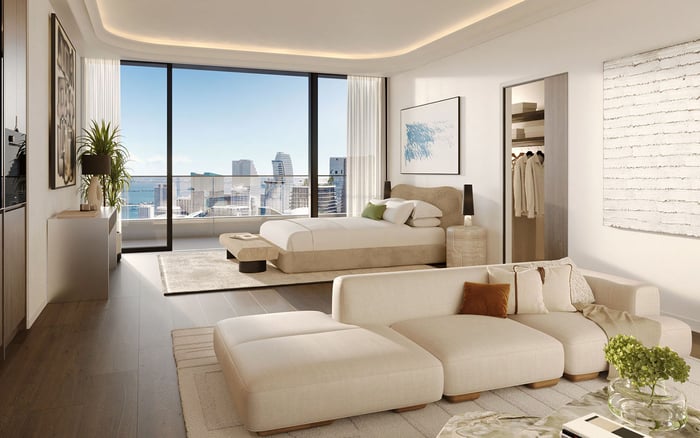
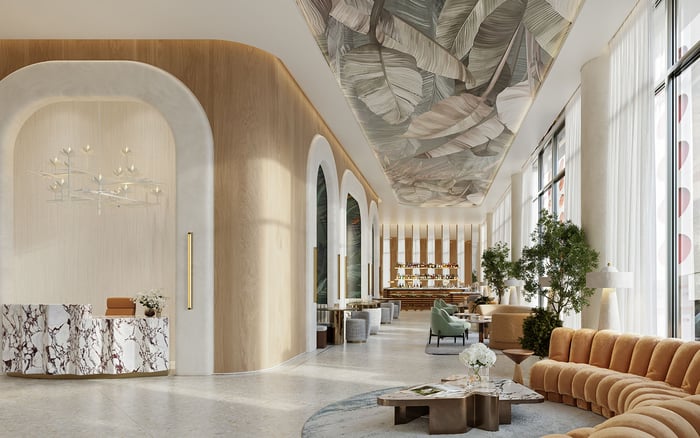
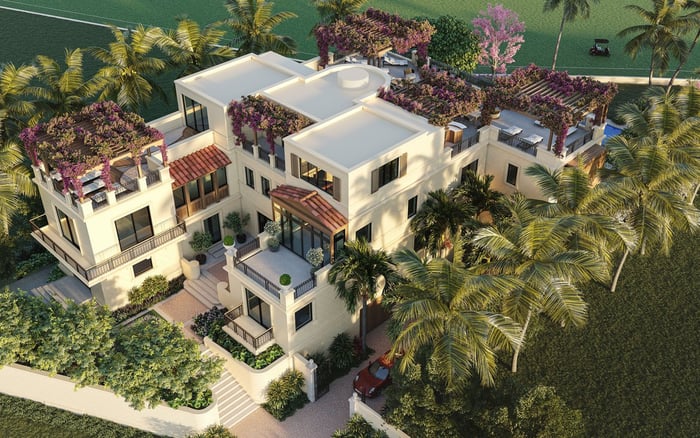
In a city defined by views and velocity, the most enduring form of luxury is often the one thing you cannot replicate: land. Large lots in Miami and greater South Florida offer a kind of status that is quiet, private, and inherently scarce. Beyond square footage, buyers pursue setbacks, gardens, motor courts, and the freedom to shape a residence around a lifestyle rather than around a floor plan. This editorial looks at why land carries social currency, how it changes daily living, and what sophisticated buyers consider before committing.
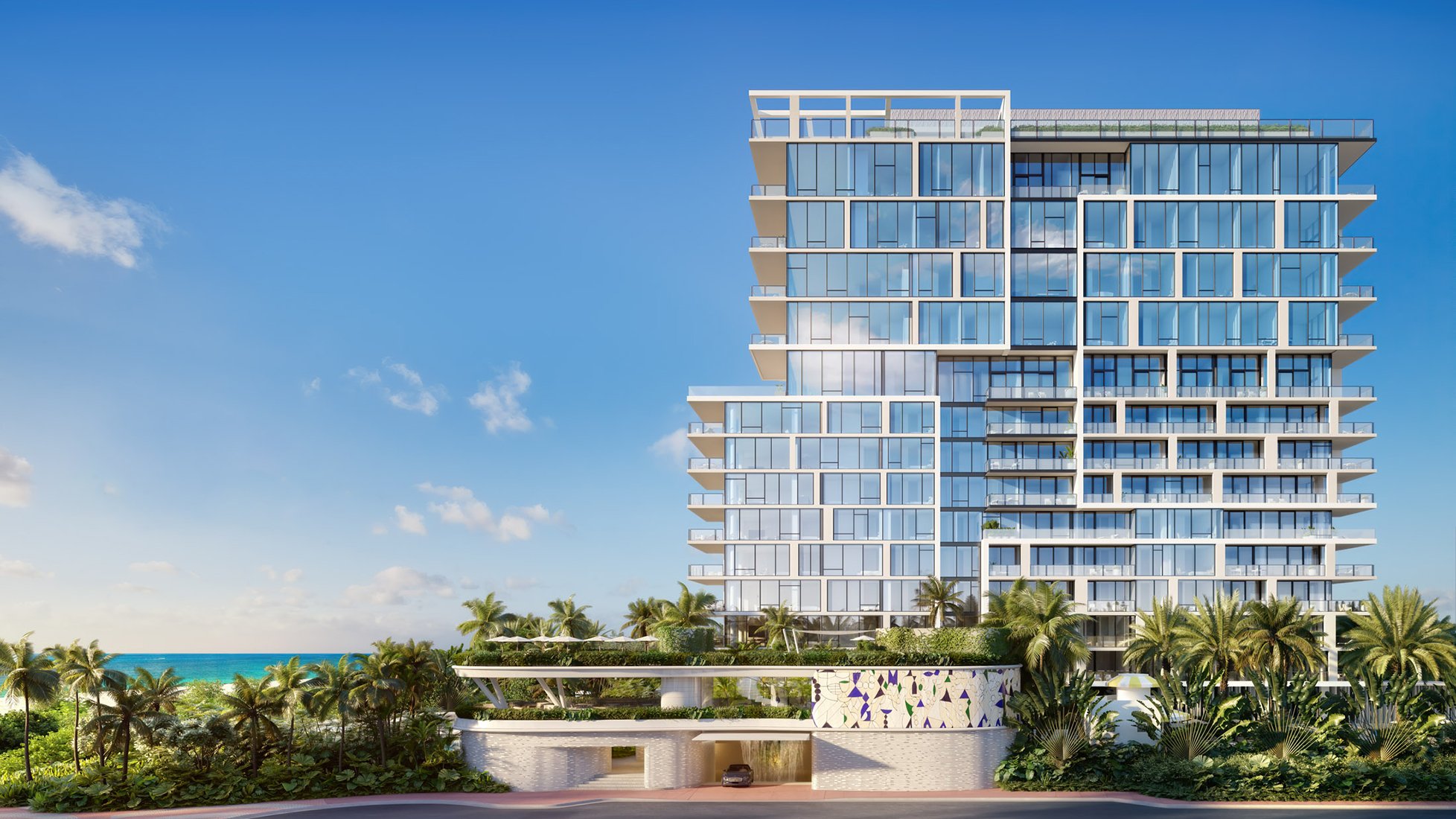
Miami has never lacked spectacle. Glass towers catch the light, supercars glide through valet lines, and waterfront decks frame sunsets that feel cinematic. Yet among the most exacting buyers, a quieter hierarchy is taking hold, one defined less by visibility and more by breathing room.
A large lot is not simply “more property.” It is a controlled buffer from the street, a layer of separation from neighboring windows, and a canvas that lets daily living unfold without friction. It is the difference between entertaining on a narrow terrace and hosting across true grounds. It is the ability to arrive home without a staged entrance, to place the home where light and landscape work for you, and to live with a sense of composure that cannot be manufactured later.
In South Florida, where land is finite and demand for prime addresses remains persistent, land itself becomes a form of luxury signaling. It reads as discretion, permanence, and control. Even when two homes share comparable interior square footage, the one with meaningful grounds often feels more complete, more intentional, and more difficult to replace.
Luxury in Miami is often described as a view, a roster of amenities, or a brand name attached to a lobby. Land operates differently. It is quieter, but more structural.
First, land is scarce in the precise places people actually want to live. Water, parks, and established neighborhoods constrain supply. In many enclaves, the question is not whether a home is attractive, but whether the parcel allows the architecture and lifestyle to breathe.
Second, land translates into options. A buyer can prioritize a long driveway and motor court, a true garden, a guest house, a separate wellness pavilion, or simply distance. Even if you never build an additional structure, the optionality carries value because it protects relevance over time.
Third, land is privacy with a physical dimension. In a market where visibility can feel unavoidable, many high-net-worth households want a residence that does not constantly negotiate with the outside world. A generous lot reduces noise, limits sightlines, and lessens the feeling of living on display.
Finally, land is a hedge against sameness. Much of modern housing is optimized for efficiency, and many parcels are built close to the edge of what code allows. A larger lot creates proportion, and proportion is one of the clearest signals of quality.
Large-lot living is not only aesthetic. It changes routines in ways that become hard to give up.
Arriving home becomes calmer. A longer approach and a defined entry sequence can separate the residence from the street and create ceremony without forced grandiosity. Within the grounds, movement can be organized so that parking, deliveries, service access, and entertaining do not collide.
Outdoor living becomes effortless. Instead of compressing furniture into a thin strip, the grounds can support multiple “rooms” outside: a shaded lounge, a dining area, a quiet reading garden, and open space for children or pets. In South Florida, where the calendar invites time outdoors for much of the year, that flexibility becomes a daily quality-of-life asset.
Hosting becomes more graceful. You can scale an event without the home feeling overwhelmed, and you can offer privacy within the gathering. The best entertaining homes are not always those with the largest interiors. They are the ones with circulation and landscape that make the flow feel natural.
For design-oriented buyers, the greatest luxury of land is what it allows an architect to do.
A larger lot can support better setbacks and a stronger overall composition. The home can be positioned to capture preferred light, to frame landscape views from key rooms, and to protect privacy through placement rather than relying on heavy window treatments. The design can create a true front garden and a true rear garden, instead of a single leftover band of grass.
This freedom improves the interior experience as well. Rooms feel more generous when they open onto space rather than a fence line. Even modest square footage can read as elevated when there is air around it and views are layered through landscape.
The best outcomes come when the grounds are treated as part of the architecture, not an afterthought. Landscape, lighting, and hardscape can be curated so the property feels like a private resort rather than a home with a yard. When the outdoor experience is planned with the same rigor as the interior, the entire residence feels more intentional.
Privacy is often discussed in Miami as an accessory. On a large lot, it can be designed into the site itself.
Distance is a subtle security tool. Setbacks reduce immediate access to the residence and allow for layered landscaping that protects without making the home feel fortified. With more land, gates, walls, and planting can be integrated so the property reads as elegant rather than defensive.
Discretion improves when the site has room for separate circulation. Service access can be routed away from primary entertaining areas. Deliveries and staff movement can be managed quietly. For many owners, that separation is as meaningful as any smart-home feature because it preserves calm on the days you are actually living there.
In a gated-community setting, the lot’s private buffer can complement neighborhood-level security. The combined effect is not only safety, but serenity.
Wellness amenities can be added to many homes, but they feel fundamentally different when they are not forced into the margins.
A larger parcel can support a dedicated wellness zone that is visually and acoustically separate from entertaining spaces. That might be a garden path to a calmer corner of the property, a shaded deck for morning movement, or an outdoor bathing experience that feels intentionally secluded.
Even without major construction, land allows wellness through landscape. Quiet seating areas, filtered light, and true greenery create a sense of retreat. The ability to step outside and feel removed from the neighborhood, even for a few minutes, is a luxury in itself.
Buyers often focus on interior finishes because they are tangible and easy to compare. Land value operates on a different logic.
Finishes can be updated. A kitchen can be replaced. A floor plan can be reworked. But the lot is the one component you cannot manufacture. When a parcel offers exceptional frontage, mature canopy, or simply a rare sense of openness, it tends to remain competitive across market cycles because a similar replacement is not guaranteed.
Large lots can also help a home stay current as lifestyles evolve. Multi-generational living, extended stays, and the desire for work and wellness space at home all point toward residences that can adapt. Land provides the flexibility to adapt without compromising the primary home’s function.
Resilience is part of the conversation as well, even when owners prefer not to dwell on it. A sophisticated buyer will consider how the property is positioned, how water moves across the site, and how landscape and drainage are managed. These considerations vary widely by parcel and should be evaluated carefully with qualified professionals.
A large lot can be a dream, but it can also conceal complexity. Experienced buyers look beyond the headline appeal and move through a disciplined set of questions.
First is usability. How much of the land actually functions as livable outdoor space, and how much is constrained by easements, setbacks, or irregular geometry? A parcel can be expansive on paper yet feel limited in practice if the buildable area is narrow.
Second is privacy in reality, not in marketing. Walk the perimeter. Study sightlines from neighboring second stories and balconies. Consider whether landscape can mature into screening, and whether the home’s placement can be optimized to reduce exposure.
Third is circulation. Where do cars enter and exit? Can guests arrive without crossing service zones? Is there room for a motor court that feels composed rather than improvised? On a large-lot property, the arrival experience is a signature, and it often determines whether the home feels effortless day to day.
Fourth is the relationship to light. Morning versus afternoon exposure, shade patterns from existing trees, and the way the home will feel at different times of day all matter. When a property has space, you can be intentional about how it lives, not just how it looks.
Fifth is governance. Restrictions can shape what you can build, how you can landscape, and how you can use the home. Confirm rules early, and confirm them in writing.
South Florida is not a single market. It is a series of micro-markets where land and lifestyle intersect differently.
In Pinecrest, buyers often pursue the classic premise of space and family ease, prioritizing quiet streets and a home that supports day-to-day living without feeling formal. The appeal is not necessarily spectacle. It is room for a composed, private life, with grounds that can carry outdoor living as a default rather than an add-on.
In Coconut Grove, the conversation frequently centers on neighborhood feel paired with a strong sense of place. Many buyers value greenery, walkable pockets, and the ability to have a residence that feels tucked away while still connected to the city.
In Miami Beach, land becomes a sharper form of luxury because the geography is constrained and proximity to the water shapes the experience. Privacy and setbacks can feel especially prized when density is high and social visibility is constant.
Across these areas, large lots are often chosen by buyers who want single-family homes that behave more like private estates than like standard residences.
There is no single “right” answer in Miami between a tower lifestyle and an estate lifestyle. The distinction is not merely taste. It is strategy.
Vertical luxury can offer a curated, simplified life: lock-and-leave ease, a staffed entry, and a sense that daily logistics are handled. For some households, that is the highest form of luxury, especially when time is the scarcest resource.
Land-led luxury offers autonomy. You control the arrival, the landscape, the outdoor experience, and the property’s rhythms. It can be more involved operationally, but it can also feel more personal because so much of the daily experience is yours to design.
Many top buyers ultimately keep both. A large-lot residence becomes the primary lifestyle anchor, while a well-located condominium serves as a city pied-a-terre. For a neutral reference point when considering the vertical option, explore Four Seasons Residences Coconut Grove.
The most successful large-lot purchases in South Florida tend to share a few consistent disciplines.
Start with the lifestyle brief, not the property type. Define what you want the land to do for you. Privacy, entertaining, wellness, gardens, guest accommodations, or a quieter arrival sequence all lead to different parcels, and clarity up front prevents expensive compromises later.
Treat the grounds as a primary asset. Walk the property at different times of day. Listen for ambient noise. Notice how neighbors relate to the site. The “feel” of land is often more important than raw dimensions, and it is easiest to judge in person, slowly.
Bring the right team early. Large-lot purchases often benefit from coordinated input across brokerage, legal, design, and property specialists so that vision and feasibility stay aligned. A beautiful home on paper is not always straightforward to improve, maintain, or expand.
Finally, think in generations. Land is one of the few luxury assets that can host changing needs without losing its identity. In Miami, where the market can move quickly, that long horizon is often the quiet advantage.
What makes a large lot feel truly private in Miami?
True privacy usually comes from a combination of distance, sightline control, and thoughtful placement. Setbacks create separation from the street, while landscape can soften edges and reduce direct views from neighbors. The goal is not isolation, but a daily sense that the home is not constantly exposed.
How should buyers compare a large-lot home to a luxury condo lifestyle?
Compare them as operating models. Condominiums can deliver simplicity, staffing, and lock-and-leave convenience. Large-lot living offers autonomy, outdoor “rooms,” and control over arrival, circulation, and landscape. The best choice is the one that supports your time, routines, and privacy needs most consistently.
What due diligence matters most when evaluating land in South Florida?
Focus on usability, constraints, and how the site actually functions. Review easements and setbacks, assess circulation for guests and service, and pay close attention to light and privacy conditions. Also evaluate how water moves across the property and how drainage and landscape are managed, with qualified professionals guiding the process.
Can a larger parcel improve resale appeal even if the house is modest?
Often, yes. A lot cannot be replicated the way interiors can. When the grounds offer openness, privacy, and flexibility, buyers may view the property as a platform for future relevance, even if the current home is not the largest. Land can make a residence feel more composed, more adaptable, and harder to replace.
For discreet guidance on estate-scale opportunities and the best-fit neighborhoods, connect with MILLION Luxury.
If branded residences are on your mind — as a home or as an allocation — we would be glad to share what we are seeing, privately.
Begin a quiet conversation