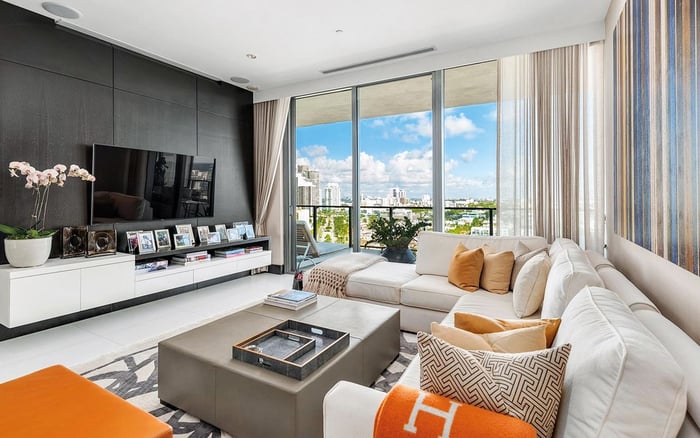
A discreet guide for collectors choosing a South Florida home around fine art storage, conservation-minded interiors, privacy, logistics, and the coastal realities of Surfside, Brickell, and waterfront living.
.jpg)
For the Paris collector arriving in South Florida, the most important room in a residence may not be the salon, the ocean-facing terrace, or the primary suite. It may be the room guests never see: the secure, climate-aware storage environment that allows important works to live safely between exhibitions, rotations, loans, and private viewings.
Choosing a home around collector-grade art storage is different from choosing a beautiful apartment. It requires asking whether the residence can support conservation discipline, discreet logistics, security, and curatorial flexibility. A rare canvas, delicate work on paper, sculpture, photograph, design object, or archive does not simply need space. It needs predictability.
That is why a buyer looking from Paris to Surfside should begin with the collection profile. Is the collection weighted toward paintings, works on paper, design furniture, large-format photography, mixed media, or sculpture? Are pieces actively loaned, frequently rotated, or largely kept for private enjoyment? Will the home function as a viewing residence, a family retreat, or both? The answers shape everything from ceiling heights and elevator access to storage adjacency, wall finishes, lighting, and insurance review.
South Florida offers the light, water, and indoor-outdoor living collectors love, but that same setting requires restraint. Ocean air, strong sun, frequent transitions between conditioned interiors and terraces, and a culture of open entertaining all raise the standard for planning.
An Oceanfront residence can be superb for living, but art-sensitive buyers should look beyond the postcard. Confirm how protected the interior zones feel, how much direct light reaches art walls, where mechanical systems are located, and whether a dedicated storage or preparation area can be planned away from glazing, kitchens, service corridors, and high-traffic entertaining zones.
In Surfside, the appeal is often privacy, scale, and proximity to Miami Beach and Bal Harbour without the intensity of denser urban settings. A buyer considering The Delmore Surfside or Arte Surfside should think in terms of quiet arrival, controlled circulation, and the ability to create protected interior moments that do not fight the ocean setting. The goal is not to hide the view. It is to choreograph the relationship between view, light, walls, and works.
Collector-grade storage depends on consistency. In practical terms, a buyer should evaluate the residence as a small private institution. Ask how the home performs when occupied, when closed for travel, when staff are present, and when seasonal entertaining increases. A residence that feels comfortable to people may still need additional planning for valuable art.
For significant collections, involve a conservator, specialty art handler, and insurance advisor before closing or before finalizing interiors. They can help determine whether a room can be adapted for storage, whether art walls should avoid certain exposures, whether lighting needs refinement, and whether the owner should create a separate receiving and unpacking protocol.
Mechanical redundancy may matter, but so does simplicity. A complicated system that no one manages well is less useful than a clear operating plan. The ideal setup makes it easy for household staff to monitor conditions, easy for specialists to access storage, and difficult for guests or service vendors to enter sensitive zones by accident.
Serious collections move through buildings. They arrive in crates, require staging, may need condition checks, and sometimes leave for conservation, sale, or exhibition. Buyers should study the path from loading area to residence with the same care they give to finishes.
The best route is discreet, direct, and secure. It avoids public spectacle and minimizes exposure to heat, humidity, vibration, and crowding. Private elevator access, service elevator capacity, receiving areas, staff coordination, and building policies all become part of the art-storage conversation. In a high-design residence, logistics are not glamorous, but they are essential.
Privacy also extends to social life. A home designed for art should allow the owner to display select works while keeping deeper inventory unseen. That might mean a gallery-like corridor for rotating pieces, a study for intimate works on paper, a family room with less sensitive works, and a controlled storage room for the rest. The most elegant homes do not reveal the entire collection at once.
Art planning should not make a residence feel like a warehouse. The strongest Design & Architecture strategies are subtle. They create generous wall planes, balanced lighting, calm circulation, and storage that is close enough to be useful but separate enough to be protected.
Avoid treating art as an afterthought placed wherever furniture leaves a gap. Instead, ask how the architecture can frame the collection. Where are the primary sightlines? Which walls receive steady indirect light? Can millwork conceal equipment without trapping heat? Are there opportunities for moveable panels, hidden hanging infrastructure, or flexible rooms that can change as the collection changes?
In Brickell, the calculus is more vertical and urban. A residence such as The Residences at 1428 Brickell may appeal to buyers who want city energy, financial-district proximity, and a more metropolitan rhythm. The collector’s task is to examine how the tower lifestyle supports privacy, deliveries, staff coordination, and interior control. The higher the lifestyle expectations, the more important it is that the art plan feels integrated rather than improvised.
Surfside has particular appeal for collectors who want Miami Beach access with a more residential tempo. Bal Harbour offers its own kind of refinement, especially for buyers who want proximity to luxury retail, dining, and the ocean. The surrounding coastal corridor can suit collectors who divide time between Europe, New York, Palm Beach, and Miami, provided the residence can support proper care.
A buyer comparing Surfside with Bal Harbour might consider how often works will be moved, whether the home will host private dinners, and how visible the collection should be to guests. Fendi Château Residences Surfside and Oceana Bal Harbour occupy names and locations that naturally invite design-led thinking, but the art-storage decision still comes down to the private details: access, light, storage, wall planning, mechanical reliability, and service culture.
Waterfront living adds another layer. The water is part of the emotional value of the home, yet the collection may need a degree of separation from the most dramatic exposures. The most successful plans allow the owner to enjoy water, horizon, and breeze while keeping the most sensitive works in controlled interior zones.
Many European collectors bring a disciplined eye to proportion, materiality, and sequence. They are accustomed to apartments where walls matter, where rooms unfold deliberately, and where objects are curated rather than merely decorated. That mindset translates beautifully to South Florida when paired with the region’s openness and light.
For an Art Basel season residence, it can be tempting to prioritize entertaining first. A better approach is to plan for both hospitality and stewardship. Create a public layer for dinners and viewings, a semi-private layer for daily enjoyment, and a private layer for storage, archives, crates, and specialist access. The home then becomes more than a place to display taste. It becomes a living instrument for caring for the collection.
Before committing, ask practical questions. Can the residence accommodate a dedicated art-storage room or a secure secondary room? Does the building allow the kind of deliveries the collection will require? Are there restrictions on work hours, freight movement, or specialist access? Can lighting be modified? Can shades, glazing treatments, or interior partitions support conservation goals? Will insurance requirements affect renovations or operations?
It is also wise to separate three categories: display, storage, and movement. Display is about beauty and experience. Storage is about stability. Movement is about risk management. A residence that excels in only one category may still disappoint a serious collector. The right home performs across all three.
Should I choose the residence before designing the art-storage plan? No. The collection profile should guide the search, especially if works are sensitive, oversized, frequently loaned, or materially complex.
Is Surfside a good fit for serious collectors? Surfside can be compelling for collectors seeking privacy, coastal calm, and proximity to Miami Beach and Bal Harbour, provided the home supports proper storage and logistics.
Can an Oceanfront home safely hold important art? Yes, if interiors are planned with disciplined climate control, light management, secure storage, and careful separation from high-exposure areas.
What should I ask about building logistics? Ask about receiving, service elevators, delivery rules, specialist access, security procedures, and how discreetly crates can move from arrival to residence.
Do I need a conservator before buying? For significant works, a conservator can identify risks that a general design review may miss, especially around light, materials, and storage conditions.
How much space should be reserved for art storage? It depends on the collection’s size, medium, and rotation habits. Plan for protected storage, not merely leftover closet space.
Is Brickell practical for collectors? Brickell can work well for urban collectors if the tower supports privacy, controlled movement, and an interior plan suited to valuable works.
Should art be displayed near large glass walls? Sensitive works usually require caution near strong light and heat exposure. A specialist should review placement before installation.
Can a residence feel warm and still be conservation-minded? Yes. The best homes combine refined materials, discreet systems, and thoughtful lighting so protection feels natural rather than clinical.
When should insurance be involved? Bring insurance advisors in early, especially before renovations, major installations, or decisions about storage, security, and transport.
For a tailored shortlist and next-step guidance, connect with MILLION.
If branded residences are on your mind — as a home or as an allocation — we would be glad to share what we are seeing, privately.
Begin a quiet conversation