In Palm Beach County, the most valuable real estate is often the land. But historic districts, design review, and state-level rules can materially change what you can renovate, demolish, or build. This MILLION Luxury editorial outlines how preservation frameworks work in West Palm Beach and Palm Beach, why ultra-luxury teardowns still happen, and how buyers can underwrite timelines and resale risk with more precision.

In the top tier of Palm Beach County real estate, the structure can feel secondary. The true asset is often the site: proximity to the ocean or Intracoastal, the privacy line, the build envelope that can be achieved, and the premium that scarcity assigns to the very best parcels.
That is exactly where preservation and redevelopment collide. A buyer may arrive with a decisive architectural program, only to encounter an equally decisive civic mandate to protect neighborhood character. At the same time, the region regularly demonstrates the opposite impulse: even trophy-priced homes can trade as tear-downs when land value, assembly potential, or replacement ambitions dominate the deal.
For luxury buyers, the objective is not to pick a camp. It is to underwrite the reality on the ground in South Florida: what is legally permissible, what is practically approvable, what is likely to be contested, and how long the full process can take.
Preservation is often spoken about as sentiment. In many markets, including Palm Beach County, it also functions as an economic framework.
A historic-preservation research summary from the University of Florida found that, across 18 studied locations, properties in local historic districts appreciated more than comparable non-historic areas in 15 cases. The same summary reported no instances where designation reduced property values. For buyers trained to model downside scenarios, that final point is critical: the data suggests local designation can act less like a ceiling and more like a stabilizer, particularly where historic character is a core component of place identity.
In the luxury segment, “identity” is not soft language. It translates into scarcity, predictability, and long-term desirability. When a street is buffered from abrupt exterior changes, the streetscape itself reads as an amenity, and that can support value through multiple cycles.
Even with a pro-preservation value narrative, Palm Beach remains one of the country’s clearest examples of the tear-down paradox: very expensive homes can be purchased and then demolished.
The decision is not always a simple “fixer versus turnkey” comparison. Reporting on high-end demolition dynamics has emphasized that teardowns can be driven by factors beyond typical housing economics, including land value, redevelopment goals, and buyer preferences. In a market that continues to see strength in $10M-plus transactions, replacement cost can feel less consequential than the opportunity cost of not executing the plan a buyer actually wants.
Widely covered local examples reinforce the pattern. The former Palm Beach home associated with Jeffrey Epstein, at 358 El Brillo Way, was reported as sold for $18.5 million in 2021 and later demolished, with additional reporting noting an address change pursued in connection with the site. Regardless of the property’s history, the real estate takeaway is straightforward: a structure can be treated primarily as a land position, even at a headline price.
Separately, regional reporting has described billionaire-scale competition for scarce oceanfront land, including land assembly, as a force that can intensify redevelopment pressure and reshape the built environment. Where scarcity is extreme, the market’s “best” outcome in purely economic terms can be the one that unlocks the site’s maximum utility, subject to whatever review regime applies.
For a luxury buyer, designation is less about nostalgia and more about process. It can change the reality of a project in four practical ways:
The key underwriting insight is that “future redevelopment optionality” is rarely a simple yes or no. It is a probability distribution across timelines, review bodies, and likely outcomes. That distribution should be priced into the offer, the renovation scope, and the ownership plan.
West Palm Beach is unusually explicit about its preservation framework. The City of West Palm Beach describes its Historic Preservation Program as including 18 locally designated historic districts and 46 individually designated historic sites.
From a buyer’s perspective, the headline number matters less than what the designation triggers. The trigger is where timelines and design intent meet regulation.
West Palm Beach’s Historic Preservation FAQs explain that owners in historic districts typically must obtain a Certificate of Appropriateness (COA) for certain exterior work, before or in addition to standard permits. This is the point where sophisticated buyers separate a beautiful rendering from an executable plan. A COA is not automatically a barrier, but it does mean your architect’s aesthetic language must translate into what guidelines and reviewers will accept.
Design review, as described by the city, is intended to protect historic character while allowing change under guidelines. In practice, the system is built for iteration. Projects framed as compatible rather than disruptive tend to move more cleanly through review, not because ambition is punished, but because alignment is rewarded.
For buyers considering West Palm Beach as a primary residence or pied-a-terre, the permitting reality often produces a strategic split. Some choose designated neighborhoods and commit to restoration or sensitive renovation. Others prioritize newer luxury inventory to reduce unknowns and compress execution risk.
The Town of Palm Beach’s development-review framework similarly emphasizes that approvals are frequently evaluated through multiple boards and commissions that review design and development proposals. For luxury owners, that structure matters because it formalizes a point many buyers underestimate: your project is not only a construction exercise. It is a governance exercise, and it is a stakeholder exercise.
In Palm Beach, design scrutiny can feel closer to couture than commodity. The upside is obvious: successful projects often benefit from civic quality control that protects the area’s global cachet. The tradeoff is time, redesign cycles, and the need to manage approvals with the same rigor you apply to budgets and contractors.
When you are acquiring a home with a plan to substantially alter it, the most expensive error is rarely a finish choice. It is buying a site with a concept that cannot survive review, or a timeline that assumes speed where the process is designed for deliberation.
Florida’s statewide legal environment can also shape what local governments can restrict, including in the context of demolition.
In 2022, Florida enacted HB 423, which limited local governments’ ability to restrict demolition of certain single-family homes under specified flood-related conditions. For preservation-minded communities, this has been a major flashpoint. It touches the boundary between local control and state preemption, and it can become relevant precisely where the highest values and the highest vulnerability can coexist.
The existence of this law does not mean demolition is automatically simple or broadly permitted. It does mean sophisticated buyers should treat demolition restrictions, especially as applied to single-family-homes in flood contexts, as a moving variable. Underwriting should include legal counsel familiar with the interplay between state and local rules, not just an assumption based on neighborhood aesthetics or past precedent.
Luxury clients tend to fall into one of three profiles. The best outcomes come from aligning the profile with the regulatory reality.
1) The stewardship buyer (restoration-forward). You want historic charm, but with modern systems, performance, and livability. In this lane, designation can be a value enhancer because a well-executed restoration signals seriousness and taste. High-end marketing often rewards that clarity. A widely reported listing of the renovated Addison Mizner-era estate Casa del Ensueños, built in 1928, illustrates how restored historic architecture can be positioned at the very top of the market.
2) The modernization buyer (renovation-forward). You want to keep the bones but transform the experience. This is where the COA and design review become operational constraints. The strategy is to invest early in an architect and expeditor team that understands local guidelines and can anticipate reviewer concerns. The earlier you define exterior intent, materials, massing, and streetscape impact, the easier it becomes to price the timeline and reduce design churn.
3) The replacement buyer (new-build-forward). You are buying for the site and intend to build anew. In this profile, it is crucial not to assume that budget can “solve” time. Review processes can be indifferent to urgency. The most bankable advantage is preparedness: concept studies, survey work, and early alignment with what boards are likely to accept. Buying well here often means buying a site whose constraints you can live with, not a site you hope to change.
Across all three, a prudent buyer treats permitting timeline as a form of carrying cost, and treats design review as a material due diligence item, not an afterthought.
When buyers want Palm Beach County lifestyle with fewer renovation variables, they often gravitate toward new or newer luxury residences where exterior design decisions have already been adjudicated and delivered.
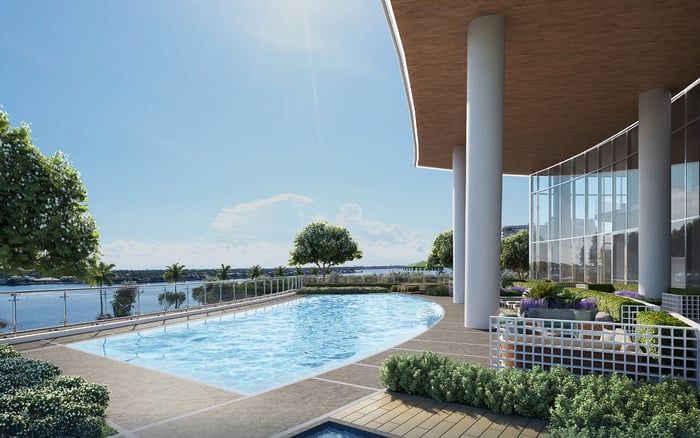
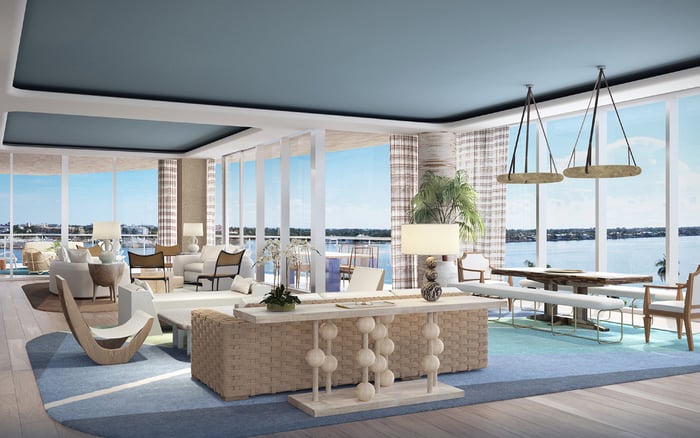
In West Palm Beach, that can mean selecting a tower that prioritizes lock-and-leave convenience, modern building systems, and curated amenities. Consider the market positioning implied by residences such as Alba West Palm Beach, where the appeal is frequently a contemporary standard of living without the uncertainty of legacy property constraints.
For buyers who value hospitality-forward service and a turnkey experience, Mr. C Residences West Palm Beach represents a different axis of value: the ability to step into a designed lifestyle rather than manage a multi-year design and construction process.
At the highest echelon, branded residential expectations also shape demand for predictability, privacy, and finish level. The Ritz-Carlton Residences® West Palm Beach speaks to the buyer who wants long-term ease with a globally recognized service culture.
And for those who want proximity to the water and an address that reads as distinctly West Palm, Shorecrest Flagler Drive West Palm Beach is part of the broader story: new residential options can absorb demand that might otherwise concentrate exclusively on historic neighborhoods and scarce single-family sites.
The strategic point is not that condos replace classic Palm Beach living. It is that they can hedge it. Many buyers hold a modern residence as a base while they patiently pursue a restoration or new-build plan that must work its way through review.
In a preservation-sensitive market, certain questions deserve attention before price.
Buyers who treat these as first-order diligence items typically avoid the most common luxury regret: paying for optionality that does not exist.
Are homes in historic districts a weaker investment because of restrictions? Not necessarily. Academic research summarized by the University of Florida reported stronger appreciation in most studied historic districts and found no cases where designation reduced values.
What is a Certificate of Appropriateness (COA) and when does it matter? In West Palm Beach historic districts, a COA is typically required for certain exterior work before or in addition to standard permits, shaping both design choices and timelines.
Why do $10M-plus homes get demolished at all? In the ultra-luxury tier, land scarcity, buyer preferences, and redevelopment goals can outweigh the existing structure’s value. This dynamic has been widely covered in Palm Beach.
Does Florida law affect demolition decisions in flood contexts? Yes. Florida’s HB 423 limited local governments’ ability to restrict demolition of certain single-family-homes under specified flood-related conditions, adding a state-level layer to local rules.
For confidential guidance on navigating preservation, approvals, and acquisition strategy in Palm Beach County, connect with MILLION Luxury.
If branded residences are on your mind — as a home or as an allocation — we would be glad to share what we are seeing, privately.
Begin a quiet conversation