West Palm Beach has led the nation in decade-long luxury price growth, while Naples continues to stand out for transaction pace and trophy-scale liquidity. For South Florida buyers, the decision often comes down to whether you prioritize momentum and proximity to the Palm Beach corridor, or a more insulated, resort-driven lifestyle with notable high-end velocity.
Luxury buyers rarely choose a market on romance alone. They choose it on signal: pricing, liquidity, and the real-world ease of owning and living well. In South Florida, two signals have been unusually clear, and they point in different directions.
On the Atlantic side, West Palm Beach posted the largest 10-year jump in U.S. median luxury sale prices, up 187.3% through October 2025, with a reported median luxury home price of $4.04M in that same period. This is not a short-term spike. It reads as a decade-long repricing that moved the market into a new peer set.
On the Gulf side, Naples is telling a different story. Realtor.com’s November 2025 luxury snapshot reported that Naples luxury homes sold 23.5% faster year over year and set the metro’s luxury threshold at $3.5M, while million-dollar listings accounted for 35.8% of all listings. The takeaway is not identical to West Palm Beach’s, but it is just as useful: top-end liquidity is active, and the market’s definition of “luxury” is both clear and widely represented.
For buyers weighing Palm Beach corridor proximity against Gulf Coast discretion, the question is no longer whether both markets are “hot.” The question is which kind of strength you want to prioritize: price momentum, or deal velocity.
West Palm Beach’s decade-long luxury growth has been widely covered, including a Redfin analysis later recapped by South Florida Agent Magazine. The point for buyers is simple: the luxury baseline has moved so quickly that yesterday’s premium inventory and today’s premium inventory can price as if they belong to different cycles.
That kind of repricing changes behavior on both sides of the table.
First, it reshapes negotiation. When the median luxury level climbs sharply, sellers tend to anchor to recent highs rather than older comps, and buyers need to be clear about what they are paying for: view, land value, building quality, service levels, or a specific lifestyle corridor.
Second, it raises the standard for due diligence. In fast-repriced markets, broad headlines can hide meaningful micro-differences. A waterfront address and a near-water address may not trade the same way, even if they live in the same zip code. Building profile, management, and future supply nearby matter more when pricing is less forgiving.
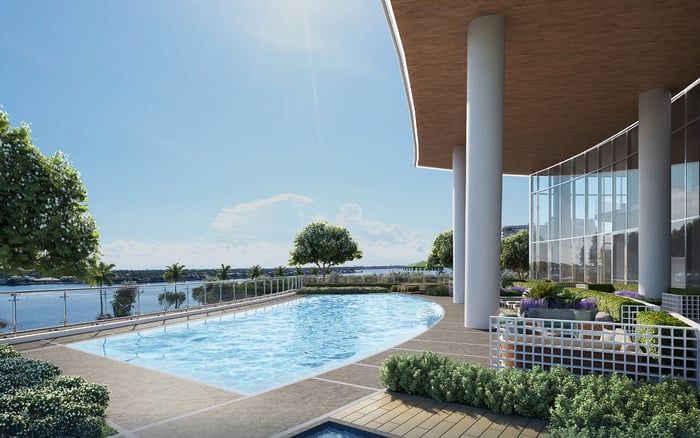
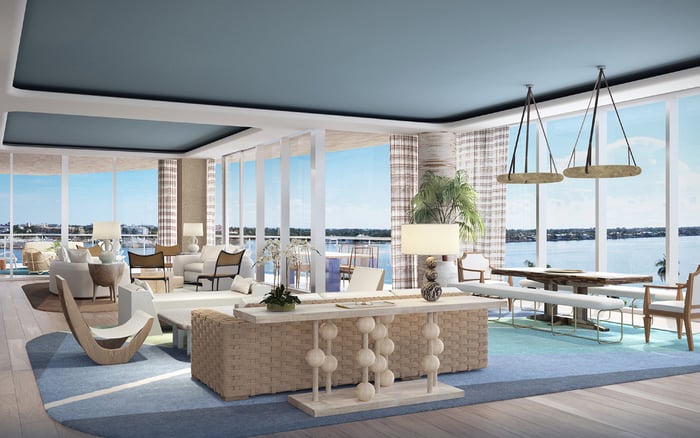
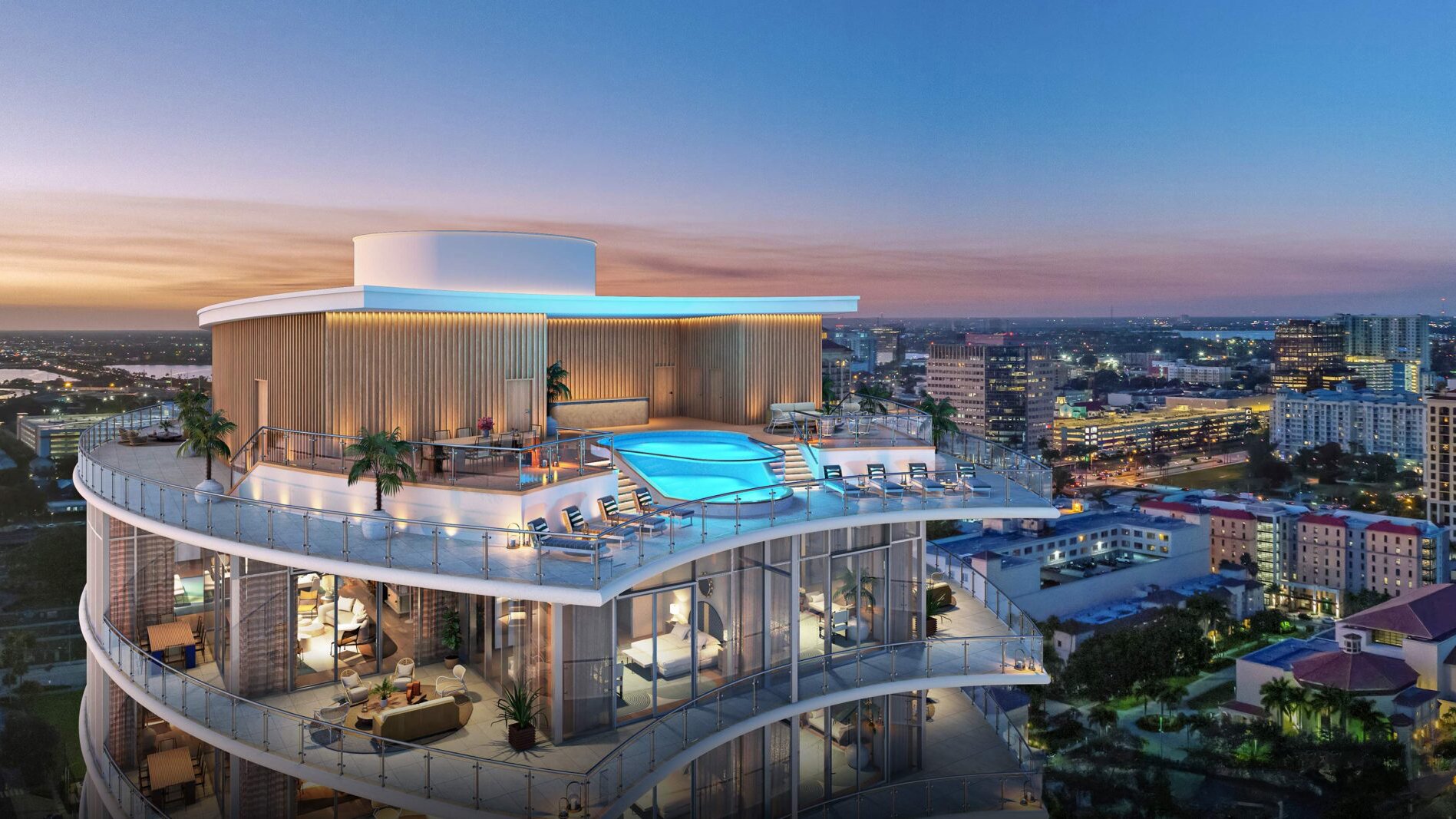
In practical terms, West Palm Beach now rewards precision: view corridors, walkability, finishes that hold up, and the frictionless access that defines the broader Palm Beach ecosystem. For buyers who want a modern, amenitized lifestyle without stepping outside the area’s cultural orbit, newer condominium options are part of the conversation. Residences like Mr. C Residences West Palm Beach speak to demand for hospitality-forward living that competes for time and attention with private clubs and island routines.
Along the Flagler waterfront, the appeal is often less about trend and more about permanence: long views, a sense of arrival, and a daily rhythm that feels intentionally composed. That is the context in which projects such as Shorecrest Flagler Drive West Palm Beach enter the discussion for buyers who want an address that reads as residential first, not as a transient pied-a-terre.
Naples does not need to mirror the Palm Beach corridor to command attention. Its luxury signal is about pace and presence, with a top tier that continues to transact.
In Realtor.com’s November 2025 reporting, luxury homes in Naples sold 23.5% faster year over year. Pair that with a luxury threshold of $3.5M and the picture becomes clearer: the upper tier is not only active, it is active within a defined band where buyers and sellers can agree on what “top of market” means for that metro.
The broader market texture also matters. A July 2025 market report summary noted a median closed price of $575,000, down 3% year over year, alongside 5,224 active listings, up 11.4% year over year. Pending sales were reported up 19.9%, while new listings were reported down 7.2% to 804. Without over-reading any single metric, the combination suggests demand is still showing up, inventory is present, and the pipeline is not endlessly expanding.
Naples also benefits from the optics of trophy-scale liquidity. A beachfront estate at 2200 Gordon Drive reportedly sold for $133M in 2025, described as the largest residential sale in Florida history. For ultra-premium buyers, record moments do more than make headlines. They recalibrate expectations about what is possible in a market, and they draw the kind of global attention that keeps top-tier inventory in motion.
Looking forward, the resort-residential pipeline remains part of the Naples story. Four Seasons has confirmed that Four Seasons Resort and Residences Naples at The Naples Beach Club is in development as part of a major beachfront resort and residential project, reinforcing the city’s long-standing relationship with branded, service-led living.
Luxury real estate is lifestyle design with a deed attached, which is why retail streets and social corridors matter as much as square footage.
On the island, Worth Avenue is positioned as Palm Beach’s flagship luxury shopping district. The value is not only the storefront mix, but also the tradition of discretion: a place where high-spend errands do not feel performative. For many buyers, being near Palm Beach’s core reads as a daily luxury, not an occasional outing.
Naples offers a different kind of anchor. Fifth Avenue South positions itself as the area’s premier mixed retail and restaurant destination, and it actively promotes recurring programming and an events calendar. The effect is a corridor that feels socially legible and easy to plug into. For second-home buyers who want weekends to feel active without feeling staged, that calendar can function as a subtle amenity.
Neither is “better.” They are simply different answers to the same question: do you want luxury curated by heritage, or curated by community?
At the highest end, many Florida purchases are less rate-sensitive than outsiders assume. Realtor.com noted that 51.3% of Palm Beach deals were all-cash, a reminder that liquidity is often a defining feature of the buyer pool, not a temporary tactic.
Still, ownership costs have moved to the center of decision-making, especially in coastal markets. Florida reporting has underscored that disaster losses and insurance costs are rising. For buyers evaluating West Palm Beach, Palm Beach, or Naples, it is no longer enough to love the view. Underwriting now extends to insurance availability, premiums, deductibles, and the long-term plan for resilience and maintenance.
Cost of living also shapes the day-to-day experience. City comparison tools have highlighted meaningful differences between Palm Beach and Naples on overall cost-of-living metrics. Even for ultra-affluent households, those deltas can show up in staffing, services, dining, and the friction costs of peak-season living.
The practical takeaway is straightforward: treat the purchase price as one line item. Your true annual cost is the combination of taxes, insurance, maintenance, and lifestyle.
Buyers often ask for a single verdict. The more useful approach is to match market characteristics to personal priorities.
If you value long-term momentum and corridor access: West Palm Beach is difficult to ignore given its decade-long luxury price growth and its connection into the Palm Beach ecosystem. Buyers who split time between business centers and private-club life often prefer the optionality of city living with island proximity.
If you value velocity and a resort-driven cadence: Naples offers a track record of active luxury turnover and a clearly defined top tier, with a lifestyle that can feel more insulated. It often suits buyers who want their social life to be local, walkable, and seasonally vibrant.
If you want a turnkey, service-forward condominium experience: West Palm Beach’s newer offerings give buyers multiple paths to hospitality-led living. For example, The Ritz-Carlton Residences® West Palm Beach and Alba West Palm Beach represent the kind of branded or highly amenitized positioning that appeals to buyers who want lock-and-leave simplicity without sacrificing finish and presence.
If you are underwriting risk like a family office: In both markets, the discipline is similar. Study insurance and resilience costs early, prioritize building quality and management, and treat location as a durability factor, not merely a view.
In West Palm Beach, the key question is how the market digests a new pricing baseline. When appreciation is outsized, the next phase often becomes more selective: buyers pay premiums for exceptional positioning and become more demanding everywhere else.
In Naples, the watch item is the balance between inventory, new listings, and the pace of absorption at the luxury threshold. When the market sells faster year over year, the best product can still trade quickly, but buyers remain attentive to value and replacement cost, especially as carrying costs rise.
Across both coasts, Florida’s luxury future increasingly belongs to the buyer who is both lifestyle-driven and spreadsheet-literate.
Which market has had stronger luxury price growth, West Palm Beach or Naples? West Palm Beach has been reported as the nation’s fastest-growing luxury market over the past decade, with a 187.3% jump in median luxury sale prices through October 2025.
What was West Palm Beach’s median luxury price in late 2025? Reportedly $4.04M as of October 2025.
How does Naples define “luxury” in recent reporting? Realtor.com set Naples’ luxury threshold at $3.5M in its November 2025 report.
Are Naples luxury homes selling quickly? Yes. Realtor.com reported Naples luxury homes sold 23.5% faster year over year in November 2025.
How common are million-dollar listings in Naples? Realtor.com reported that million-dollar listings represented 35.8% of all listings in Naples in its November 2025 snapshot.
Is cash still a major factor in Palm Beach area luxury deals? Yes. Realtor.com noted 51.3% of Palm Beach deals were all-cash.
What is a recent indicator of Naples’ trophy-market strength? A beachfront estate at 2200 Gordon Drive reportedly sold for $133M in 2025, described as the largest residential sale in Florida history.
What lifestyle district defines Palm Beach shopping culture? Worth Avenue is positioned as Palm Beach’s flagship luxury shopping district.
What is Naples’ signature walkable dining and retail corridor? Fifth Avenue South is marketed as the area’s premier mixed retail and restaurant destination and it promotes a recurring events calendar.
What ownership cost should coastal buyers prioritize alongside price? Insurance and disaster-related carrying costs, which Florida reporting indicates are rising.
For tailored guidance on West Palm Beach, Palm Beach, and Naples opportunities, speak with MILLION Luxury.
If branded residences are on your mind — as a home or as an allocation — we would be glad to share what we are seeing, privately.
Begin a quiet conversation