A buyer-oriented, tri-county read on South Florida’s 2026 ultra-luxury landscape, grounded in recent pricing, inventory, and demand signals across Miami-Dade, Broward, and Palm Beach.
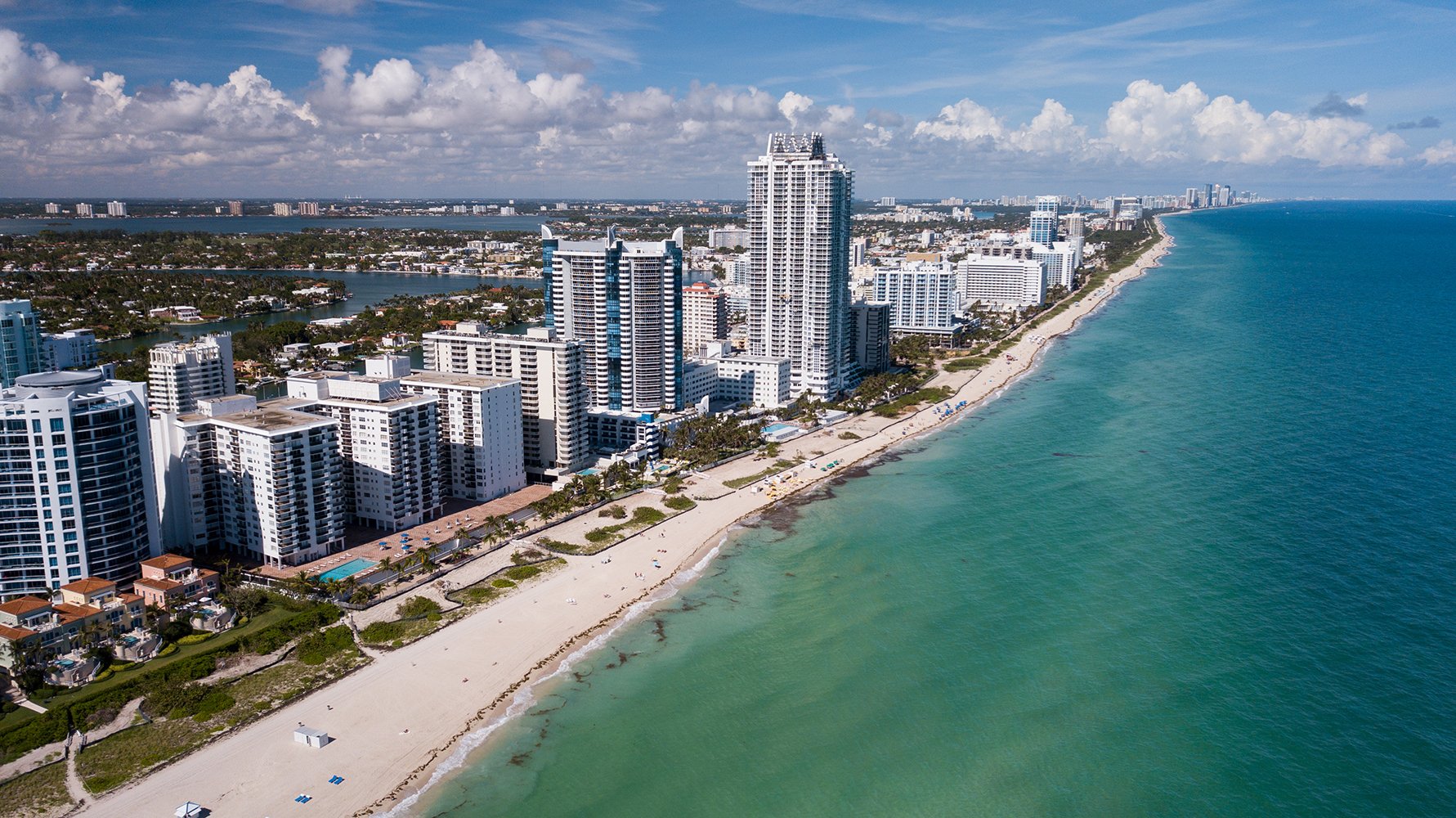
South Florida’s ultra-luxury market entering 2026 is defined less by the existence of demand and more by how precisely that demand is expressed. Across the tri-county “golden triangle” of Miami-Dade, Broward, and Palm Beach, sales above $10 million stayed historically active through 2025. The market recorded 262 transactions in the first nine months, with a projection of roughly 426 by year-end, close to the 2021 record pace.
That volume matters for two reasons. First, it confirms that discretionary buyers continue to treat South Florida as a primary lifestyle market, not simply an opportunistic trade. Second, it reveals a market large enough to segment sharply. Certain addresses, views, building reputations, and service models still command premiums, while adjacent product must compete harder, particularly on terms and perceived certainty.
For buyers and sellers navigating 2026, the most useful distinction is between “luxury” as a price band and “luxury” as a product. Price bands can soften with broader conditions. True luxury product, the kind defined by scarcity and a frictionless ownership experience, tends to hold value more consistently because it remains difficult to replace.
Miami’s luxury condo market in Q3 2025 points to a steady top end with a more analytical buyer. The median price was about $1.8 million, up 4.3% year over year. Price per square foot landed near $995, up 2.7% year over year, but notably down from Q2 2025’s $1,078 per square foot.
For 2026, that pullback is one of the clearest practical signals. The buyer is still present, but increasingly disciplined. The negotiation is often less about the headline price and more about whether the per-square-foot number makes sense in light of finish quality, layout efficiency, exposure, and the building’s day-to-day operating profile.
Discipline also shows up in the premium for certainty. Buyers pay more readily when the residence is truly turnkey, the building feels well-managed, and the view corridor is protected. Conversely, pricing can be challenged when renovations are open-ended, assessments feel unpredictable, or the lifestyle proposition does not differentiate itself from nearby options.
Submarket spreads underline how granular the market has become. In Q3 2025, luxury condo pricing in Miami-Dade varied dramatically, with Greater Downtown around $718 per square foot, Brickell near $950 per square foot, and Miami Beach near $1,292 per square foot. In 2026, “Miami is expensive” is too blunt to be useful. The more accurate read is that Miami’s premium is concentrated, and micro-markets with repeatable desirability keep earning it.
Miami-beach continues to operate as South Florida’s most visible luxury stage, and the pricing data reflects that status. In Q3 2025, Miami Beach luxury condos posted a median sale price around $2.0 million (up 8.1% year over year) and $1,292 per square foot (up 15.1% year over year). South Beach was even more pronounced, with price per square foot rising 37% year over year, from $1,123 in Q3 2024 to $1,538 in Q3 2025.
In 2026, that gap is not simply branding. It is the math of limited oceanfront land, a walkable lifestyle, and a global buyer pool that treats Miami Beach as a category of its own. Buildings that offer a clear lifestyle promise tend to hold attention, especially when the ownership experience is easy to understand and consistently delivered.
Newer boutique deliveries and tightly held legacy buildings often benefit most from this dynamic, because supply is not just limited, it is inherently constrained by geography and zoning realities. When demand is healthy, the market is selective about where it concentrates, and Miami Beach remains one of the most consistent focal points.
In that context, projects such as 57 Ocean Miami Beach are best understood as a response to a specific buyer brief: ocean adjacency, privacy, and a sense of quiet luxury that is difficult to replicate in larger, higher-density towers. Similarly, Shore Club Private Collections Miami Beach speaks to buyers who want a hospitality-caliber environment while maintaining residential autonomy.
A final note for 2026: Miami-beach buyers are often the quickest to price in forward-looking considerations, from building governance to maintenance standards. Premiums tend to accrue to residences where the ownership experience feels predictable, and where the building story is coherent in both operations and reputation.
At the peak of the Miami Beach hierarchy sits Fisher-island, widely described as the city’s most premium zip code. Q3 2025 metrics cited for Fisher Island include a median of about $2,708 per square foot and a median sale price around $11.2 million.
For buyers, the lesson is not that every listing should trade at those levels. The lesson is that certain enclaves behave like private markets. Values can be anchored less to quarterly sentiment and more to lifestyle exclusivity, access constraints, and a supply profile that is not meaningfully expandable.
When the lifestyle requires a specific geography and access model, there is no easy substitute. That reality is what supports pricing, even when surrounding markets fluctuate. In practical terms, the buyer is not simply choosing a unit. They are choosing a membership in a restricted set of options.
For sellers, Fisher-island pricing is also a reminder that presentation and positioning still matter, even at the highest end. The audience is sophisticated, frequently international, and accustomed to comparison shopping across global resort markets. The strongest results tend to follow listings that articulate their advantages clearly, and that remove uncertainty around condition, governance, and operating expectations.
One of the most consequential demand signals for 2026 is the composition of the buyer pool. Over an 18-month period ending June 2025, 49% of new South Florida construction, pre-construction, and condo conversion sales were purchased by international buyers.
That figure helps explain why Pre-construction remains central to South Florida’s luxury narrative. International buyers often value the clarity of a new-product offering: modern building systems, amenity design aligned with current tastes, and a purchase process that can feel more standardized than renovating a legacy asset.
The implication for 2026 is nuanced. Pre-construction demand can remain resilient even when resale feels choppy, because the buyer is underwriting a future lifestyle and a known design intent. At the same time, pricing power is increasingly earned, not assumed. Projects that perform best tend to combine a location that is difficult to replicate with a service culture that reads as credible and durable.
In Miami Beach, for example, Setai Residences Miami Beach fits the buyer who prioritizes a discreet, high-service environment. In 2026, that service component is not a soft benefit. For many buyers, it is part of the underwriting, because it directly affects enjoyment, ease of ownership, and long-term positioning.
A clear case study for 2026 is the premium attached to proximity, especially near globally recognized enclaves. Near Indian Creek, the boutique project Indian Creek Residences and Yacht Club in Bay Harbor Islands was reported sold out at an average of roughly $1,900 per square foot, described as about a 14% premium to Miami’s overall luxury condo market.
This is more than an anecdote. It is a signal of what buyers are rewarding: limited supply, a focused lifestyle offering, and the psychological premium of being close to an address with established cachet. For many households, proximity functions as a form of access, even when the property is not within the enclave itself.
Bay Harbor and adjacent addresses can also offer a more residential rhythm while staying close to Miami Beach’s cultural gravity. That balance, privacy with connectivity, is itself a luxury characteristic, particularly for buyers who want Miami’s energy without living in its most saturated corridors.
If you are exploring this corridor, Indian Creek Residences and Yacht Club illustrates how quickly a well-positioned, boutique offering can clear when the value proposition is crisp: limited unit count, a marina-forward lifestyle, and a location that reads as both discreet and central.
Broward’s luxury landscape is often misunderstood by buyers who only track Miami headlines. In practice, Broward can deliver a different kind of luxury: waterfront neighborhoods with boating infrastructure, privacy, and a more navigable daily pace. For 2026, however, the negotiating environment is particularly relevant.
A local Fort Lauderdale update cited inventory reaching about 9.84 months as of January 2025, characterized as the highest since the post-2007 crash period. That does not automatically indicate distress at the top, but it does suggest more choice, more time for due diligence, and potentially more willingness from sellers to engage on terms.
In this environment, neighborhood context becomes decisive. In early 2025, Las Olas Isles was cited around a $2.3 million average home price, while Harbor Beach was cited around $6.5 million. For buyers, this is where Broward can become compelling: you can remain in the same city and still select a fundamentally different lifestyle tier, from intimate boating canals to high-privacy waterfront estates.
Fort-lauderdale also benefits from a broader set of use cases. Some buyers want a primary residence with yachting access. Others want a second home that is easier to operate than a large estate. In 2026, those operational preferences, including staffing, maintenance, and insurance posture, increasingly guide decision-making, and they influence what feels “worth it” at a given price point.
At the very top of Broward’s coastal trophy market, Hillsboro-beach listings have been cited at extraordinary levels, including 1107 Hillsboro Mile at about $59.95 million and 999 Hillsboro Mile at about $45 million.
For 2026, this illustrates a key reality: ultra-luxury is not a single market. It is a series of micro-markets defined by scarcity, exposure, and the limited count of true substitutes. In these oceanfront corridors, buyers are not deciding between ten comparable options. They are often choosing among one or two homes that meet a strict, non-negotiable set of requirements.
The practical takeaway is to focus on controllable factors. Title clarity, sea-wall and structural diligence where applicable, and an insurance strategy aligned with the property’s exposure are all part of the luxury purchase. In 2026, trophy buyers tend to be pragmatic, even when the price is not, because the downside of operational surprises is reputationally and financially costly.
Palm-beach remains its own universe, driven by legacy wealth, an established social calendar, and trophy properties that feel closer to heirloom assets than commodities. Palm Beach County residential sales were cited up 19.7% year over year to 1,706 in November 2025, with single-family up 19% and condos up 20.7%.
On the pricing side, a decade-long view is even more striking. Redfin data cited West Palm Beach luxury home prices up 187.3% from 2015 to 2025, the fastest among major U.S. metros, and the research cited a West Palm Beach median luxury home price around $4.04 million in October 2025.
At the trophy end, Manalapan pricing serves as an anchor for what is possible in Palm-beach County, with ultra-luxury listings cited around $285 million and $150 million. Even if those are outliers, they influence perception and framing. They reinforce the idea that the region’s ceiling is not fixed, and that a small number of extraordinary assets can reset the narrative for the broader luxury ecosystem.
For buyers considering West Palm Beach’s new luxury inventory, Mr. C Residences West Palm Beach signals how lifestyle-branded, service-oriented condo living is increasingly part of Palm Beach County’s core, not just its periphery.
Luxury decisions are emotional, but operating realities have become more visible, and they now shape negotiations more directly. One of the more constructive inputs for 2026 is the reported direction of Florida’s insurance market: 17 new homeowners insurers entering and 83 rate-decrease filings expected to take effect in January 2026, with average reductions around 13.4% across Miami-Dade, Broward, and Palm Beach.
This does not eliminate underwriting complexity, particularly for waterfront estates and older buildings, but it can improve confidence at the margin. In 2026, confidence often translates into velocity. Buyers move faster when the operating picture feels legible, and when the path to stable ownership costs seems more predictable.
For sellers, the implication is equally practical. Homes and residences that present as straightforward to insure and maintain, or at least transparent in their operating profile, can feel more liquid. Even in ultra-luxury, liquidity is a feature that buyers notice.
First, pay for what cannot be recreated. View corridors, beach frontage, boating access, and a genuinely private arrival sequence tend to be durable sources of premium. These are attributes that remain scarce even when inventory rises.
Second, treat per-square-foot as a discipline, not a verdict. Miami’s Q3 2025 pullback from Q2 highs suggests that the market is still willing to pay, but wants the product to earn it. The most defensible pricing typically aligns with condition, building governance, and a lifestyle proposition that is obvious on first impression.
Third, plan for liquidity, even if you intend to hold. The most liquid luxury assets are those that a global buyer can understand instantly: location, service, and a building or neighborhood with a known identity. In 2026, clarity is a premium in itself.
Is South Florida still near record activity above $10M? Yes. Sales above $10 million were highly active through 2025, with 262 in the first nine months and a projection near 426 by year-end.
Where is condo pricing strongest by submarket? Miami Beach led in Q3 2025 at about $1,292 per square foot, above Brickell and Greater Downtown, with South Beach even higher on a year-over-year basis.
What does higher inventory in Fort-lauderdale imply for 2026? More inventory generally means more choice and more room for due diligence. It can also create negotiating leverage, especially outside the most scarce waterfront pockets.
Why does Pre-construction remain a core theme? International demand is a major driver. Nearly half of new construction, pre-construction, and conversion sales over an 18-month period ending June 2025 were bought by international buyers.
For discreet guidance on evaluating South Florida’s next premium addresses, connect with MILLION Luxury.
If branded residences are on your mind — as a home or as an allocation — we would be glad to share what we are seeing, privately.
Begin a quiet conversation