In South Florida, the most decisive luxury purchases are rarely only about square footage. They are about identity, daily rituals, and the kind of access that cannot be manufactured at scale. For most affluent buyers, the search naturally resolves into three enduring lifestyle tracks: ocean and Intracoastal waterfront living, private golf club communities, and Wellington’s equestrian-centric properties. This guide outlines how each track behaves as a long-term asset and as a lived experience, and how to choose with clarity in 2026.
South Florida luxury real estate is often discussed as a single market. In practice, high-net-worth buyers experience it as a series of lifestyle decisions with distinct rules. The home is the container. The real acquisition is the day-to-day: Atlantic sunrise views, a private club calendar, or a property designed around horses as a primary operating requirement rather than an occasional pastime.
Across South Florida, three lifestyle tracks surface consistently in serious buyer conversations:
Each track has its own definition of scarcity, its own cost structure, and its own type of liquidity. The objective is not to declare a universal winner. It is to choose the track that aligns with how you want to live and how you want your capital to behave.
This guide frames the decision the way experienced buyers do: by identifying where value originates, what ongoing obligations look like, and which aspects are difficult to change after closing.
Waterfront remains the most intuitive lifestyle track because the scarcity is visible. Coastline and barrier islands are finite. Prime waterfront lots cannot be reproduced. That physical limitation helps explain why top coastal submarkets can show resilience across cycles, particularly when inventory is tight.
Within the waterfront category, buyers generally approach the opportunity from two different mindsets.
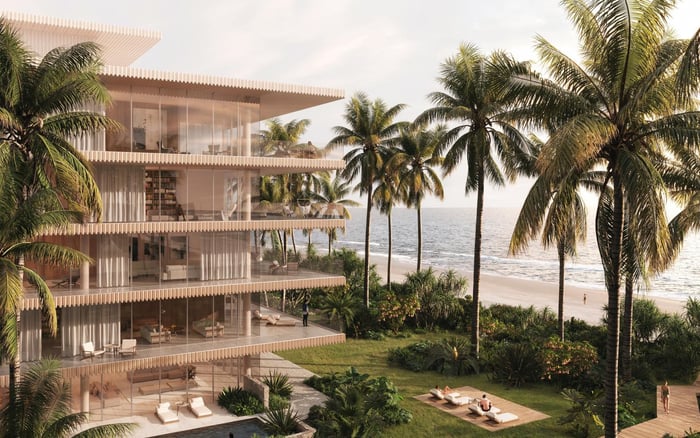
The first is view-led Oceanfront living: sunrise orientation, beach access, and the prestige of being directly on the Atlantic. This mindset commonly clusters in areas with global recognition, including Miami Beach, and in the rare pockets where the ocean is literally the front yard.
The second is boating-led waterfront: Intracoastal frontage, canal networks, and the ability to leave from a private dock on your own timeline. For many South Florida listings, boating infrastructure is not a bonus feature. It is a primary value driver for owners who want utility, not only scenery.
Branding by location matters as well. Palm Beach Island is widely recognized for a scarcity premium due to limited housing stock and wealth-driven demand. Enclaves like Manalapan are often discussed as trophy inventory: tight, waterfront-forward, and intensely lifestyle-specific. Fort Lauderdale’s luxury identity is closely tied to yachting and Intracoastal access, supported by a global marketing footprint. Miami Beach remains a deep, ocean-oriented market with a high-end condo ecosystem and an enduring luxury narrative.
Then there are micro-strips where the geography alone reads like an investment thesis. Hillsboro Beach’s Hillsboro Mile is frequently positioned as a narrow band of ultra-luxury homes between the ocean and the Intracoastal.
If your intention is to own a place-based asset, waterfront is the clearest expression of that thesis. The premium is not only for the view, but for irreplaceability.
If waterfront is fundamentally place-based, Golf communities are ecosystem-based. You are buying a home inside a private culture, and that culture usually brings rules, rhythms, and recurring costs that shape total ownership.
South Florida’s private golf landscape spans legacy clubs and newer concepts that blend golf with hospitality and wellness positioning. Communities like The Bear’s Club in Jupiter are widely known for exclusivity and limited residential inventory, with a social environment anchored by golf. Old Palm Golf Club in Palm Beach Gardens is also commonly highlighted among the county’s high-end golf addresses, reflecting the gravitational pull that long-established clubs can command.
Newer models have attracted attention for a different reason: the economics of access. Shell Bay in Hallandale Beach, positioned as a luxury club and residences concept, has been widely covered for its reported seven-figure initiation fee for club access, separate from purchasing a residence. Whether or not a buyer plans to join immediately, that headline reality reinforces a core point: in the Golf track, the purchase price is only one line item in the financial story.
Modern golf developments such as Panther National, marketed within Avenir in Palm Beach Gardens, are often associated with new-construction momentum and a contemporary lifestyle pitch. For some buyers, that positioning matters as much as course design. It can translate to cleaner architecture, updated layouts, and an amenity package that feels closer to a resort, without requiring a resort.
When Golf is central to your week, the club often becomes your social nucleus. When it is peripheral, the same ecosystem can read as a high carrying cost for optionality. Either way, a Golf home should be evaluated as a two-part asset: the real estate plus the membership economics.
Wellington is widely positioned as South Florida’s equestrian epicenter, supported by competition venues, seasonal circuits, and deep equine services. That infrastructure creates a form of value distinct from waterfront or club living. It is operational.
In the equestrian track, the residence is often the least complex component. The sophistication is in the compound: barn design, stall count, arena dimensions, footing, drainage, trailer access, and staff flow. Buyers routinely underwrite properties based on facility functionality as much as they do on interior square footage. This is why purpose-built equestrian compounds can command attention even when the main home is comparatively understated.
Neighborhood selection tends to be driven by proximity and zoning compatibility. Pockets such as Saddle Trail are often referenced for horse-friendly logistics and closeness to venues. For owners who travel with horses or host trainers and grooms, minutes matter. A beautiful house that adds friction to daily routines can become a liability, regardless of how well it photographs.
For many buyers, the equestrian track is also a privacy track. Land, setbacks, and controlled access are part of the appeal, along with the ability to build a lifestyle that feels insulated from seasonal crowds.
The best equestrian purchases are rarely defined by cosmetics alone. They are defined by whether the property performs under real use, day after day.
When buyers compare waterfront, Golf, and equestrian properties, the most productive question is not, “Which is best?” It is, “Where does the value originate?”
Waterfront tends to be dominated by place-based scarcity. The property itself is the amenity, and that amenity cannot be duplicated.
Golf is often defined by membership value. The best days can feel priceless, but the economics are ongoing, and the quality of the experience depends on the club’s culture and stewardship.
Equestrian value is operational utility. If the facilities match your needs, the property performs as a lifestyle platform. If they do not, you may find yourself spending heavily to retrofit a site that was never designed for serious use.
This framework also clarifies resale dynamics. A prime waterfront parcel can attract multiple buyer profiles: primary residents, second-home owners, and global buyers who simply want the address and the experience. A Golf home may sell best to those who actively want the club life, which can narrow the pool depending on initiation fees and dues. An equestrian estate may be a dream acquisition for the right buyer and effectively irrelevant to everyone else.
In practice, many households split life across tracks: an Oceanfront condo for winter and a Wellington compound for the circuit, or a Golf residence for community and a waterfront home for weekends on the water. The key is deciding which track is the anchor and which is the complement.
Across all three tracks, luxury positioning in 2025 and into 2026 has converged around a consistent set of priorities: indoor-outdoor living, wellness features, smart-home systems, and sustainability-forward materials.
On the waterfront, indoor-outdoor flow can be the difference between owning a view and living in it. Buyers pay close attention to glazing, wind considerations, and whether terraces function across seasons rather than existing as rarely used showpieces.
In Golf communities, wellness increasingly sits inside the club narrative, not only within private homes. Fitness, recovery, and spa-caliber amenities now share center stage with the traditional golf-and-dining model. For many buyers, that broadened program strengthens the community value proposition, especially when multiple members of the household want to use the club weekly.
In Wellington, smart systems and resilient materials tend to be practical rather than performative. Owners often prioritize climate control that performs reliably, durable surfaces that withstand active use, and a layout that keeps the residence elegant while accommodating the realities of barn life.
The through-line is discreet but decisive: luxury has shifted from ornament to performance. Beauty still matters. Buyers are simply less forgiving of homes that do not live well.
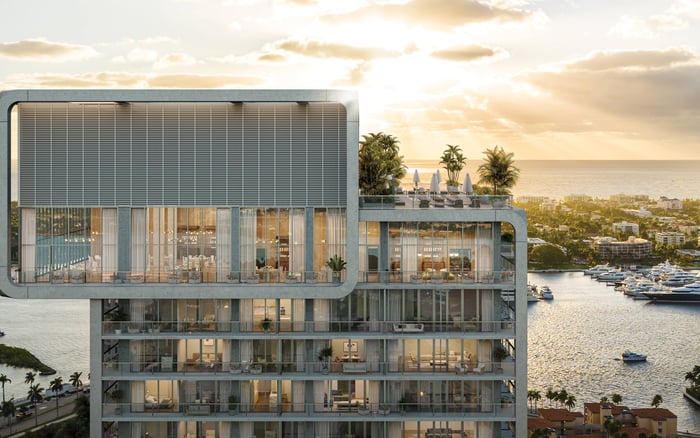
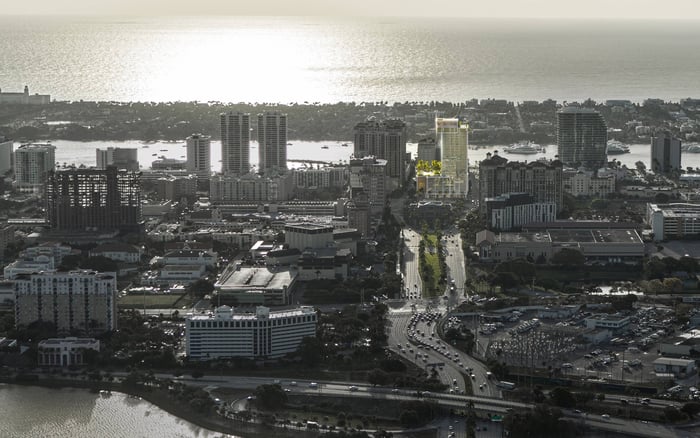
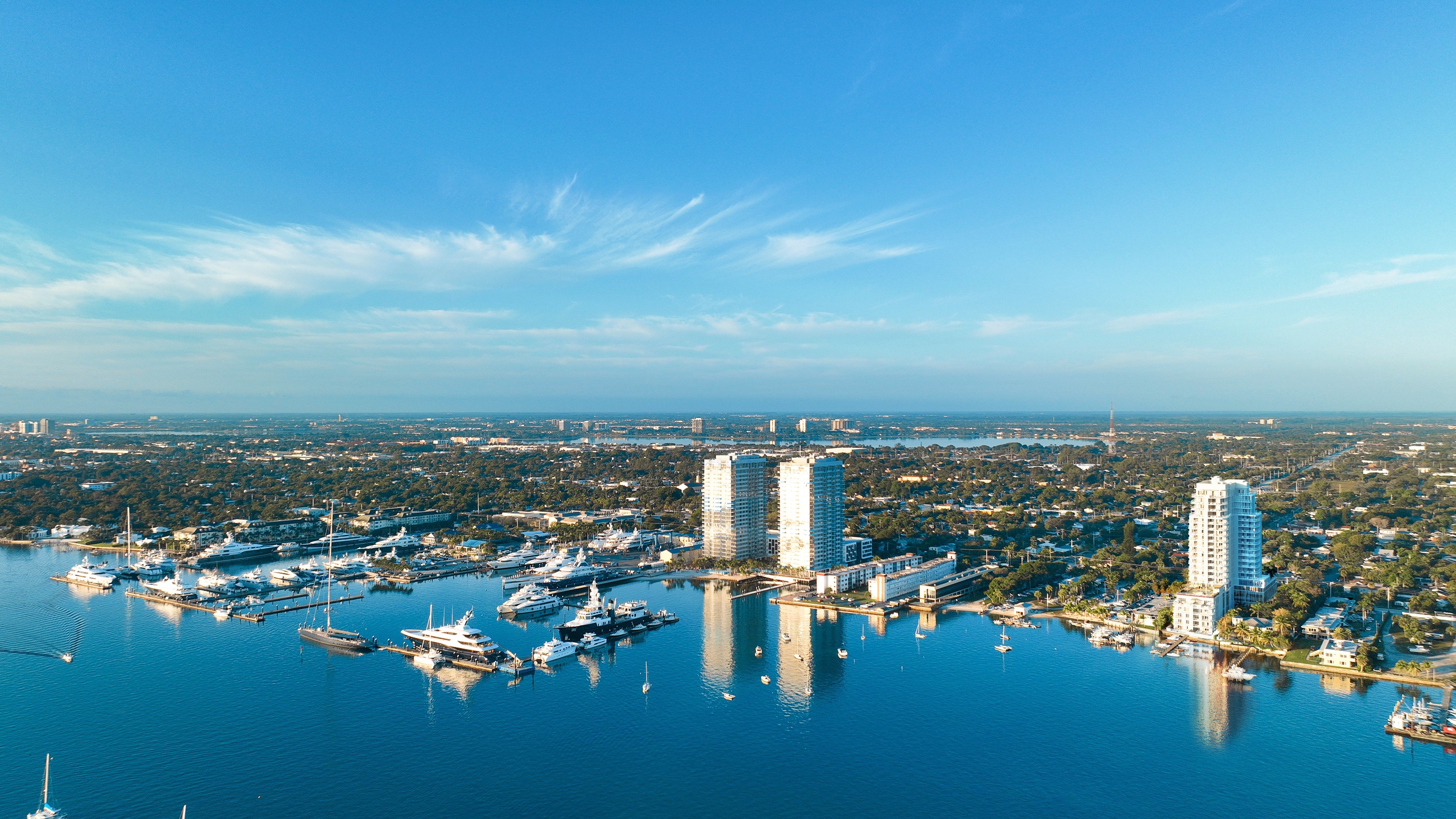
For buyers who want Palm Beach County proximity without the operational complexity of a large estate, new condominium inventory in West Palm Beach has become part of the decision set, particularly for lock-and-leave lifestyles.
Along Flagler Drive and the evolving downtown waterfront, the appeal is a blend of privacy, service, and access to culture and travel. It is also a way to align lifestyle with a lighter footprint: fewer maintenance variables, more predictable services, and the ability to arrive and depart without staffing up.
In that context, buildings like Forté on Flagler West Palm Beach reflect demand for modern, waterfront-adjacent living with a boutique sensibility. Nearby, Mr. C Residences West Palm Beach speaks to buyers who value hospitality DNA and a residence that operates like a well-run hotel suite, but with the privacy of ownership.
For those who prioritize brand-level service and a more formal residential experience, The Ritz-Carlton Residences® West Palm Beach positions itself in the market conversation as a service-led option. And for buyers drawn to design-forward new construction, Alba West Palm Beach can be considered within the same lifestyle set, particularly for owners who want contemporary lines and an amenity-rich environment.
These residences are not substitutes for an Oceanfront estate, a Golf compound, or a Wellington barn property. They are often complements, selected as a basecamp near Palm Beach, with the flexibility to pursue other tracks without carrying multiple single-family properties.
A refined decision still benefits from a disciplined checklist. Before committing, underwrite the realities that tend to surprise even experienced buyers.
Waterfront: Confirm the experience, not just the address. View corridors, noise patterns, wind exposure, and boating access can matter as much as frontage. If boating is a priority, evaluate the dock, lift capability, and the route to open water as carefully as the living room.
Golf: Treat membership as a second purchase. Initiation fees, annual dues, assessments, and the rules around membership transferability can shift the true cost of ownership. Spend time at the club at different hours and on different days to understand whether the culture fits your household.
Equestrian: Tour the facilities with a practitioner. Barn layout, arena usability, and logistics for trailers and staff are not cosmetic considerations. They determine whether the property performs as a working lifestyle asset.
Across all tracks, remember that luxury liquidity is not only about price. It is also about how many qualified buyers can imagine themselves living there without needing to redesign the property’s purpose.
What is the most “scarce” lifestyle track in South Florida? True Oceanfront and prime waterfront lots are inherently finite due to the fixed coastline and barrier islands, which is why scarcity often concentrates there.
Do golf communities hold value as well as waterfront homes? They can, but the value proposition is different. Golf pricing can be influenced by club prestige, culture, and membership economics, not only the underlying land.
Why do Wellington equestrian properties price differently from other estates? Because buyers often underwrite functionality. Barn and arena quality, logistics, and proximity to equestrian infrastructure can be decisive value drivers.
Is West Palm Beach a smart base for a multi-property lifestyle? For many buyers, yes. A lock-and-leave condo can function as a Palm Beach County anchor while you pursue waterfront weekends, Golf membership, or Wellington seasons.
To refine your next move across Oceanfront, Golf, or equestrian living, explore South Florida’s most compelling options with MILLION Luxury.
If branded residences are on your mind — as a home or as an allocation — we would be glad to share what we are seeing, privately.
Begin a quiet conversation