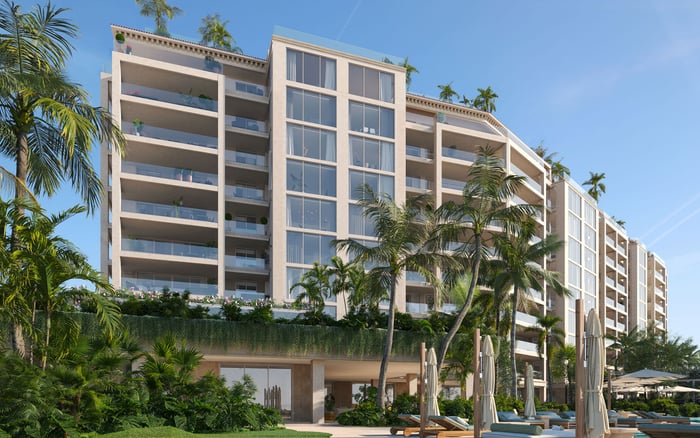
A document-first buyer guide to condominium ownership, governance, waterfront rights, carrying costs, and preconstruction diligence at three South Florida luxury projects.

In South Florida luxury real estate, the most important purchase question is often not simply what a residence looks like, but what ownership actually controls. That distinction matters at Glass House Boca Raton, Onda Bay Harbor, and Vita at Grove Isle because each asks buyers to look beyond lifestyle presentation and into enforceable ownership rights.
For sophisticated buyers, the ownership lens should move quickly from brochure language to recorded documents and binding agreements. A condominium interest typically pairs title to a private residence with shared interests in common elements, and the lived value depends on how the declaration, bylaws, rules, contracts, budgets, reserves, and association governance allocate control.
Luxury buyers often evaluate architecture, finishes, arrival experience, services, privacy, and views. Those elements matter, but they are not automatically ownership rights. A private elevator foyer, valet standard, pet policy, pool protocol, parking space, storage area, or amenity access arrangement should be traced to the governing documents and purchase agreements before it is treated as durable.
This is especially important in boutique condominium buildings, where a smaller ownership base can enhance privacy and exclusivity while also concentrating financial exposure. Fewer owners may mean fewer voices in governance, more meaningful voting blocks, and a higher per-owner share of premium services, insurance, staffing, maintenance, and future capital work.
Glass House Boca Raton should be evaluated as a luxury condominium interest rather than as a standalone private estate. Buyers are not purchasing fee-simple independence; they are entering a shared ownership structure where building systems, services, reserves, budgets, and rules shape daily life.
The practical review should begin with the declaration, bylaws, house rules, purchase contract, and any separate agreements covering parking, storage, services, or amenities. If a sales conversation implies a privilege, the next question is where that privilege appears in writing. Rental limits, pet policies, valet rules, privacy protocols, architectural controls, and amenity use should all be confirmed in the condominium documents rather than inferred from marketing language.
Governance deserves particular attention. Buyers should understand voting rights, association control, budget assumptions, reserves, insurance structure, and whether any management or operational rights are reserved during the early ownership period. In a compact luxury building, service quality can be a major attraction, but the cost of maintaining that standard is shared by the owner group.
Onda Bay Harbor belongs in a careful waterfront ownership conversation because water access can introduce rights and obligations that do not exist in a purely inland condominium. The appeal may be immediate, but the legal character of the waterfront experience should be verified line by line.
At Onda, dockage, marina-related rights, seawall obligations, water-access rules, and the legal character of any boat slips should be reviewed with care. A buyer should verify whether waterfront facilities are common elements, limited common elements, separately licensed rights, or controlled through a third-party or association agreement. The distinction can affect transferability, maintenance responsibilities, use restrictions, and long-term value.
Waterfront exposure also requires a clear view of carrying costs. Wind insurance, deductibles, reserves, maintenance planning, and future resilience work are not peripheral matters for a waterfront condominium. They belong at the center of the ownership conversation, especially in a boutique format where a smaller group of owners may share fixed costs.
Governance is equally important. Purchasers should examine association control turnover, management agreements, and owner rights to amend rules or terminate service contracts. Privacy may be one of the defining attractions of a boutique waterfront building, but privacy is sustained by documents, budgets, and disciplined management.
Vita at Grove Isle belongs in the same ownership conversation because buyers drawn to Grove Isle and Coconut Grove often care about privacy, arrival, access, water orientation, and residential separation within the city. Those qualities can be compelling, but the ownership analysis should remain document-first.
For Vita at Grove Isle, buyers should verify exactly how the condominium structure treats amenities, access, parking, guest protocols, service areas, waterfront or marina-related privileges, insurance, reserves, and capital responsibilities. If island lifestyle is central to the appeal, the documents should define what is private, what is shared, what is controlled by the association, and what may be subject to separate agreements or future rule changes.
This is where emotional appeal and legal ownership can diverge. A buyer may fall in love with the setting, but the lasting value of the residence depends on what the owner can use, what the owner must pay for, and what the association or developer can change.
For preconstruction buyers, the purchase contract can be as consequential as the floor plan. Buyers should scrutinize deposit timing, escrow treatment, default remedies, outside completion dates, and the developer’s rights to modify plans, specifications, or finishes.
The central issue is control. A preconstruction purchaser is often committing capital before the residence exists in final form. That makes outside completion dates, change rights, permitted substitutions, refund triggers, and default provisions essential. A luxury buyer should know not only what is promised, but what happens if timing, design, materials, or delivery conditions shift.
In South Florida, ownership cost is closely tied to insurance, reserves, staffing, maintenance standards, and capital planning. A lower-density building may feel calmer and more private, but it may also place a larger share of fixed costs on each owner. A waterfront building may offer rare lifestyle value, but it can also bring seawall, wind, flood, deductible, and resilience considerations into the budget.
The best diligence compares the residence, the building, and the association as one integrated ownership package. Price per square foot alone does not capture governance risk, service expectations, liquidity, rule flexibility, or future assessment potential. For a luxury buyer, the most elegant acquisition is the one where rights, costs, and lifestyle align.
What is the main ownership distinction for these properties? They should be evaluated as condominium ownership, where private residence title is paired with shared interests and association governance.
Why are condominium documents so important? They determine enforceable rights around amenities, rules, reserves, insurance, voting, parking, storage, and owner obligations.
What should Glass House Boca Raton buyers focus on first? Buyers should review the declaration, bylaws, rules, purchase contract, reserves, insurance, and any separate amenity agreements.
Why does boutique scale affect ownership? Boutique scale can enhance privacy, but fewer owners may share premium service costs and hold more concentrated voting influence.
What makes Onda Bay Harbor different from an inland condominium? Its waterfront context makes dockage, water access, seawall obligations, insurance, deductibles, and resilience planning central.
Are boat slips always owned with a unit? No. They may be common elements, limited common elements, licensed rights, or governed by separate agreements.
What should preconstruction buyers review carefully? Deposit treatment, delay remedies, default provisions, outside completion dates, and developer rights to modify plans or finishes should be reviewed closely.
How should buyers think about Vita at Grove Isle? Buyers should verify the island lifestyle through documents covering access, amenities, governance, costs, and any waterfront privileges.
Can marketing statements replace the condominium documents? No. Sales language should be confirmed in the governing documents and contracts before it is treated as an ownership right.
What is the best way to shortlist comparable options for touring? Start with location fit, delivery status, and daily lifestyle priorities, then compare stacks and elevations to validate views and privacy.
For a discreet conversation and a curated building-by-building shortlist, connect with MILLION.
If branded residences are on your mind — as a home or as an allocation — we would be glad to share what we are seeing, privately.
Begin a quiet conversation