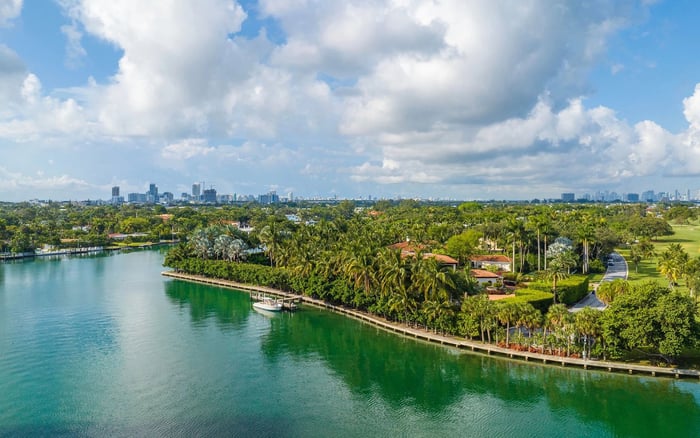
A refined guide for Buenos Aires buyers considering Coral Gables and greater Miami, with practical planning themes around ownership, family use, liquidity, privacy, and long-term stewardship.

For a Buenos Aires buyer considering Coral Gables, the purchase is rarely only about square footage, terraces, or proximity to the airport. It is a decision that touches family governance, banking, succession, privacy, currency exposure, and the practical rhythm of how a second home will be used. In South Florida’s upper tier, the strongest acquisitions begin well before a contract is signed.
Coral Gables holds particular appeal for buyers who want a residential setting with architectural character, established streetscapes, schools, clubs, dining, and a calmer atmosphere than the waterfront towers of the beach. Yet the same buyer may also compare Brickell for financial-district convenience, Coconut Grove for a more relaxed coastal village feeling, or Miami Beach for resort living. Each location can be compelling, but each requires a different ownership plan.
This is why cross-border planning belongs in serious Buyer's Guides, not as an afterthought but as the framework that makes the purchase durable. The purpose is not to slow the process. It is to make every decision, from title structure to insurance review, feel deliberate.
Before choosing between a single-family home, a boutique condominium, or a branded residence, define the role of the property. Is it a seasonal family base, a future primary residence, a legacy asset, or an investment with occasional personal use? The answer influences how the buyer should think about carrying costs, governance, financing, and exit strategy.
A family moving between Buenos Aires and Miami may prioritize bedrooms, parking, privacy, and flexible entertaining spaces. A buyer focused on capital preservation may weigh liquidity, building reputation, and neighborhood depth more closely. A parent purchasing for children may need a different approval, use, and management structure than a couple buying a personal retreat.
In Coral Gables, that conversation often points toward residences that feel residential rather than transient. Projects such as Ponce Park Coral Gables speak to buyers who want the Gables lifestyle in a more curated format, while The Village at Coral Gables aligns with those drawn to neighborhood texture and architectural continuity.
Cross-border buyers should assemble the advisory team early: local real estate counsel, tax professionals in relevant jurisdictions, banking contacts, insurance guidance, and estate planning counsel. The point is not to create complexity. It is to prevent a beautiful purchase from creating avoidable friction later.
Ownership can be held in different ways, and the correct choice depends on personal circumstances. Privacy, financing, succession, tax treatment, reporting obligations, and family control may all factor into the structure. A structure that feels simple on closing day may not be ideal if children inherit the asset, if the buyer later changes residency, or if the property becomes part of a broader family office strategy.
Buyers should also clarify who has authority to sign documents, move funds, approve inspections, and make time-sensitive decisions. In a competitive luxury market, elegant execution matters. Delays caused by unresolved documentation can weaken an otherwise strong offer.
Luxury buyers often focus on the property they want to own, but sophisticated cross-border planning also considers how the asset might one day be sold, leased, transferred, or retained by the next generation. Liquidity varies by neighborhood, building type, price point, view corridor, and buyer pool.
Coral Gables offers a different resale audience than Brickell, and Miami Beach differs again. A waterfront condominium with international recognition may attract one type of buyer, while a Gables residence near parks, dining, and schools may appeal to another. Neither is inherently better. The question is which asset profile fits the family’s plans.
For buyers who want a more urban, lock-and-leave format, Brickell remains a natural comparison. Cipriani Residences Brickell may appeal to those who value service, dining culture, and a financial-district address. The planning lens, however, remains the same: how will the property be used, funded, managed, and eventually transferred?
South Florida is not one market in lived experience. Coral Gables can feel composed and civic, Coconut Grove softer and more bohemian, Brickell vertical and connected, Miami Beach more resort-oriented and social. Buenos Aires buyers often understand neighborhood nuance instinctively, because lifestyle in a city is shaped by daily rituals as much as by prestige.
If the family expects long stays, proximity to schools, clubs, medical care, and familiar dining patterns may matter more than a dramatic view. If the property will be used for shorter visits, building services, valet, security, and maintenance simplicity may become central. If adult children or guests will use the residence independently, access and privacy should be considered from the beginning.
Coconut Grove frequently enters the conversation for buyers who like greenery, marinas, and a quieter coastal identity without feeling remote. Four Seasons Residences Coconut Grove offers an example of how service and neighborhood intimacy can coexist. For a more resort-centered rhythm, Miami Beach options such as The Ritz-Carlton Residences® Miami Beach may suit families who want privacy with hospitality-caliber support.
For condominium buyers, the building is part of the asset. Rules on leasing, guests, pets, renovations, deliveries, staffing, and amenity use can affect how comfortably the residence functions for an international owner. A buyer who plans to visit during holidays may care about guest policies and parking. A buyer who expects to renovate may need to understand approval timelines and contractor access.
Association financials, reserves, insurance posture, and maintenance obligations deserve close review. For a cross-border owner, predictability is especially valuable because issues can be harder to manage from abroad. A well-run building can reduce the operational burden. A poorly understood building can turn a simple second home into a recurring administrative task.
Single-family homes require a different diligence mindset. Landscaping, security, pool service, storm preparation, and routine maintenance need a dependable local system. The larger and more customized the property, the more important property management becomes.
International buyers should think carefully about timing. Currency movements, transfer logistics, bank compliance, deposit deadlines, and closing schedules can affect execution. None of these should be handled casually once a preferred property has been found.
Documentation should be prepared early and consistently. Names, entity documents, proof of funds, banking references, and signing authority should align across the transaction. In high-value purchases, clarity builds confidence for sellers and reduces stress for buyers.
Financing, if used, should be explored before the search becomes serious. Some buyers prefer cash for speed and certainty, while others use leverage as part of a broader asset strategy. Either way, the decision should be integrated with tax, estate, and liquidity planning rather than treated as a last-minute tactic.
A South Florida residence can become more than a warm-weather escape. It may become the family’s meeting point, an educational base, a future retirement address, or a store of lifestyle value across generations. That possibility makes succession planning essential.
The question is not only who owns the property today. It is who controls it if circumstances change, who pays expenses, who may use it, how decisions are made, and whether the property should be held, sold, or refinanced in the future. Families with assets in more than one country should avoid informal assumptions. Written plans preserve harmony.
For Buenos Aires buyers, the most elegant acquisition is one where the legal architecture is as considered as the interior architecture. Coral Gables may provide the emotional center, but the ownership plan provides the durability.
Should Buenos Aires buyers choose Coral Gables over Brickell? Coral Gables suits buyers seeking a residential, established atmosphere, while Brickell is better for a more urban, vertical lifestyle. The right choice depends on family use and long-term plans.
Is cross-border ownership planning only for very large purchases? No. Any international purchase can benefit from coordinated legal, tax, banking, and estate guidance before signing a contract.
Should a buyer decide the ownership structure before touring homes? It is wise to discuss structure early, even if final decisions come later. This helps prevent delays once a property is selected.
Can a South Florida residence be part of an investment strategy? Yes, but personal use, carrying costs, liquidity, and management needs should be assessed carefully before treating the property as an investment.
Are condominiums simpler than single-family homes for foreign owners? Often they can be easier to manage, but building rules, fees, insurance, and governance still require careful review.
Why do building rules matter for international families? Rules can affect guests, leasing, renovations, pets, deliveries, and day-to-day convenience. These details shape how the home actually functions.
Should buyers compare Coconut Grove with Coral Gables? Yes. Coconut Grove may appeal to buyers wanting greenery, marinas, and a relaxed village feel, while Coral Gables offers a more formal residential character.
Does Miami Beach require different planning? Miami Beach often emphasizes resort-style living, services, and waterfront lifestyle. Buyers should still review governance, insurance, and use patterns closely.
How early should banking logistics be addressed? Early in the search. Transfer timing, documentation, and deposit requirements can become important once negotiations begin.
What is the most important first step? Define the property’s purpose, then coordinate advisors around that purpose. The right home should fit both lifestyle and ownership architecture.
For a discreet conversation and a curated building-by-building shortlist, connect with MILLION.
If branded residences are on your mind — as a home or as an allocation — we would be glad to share what we are seeing, privately.
Begin a quiet conversation