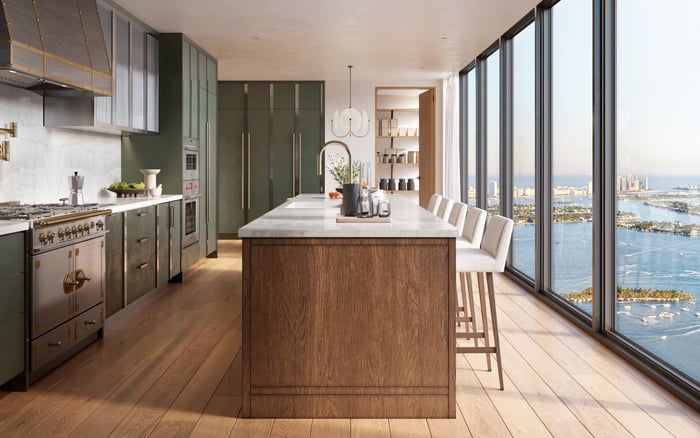
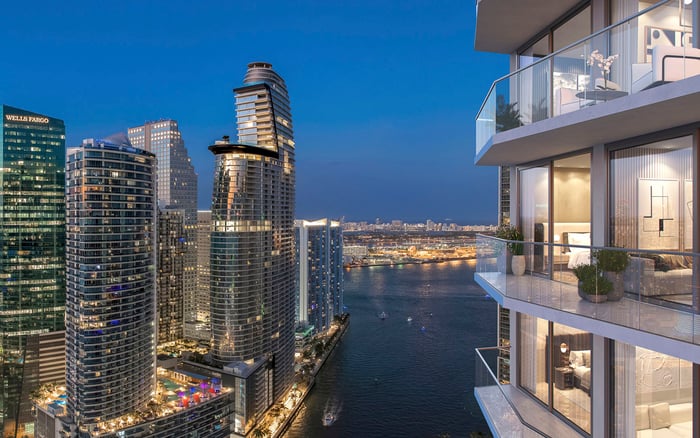
A practical luxury buyer’s guide to evaluating Edgewater on weekdays, when traffic patterns, service access, daytime noise, walkability, and building operations reveal the clearest picture of daily life.

Edgewater is often evaluated through water, skyline, architecture, and proximity. Those elements matter, particularly for buyers considering high-design residences with bay-facing terraces and hotel-level services. Yet the neighborhood’s true character is not revealed on a quiet Sunday morning or during a polished sales presentation. It is revealed on a Tuesday at 8:15 a.m., at lunch, at school pickup, during a late-afternoon storm, and after dinner as the district begins to settle.
For a serious purchaser, the question is not simply whether Edgewater feels desirable. The sharper question is whether it still works on weekdays, when life is less curated. A neighborhood can be beautiful and still create friction. It can offer compelling views and still require compromises in access, noise, service flow, and street-level comfort. The best buyers identify those tradeoffs before they fall in love with a floor plan.
This is especially important in a market where new-construction design has elevated expectations. A building may deliver privacy, wellness, parking, security, and amenities within its walls, but a residence is still lived from the outside in. The approach road, lobby arrival, walk to coffee, school departure, and evening return all shape whether a home feels graceful or effortful.
A single showing rarely tells the truth. A proper Edgewater evaluation should include at least four weekday windows: the morning outbound period, the midday errand period, the late-afternoon return, and an evening visit after the professional day ends. Each moment tests a different part of the neighborhood.
In the morning, study how the building releases residents into the city. Is valet moving with composure? Are cars stacking at the porte cochère? Does rideshare pickup feel intuitive or improvised? If you have a driver, ask where the car will actually wait without creating tension. If you drive yourself, test the first ten minutes of the route rather than imagining it from a map.
At midday, the neighborhood reveals its service texture. Observe delivery activity, dog walking, maintenance vehicles, grocery access, and the ease of moving on foot. A polished condominium lobby can feel very different when multiple vendors, residents, and guests converge at once. This is where a buyer begins to understand lifestyle in practical terms, not as a brochure word.
Late afternoon is often the most revealing. Heat, weather, traffic, school schedules, appointments, and building arrivals can overlap. The calmest residences are not always in the calmest settings. They are the ones where building operations absorb pressure elegantly.
Luxury buyers are trained to inspect finishes, ceiling heights, exposures, amenity decks, and views. In Edgewater, they should inspect the block with equal discipline. Stand outside for ten minutes and watch how people move. Are sidewalks comfortable? Are crossings intuitive? Does the street feel residential, transitional, or purely logistical? Does the entrance create a sense of arrival, or does it feel like a narrow pause in a busy corridor?
This is not about demanding suburban quiet from an urban waterfront neighborhood. Edgewater’s appeal is partly its urbanity. The goal is to decide whether the specific block supports the life you intend to live. A buyer who expects to walk daily, entertain frequently, host family, or work from home will read the same location differently than a buyer who uses the residence as a lock-and-leave base.
Residences such as Aria Reserve Miami have helped focus attention on the district’s vertical, view-oriented appeal. Still, even the most compelling tower should be evaluated through the daily choreography outside its front door. The question is not whether the project is impressive. The question is whether your personal routine feels supported by the surrounding streets.
Weekday Edgewater has a working layer that may not be obvious during weekend tours. Buyers should listen as carefully as they look. Stand on the terrace with the doors open, then closed. Visit the amenity levels, corridors, garage areas, lobby, and immediate streetscape. Notice whether sound is constant, intermittent, or tied to specific moments of the day.
Construction exposure deserves particular attention. Without relying on assumptions, look around from the unit, the amenity deck, and the street. If adjacent sites are active, ask direct questions about what can be seen, heard, and reasonably expected from the residence you are considering. Avoid vague comfort. The right inquiry is specific: what is directly beside, below, across, and within the sightline of the home?
This is where a buyer’s calm discipline protects value. A dramatic view can coexist with temporary disruption or long-term activity. Neither is automatically disqualifying, but both should be priced into your personal decision. Edgewater rewards the buyer who distinguishes between romance and routine.
The most elegant way to evaluate Edgewater is to live one ordinary weekday before purchasing. Arrive as if you already own the residence. Get coffee. Walk the dog if you have one. Take a work call from the lobby or amenity space. Drive to your office, school, club, marina, airport route, or preferred dinner neighborhood. Return at the time you actually return, not at the time the showing happens to be scheduled.
For waterfront buyers, the emotional pull of bay proximity is real. Water changes the mood of a home. It can make mornings quieter, evenings softer, and entertaining more cinematic. But water does not eliminate daily logistics. If you need seamless access to multiple parts of Miami, weekday testing is essential.
The same standard applies when comparing Edgewater with Brickell, Downtown Miami, Coconut Grove, Miami Beach, or other waterfront enclaves. Projects such as EDITION Edgewater may appeal to buyers who want a refined residential atmosphere with a hospitality sensibility, while Villa Miami speaks to those drawn to design, dining culture, and a more expressive urban identity. The location must still pass the weekday test for your household.
In a luxury condominium, operations are part of the asset. A buyer should ask how the building handles guests, deliveries, staff access, vendors, pets, bicycles, packages, valet, and private drivers. These details can determine whether the residence feels serene or crowded.
During weekday visits, observe staff posture and resident flow. A well-run building feels composed even when it is busy. Elevators arrive predictably. Valet communication feels orderly. Service entries are discreet. The lobby maintains privacy without feeling rigid. Security is present without becoming theatrical.
This is also the time to ask about move-in procedures, service reservations, amenity use, guest policies, and any rules that would affect the way you entertain or maintain the home. Buyers often focus on the most visible amenities first, yet the invisible systems can matter more over time.
A residence at The Cove Residences Edgewater may be considered by buyers prioritizing a more intimate relationship with the water and neighborhood scale. When comparing Cove Miami with larger high-rise offerings, pay attention not just to architecture but to daily circulation, privacy, and how the property absorbs weekday demand.
In Edgewater, view is a powerful driver of desire. It can justify a premium and anchor long-term satisfaction. But livability value is broader. It includes arrival, sound control, sunlight, privacy, elevator performance, parking ease, staff quality, pet logistics, delivery management, and the grace of leaving and returning each day.
The best purchase is not always the unit with the strongest first impression. It may be the residence with the best combination of exposure, floor height, quiet, access, and service. A buyer should compare units within the same building at different times of day, especially when choosing between lower floors with stronger neighborhood connection and higher floors with greater separation.
The most sophisticated Edgewater buyers do not ask, “Is this a good neighborhood?” They ask, “Is this the right weekday life for me?” That question is more personal, more useful, and more likely to produce a confident purchase.
After testing the neighborhood, translate observations into negotiation posture. If access, noise, construction exposure, or service flow introduces friction, the offer should reflect it. If the building performs beautifully under weekday pressure, that confidence may support a stronger bid.
Do not let a spectacular sunset erase what you observed at 5:30 p.m. Do not let a quiet weekend tour override a congested weekday arrival. Edgewater’s finest opportunities are best understood through repetition. Visit, return, compare, and ask practical questions until the residence feels as convincing on an ordinary weekday as it does in the first showing.
How many times should I visit Edgewater before making an offer? Visit several times across different weekday windows so you can observe access, sound, traffic, and building operations.
Is a weekend showing enough for an Edgewater condo purchase? No. Weekends can be useful, but weekday visits reveal the routines that will shape daily living.
What should I test first during a weekday visit? Test arrival and departure, including valet, rideshare pickup, garage access, and the first few minutes of your usual route.
Should I worry about weekday noise in Edgewater? You should evaluate it carefully from inside the residence, on the terrace, in amenity areas, and at street level.
How important is the exact block in Edgewater? Very important. Two buildings in the same neighborhood can feel different because of street design, access, exposure, and activity.
Can amenities compensate for a difficult weekday location? Amenities help, but they rarely erase daily friction if access, sound, or service flow consistently feels inconvenient.
What should work-from-home buyers prioritize? Prioritize acoustic comfort, reliable arrival for guests and deliveries, natural light, privacy, and usable indoor-outdoor space.
Should investors evaluate weekdays differently from end users? Yes. Investors should still assess weekday livability because tenant appeal and resale confidence often depend on daily ease.
Are higher floors always better in Edgewater? Not always. Higher floors may offer more separation, but the best choice depends on view, sound, elevator flow, and personal preference.
What is the best way to shortlist comparable options for touring? Start with location fit, delivery status, and daily lifestyle priorities, then compare stacks and elevations to validate views and privacy.
For a discreet conversation and a curated building-by-building shortlist, connect with MILLION.
If branded residences are on your mind — as a home or as an allocation — we would be glad to share what we are seeing, privately.
Begin a quiet conversation