Flood-zone exposure is not simply an insurance footnote for South Florida private-club buyers. It can reshape carrying costs, financing conversations, renovation planning, resale strategy, and the true premium of waterfront or low-lying club living.
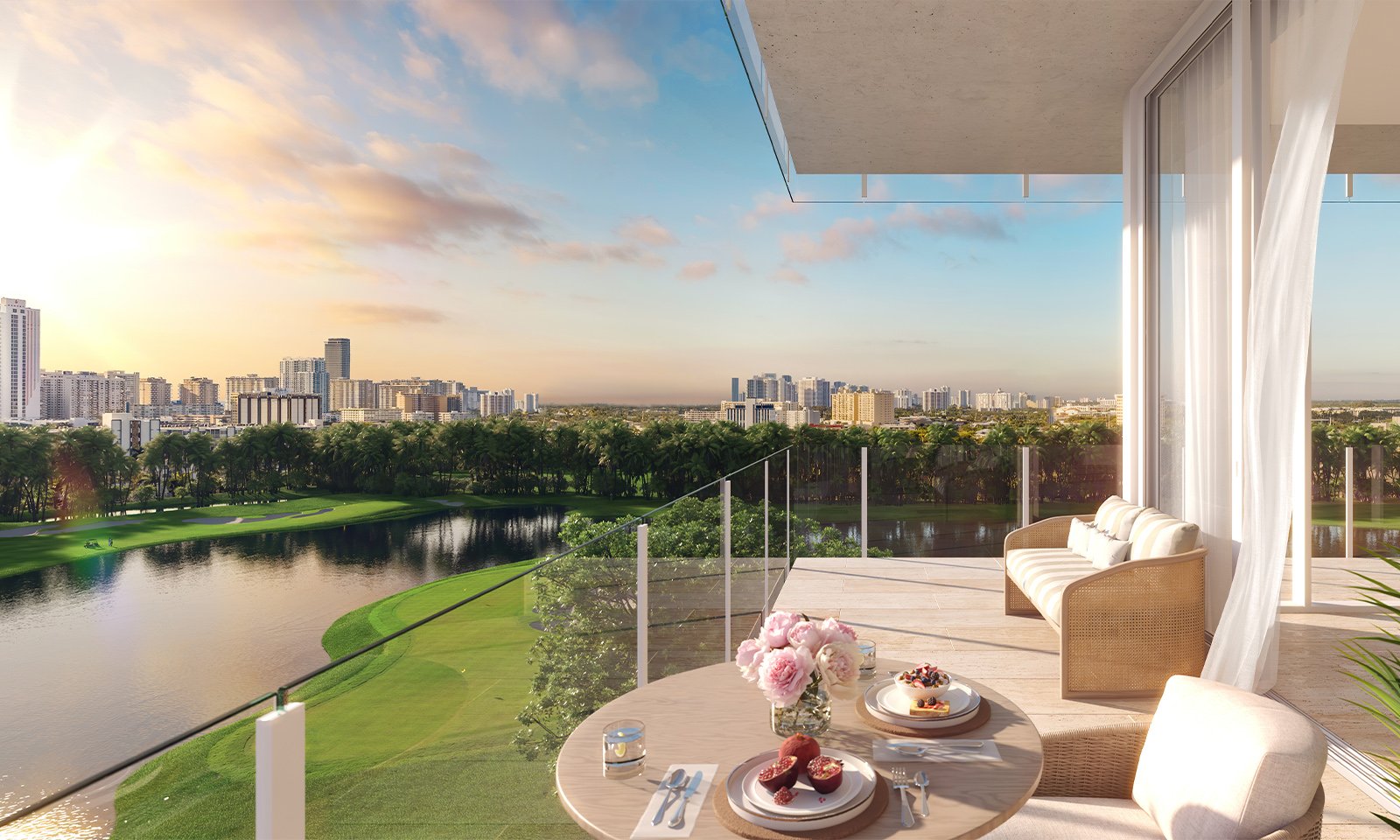
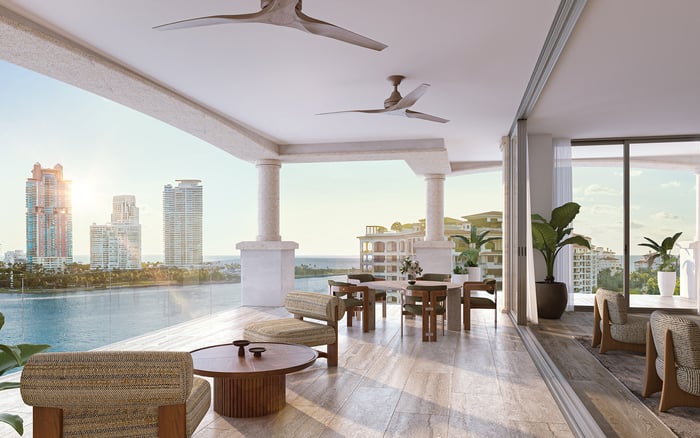
In South Florida’s private-club market, the most compelling homes are often those closest to the water, the fairway, the marina, or the quiet edge of a barrier island. That proximity is part of the allure. It is also where flood-zone exposure begins to shape the true cost of ownership.
For a buyer weighing a club residence with concierge service, resort-level amenities, and a coveted membership environment, the purchase price is only the first line of analysis. Flood exposure can influence insurance availability, premium volatility, lender scrutiny, reserve planning, renovation flexibility, and future buyer perception. None of those factors necessarily diminishes the appeal of a residence. In many cases, the lifestyle value remains exceptional. But the cost should be modeled with the same discipline applied to taxes, club dues, assessments, staffing, and maintenance.
The key is to separate romance from underwriting. A private-club residence can offer privacy, programming, security, sport, dining, and social continuity. Flood-zone exposure asks a different question: what will it cost to preserve that experience over time?
A residence may appear fairly priced on a per-square-foot basis and still carry a higher real cost because of its flood profile. Real cost includes annual insurance, potential deductibles, required elevation or mitigation measures, association planning, and the possibility that future buyers will apply their own discount or diligence premium.
This is especially important in the ultra-premium segment, where buyers often concentrate on finish level, view corridors, privacy, and access. Those elements matter, but they do not replace a careful review of flood maps, building elevation, garage placement, mechanical systems, drainage, seawall condition where relevant, and association reserves. In a condominium, the unit may be elevated and protected, while common areas, parking, storage, and building systems may carry a different exposure profile. In an estate setting, the house, guest structures, pool terrace, dock, and landscape can each present a separate cost consideration.
For waterfront buyers, the question is rarely whether water is desirable. It is how the waterfront condition is engineered, insured, maintained, and priced into the total ownership plan.
South Florida’s private-club residences are not a single category. A golf-oriented inland club, an oceanfront condominium with membership access, a private-island estate, and a marina-adjacent residence can each present a different relationship to water and risk.
At Shell Bay by Auberge Hallandale, the broader buyer conversation may center on the balance between club lifestyle and South Florida coastal due diligence. The name itself has become part of the region’s club-residence vocabulary, but any buyer still benefits from looking beyond the amenity package and into insurance, association obligations, and site-specific exposure.
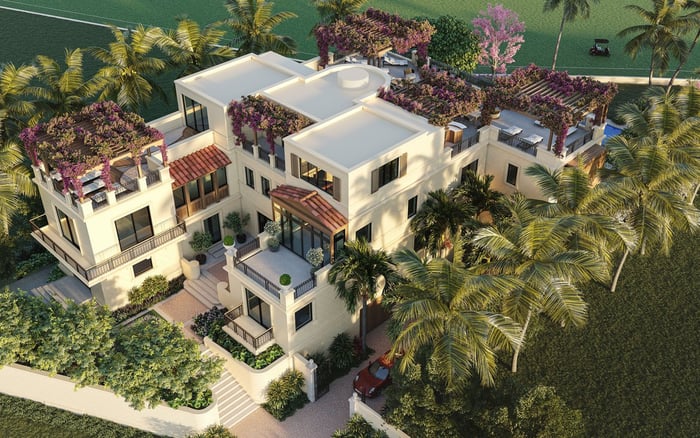
On Fisher Island, exclusivity and access create a different ownership calculus. A buyer considering The Residences at Six Fisher Island or The Links Estates at Fisher Island is not simply comparing residences. The buyer is comparing forms of privacy, transport, club culture, and long-term stewardship in a highly specialized island environment. Flood-zone review becomes part of understanding how the asset behaves through ownership cycles, not a reason to flatten the property into a generic risk category.
In Boca Raton, the discussion can shift again. A buyer studying The Residences at Mandarin Oriental Boca Raton may be weighing branded service, walkability, club access, and regional lifestyle against a different exposure profile than a barrier-island or direct-ocean purchase. Boca Raton remains a major luxury market, but no serious buyer should assume that one city label answers every flood question.
Insurance is the most visible place flood exposure enters the budget, but it is not the only one. A higher deductible can change the practical economics of a claim. A lender may require specific coverage or documentation. An association may need larger reserves if critical systems, lower levels, or site improvements require more attention. A future renovation may need to account for elevation, waterproofing, materials, or code requirements.
Private-club residences also introduce lifestyle continuity as a cost factor. If a storm event affects access roads, garages, service areas, landscaping, docks, golf facilities, or common amenities, the owner’s experience may be disrupted even when the residence itself performs well. For golf buyers, diligence should extend beyond the home and into course drainage, clubhouse positioning, maintenance standards, and the association’s approach to capital planning.
This is where affluent buyers often have an advantage. They can assemble the right advisers before contract execution. The strongest teams include insurance counsel or an experienced broker, a real-estate attorney, a lender familiar with coastal assets, an inspector who understands moisture and envelope issues, and, when appropriate, engineers for seawalls, drainage, or structural review.
Resale is not only about the next buyer’s taste. It is about the next buyer’s confidence. A well-documented residence with clear insurance history, organized association records, sensible reserves, and visible mitigation can make the flood conversation more manageable. A poorly documented property can invite hesitation, even if the setting is otherwise superb.
In the private-club tier, buyers are accustomed to paying for scarcity. They will pay for view, service, brand, security, and access. But they also expect clarity. If flood-zone exposure is handled transparently, it becomes one variable among many. If it is ignored until late diligence, it can become a negotiating point.
This does not mean waterfront or island residences should be avoided. Quite the opposite. Some of South Florida’s most desirable properties sit in environments where water is central to the experience. The stronger position is to understand the exposure, price it, insure it where possible, and align it with the intended hold period.
The most refined approach is not to ask whether a property is in or out of a flood zone as a binary test. Instead, ask five practical questions. What parts of the property are exposed? What coverage is available, and at what cost? What does the association or owner control directly? What capital work may be needed during the hold period? How will a future buyer interpret the same facts?
This is especially useful across buyer-guide conversations, because a private-club residence is both a lifestyle purchase and a balance-sheet decision. The right home should feel effortless once owned, but that ease is often the result of disciplined diligence before acquisition.
A buyer who loves a residence should not be deterred by complexity. Complexity simply needs to be converted into numbers, documents, and timelines. In South Florida, elegance and exposure often coexist. The sophisticated buyer learns how to own both.
Does flood-zone exposure automatically make a private-club residence a poor buy? No. It means the buyer should model insurance, reserves, financing, maintenance, and resale expectations more carefully.
Is purchase price enough to compare two club residences? No. The better comparison is total cost of ownership, including insurance, dues, reserves, taxes, upkeep, and potential mitigation.
Should condominium buyers review flood exposure if their unit is on a high floor? Yes. Common areas, garages, storage, mechanical systems, and association obligations may still affect cost and livability.
Can flood exposure affect financing? It can. Lenders may review insurance, building documentation, and coverage requirements as part of the approval process.
What should estate buyers examine beyond the main house? They should consider drainage, pool areas, guest structures, docks, seawalls, landscaping, access, and low-lying mechanical systems.
Do private-club amenities change the analysis? Yes. Clubhouses, courses, marinas, roads, and service areas can influence both lifestyle continuity and shared capital planning.
Is waterfront living still worth the added diligence? Often, yes. The value of view, access, privacy, and atmosphere can be substantial when the ownership costs are understood.
How can a buyer reduce uncertainty before contract deadlines? Assemble insurance, legal, lending, inspection, and engineering advice early, rather than waiting until late diligence.
Can strong documentation help resale? Yes. Clear records on insurance, mitigation, reserves, and maintenance can make future buyers more confident.
What is the most important mindset for South Florida club buyers? Treat flood exposure as a financial variable to be priced, not as a vague fear or an afterthought.
For a confidential assessment and a building-by-building shortlist, connect with MILLION.
If branded residences are on your mind — as a home or as an allocation — we would be glad to share what we are seeing, privately.
Begin a quiet conversation