A buyer-focused comparison of ORA by Casa Tua Brickell and Faena Residences Miami Downtown Miami for owners evaluating parking control, EV charging readiness, and private-driver flow.
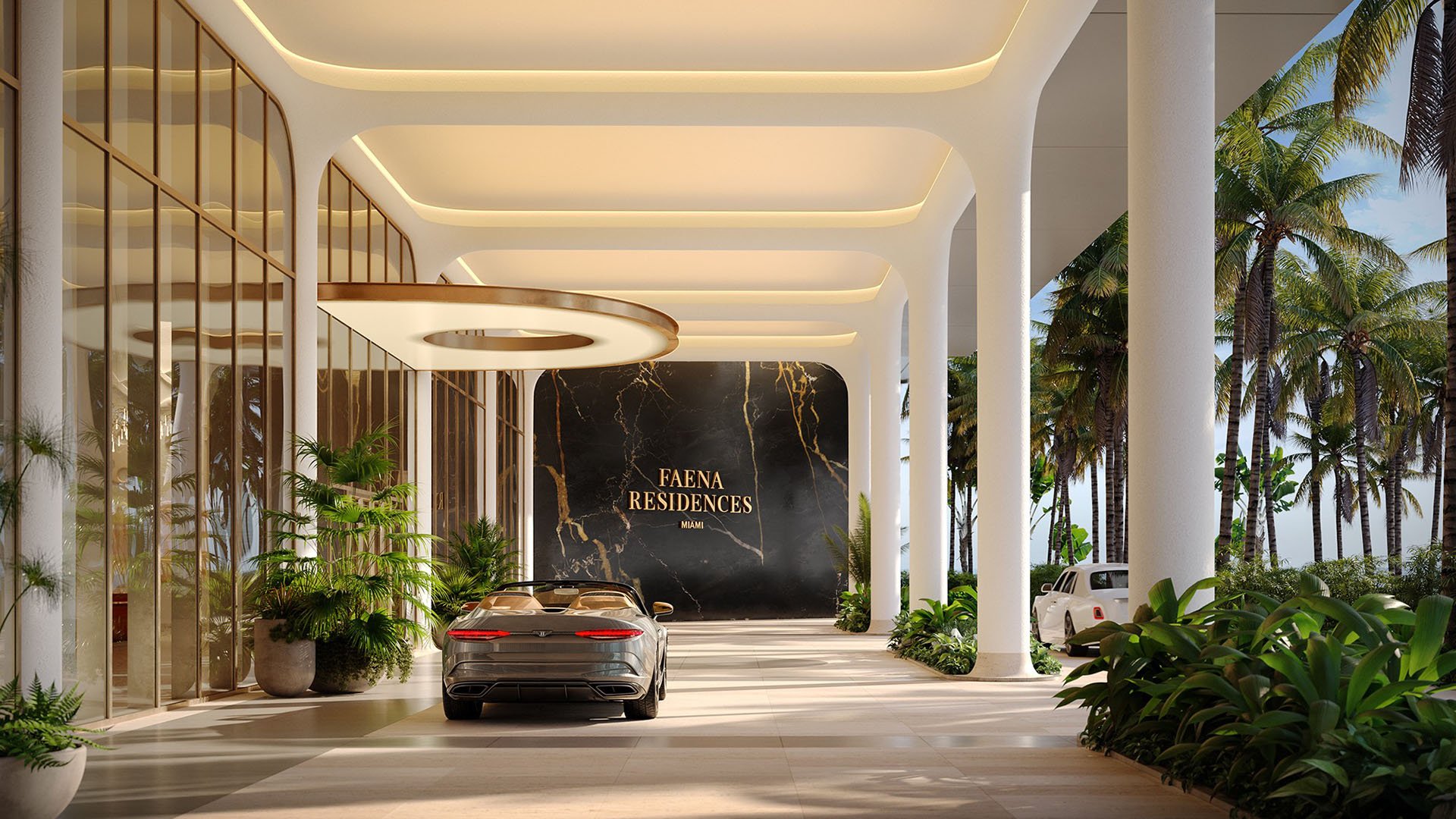
For many luxury buyers, a residence is no longer judged only by views, finishes, wellness programming, or dining pedigree. The quieter test is operational: where the cars live, how easily they can be charged, and how gracefully a driver can move through the building without making the owner’s day feel managed by the property rather than supported by it.
That is the real comparison between ORA by Casa Tua Brickell and Faena Residences Miami Downtown Miami. Both sit in dense, vertical Miami environments where arrival choreography matters. Yet the right choice for a buyer with collector vehicles, electric cars, a private driver, or frequent guest pickups is not simply a matter of which tower sounds more glamorous. It is a question of rights, routes, and daily friction.
In practical terms, ORA by Casa Tua Brickell is best framed for buyers whose lives orbit Brickell. Faena Residences Miami Downtown Miami is best framed for buyers whose schedules are more Downtown-oriented. For car storage, EV charging, and driver logistics, neither should be treated as superior until the buyer has reviewed the exact parking allocation, charger policy, valet protocol, service entry procedure, and building rules tied to the specific residence.
In ultra-premium urban condominiums, “parking” can mean several different things. A space may be assigned, deeded, licensed, valet-managed, tandem, reserved, or subject to association rules. For a buyer who keeps multiple vehicles, the distinction is not cosmetic. It affects control, resale clarity, guest flexibility, and the ease with which a household can manage daily movements.
A buyer comparing ORA by Casa Tua Brickell with Faena Residences Miami Downtown Miami should first ask whether the residence includes clearly identified parking rights and whether additional spaces can be acquired, leased, or requested. The next question is proximity: how close the space is to elevators, service corridors, or valet stations. A superb residence can still feel compromised if an owner’s vehicle is difficult to retrieve during peak arrival windows.
Collectors should also ask about ceiling clearances, access ramps, turn radii, storage restrictions, battery tender permissions, and whether long-term vehicle storage is treated differently from daily-use parking. These are not minor operational details. They define whether a building works for a family with one EV and a chauffeured SUV, or for an owner rotating among several vehicles.
EV charging is often discussed as if the presence of chargers solves the issue. For serious buyers, the more important question is whether charging is controlled, scalable, and tied to the owner’s actual parking rights. A building may offer communal charging, limited stations, valet-assisted charging, assigned charger capability, or infrastructure pathways for future installation. Each model creates a different ownership experience.
For ORA by Casa Tua Brickell, the key inquiry is whether an EV-owning resident can charge with minimal handoff and predictable availability within the building’s rules. For Faena Residences Miami Downtown Miami, the same standard applies. The buyer should ask whether charging is individually metered, whether installation requires board approval, whether load capacity is already planned, and whether future upgrades can be accommodated without disrupting the owner’s parking position.
This is especially important for Pre-construction and New-construction buyers because early documentation may evolve before delivery. A reservation conversation is not the same as a recorded right. Buyers should seek written clarity on charger allocation, billing, installation costs, maintenance responsibility, and whether valet or building staff are permitted to move vehicles for charging.
Nearby Brickell comparables such as Cipriani Residences Brickell and The Residences at 1428 Brickell reinforce a broader point: in Miami’s most vertical neighborhoods, electrical infrastructure and access choreography are becoming part of the luxury conversation, not back-of-house details.
A private driver changes the way a building is experienced. The owner may rarely think about parking, but will feel every weakness in the arrival sequence. Is there a protected place for a vehicle to wait briefly? Can the driver enter and exit without blocking residents or guests? Does the building have a clear protocol for luggage, security, vendor coordination, and airport timing? Are chauffeurs directed to the same areas as delivery vehicles, or is there a more refined flow?
In Brickell, daily circulation often centers on business appointments, restaurants, banking, law, finance, and short cross-neighborhood trips. For a buyer whose driver is constantly cycling through Brickell meetings, ORA by Casa Tua Brickell may have the more natural geographic logic because the residence is anchored to that lifestyle. The question is not whether Brickell is convenient in the abstract. It is whether the building’s arrival system supports repeated, discreet vehicle movements throughout the day.
In Downtown, the driver pattern can feel different. Faena Residences Miami Downtown Miami may suit a buyer whose routine is tied to Downtown dining, culture, waterfront movement, civic appointments, or frequent transitions between Downtown and surrounding districts. In that context, the value is not only the residence, but how smoothly the driver can time curbside arrivals and exits around the owner’s schedule.
A Downtown reference such as Aston Martin Residences Downtown Miami illustrates how this part of Miami increasingly attracts buyers who view the automobile experience as part of the residence’s identity. Still, the final judgment must come from the documents and a site-specific logistics review, not branding alone.
ORA by Casa Tua Brickell will likely appeal to buyers who want their residence embedded in the Brickell rhythm. That can be an advantage for owners who spend much of the week moving between offices, restaurants, wellness appointments, and social commitments within the neighborhood. Less distance often means fewer driver handoffs, shorter pickup windows, and simpler coordination.
For car storage, diligence should focus on allocation, expansion potential, and the level of control attached to the parking arrangement. For EV charging, the questions should be direct: what is available now, what can be installed, who approves it, and how electricity is billed. For private-driver service, the buyer should request a walkthrough of arrival, waiting, luggage transfer, guest pickup, and late-night return procedures.
The best ORA buyer in this category is someone who prizes immediacy. If the owner’s calendar is weighted toward Brickell, the building’s neighborhood position may reduce operational drag. But if the owner needs exceptional multi-car storage, dedicated charging at scale, or complex chauffeur coordination, the purchase should turn on the specific residence package and building rules.
Faena Residences Miami Downtown Miami is better framed for the buyer who wants a Downtown base and a more central urban Miami circulation pattern. If the household’s daily life points toward Downtown, the driver experience may feel more intuitive from this address. The same is true for owners who treat their residence as a stage for frequent arrivals, guest movements, evening plans, and carefully timed departures.
The diligence, however, is identical. Buyers should confirm whether parking rights are assigned clearly, whether guest and owner movements are separated when needed, and whether staff procedures protect privacy. For an EV household, the focus should be charging reliability, not simply charger presence. Can the primary vehicle be charged when needed? Can a second vehicle be supported? Is valet involved? Is the billing transparent?
Faena Residences Miami Downtown Miami may be the stronger emotional fit for a buyer who wants Downtown energy with a highly curated residential identity. Yet for mobility-dependent owners, the better fit is proven only when the building’s logistics are tested against the buyer’s real weekly schedule.
If the buyer’s life is concentrated in Brickell, ORA by Casa Tua Brickell has the stronger locational case. If the buyer’s pattern is more Downtown, Faena Residences Miami Downtown Miami has the stronger locational case. For car storage and EV charging, the decision should not be made on neighborhood alone. It should be made on written rights, physical access, charger infrastructure, staffing protocols, and privacy standards.
The most sophisticated buyer will compare both buildings through a simple lens: how many times per week a vehicle will be moved, charged, parked, retrieved, or staged for a driver. The residence that makes those movements feel invisible is the better mobility residence.
Which building is better for a buyer with multiple cars? The better choice is the one with clearer parking rights and enough capacity for the specific household. Buyers should verify allocation, access, and any option for additional spaces.
Is ORA by Casa Tua Brickell better for private drivers? It may be preferable for buyers whose schedules are primarily in Brickell. The building’s actual driver suitability depends on arrival, waiting, and valet protocols.
Is Faena Residences Miami Downtown Miami better for chauffeur circulation? It may suit buyers whose lives are centered in Downtown. The decisive factor is how the building manages curbside timing, privacy, and vehicle flow.
What should EV owners ask before purchasing? Ask whether charging is assigned, shared, valet-managed, individually metered, or subject to installation approval. Written rules matter more than verbal assurances.
Do Pre-construction buyers need extra diligence on parking? Yes. Pre-construction buyers should confirm parking, charger, and access terms in writing because early sales language can be less specific than final documents.
Why does New-construction status matter for EV planning? New-construction can allow more modern infrastructure planning, but buyers still need to verify capacity, billing, installation rights, and future upgrade procedures.
Should a buyer prioritize valet or self-parking? It depends on privacy, vehicle type, and usage frequency. Collectors often want more control, while driver-based households may prefer seamless staff coordination.
Are guest pickups important in this comparison? Yes. Frequent guests, family members, and staff can strain a weak arrival plan, so buyers should understand pickup zones and security procedures before contract.
What is the simplest way to compare the two? Map a normal week of vehicle movements, including charging, airport runs, school runs, office trips, and evening returns. Then test each building against that schedule.
What is the final buyer takeaway? Choose ORA for a Brickell-centered life and Faena for a Downtown-centered life, then let the parking documents and driver protocols decide the finer point.
For a discreet conversation and a curated building-by-building shortlist, connect with MILLION.
If branded residences are on your mind — as a home or as an allocation — we would be glad to share what we are seeing, privately.
Begin a quiet conversation