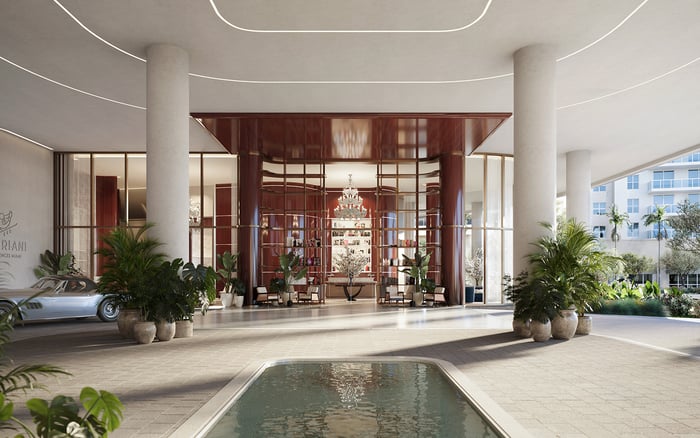
A practical buyer comparison of Cipriani Residences Brickell and ORA by Casa Tua Brickell, focused on service delivery, staffing, operating costs, governance, rental flexibility, and the level of household autonomy each lifestyle may support.
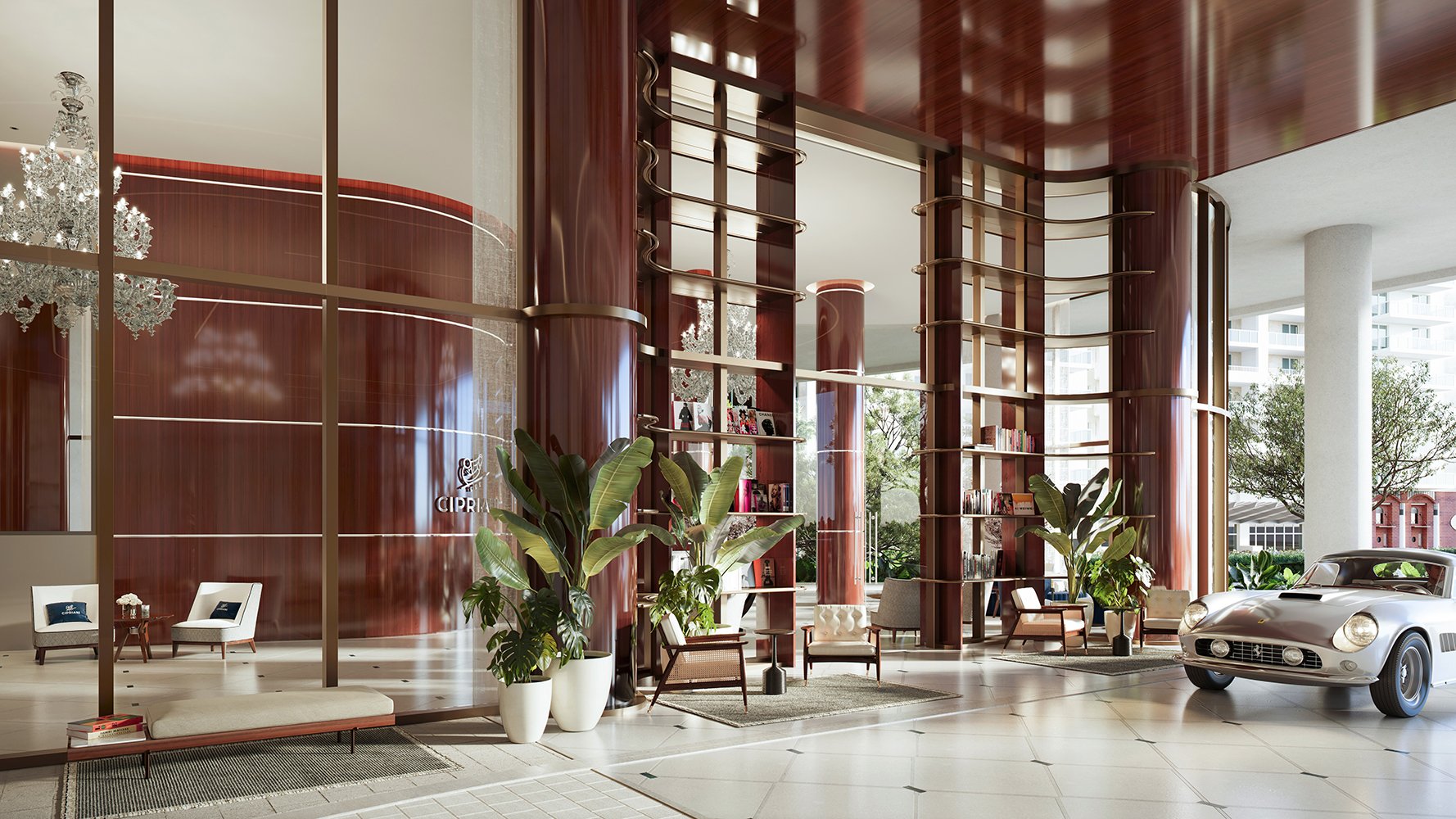
For luxury buyers in Brickell, the distinction between Cipriani Residences Brickell and ORA by Casa Tua Brickell is not simply which name feels more glamorous. Both are branded residential propositions tied to hospitality identities with strong emotional pull. The more useful buyer question is how that promise functions in daily life once the elevator doors open, the concierge desk is staffed, guests arrive, amenities are reserved, and residents begin paying for the service ecosystem.
That is where the comparison becomes most revealing. Cipriani Residences Brickell is framed as the more traditional private-residence model, with a classic hospitality overlay. ORA by Casa Tua Brickell is framed as the more experimental, mixed-use, hospitality-forward, and rental-flexible concept. Neither position is inherently better. They answer different versions of the same question: how much hospitality do you want inside the residential experience, and how much control are you willing to trade for it?
For New-construction and Pre-construction buyers, especially those evaluating Brickell as both a lifestyle base and an Investment, this is as much a governance and operating-model decision as it is a design decision.
Cipriani’s appeal rests on a familiar luxury language: discretion, polish, and a club-like sense of order. The likely culture is more old-world in tone, with a refined hospitality layer intended to enhance residence life rather than redefine it. For buyers who want service while still wanting the building to feel primarily like a private condominium, that distinction matters.
The practical advantage of this model is predictability. A more traditional residential framework can make daily routines easier to understand: arriving home, receiving guests, accessing amenities, coordinating valet, requesting assistance, and maintaining separation between private life and public energy. In Brickell, where density and movement are constant, a quieter service culture can be a luxury in itself.
The diligence question is whether the classic hospitality overlay is supported by staffing depth, service standards, and budgets that can endure beyond initial marketing. Buyers should ask how concierge, valet, amenity, butler-style, and food-and-beverage services are scheduled, managed, and paid for. A polished name has value, but the operating budget determines whether the experience feels seamless at 8 p.m. on a weekday or strained during peak building demand.
This is also why comparisons with other branded Brickell residences, such as St. Regis® Residences Brickell, often come down less to logo hierarchy and more to the specific condominium documents, service menus, staffing assumptions, and association economics.
ORA by Casa Tua Brickell speaks to a different buyer psychology. Its likely lifestyle culture is looser, more bohemian, and more culinary-driven. It is less about reproducing a private-club atmosphere and more about bringing the energy of hospitality and dining into a residential setting.
That can be compelling for owners who want programming, social texture, food-and-beverage access, and flexibility. ORA may appeal to buyers who see a Brickell residence as a dynamic urban platform, not only a private retreat. The rental-flexible aspect, while requiring careful document review, may also resonate with buyers who want more optionality in how the home is used over time.
The tradeoff is friction risk. Food-and-beverage programming and active common areas can make a building feel alive, but they can also alter the rhythm for long-term occupants. A buyer should ask: who uses the amenities, when are they busiest, how are guests controlled, and what parts of the building remain meaningfully residential? The right answer depends on the household. Some residents will prize the energy. Others will want clearer separation.
This is especially important for buyers thinking about Short-term-rentals or flexible use. The headline promise of flexibility is not enough. The rules, approval processes, fees, insurance obligations, staff responsibilities, and enforcement mechanisms will shape the owner experience far more than broad branding.
In dense Brickell towers, staffing density is not a back-office issue. It is the difference between grace and congestion. Front-desk teams, concierge staff, valet operations, amenity attendants, butler-style services, and food-and-beverage personnel collectively determine whether a building feels genuinely serviced or merely marketed as serviced.
Buyers comparing Cipriani and ORA should move past the phrase five-star and ask what is actually included. Are certain services funded through association dues? Are others billed as user fees? Are food-and-beverage experiences subsidized, independently operated, or separately charged? Is the service model dependent on high usage, resident participation, or commercial activity? These questions are not cynical. They are the foundation of ownership clarity.
This is where Brickell’s broader branded-residence landscape is instructive. Buildings such as Baccarat Residences Brickell and The Residences at 1428 Brickell show how buyers increasingly parse service identity, residential privacy, and operational substance with unusual care. In this market, the brand may open the conversation, but operations close the sale.
Household autonomy is the issue many buyers underweight during the sales process. It includes privacy, staff access to residences, package and delivery protocols, guest policies, rental rules, amenity reservations, housekeeping coordination, and the owner’s ability to decide how the home functions.
Cipriani’s more traditional framing may suit households that want a predictable private-residence environment, with service available when desired but not constantly shaping the building’s mood. ORA’s more hospitality-forward concept may suit households that welcome culinary programming, social movement, and flexible-use potential. Both can be luxurious. The question is which one feels like home after the novelty fades.
Buyers should review how service requests are placed, who enters the residence, how permissions are documented, whether staff access can be limited, and how guest traffic is managed. In a branded building, service should feel empowering, not invasive. The owner should know where hospitality ends and household control begins.
The most important period in a branded condominium is not always the launch. It is the period after residents move in, budgets are tested, association control evolves, and the real cost of branded-service commitments becomes visible. Long-term governance matters because residents ultimately bear the operating consequences.
A disciplined buyer should study the documents, not just the renderings. Ask how brand standards are maintained, how service contracts can be amended, what obligations survive transition, and how future boards may adjust services if costs rise. The best branded residences align aspiration with a durable operating structure. Weaker ones rely too heavily on ambiance.
Cipriani may be the more intuitive fit for a buyer who values privacy, order, and a refined residential cadence. ORA may be the more intuitive fit for a buyer who wants culinary energy, programming, and flexible-use potential. The sophisticated answer is not which brand is better. It is which operating model best matches the way your household actually lives.
Is Cipriani Residences Brickell more traditional than ORA by Casa Tua Brickell? Yes. Cipriani is framed as the more traditional private-residence model, with a classic hospitality overlay.
Is ORA by Casa Tua Brickell more hospitality-forward? Yes. ORA is framed as more experimental, mixed-use, hospitality-forward, and potentially more flexible in use.
Which building is better for privacy-focused buyers? Cipriani may appeal more to buyers who prioritize a predictable private-residence environment and a refined service layer.
Which building is better for social and culinary energy? ORA may appeal more to buyers who want lifestyle programming, food-and-beverage energy, and a looser residential culture.
Why does staffing matter so much in this comparison? Staffing affects the real daily experience, including front desk, concierge, valet, amenity, butler-style, and food-and-beverage service.
Should buyers focus mainly on the brand name? No. The key is how the brand translates into sustained condominium operations, budgets, rules, and service delivery.
What service-cost questions should buyers ask? Buyers should ask what is included in association dues, what is billed separately, and how optional services are priced.
Why is household autonomy important? It determines privacy, staff access, guest control, rental permissions, and how much authority owners retain over their home.
Can food-and-beverage programming create friction? Yes. It can enhance daily life, but it may also increase common-area activity and affect the residential mood.
What should buyers review before committing? Buyers should review condominium documents, rental rules, service contracts, fee structures, access policies, and governance rights.
If you'd like a private walkthrough and a curated shortlist, connect with MILLION.
If branded residences are on your mind — as a home or as an allocation — we would be glad to share what we are seeing, privately.
Begin a quiet conversation