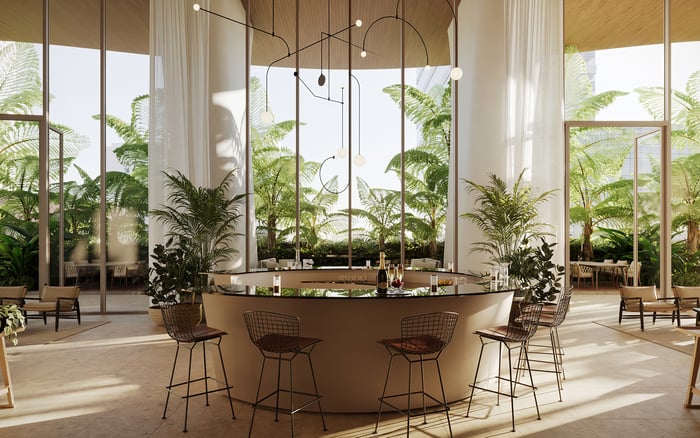
A buyer-focused editorial on why housekeeping options can become a decisive variable when evaluating House of Wellness Brickell and comparable luxury residences.

At the highest end of the South Florida condominium market, the buyer decision is rarely about finishes alone. Marble, glass, views, and design language create desire; service determines whether a residence becomes genuinely effortless. That is why the housekeeping conversation can become decisive for buyers evaluating House of Wellness Brickell and other wellness-led residences in the city’s most service-conscious neighborhoods.
Housekeeping is not merely a convenience. It touches privacy, daily rhythm, guest readiness, lock-and-leave confidence, and the emotional experience of arriving home. For a buyer who travels often, entertains discreetly, or uses a residence seasonally, the difference between ad hoc support and a carefully organized residential service culture can change the entire ownership calculus.
The point is not whether a buyer can hire help privately. In Miami, almost any affluent owner can do that. The sharper question is whether the building’s framework makes domestic care simple, secure, consistent, and aligned with how the owner actually lives.
Luxury buyers often compare floor plans, exposures, ceiling heights, and amenity decks first. Yet housekeeping options belong in the same tier of evaluation because they govern the daily performance of the home. A beautifully designed residence that requires constant coordination can feel less luxurious than a more intuitive one where routine upkeep is anticipated.
For buyers comparing House of Wellness Brickell with nearby offerings such as ORA by Casa Tua Brickell, the issue becomes lifestyle fit. Does the building support a quiet weekday reset? Can a residence be prepared before a late arrival? Is there a practical pathway for recurring care without making the home feel overly exposed to staff movement? These are not secondary questions for buyers who value discretion.
The best housekeeping arrangements make a residence feel fresh without making service feel visible. That balance is especially important in wellness-oriented living, where calm, order, and recovery are part of the promise. A clean home is not simply tidy. It is mentally quiet.
Housekeeping should be reviewed with the same discipline as maintenance fees, parking, storage, and building rules. The first question is flexibility. Some owners want daily attention; others prefer periodic deep care or pre-arrival preparation. A rigid program may suit one buyer and frustrate another.
The second question is privacy. Buyers should understand how access is managed, how staff are supervised, and whether service can be scheduled around sleep, work, training, family, or travel. For many ultra-premium buyers, the true luxury is not the availability of service. It is the ability to control when service disappears.
The third question is scope. Housekeeping may mean light residential tidying in one context and a more complete home-care program in another. Buyers should clarify what is included, what is optional, and what requires separate private staffing. Clarity before contract protects the feeling of ease after closing.
The fourth question is continuity. A primary residence may demand predictable weekly standards, while a seasonal residence may require preparation, inspection, and reset before and after visits. A building that understands both patterns can appeal to a wider range of ownership profiles.
Brickell has become a natural setting for buyers who want urban energy paired with polished residential support. In that context, housekeeping options are part of a broader service conversation. Buyers are not only purchasing square footage. They are selecting an operating environment for private life.
That is why comparisons with buildings such as Baccarat Residences Brickell or The Residences at 1428 Brickell often extend beyond architecture and views. The buyer may ask which residence feels more seamless, which one supports a calmer arrival, and which one best protects time.
For a new-construction buyer, the housekeeping question also reveals how carefully a project has considered operations. Service is not just an amenity menu. It is a building culture. The most compelling residences make the owner feel that daily care has been designed into the experience, not added as an afterthought.
Housekeeping matters differently depending on the intended use. For a primary home, the priority may be reliability and subtlety. The buyer wants an elegant baseline of order that supports work, family, wellness routines, and entertaining without constant personal management.
For a second-home, housekeeping can be the difference between a residence that feels ready and one that feels dormant. Seasonal owners often care deeply about the first ten minutes after arrival. Lights, scent, linens, kitchen condition, terrace readiness, and general freshness all shape the emotional value of the property.
For an investment-minded buyer, the issue is not only personal comfort. It is the long-term positioning of the residence. A building with a strong service identity may feel more compelling to future purchasers who prize ease of ownership. Even when rental strategy is not the goal, operational polish can influence desirability because it reduces perceived friction.
The key is alignment. A buyer who wants total privacy may prefer minimal building involvement and a private staff model. Another buyer may prize integrated support and the reassurance of a known service pathway. Neither approach is inherently superior. The right answer is the one that reflects the owner’s habits.
Before making a decision, buyers should ask practical questions in a calm, specific way. How is access authorized? Can service be paused? Are there preferred time windows? Is there a distinction between routine housekeeping, deep cleaning, and residence preparation? How are special requests handled when the owner is away?
They should also think about the physical design of the residence. Some floor plans make service feel natural, with clear circulation and separation between private and social zones. Others require more choreography. A buyer who entertains frequently may care about how quickly the residence can be reset after dinner. A buyer focused on wellness may care more about the bedroom, bath, wardrobe, and recovery spaces.
Finally, buyers should consider personality. Some owners enjoy managing every detail. Others want their home to perform quietly in the background. Housekeeping options help reveal which building philosophy best matches that temperament.
Housekeeping options can change the buyer decision because they translate luxury from an aesthetic into a lived experience. They affect how the home greets its owner, how it recovers after use, and how confidently it can be left behind.
For House of Wellness Brickell, the question buyers should bring to the table is direct: does the service environment support the way I intend to live? If the answer is yes, housekeeping becomes more than a line item. It becomes part of the residence’s private value.
Why do housekeeping options matter in a luxury condo purchase? They influence how effortless the residence feels day to day, especially for buyers who travel, entertain, or maintain multiple homes.
Should housekeeping be evaluated before contract? Yes. Buyers should understand access, scheduling, scope, and optional services before relying on the building’s service environment.
Is housekeeping only relevant for seasonal owners? No. Primary residents may value routine consistency, while seasonal owners may focus more on pre-arrival and post-departure care.
How does housekeeping relate to wellness living? A well-kept residence supports calm, order, and recovery, which are central to a wellness-led home experience.
Can a buyer use private staff instead of building-coordinated service? Often, buyers may prefer private staffing, but they should confirm building rules, access procedures, and operational expectations.
What is the most important housekeeping question to ask? Ask how service is managed when the owner is not present, because remote confidence is essential for many luxury buyers.
Does housekeeping affect resale appeal? It can contribute to perceived ease of ownership, which may matter to future buyers seeking a highly serviced residential environment.
What should a frequent traveler prioritize? Pre-arrival preparation, secure access control, flexible scheduling, and residence checks are especially important for frequent travelers.
How should privacy-focused buyers approach housekeeping? They should clarify staff access, notice procedures, preferred scheduling, and whether services can remain discreet and limited.
Is housekeeping more important than design? It is not a substitute for design, but it can determine whether an elegant residence feels genuinely effortless to own.
For a tailored shortlist and next-step guidance, connect with MILLION.
If branded residences are on your mind — as a home or as an allocation — we would be glad to share what we are seeing, privately.
Begin a quiet conversation