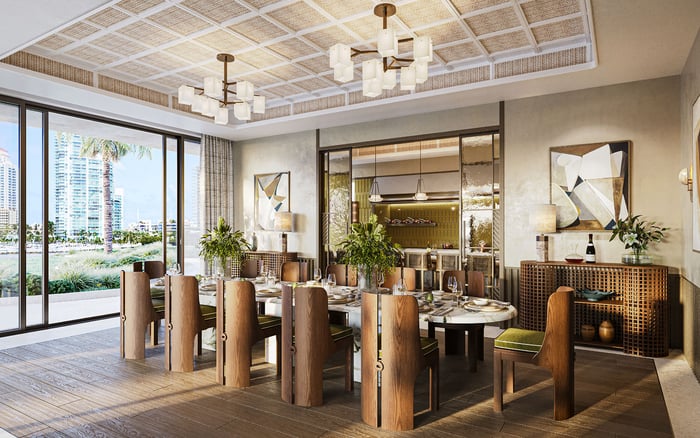
South Florida luxury buyers are elevating wheelchair-friendly circulation from a niche concern to a front-line lifestyle filter, especially in new and recently planned residences where arrival, elevator access, interior flow, bathrooms, and terraces can shape long-term ownership confidence.
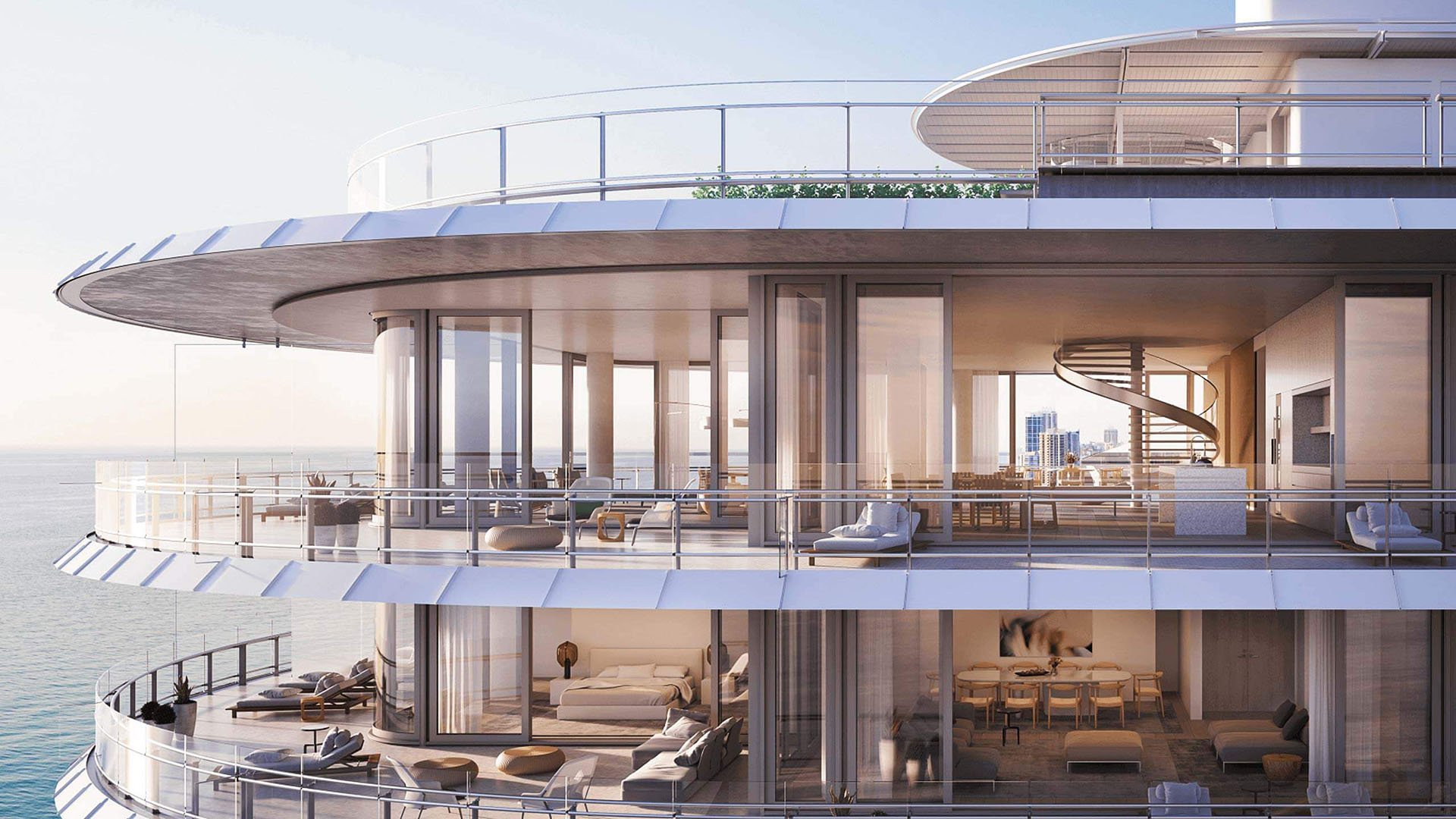
In South Florida’s luxury market, wheelchair-friendly circulation is becoming a quiet measure of architectural intelligence. The conversation is not confined to immediate medical need, nor framed as a concession. Increasingly, it is about how gracefully a residence allows people to move, host, recover, age, visit, and live without friction.
For 2026 buyers, the question is no longer simply whether a home is beautiful. It is whether that beauty holds up in motion. Can a guest enter without a step sequence that requires choreography? Does the elevator open into a corridor that feels generous rather than pinched? Can a principal suite function comfortably if mobility changes for a season, a decade, or a lifetime? These are discreet questions, but they now influence serious purchase decisions.
This is especially relevant in South Florida, where second-home ownership, multigenerational use, long-stay guests, wellness routines, and indoor-outdoor living often converge in a single residence. Circulation has become part of the luxury program, alongside view, privacy, service, and finish.
Sophisticated buyers are reading floor plans with a sharper eye. They are tracking the path from valet or garage to lobby, from lobby to elevator, from elevator to residence, and from residence to terrace. A property may photograph impeccably, but if movement feels interrupted, the impression changes quickly.
Inside the home, attention turns to clearances, door swings, threshold conditions, and the relationship between key rooms. The most persuasive residences do not announce accessibility as a feature. They simply feel composed. Rooms connect logically. Hallways allow ease. Bathrooms convey calm rather than constraint. Kitchens can accommodate more than one person in motion. Terraces are not treated as decorative appendages, but as usable extensions of daily life.
In vertical markets such as Brickell, buyers comparing residences like The Residences at 1428 Brickell are often considering the full sequence of living, not only the private residence. The elevator experience, the amenity route, the arrival rhythm, and the ability to move between social and private spaces all matter. A plan that works beautifully on paper still has to perform under lived conditions.
South Florida luxury ownership is unusually fluid. A residence may function as a primary home for part of the year, a family gathering point during holidays, a recovery retreat after travel or surgery, or a long-term base for owners who want fewer compromises over time. That flexibility is why wheelchair-friendly circulation is being treated less like a specialized request and more like a quality marker.
The region’s appeal also depends heavily on lifestyle transitions. A buyer may come for the waterfront, the arts, the schools, the tax environment, the marina culture, or the simple pleasure of winter light. Yet the residence must hold up through changing family dynamics. Grandparents, adult children, weekend guests, caregivers, trainers, private chefs, and visiting friends all use the same circulation paths. When those paths are generous, the home feels effortless. When they are not, even a spectacular view can lose some of its authority.
In Miami Beach, interest in residences such as The Perigon Miami Beach often sits within a broader desire for ease: beach access, privacy, hospitality-level arrival, and a home that supports both entertaining and retreat. Wheelchair-friendly circulation fits naturally into that desire because it strengthens long-term usability without diminishing design character.
The best wheelchair-friendly plans do not feel clinical. They feel resolved. A wider gallery can become a stronger art wall. A step-free terrace transition can make the ocean or garden feel closer. A more generous powder room can serve guests with greater dignity. A primary bath with clear movement can read as spa-like rather than utilitarian.
This is where luxury design is evolving. The old assumption was that accessibility had to be added, often awkwardly, after a need appeared. The more current approach embeds adaptability from the beginning. It is not about turning every residence into a care environment. It is about refusing to let preventable barriers interrupt an otherwise exceptional home.
For buyers reviewing new-construction opportunities, this lens can be particularly useful. Early-stage decisions may allow for more thoughtful review of door widths, bathroom layouts, appliance placement, terrace thresholds, and storage access. Even when a residence is already planned, asking these questions early can help distinguish between a home that is merely fashionable and one that is genuinely future-ready.
The most revealing spaces are rarely the most theatrical. Arrival comes first. If the route from car to residence involves awkward ramps, narrow passages, or unnecessary transitions, buyers notice. Elevators are next. The experience should feel private, intuitive, and unstrained.
The primary suite is another major test. Buyers are looking at the bed wall, closet access, bath entry, shower approach, and the distance between rest, dressing, and bathing. A suite can be lavish and still fail if movement feels forced. Conversely, a quieter plan with excellent circulation can feel more luxurious because it anticipates real life.
Terraces matter as well. In South Florida, outdoor space is part of the living room. A terrace that is difficult to reach, interrupted by a pronounced threshold, or too tight to navigate can feel less valuable than its square footage suggests. In Surfside, buyers considering residences such as The Delmore Surfside may naturally place terrace usability, privacy, and flow within the same mental category. The outdoor room has to welcome movement, not just photography.
The smartest question is not, “Is this accessible?” It is, “How does this home move?” That framing keeps the conversation elevated and practical. It invites the architect, developer, sales team, or designer to explain the residence as an experience rather than a checklist.
Buyers should walk the home slowly, with attention to turns, transitions, and the relationship between daily rituals. How does one move from entry to kitchen with luggage? From bedroom to terrace in the morning? From dining table to powder room during a dinner party? From elevator to guest suite with a visiting parent? These scenarios reveal more than a finish schedule ever can.
In Coconut Grove, a buyer studying Four Seasons Residences Coconut Grove may be weighing privacy, greenery, service, and a softer residential rhythm. The same circulation logic applies. A home that supports ease today is often the home that remains relevant tomorrow.
Even when buyers do not need wheelchair-friendly circulation now, they increasingly understand its resale logic. A home with fewer barriers can speak to a broader future audience. It can accommodate visiting family with less concern. It can reduce the need for disruptive renovation. It can make a residence feel more thoughtful, even to buyers who do not use the language of accessibility.
This does not mean every buyer will prioritize the same details. Some will focus on elevator access. Others will care most about bathrooms, terraces, or entry sequences. But the pattern is clear: movement is becoming part of due diligence. In the ultra-premium tier, where buyers expect refinement at every scale, awkward circulation is harder to excuse.
The most compelling residences will be those where accessibility, wellness, privacy, and design maturity are not competing ideas. They will feel inevitable. They will allow owners to live beautifully without asking the home for permission.
Why are buyers prioritizing wheelchair-friendly circulation in 2026? Buyers are viewing adaptable movement as part of long-term luxury, not just a response to immediate need.
Does wheelchair-friendly design make a residence feel less luxurious? Not when it is integrated well. Generous circulation often makes a home feel calmer, more elegant, and more resolved.
What should buyers examine first during a tour? Start with the full arrival path, including parking or valet, lobby, elevator, corridor, and private entry.
Are terraces part of wheelchair-friendly circulation? Yes. In South Florida, terraces are core living spaces, so access and usable movement matter.
Is this mainly relevant for older buyers? No. It also matters for guests, family visits, temporary injuries, multigenerational living, and future resale.
Can an existing condo be improved for better circulation? Sometimes, but structural limits, plumbing locations, thresholds, and association rules may shape what is possible.
What room reveals the most about adaptability? The primary suite often reveals the most because it combines bedroom, closet, bath, and daily routine.
Should buyers ask about accessibility directly? Yes, but they should also ask how the home moves from arrival to daily living and entertaining.
Do wider corridors always mean better design? Not by themselves. The best plans balance width, proportion, privacy, furniture placement, and natural flow.
How does this affect resale appeal? A residence with fewer movement barriers can appeal to a wider range of future buyers and family needs.
If you'd like a private walkthrough and a curated shortlist, connect with MILLION.
If branded residences are on your mind — as a home or as an allocation — we would be glad to share what we are seeing, privately.
Begin a quiet conversation