A buyer-focused comparison of how ORA by Casa Tua Brickell and Faena Residences Miami Downtown Miami approach private members clubs, branded living, and luxury identity in Miami.
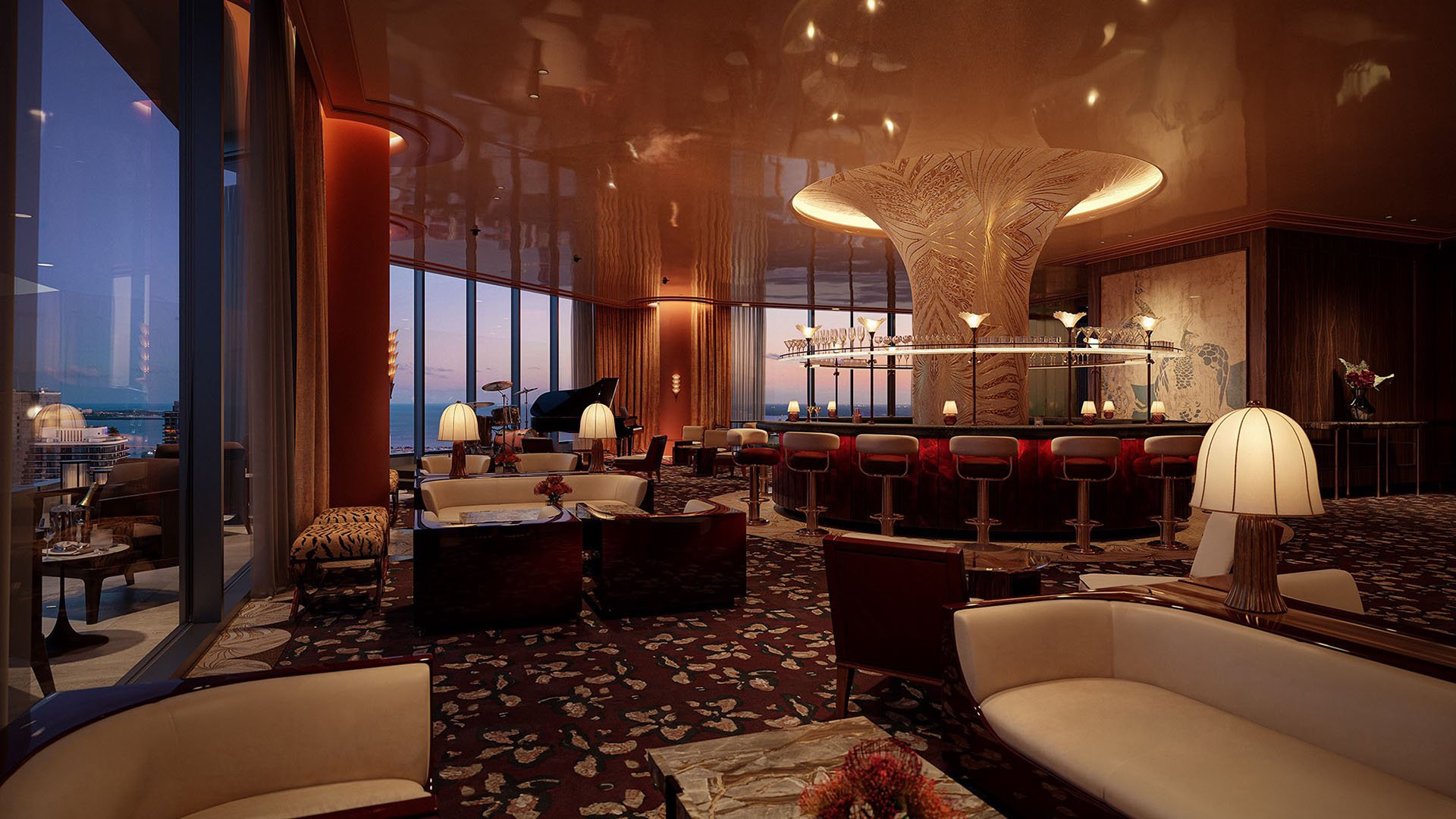
In South Florida’s highest residential tier, private club access has evolved from a welcome amenity into a defining proposition. Buyers are no longer judging a tower solely by its architecture, views, or service offerings. They are also asking what kind of social world comes with ownership, how curated that world feels, and whether the club experience is contained within the building or extends beyond it.
That is what makes ORA by Casa Tua Brickell and Faena Residences Miami Downtown Miami such a revealing comparison. Both projects belong in the ultra-luxury conversation. Both are branded. Both place private members-club identity at the center of their sales narrative. Yet each expresses that idea in a distinctly different way.
At ORA by Casa Tua Brickell, the appeal is tied to Casa Tua’s established hospitality and club universe, long associated with private dining, culture, and discreet social programming. At Faena Residences Miami Downtown Miami, the proposition is more internalized, with the club concept woven directly into the residential ecosystem. For buyers weighing Brickell against Downtown, that distinction is significant.
ORA offers a particularly clear example of a residence drawing strength from an existing private-club brand. Rather than relying on a conventional tower-only amenities story, the project links ownership to Casa Tua’s members-club lifestyle. The brand’s identity has long been associated with intimate hospitality, gardens, dining rooms, cultural gatherings, and a social rhythm that feels curated rather than crowded.
For the buyer, that means ORA is not simply selling square footage in Brickell. It is offering adjacency to a private social code already recognized in Miami. That matters because established club culture often carries a different kind of value than a newly created amenity package. It can feel more lived-in, more selective, and more immediately legible to an international buyer seeking a local network as much as a home.
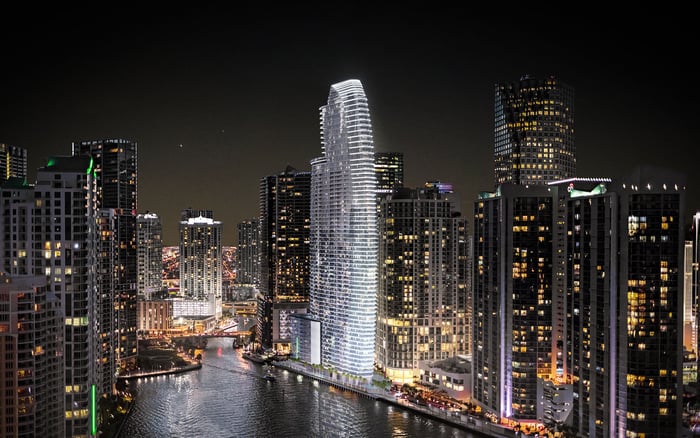
The project’s design positioning further reinforces that identity. ORA is associated with Rafael Viñoly, giving it a strong architectural signature within the Brickell market. In a neighborhood where branded living continues to evolve through projects such as 888 Brickell by Dolce & Gabbana and The Residences at 1428 Brickell, ORA stands apart by placing social belonging at the center of the ownership thesis.
The key nuance, however, is that the club integration is externally anchored. Casa Tua’s club identity is not merely an amenity floor inside the tower. It is a separate destination with its own atmosphere, traditions, and cultural relevance. Some buyers will see that as a strength because it extends daily life beyond the building. Others may view it as less seamless than a fully in-house model.
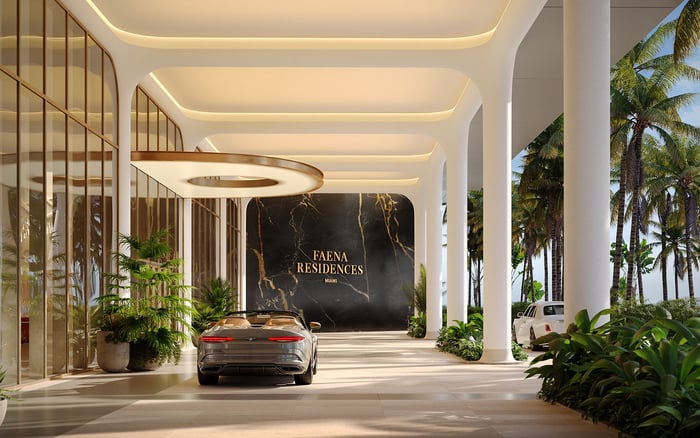
Faena approaches the same luxury question from a more integrated angle. Here, the private-club concept is positioned as part of the development itself, embedded within the residential environment rather than centered on a separate off-site social destination. From the outset, that gives the project a different tone from ORA.
Faena’s residential language is hospitality-driven. The emphasis falls on concierge-style service, lifestyle management, wellness, entertaining, and brand continuity. In practical terms, this can create a more frictionless ownership experience. The resident does not simply gain access to a club associated with the brand. The resident lives within an environment designed to make that club feeling continuous.
That continuity has strategic value in Downtown, where branded residential competition increasingly turns on immersive service ecosystems. Buyers comparing Faena with nearby icons such as Waldorf Astoria Residences Downtown Miami or Aston Martin Residences Downtown Miami are often choosing between different forms of branded immersion. Faena’s answer is theatrical, service-oriented, and internally choreographed.
The brand itself has long been associated with layered design, dining, entertainment, and a form of experiential luxury that feels more staged and enveloping than traditional clubland discretion. In residential form, that translates into a buyer proposition built around on-site convenience and a controlled atmosphere. Everything is intended to feel part of the same world.
For sophisticated buyers, the clearest way to understand this comparison is to separate destination value from embedded value.
ORA offers destination value. Ownership connects to a standalone private members-club identity with an established Miami social reputation. The emotional appeal is belonging not only to a building, but to a wider cultural orbit. The club experience carries a sense of movement through the city, from residence to private social setting, with dining and programming serving as essential parts of the ritual.
Faena offers embedded value. The private-club experience is folded into the residential setting, making access feel immediate, continuous, and operationally seamless. The emotional appeal is ease. Service, wellness, entertaining, and club identity are all meant to feel inseparable from the home itself.
Neither model is inherently superior. The distinction depends on how the buyer defines luxury. If luxury means belonging to an established social institution with a strong Miami identity, ORA has a compelling edge. If luxury means never leaving the branded environment to access the best parts of the lifestyle, Faena’s model is likely to be more persuasive.
In Brickell, club affiliation can serve as a counterweight to density. A tower may rise in the center of a fast-moving financial district, yet the right private-club association can make ownership feel more selective and socially rarefied. That is where ORA’s proposition becomes especially powerful. It transforms a Brickell residence into an invitation-only cultural narrative.
In Downtown, the conversation tends to favor integrated grandeur. Buyers often seek full-spectrum branded living, where architecture, service, entertainment, and club access align under a single operating philosophy. Faena fits that instinct naturally, positioning the club as an internal layer of everyday life rather than a separate destination.
This comparison also reflects a broader trend across Miami’s top market. Branded residences are increasingly competing on curation, community, exclusivity, and access, not simply finish levels or skyline exposure. The private members club has become a purchase driver in its own right, a shorthand for the kind of people, programming, and atmosphere a buyer expects to enter.
ORA is best understood as a fit for the buyer who wants a home linked to an already resonant social identity. The owner is not merely purchasing amenities. The owner is buying into a known cultural and hospitality universe, one that feels intimate, urban, and highly specific to Miami.
Faena is better suited to the buyer who prioritizes continuity and on-site orchestration. Here, luxury feels less like joining an outside circle and more like living inside a fully designed brand environment. For many global purchasers, that can be especially appealing because the service proposition is immediate and easily legible.
The essential question is simple: do you want your members-club life to extend beyond the tower, or do you want it woven into the tower itself?
What is the main difference between ORA and Faena in club integration? ORA connects residents to Casa Tua’s separate private-club world, while Faena positions the club experience within the residential environment.
Is ORA by Casa Tua Brickell more social or more residential in concept? It is distinctly social in concept, with ownership tied to a broader hospitality and members-club identity rather than a standard amenity-only approach.
Does Faena Residences Miami Downtown Miami emphasize on-site lifestyle? Yes. Its value proposition centers on hospitality continuity, service, and club access integrated into the project.
Which project better suits buyers who want seamless convenience? Faena is likely the stronger fit for buyers who prioritize immediate, in-house access to club spaces and hospitality-style services.
Which project may appeal more to buyers seeking Miami social cachet? ORA may resonate more with buyers who value connection to Casa Tua’s established dining, cultural, and private-club identity.
Is architecture part of ORA’s positioning? Yes. ORA’s association with Rafael Viñoly reinforces its design-forward profile in Brickell.
How does Downtown Miami shape Faena’s appeal? Downtown tends to reward fully integrated branded living, which aligns with Faena’s emphasis on an immersive residential ecosystem.
Does club location affect day-to-day lifestyle? It can. Off-site access may feel more socially expansive, while on-site integration may feel more immediate and consistent.
Is this comparison also about neighborhood lifestyle? Yes. Brickell and Downtown frame the ownership experience differently, which can influence how each club model feels in practice.
What should a buyer ask first when comparing these two projects? Ask whether you prefer a destination-based members club with a distinct city presence or a club environment embedded directly into the residence.
For a discreet conversation and a curated building-by-building shortlist, connect with MILLION Luxury.
If branded residences are on your mind — as a home or as an allocation — we would be glad to share what we are seeing, privately.
Begin a quiet conversation