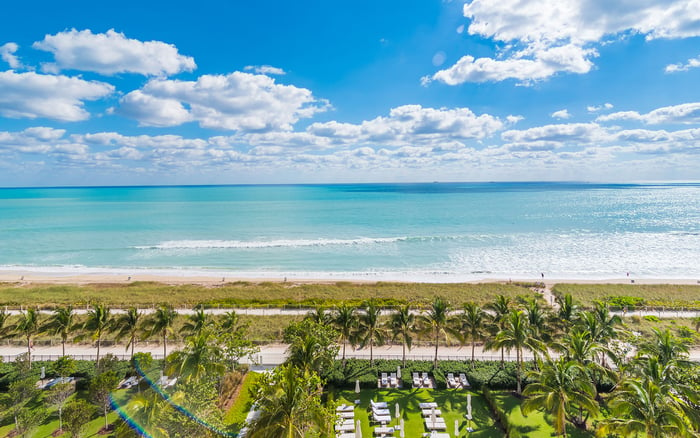
An editorial look at why trash-chute placement matters in branded oceanfront residences, using Four Seasons Fort Lauderdale as a lens for service, discretion, and long-term livability.

At Four Seasons Hotel & Private Residences Fort Lauderdale, the obvious conversation begins with the beach, the brand, and the promise of hotel-style service paired with private ownership. The more sophisticated conversation starts somewhere quieter: how the building moves refuse, staff, supplies, and daily friction out of view.
That is where trash-chute placement becomes a serious luxury issue. It is not glamorous, and it rarely appears in a sales-gallery narrative. Yet in a mixed hotel and private-residence property on Fort Lauderdale Beach, back-of-house planning is inseparable from the lived experience. A residence can have a beautiful entry sequence, polished amenity language, and oceanfront presence, but if the service systems are poorly resolved, the building reveals it in small, persistent ways.
Condo-hotel living depends on choreography. The best version feels effortless because the work is hidden. Residents should not experience refuse movement as sound, odor, traffic, heat, humidity, or staff congestion. In that sense, a trash chute is not merely a utility. It is a test of whether the building understands discretion.
Oceanfront residences in South Florida now compete on more than views. The premium market has moved toward branded residences, design-forward hospitality, and mixed-use beachfront development where restaurants, spas, pools, lobbies, and beach-club-style environments share the same vertical address as private homes. Four Seasons Hotel & Private Residences Fort Lauderdale sits squarely within that Broward evolution.
In this context, luxury is not only what appears in marble, millwork, and terrace glass. It is also what never interrupts the day. A well-planned refuse path reduces the chance that residents encounter service activity in the wrong place at the wrong time. It keeps the residential corridor from becoming an extension of housekeeping. It preserves the sense that ownership here is private, even when the larger property carries the energy and complexity of hospitality.
This is why the topic belongs beside more visible comparisons. Buyers may look from Fort Lauderdale to Auberge Beach Residences & Spa Fort Lauderdale or St. Regis® Residences Bahia Mar Fort Lauderdale and focus on amenity programming, marina or beach positioning, and brand language. The quieter differentiator is how each building resolves daily operations. A tower can feel serene only when its infrastructure is disciplined.
The question is not whether a chute exists. The question is where the chute room sits in relation to private entries, bedrooms, service elevators, mechanical zones, and amenity circulation. A poorly placed chute can create unnecessary acoustic transfer. A poorly detailed chute room can make odors harder to contain. A poorly routed refuse path can pull staff movement across resident-facing spaces that should feel calm.
In high-end mixed-use buildings, waste-handling infrastructure competes for space with the most marketable features: arrival lobbies, pool decks, treatment rooms, restaurants, lounges, and beach-oriented amenities. The commercial pressure is clear. Visible areas sell the dream, while service rooms sustain it. But the buyer who plans to live in the building, or hold it as a serious second home, should care about the invisible square footage as much as the photogenic square footage.
The technical concerns are broad: fire code, acoustics, odor control, pest control, maintenance access, service-elevator routing, staff logistics, and resilience during severe weather conditions. None of these should be treated as afterthoughts in a branded residence. They form the background against which everything else is judged.
The Four Seasons name changes the expectation. In a non-branded condominium, residents may forgive certain operational rough edges if the views, floor plans, and finishes are strong. In a branded hospitality environment, the promise is different. Service is not an accessory. It is central to the identity.
That promise makes invisible circulation especially important at Four Seasons Hotel & Private Residences Fort Lauderdale. The building’s residential experience depends on how seamlessly hotel functions and private ownership coexist. A resident should feel the benefit of service without absorbing the mechanics of service.
This is the same lens buyers use when comparing other South Florida luxury references, from the historic hospitality aura of The Surf Club Four Seasons Surfside to the more contemporary beachfront and urban branded-residence set across Miami Beach, Sunny Isles, and Fort Lauderdale. The strongest buildings do not simply offer amenities. They prevent operational overlap from diluting privacy.
A serious buyer does not need to make trash-chute placement the first question in a tour. But it should become part of the diligence conversation before contract, especially in a luxury tower where long-term livability matters as much as first impression.
Ask how refuse travels from each residential floor to collection areas. Ask whether chute rooms are buffered from residences and whether doors, seals, and ventilation strategies are designed to contain odor and noise. Ask how recycling is handled, how staff access the system, and whether maintenance can occur without creating disruption in resident-facing corridors. Ask how the building separates hotel operations from private residential circulation.
The goal is not to interrogate the property as if it were an industrial facility. The goal is to understand whether the architecture has respected the daily life of residents. A discreetly placed and well-managed chute room can preserve the quietness of a corridor. A thoughtful service route can protect arrival sequences. Proper access can make maintenance less visible. These are not small details at the top of the market. They are part of the luxury product.
Luxury resale often begins with what photographs well, but it is sustained by what owners feel over time. Buyers remember whether the elevator lobby is calm. They notice whether service activity stays in the background. They sense whether a building has been planned with enough discipline to handle daily life without tension.
That is why invisible infrastructure can become a proxy for construction quality, planning discipline, and long-term desirability. The best buyers know that a residence is not only a view corridor or a finish package. It is a system of thresholds, adjacencies, and routines.
This logic applies across the region. A buyer considering The Ritz-Carlton Residences® Fort Lauderdale may evaluate a different branded environment, but the same questions remain. How does the building protect privacy? Where do staff move? What systems are visible, audible, or avoidable? In a market where new-construction and branded inventory continue to define the ultra-premium conversation, the difference between good and excellent often hides in plain sight.
Trash-chute placement is a narrow topic only at first glance. At Four Seasons Hotel & Private Residences Fort Lauderdale, it opens into the larger question of how an oceanfront branded residence should behave. Does it remove friction? Does it conceal operational effort? Does it protect the dignity of private ownership inside a hospitality setting?
The answer will not be found in a single glamour image. It lives in floor plates, service paths, corridor acoustics, ventilation, maintenance protocols, and the hierarchy between public, private, and back-of-house space. The more expensive the residence, the more these subtleties matter.
True quiet luxury is not silence alone. It is the absence of avoidable disturbance. It is the confidence that the building has anticipated ordinary life with extraordinary care.
Why does trash-chute placement matter in a luxury residence? It affects noise, odor, staff circulation, and the overall sense of privacy in daily living.
Is there a verified trash-chute layout for Four Seasons Fort Lauderdale? The important buyer question is not a presumed layout, but how the building manages refuse, service access, and residential separation.
How does this relate to branded residences? Branded residences promise hotel-style service with private ownership, so back-of-house planning becomes part of the luxury experience.
What should buyers ask about chute rooms? Ask about adjacency to residences, door sealing, ventilation, acoustic control, and maintenance access.
Can trash-chute design affect resale value? Yes. Invisible infrastructure can influence long-term comfort, owner satisfaction, and perceived building quality.
Why is this especially relevant on Fort Lauderdale Beach? Beachfront mixed-use buildings combine private homes with hospitality, amenities, and service operations that must be carefully separated.
What is the risk of poor service routing? Poor routing can make resident corridors feel busy, expose owners to operational traffic, or reduce the sense of discretion.
Does a luxury brand guarantee perfect infrastructure? A brand raises expectations, but buyers should still ask practical questions about systems, circulation, and maintenance.
Should this concern outweigh views and amenities? No, but it should sit beside them because livability depends on both beauty and operational discipline.
What is the broader lesson for South Florida buyers? The most refined residences are judged not only by what they display, but by how well they hide daily complexity.
If you'd like a private walkthrough and a curated shortlist, connect with MILLION.
If branded residences are on your mind — as a home or as an allocation — we would be glad to share what we are seeing, privately.
Begin a quiet conversation