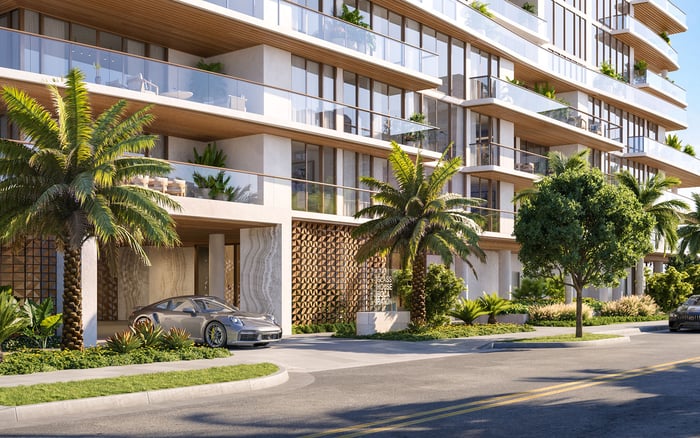
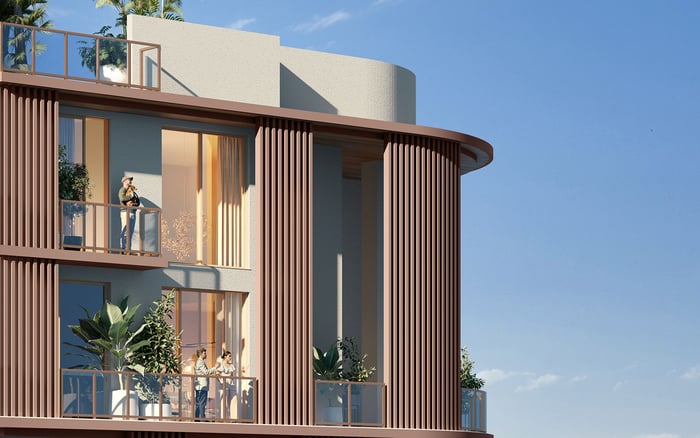
A buyer-focused comparison of Opus Coconut Grove and The Lincoln Coconut Grove, examining privacy, walkability, design, amenities, pricing, and resale positioning within Coconut Grove’s low-density luxury market.
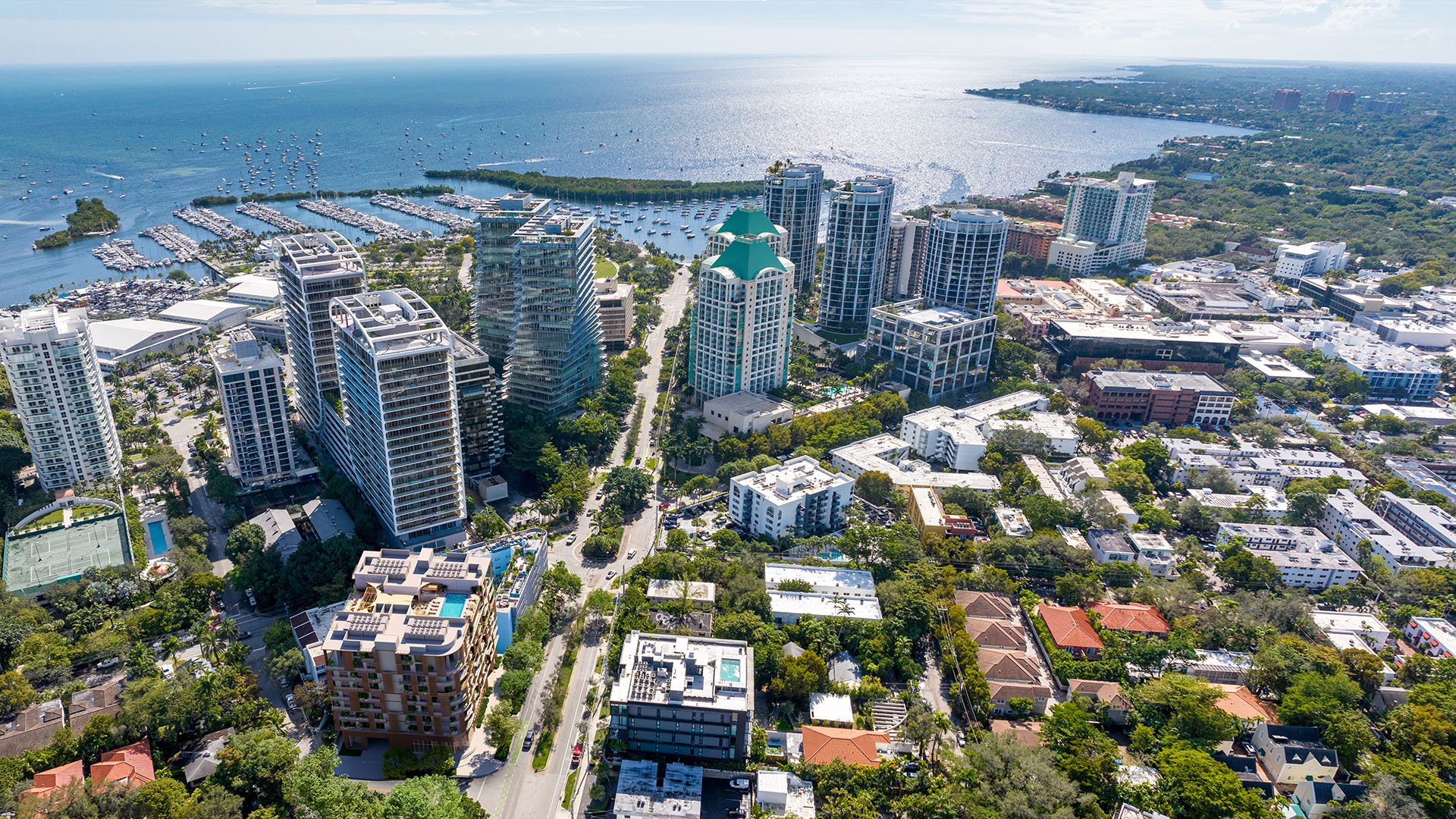
In a market increasingly defined by scale, Coconut Grove still rewards restraint. The neighborhood’s tree-canopied streets, historic prestige, and calmer residential rhythm create a different luxury proposition from Brickell or Miami Beach. Here, the most compelling addresses often feel less like vertical cities and more like private clubs with front doors.
That is precisely why Opus Coconut Grove and The Lincoln Coconut Grove command such focused attention. Both are conceived as low-density, ultra-luxury residential offerings with roughly 50 residences, a scale that immediately separates them from larger condominium product elsewhere in South Florida. For buyers seeking boutique living without sacrificing finish, service, or stature, these two projects sit at the top of the conversation.
Yet they are not interchangeable. Opus Coconut Grove is the more overtly water-view choice, oriented to South Bayshore Drive and the appeal of Biscayne Bay vistas, privacy, and a more insulated residential experience. The Lincoln Coconut Grove, by contrast, is shaped around Main Highway and the advantages of immediate village connectivity, where dining, shopping, and culture are woven into daily life.
For MILLION Luxury readers, the real question is not which project is objectively better. It is which interpretation of Coconut Grove luxury most closely aligns with how you want to live.
If location is lifestyle, Opus Coconut Grove and The Lincoln Coconut Grove begin from different definitions of privilege.
Opus Coconut Grove occupies a coveted South Bayshore Drive address in the waterfront district, with bay views forming a central part of its identity. That placement naturally appeals to buyers who value discretion, visual openness, and the restorative quality of water. The feeling is less about being in the middle of everything and more about hovering just outside it, with Coconut Grove available on demand rather than constantly at your doorstep.
The Lincoln Coconut Grove takes the opposite, equally refined approach. Positioned on Main Highway near the village, it offers a more connected expression of luxury, one where a morning coffee run, an evening dinner reservation, or a walk through the neighborhood becomes part of the residential experience. For owners who want their home to function as a seamless extension of village life, that is a meaningful advantage.
This distinction also helps place each project within the broader local context. Buyers considering Park Grove Coconut Grove or Mr. C Tigertail Coconut Grove often ask the same foundational question: do you want Coconut Grove to feel like a retreat, or like a daily social landscape? Opus Coconut Grove answers the first. The Lincoln Coconut Grove answers the second.
The design language reinforces that divergence.
Opus Coconut Grove is characterized by a minimalist, contemporary sensibility. Its homes are described as large-format residences and penthouses spanning roughly 3,000 to more than 7,000 square feet, with penthouses featuring 12- to 15-foot ceilings and open-plan layouts. The overall impression is edited and serene, with volume and light doing much of the luxury work.
The Lincoln Coconut Grove introduces a different form of sophistication. Its design is framed by a mid-century modern influence updated with contemporary materials and technology, a combination that feels especially at home in Coconut Grove, where legacy and modernity often meet gracefully. Residences are described as ranging from three- to five-bedroom penthouses to full-floor homes of roughly 3,500 to more than 8,000 square feet, giving it strong appeal for buyers who want true family-scale living in a highly serviced building.
For those who prioritize expansive layouts above all, The Lincoln Coconut Grove may hold a slight edge at the upper end of the size range. For those more compelled by pared-back contemporary calm, Opus Coconut Grove offers a notably focused identity.
Amenities are where the two developments become especially easy to distinguish.
Opus Coconut Grove leans into a private, highly curated wellness proposition. Its amenity program includes a fitness center, private spa and wellness spaces, wine storage, a private cinema, concierge services, and smart-home integration. The effect is intimate rather than performative. This is a building for owners who define luxury as control, comfort, and quiet personalization.
The Lincoln Coconut Grove is more outward-looking in spirit. Its amenities include a rooftop club, fitness center, spa, concierge services, and integrated smart-home systems, but its most distinctive advantage is marina access. Private marina access, water-sports facilities, and resident boat slips create a genuinely differentiated offering for buyers whose version of luxury includes movement on the bay, not simply views of it.
That lifestyle orientation matters. If your ideal residence resembles a sanctuary, Opus Coconut Grove is likely the cleaner fit. If your priorities include boating, active entertaining, and a stronger sense of daily engagement, The Lincoln Coconut Grove becomes increasingly compelling. In that sense, it shares some DNA with other water-oriented South Florida residences, though in a much more intimate Coconut Grove format than larger developments such as Vita at Grove Isle.
Launch pricing further clarified the intended buyer profile for each project.
Opus Coconut Grove was generally marketed from about $5 million to $15 million-plus, while The Lincoln Coconut Grove was generally positioned from about $4 million to $12 million-plus. Those ranges are directional rather than definitive in today’s environment, but they suggest a subtle hierarchy: Opus Coconut Grove tilts slightly more toward the buyer willing to pay a premium for waterfront privacy and a wellness-driven residential atmosphere, while The Lincoln Coconut Grove offers an equally elevated proposition with a somewhat broader entry point.
In practical terms, neither project was designed to compete on value in the conventional sense. Both are boutique, low-density residences that function as alternatives to denser luxury towers in Brickell and Miami Beach. The comparison is closer to curation than cost-cutting.
This is also why resale conditions matter. By 2026, both projects were largely sold and occupied, with constrained resale availability and select residences reportedly trading at or above original retail pricing. For buyers entering now, the challenge is often less about negotiating a broad inventory field and more about being ready when a suitable residence appears.
Opus Coconut Grove is the stronger match for purchasers who want a home to act as a decompression chamber. The bayfront orientation, quieter setting, and wellness-focused amenity package create a distinctly inward-looking luxury experience.
This is especially persuasive for second-home buyers, privacy-minded executives, and residents who view service as essential but social visibility as optional. If your ideal day ends with expansive water views, understated interiors, and building amenities that feel restorative rather than theatrical, Opus Coconut Grove is likely the more natural choice.
It also suits buyers who want Coconut Grove prestige without the sensation of being absorbed into its most active pedestrian corridors. That is a very specific luxury, and one increasingly difficult to replicate.
The Lincoln Coconut Grove is for the buyer who wants intimacy without isolation. Its village-adjacent setting, larger upper-end layouts, and marina-oriented amenity profile position it well for residents who expect their home to connect seamlessly with both land and water.
For boating enthusiasts, social households, and full-time owners who want daily walkability, the project may be the more complete answer. The presence of private slips and water-sports facilities gives it a lifestyle signature that is difficult to duplicate, even in a region crowded with luxury inventory.
It also carries the appeal of a residence that feels deeply integrated into the neighborhood rather than simply adjacent to it. For some buyers, that is the essence of Coconut Grove itself.
Between Opus Coconut Grove and The Lincoln Coconut Grove, the decision is not really about luxury level. Both occupy the same rarefied tier of low-density living, both are shaped for buyers who dislike oversized towers, and both benefit from Coconut Grove’s enduring appeal as one of Miami’s most residentially elegant enclaves.
The cleaner divide is this: Opus Coconut Grove prioritizes privacy, wellness, and water-view serenity. The Lincoln Coconut Grove prioritizes walkability, marina access, and an active village-meets-water lifestyle.
For the buyer who wants a quiet retreat with a contemporary minimalist edge, Opus Coconut Grove may feel almost custom-made. For the buyer who wants a boutique residence embedded in the social and nautical life of the neighborhood, The Lincoln Coconut Grove makes a compelling case.
Is Opus Coconut Grove more private than The Lincoln Coconut Grove? Generally, yes. Opus Coconut Grove is positioned as the more waterfront- and privacy-oriented choice, with a quieter, retreat-like character.
Is The Lincoln Coconut Grove better for walkability? Yes. Its Main Highway setting near the village gives it a stronger connection to restaurants, shopping, and cultural destinations.
Which project is better for boating? The Lincoln Coconut Grove stands out for boating, thanks to private marina access, water-sports facilities, and resident boat slips.
How large are residences at Opus Coconut Grove? Residences are described as ranging from roughly 3,000 to more than 7,000 square feet, including penthouses.
How large are residences at The Lincoln Coconut Grove? Residences are described as spanning roughly 3,500 to more than 8,000 square feet, including full-floor homes and penthouses.
Does Opus Coconut Grove emphasize wellness amenities? Yes. Its amenity mix centers on fitness, spa and wellness spaces, wine storage, concierge service, and other private-use comforts.
Does The Lincoln Coconut Grove have smart-home features? Yes. Integrated smart-home systems are part of its broader luxury amenity offering.
Were these projects positioned as low-density buildings? Yes. Both have roughly 50 residences, which is notably intimate compared with many larger Miami towers.
Is resale inventory easy to find at either project? No. Availability has been limited, and select residences have reportedly traded at or above original retail pricing.
Which project should a second-home buyer choose? It depends on lifestyle. Buyers seeking a quiet bayfront retreat may prefer Opus Coconut Grove, while those wanting village activity and marina access may favor The Lincoln Coconut Grove.
If you'd like a private walkthrough and a curated shortlist, connect with MILLION Luxury.
If branded residences are on your mind — as a home or as an allocation — we would be glad to share what we are seeing, privately.
Begin a quiet conversation