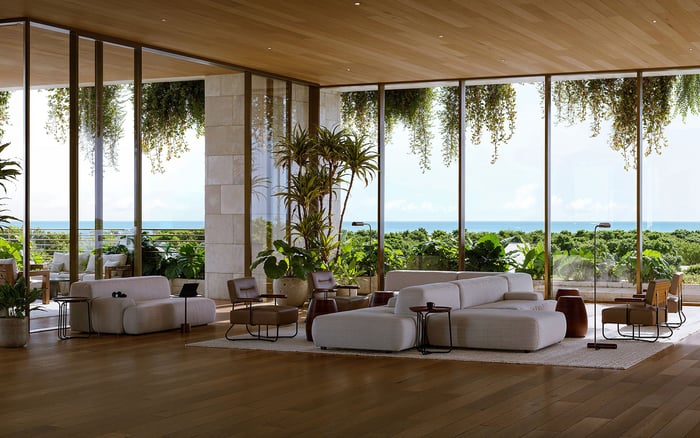
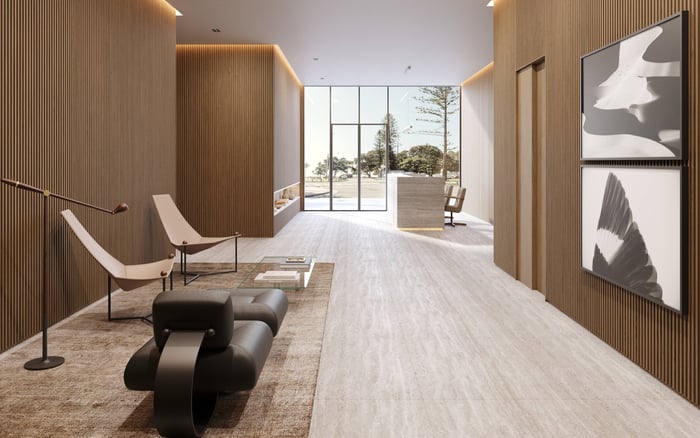
A buyer-focused comparison of Four Seasons Residences Coconut Grove and Opus Coconut Grove, examining branded service, privacy, operational philosophy, resale visibility, and which profile each residence best serves in Coconut Grove.
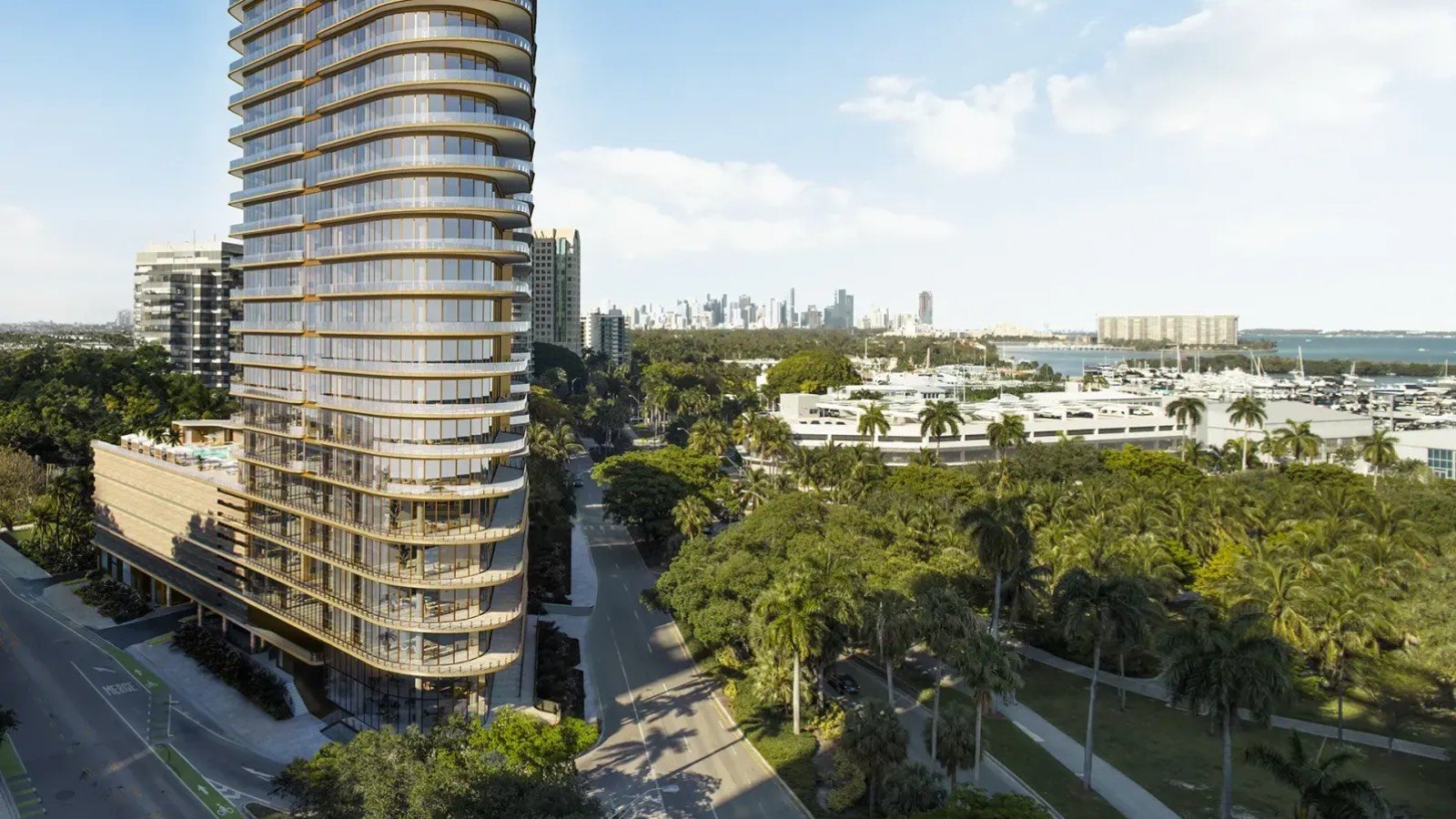
In Coconut Grove, these two residences represent different ideas of luxury living. Four Seasons Residences Coconut Grove is framed around a globally recognized hospitality model, while Opus Coconut Grove is positioned as a more intimate, highly selective sanctuary where discretion carries more weight than visibility. For buyers, this is not simply a question of finishes or amenities. It is a question of how one wants to live day to day.
At Four Seasons, the proposition is overtly service-led. Its identity is rooted in hotel-style operations, concierge-led support, housekeeping, in-residence services, and a broader hospitality ecosystem. By contrast, Opus presents itself as a boutique proposition defined by privacy, selective curation, and a notably lower public profile.
That distinction matters because the most compelling residences are often defined less by spectacle than by operational philosophy. Buyers choosing Coconut Grove today are often deciding whether they want a residence as a serviced platform or a residence as a private refuge.
The appeal of Four Seasons Residences Coconut Grove begins with clarity. Its offering is articulated in the language of hospitality: concierge assistance, in-residence support, wellness and fitness amenities, pool experiences, and programming shaped by hotel-level standards. In practical terms, that means a resident is buying not only square footage, but an operating system designed to remove friction from daily life.
That is especially compelling for executives, entrepreneurs, and international owners who divide time across cities. A well-run branded residence can make arrival feel seamless, ownership feel organized, and entertaining feel fully supported. Four Seasons also benefits from greater public-facing visibility than many quieter boutique projects in the neighborhood, which can create a more transparent impression for buyers considering long-term use, resale, or future marketability.
Its identity also sits within a broader South Florida tradition of branded living, alongside hospitality-driven addresses such as Four Seasons Hotel & Private Residences Fort Lauderdale and The Surf Club Four Seasons Surfside, where ownership and service are deliberately intertwined.
Opus Coconut Grove speaks to a different luxury instinct. Rather than foregrounding a highly visible amenity narrative, it is positioned as an ultra-private, curated residential sanctuary. Publicly disclosed details are more restrained, which in this case is part of the project’s identity.
For certain buyers, the absence of overt publicity is itself a premium feature. Opus is portrayed as appealing to privacy-conscious owners who prefer selective community composition, quieter circulation, and reduced public visibility. That approach resonates with purchasers who view anonymity as essential rather than optional.
This makes Opus better understood not as a rejection of luxury service, but as a refinement of luxury priorities. The atmosphere is less social, less performative, and less dependent on a global brand framework. Its value proposition rests on discretion, selectivity, and the sense that not every detail needs to be broadly broadcast to carry weight.
The clearest way to compare these two projects is to look past finishes and ask what each building is designed to optimize. Four Seasons optimizes convenience. Opus optimizes confidentiality.
At Four Seasons, daily life is structured around support. The resident who wants a concierge to streamline logistics, hotel-level operations to maintain consistency, and wellness-oriented amenities to be clearly programmed will likely understand the proposition immediately. Buyers who appreciate brand-standard processes often find reassurance in that predictability.
At Opus, the proposition is more understated. The resident is choosing reduced exposure, less public disclosure, and a residential environment that prioritizes seclusion over hospitality theater. For some owners, that quieter posture may feel far more luxurious than a deeply serviced model. It suggests control over access, lower visibility, and a more tightly held community.
This divide can also shape social rhythm. Four Seasons is more naturally aligned with residents who welcome active support and a polished flow of services around work, travel, and entertaining. Opus is better suited to buyers who prefer a home that retreats from public cadence. In the wider Coconut Grove context, that places Four Seasons closer in spirit to polished lifestyle ecosystems, while Opus sits nearer the boutique privacy valued at projects like Arbor Coconut Grove and The Lincoln Coconut Grove.
One practical distinction is how each project tends to appear in the market. Four Seasons has greater public listing and resale visibility than Opus. For some buyers, that transparency is useful. It can make the residence easier to benchmark, easier to discuss with advisers, and easier to position within a broader luxury portfolio.
Opus, by contrast, aligns more readily with limited public exposure. That changes the ownership experience in subtle but meaningful ways. Some buyers consider broad visibility a benefit because it creates clearer market reference points. Others see lower exposure as part of the property’s appeal, especially when discretion is central to family privacy or security preferences.
Neither model is inherently superior. The right answer depends on whether a buyer values easy comparability or prefers a more cloistered market presence. In a neighborhood as established as Coconut Grove, both approaches can attract serious interest, but they send very different signals about how ownership should feel.
Four Seasons Residences Coconut Grove is likely the stronger match for the owner who wants a branded, service-rich environment with visible operational standards. It suits individuals with demanding schedules, cross-border lifestyles, or a preference for highly organized residential support. If convenience is the central luxury, Four Seasons holds a clear advantage.
Opus Coconut Grove is likely the better fit for the owner who treats privacy as the primary luxury good. It favors buyers who do not need a public-facing hospitality narrative to validate quality and who may actively prefer fewer disclosed details, less circulation, and a more secluded residential identity. If discretion is the central luxury, Opus becomes especially compelling.
The most intelligent buyers in Coconut Grove are rarely choosing between good and bad. They are choosing between two specific definitions of excellence: one polished by hospitality, the other sharpened by restraint.
What is the main difference between Four Seasons Residences Coconut Grove and Opus Coconut Grove? Four Seasons emphasizes branded hospitality and service, while Opus is centered on privacy, discretion, and a quieter residential experience.
Is Four Seasons Residences Coconut Grove a branded residence? Yes. It is presented as a hospitality-integrated residential concept built around a recognized service model.
Does Four Seasons Residences Coconut Grove focus on hotel-style services? Yes. Its positioning includes concierge-led support, in-residence services, and operations shaped by hospitality standards.
Is Opus Coconut Grove positioned as the more private option? Yes. Opus is framed as a boutique sanctuary with lower public visibility and a more discreet ownership experience.
Which project may appeal more to frequent travelers? Four Seasons may appeal more to buyers who value seamless support, convenience, and consistent service during arrivals and departures.
Which residence may suit buyers who value anonymity? Opus is generally the stronger fit for buyers who prioritize confidentiality, selectivity, and reduced public exposure.
Are both projects located in Coconut Grove? Yes. Both residences are positioned within Coconut Grove, one of Miami’s most established luxury residential neighborhoods.
Does Four Seasons Residences Coconut Grove have more resale visibility? Yes. It has a more public-facing market presence, which can help buyers seeking clearer benchmarks and broader visibility.
Are public amenity details equally visible for both projects? No. Four Seasons presents a more clearly articulated service and amenity narrative, while Opus is more restrained in public detail.
What is the best way to shortlist comparable options for touring? Start with location fit, delivery status, and daily lifestyle priorities, then compare stacks and elevations to validate views and privacy.
For a discreet conversation and a curated building-by-building shortlist, connect with MILLION Luxury.
If branded residences are on your mind — as a home or as an allocation — we would be glad to share what we are seeing, privately.
Begin a quiet conversation