A discreet buyer’s guide to choosing between Edgewater and Brickell when waterfront living matters, but hotel-like traffic, transient atmosphere, and public-facing energy do not.
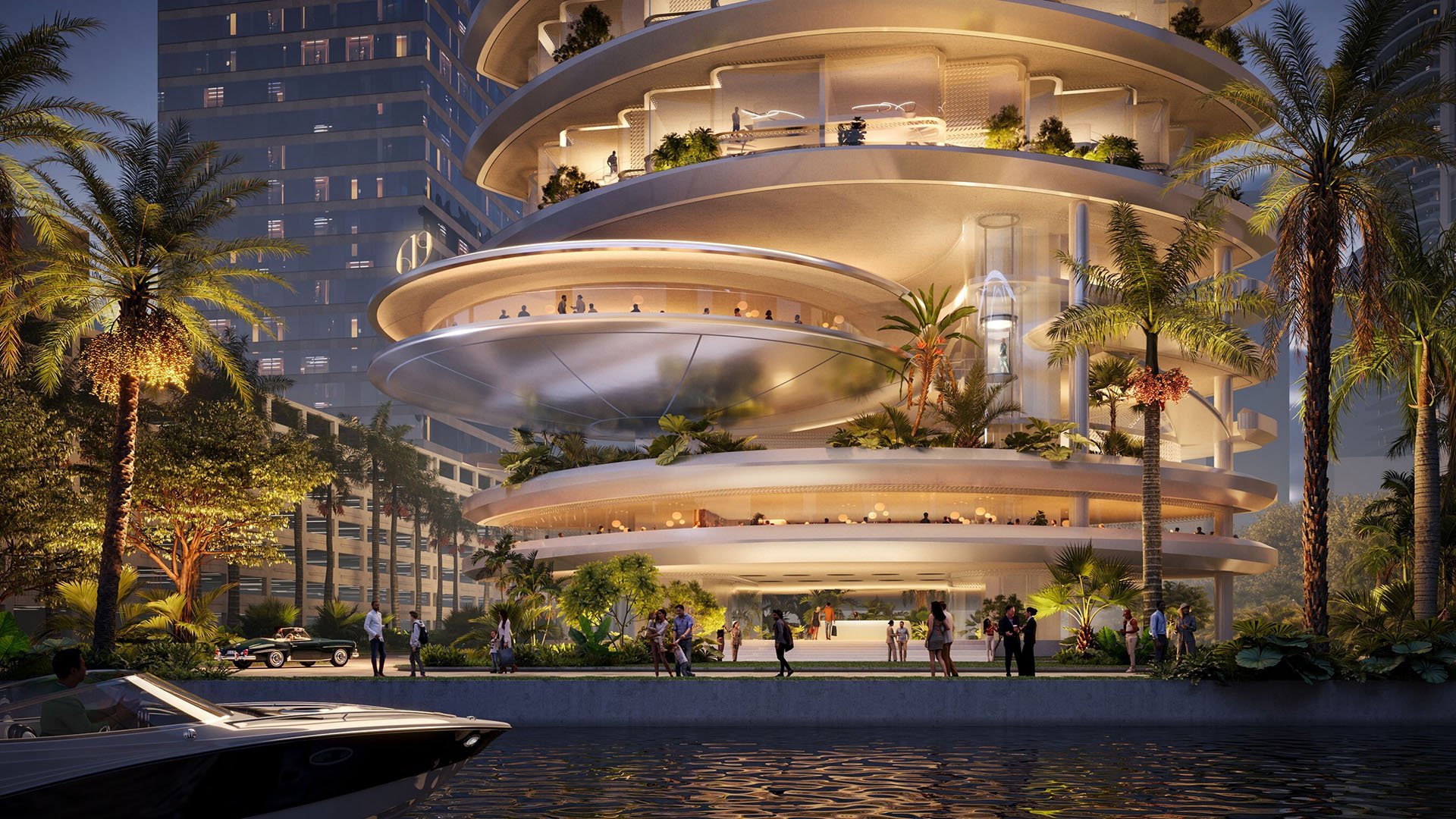
For many high-net-worth buyers, the choice between Edgewater and Brickell is not simply about skyline, commute, or view corridor. It is a question of atmosphere. Some owners like a tower that feels animated from morning to midnight, with a visible social pulse and a lobby that reads like an arrival lounge. Others want the water, the service, and the architecture without the sensation of living inside a public venue.
This is the buyer the question is really for: the owner who dislikes hotel energy. Not service, not polish, not attentive staff, but the revolving-door feeling that can emerge when a building’s daily rhythm is shaped by guests, short stays, highly visible amenities, and social traffic that feels only loosely connected to ownership.
The short answer is that Edgewater will often be the easier fit for owners seeking a more residential waterfront rhythm, while Brickell can still work beautifully if the building is chosen with unusual discipline. In either district, the real decision is determined less by the address than by the building’s operating culture.
Edgewater appeals to buyers who want to remain close to Miami’s center of gravity while preserving a degree of separation from its most public-facing energy. For owners who prioritize waterview living, the district can offer a softer residential mood than a more intensely commercial urban core. That does not mean every building is quiet, private, or appropriate for every buyer. It means the district’s best residential experiences tend to be easier to evaluate through the lens of daily ownership.
A buyer considering Aria Reserve Miami, for example, should not ask only about views, floor plan, or amenity package. The more revealing questions are operational: how residents arrive, how guests are handled, how amenity reservations are managed, and whether the lobby feels like a residential threshold or a hospitality stage.
The same logic applies when reviewing EDITION Edgewater. A hospitality-associated name may appeal to buyers who value service fluency, but privacy-minded owners should distinguish refined service from a hotel-like social tempo. The right building can deliver staff precision without making residents feel as if they are sharing their home with the city.
Brickell is not automatically the wrong answer. For some owners, especially those who want immediate urban access and a waterfront residence that remains connected to business, dining, and private social life, Brickell may be the more practical choice. The caution is that convenience and energy are closely related. The very qualities that make Brickell compelling can also create the atmosphere that hotel-averse owners are trying to avoid.
This is why building selection matters more in Brickell than almost anywhere else. A residence such as Una Residences Brickell should be evaluated through the same privacy lens as an estate: arrival sequence, elevator control, guest circulation, staff discretion, and whether the amenity spaces are scaled for residents rather than spectacle.
For buyers studying The Residences at 1428 Brickell, the essential issue is not whether Brickell is active. It is. The issue is whether the building creates a private residential layer above and apart from that activity. The best Brickell ownership experience for this buyer is one where the neighborhood can be accessed on demand, then left behind the moment the resident returns home.
The first signal is arrival. A discreet porte cochere, calm valet choreography, and clear separation between residents and visitors can transform how a tower feels. If the entry sequence is congested or performative, the residence may feel public before the owner ever reaches the elevator.
The second signal is lobby culture. A beautiful lobby is not enough. The question is whether people linger, photograph, wait, meet, and gather there in a way that makes the space feel shared with outsiders. For hotel-averse owners, the ideal lobby is elegant, staffed, and controlled, but not theatrical.
The third signal is amenity governance. A pool, dining room, fitness level, lounge, or terrace can feel private or social depending on rules, staffing, guest policy, and resident behavior. Boutique does not always mean quiet, and large does not always mean impersonal. Operations decide the mood.
The fourth signal is rental posture. Owners who dislike hotel energy should understand building rules around rentals, guests, and access. The point is not moral judgment. It is predictability. A building with frequent turnover can feel different from one shaped by long-term owners and residents.
The fifth signal is elevator privacy. Private or semi-private access, controlled destination systems, and clean back-of-house logic matter because they reduce unnecessary contact. For an owner seeking calm, the route from car to residence should feel composed.
If the buyer’s highest priority is a quieter waterfront lifestyle with a residential tone, Edgewater is usually the better starting point. It offers a compelling balance for owners who want Miami immediacy without feeling immersed in the city’s most public daily current. For a new-construction buyer, Edgewater should be approached as a district where one can seek scale, views, and service while still screening for restraint.
If the buyer’s highest priority is access, intensity, and a more urban relationship to Miami, Brickell remains a formidable choice. The compromise is that the buyer must be more selective. A building like St. Regis® Residences Brickell may enter the conversation for owners who want recognizable service language, but the evaluation should remain focused on whether the day-to-day experience is genuinely residential rather than performative.
The refined answer is therefore not “Edgewater good, Brickell bad.” It is this: Edgewater tends to make privacy easier to achieve, while Brickell requires more precision to achieve the same emotional result. The best choice is the one where the owner can arrive unobserved, host selectively, use amenities without friction, and feel that the building belongs principally to its residents.
Tour at more than one time of day if possible. A building can feel serene on a weekday morning and entirely different at the hour when residents, guests, cars, and service staff overlap. Watch the lobby for ten minutes. Notice whether staff know residents by rhythm, whether visitors are clearly managed, and whether the space feels curated or crowded.
Ask about guest policies without apology. Ask how amenity reservations are handled, how many guests residents may bring, and how access is controlled. Ask where deliveries go, how service elevators work, and whether private events are common in shared spaces. These questions reveal more than a brochure ever could.
Finally, trust discomfort. If a building feels too visible, too busy, or too socially porous during a tour, ownership is unlikely to make that feeling disappear. Luxury, for this buyer, is not measured by how much is happening. It is measured by how little has to be negotiated.
Which district is generally better for owners who dislike hotel energy? Edgewater is usually the better starting point for a calmer waterfront residential feel, though individual building operations matter most.
Can Brickell still work for a privacy-minded owner? Yes. Brickell can work if the building creates strong separation between public neighborhood energy and private residential life.
What is “hotel energy” in a condo context? It is the feeling of frequent turnover, visible guest traffic, lobby lingering, and amenity spaces that feel more public than residential.
Should I avoid branded residences if I want privacy? Not necessarily. The key is whether the brand translates into discreet service or into a hospitality-style social environment.
Is a smaller boutique building always quieter? No. A boutique property can still feel active if guest policies, amenity culture, or resident behavior create a social atmosphere.
What should I watch during a private tour? Watch the arrival sequence, lobby behavior, elevator access, staff discretion, and how visitors are managed from entry to amenity areas.
Does a waterview guarantee a serene ownership experience? No. A waterview may create visual calm, but building operations determine whether daily life feels private and composed.
Are amenities a problem for hotel-averse buyers? Amenities are not the problem. The issue is whether they are governed for residents or programmed in a way that invites constant activity.
How important is a private terrace? A private terrace can help owners enjoy outdoor space without relying on shared amenities, but privacy still depends on layout and exposure.
What is the best way to shortlist comparable options for touring? Start with location fit, delivery status, and daily lifestyle priorities, then compare stacks and elevations to validate views and privacy.
If you'd like a private walkthrough and a curated shortlist, connect with MILLION.
If branded residences are on your mind — as a home or as an allocation — we would be glad to share what we are seeing, privately.
Begin a quiet conversation