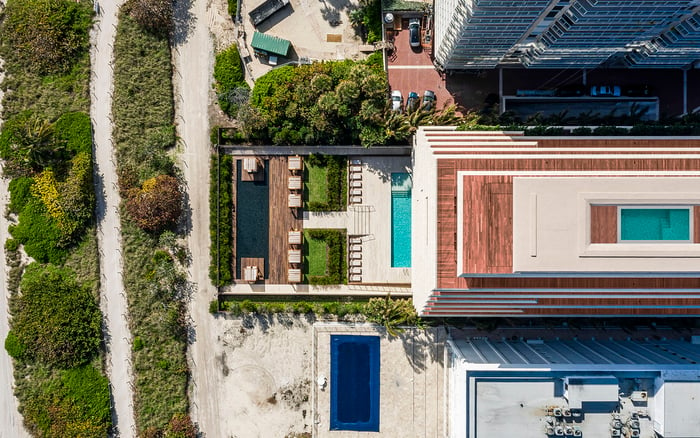
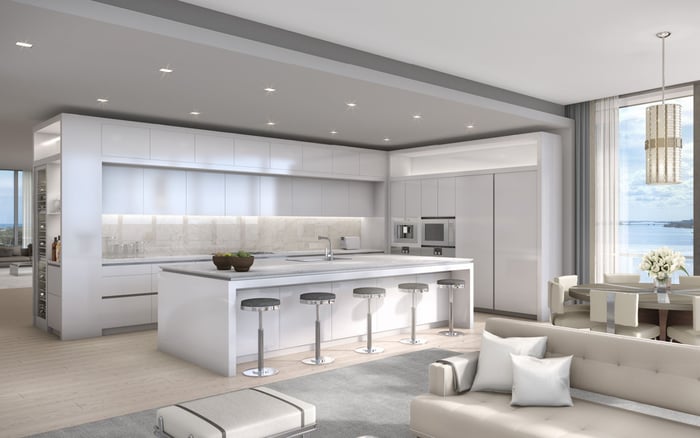
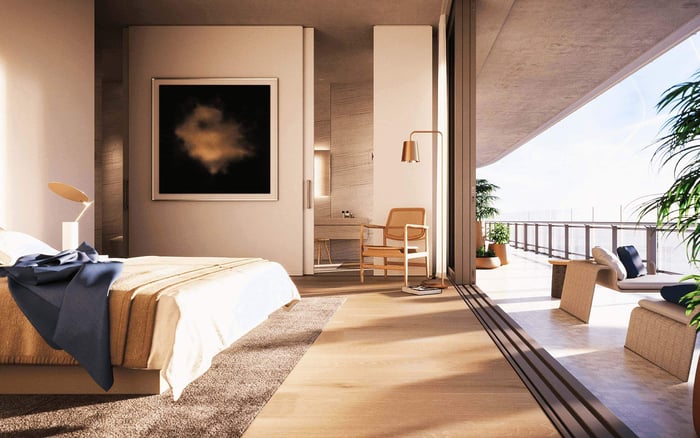
Ocean House Surfside raises a refined buyer question: can an oceanfront, glass-forward residence deliver both visual openness and the operational discipline required for true lock-and-leave ownership?
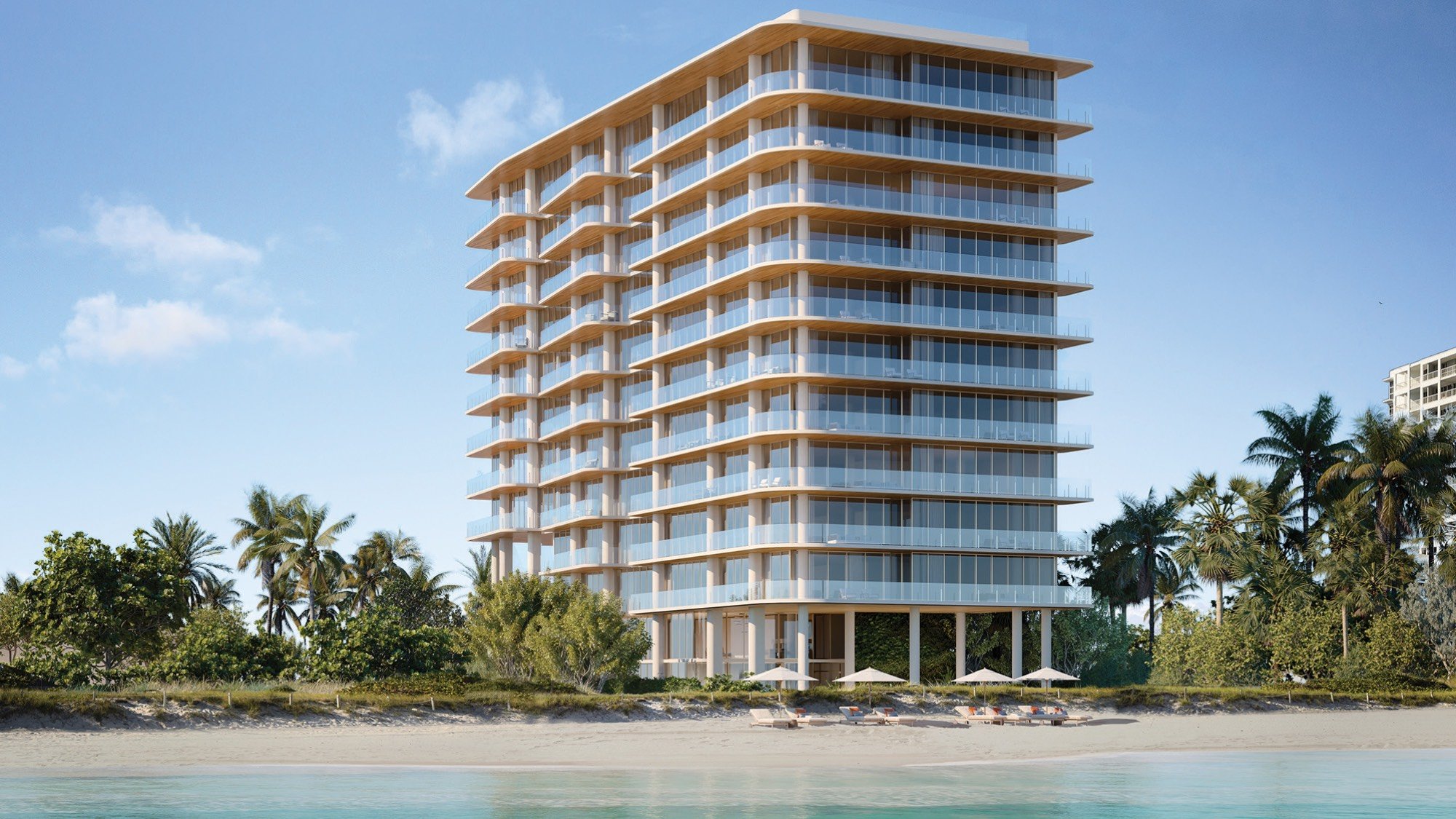
Ocean House Surfside sits at the center of a distinctly modern luxury question: can a highly transparent oceanfront residence still function as a secure, low-maintenance seasonal home? For the South Florida buyer, especially one who divides time among several addresses, the answer is not simply about glass thickness, a beautiful view, or the sense of discretion once the doors are closed. It is about whether the residence can be left, monitored, protected, cooled, inspected, and returned to without friction.
Glass-wall living is one of coastal architecture’s defining pleasures. It brings the ocean into the daily rhythm of the home, shifting the mood of a room from dawn to late afternoon without a single decorative gesture. Yet glass is not neutral. It frames the owner to the outside world as much as it frames the Atlantic for the owner. In Surfside, where oceanfront living meets boutique-scale luxury and immediate proximity to Bal Harbour and Miami Beach, that tension deserves a serious buyer conversation.
For Ocean House Surfside, the privacy question is not a rejection of openness. It is the refinement of it. The best glass-forward homes do not simply expose. They edit, filter, shade, buffer, and choreograph sightlines so the owner can enjoy openness without feeling observed.
A residence can feel private and still require a deeper security review. Visual privacy is what an owner experiences from the living room, primary suite, terrace, or pool-facing space. Operational security is what happens at the building level: access control, staff coverage, elevator procedures, visitor handling, maintenance entry, camera placement, key management, and after-hours response.
That distinction is essential for seasonal owners. A full-time resident notices small changes quickly: a window treatment that did not close properly, a cooling system that sounds different, moisture where it should not be, or a service visit that ran late. A second-home owner may not see those signals for weeks or months. The building and the owner’s management system must become the eyes of the residence in the owner’s absence.
True lock-and-leave value therefore depends on more than the floor plan. It depends on climate control, water monitoring, access control, routine inspections, storm readiness, and clear procedures for entering the home only when appropriate. The ideal outcome is simple: the owner returns after a long absence and the home feels not merely intact, but immediately usable.
Privacy in a glass-forward oceanfront residence should be evaluated from multiple angles. The most obvious is the beach, where movement is constant and views toward the building change throughout the day. But the beach is only the first perspective. Neighboring buildings, adjacent terraces, street approaches, service areas, and even potential drone sightlines should be part of the review.
Orientation matters as much as height. East-facing glass delivers the emotional reward of direct ocean views, but it also creates a specific kind of exposure. North and south exposures may interact more directly with neighboring buildings or terrace-to-terrace sightlines. West-facing glass can create different evening visibility as interior lights come on and the city-side view becomes more reflective.
Buyers should stand in the exact residence stack, at the exact floor height, and observe how the home is seen from outside. It is not enough to study a rendering or walk a model. Privacy changes with elevation, angle, neighboring massing, terrace depth, and the way glass responds to light at different hours.
The best solutions are architectural rather than theatrical. Deep terraces can create a veil between interior life and outside view corridors, especially when furniture placement and outdoor circulation are considered with care. Landscape buffering can soften edges and reduce direct visibility without making the home feel enclosed. Setback design can help keep the most intimate rooms from sitting too close to public or semi-public lines of sight.
Glazing also deserves scrutiny. Tinted or low-reflective glass can help balance daylight, glare, and discretion, though buyers should understand how the material behaves at night. Smart shading may be equally important. The question is not whether shades exist, but whether they are intuitive, quiet, programmable, and appropriate for long absences. A seasonal owner should be able to leave the residence with confidence that sun exposure, heat gain, and visual openness are being managed intelligently.
In a boutique setting, these details feel especially personal. There may be fewer layers between the individual residence and the surrounding environment, which can be part of the appeal. The same intimacy that makes Surfside desirable also makes due diligence more precise.
The phrase lock-and-leave is often used casually in luxury real estate, but serious buyers should treat it as an operations test. What happens when the owner is away for six weeks? Who verifies interior conditions after a storm? How are service providers admitted? Are inspections scheduled, documented, and escalated if something is wrong? What is the protocol for water shutoff, humidity control, or unexpected mechanical alerts?
The strongest residences are not merely easy to close. They are easy to reopen. That difference matters in South Florida, where climate, salt air, storms, and heavy seasonal usage can all affect the condition of a home. Maintenance oversight is not a background service. For an absent owner, it is part of the asset’s protection.
Staff protocols are equally important. A buyer should understand how the building manages guests, deliveries, vendors, parking, elevator access, and any private entry sequence. Privacy is weakened when access is casual. Security is strengthened when procedures are consistent, respectful, and discreet.
Surfside has a particular appeal for owners who want oceanfront living without the scale or tempo of larger urban corridors. It offers a calmer residential rhythm while keeping Bal Harbour and Miami Beach close enough for dining, shopping, culture, and private appointments. That combination helps explain why the area remains compelling for buyers who want both quiet and connectivity.
For Ocean House Surfside, the location heightens the importance of the privacy conversation. The buyer is not choosing between isolation and visibility. The buyer is choosing a residence that should deliver open coastal living while still supporting discretion, security, and ease of ownership. In that sense, Surfside’s appeal is not only aesthetic. It is operational, emotional, and practical.
Before purchasing, the most useful review is residence-specific. Start with the exact stack, not the building in general. Study the floor height, glass exposure, terrace layout, elevator access, and the relationship to neighboring structures. Walk the residence at different times if possible, paying close attention to how privacy shifts from daytime brightness to evening illumination.
Then move from sightlines to systems. Ask how the home is monitored during owner absence. Clarify routine inspection options, climate control expectations, water monitoring, storm procedures, and access permissions for staff or property managers. Confirm how maintenance issues are noticed, communicated, and resolved when the owner is not in town.
Finally, consider lifestyle behavior. A glass-forward residence may feel entirely private when shades are lowered and terraces are quiet, but owners who entertain frequently, travel often, or keep irregular schedules may need a different privacy strategy than owners who use the residence in predictable seasonal blocks. The right answer is less about whether glass is private and more about whether the total residence strategy matches the way the owner actually lives.
At the highest level, the Ocean House Surfside question is not whether glass-wall privacy is possible. It is whether openness has been disciplined enough to support real life. The most desirable oceanfront homes are not defensive. They do not feel sealed away from the water or the light. Instead, they make discretion feel effortless.
That is the standard a buyer should apply. If the residence offers views without unnecessary exposure, access without looseness, service without intrusion, and absence without anxiety, then glass becomes more than a design feature. It becomes a calibrated luxury, one that allows the owner to leave with confidence and return to a home that is ready, private, and composed.
What is the main lock-and-leave question at Ocean House Surfside? The central question is whether a glass-forward oceanfront residence can remain secure, private, and easy to maintain when the owner is away.
Is glass-wall living automatically less private? Not automatically, but it requires careful review of sightlines, orientation, floor height, glazing, terrace depth, and shading.
Why does orientation matter in a glass residence? East-facing ocean views create different exposure than north, south, or west-facing glass, especially at different times of day.
What should seasonal owners prioritize? They should prioritize building operations, access control, staff protocols, climate control, water monitoring, and routine inspections.
Can a residence feel private but still need stronger security? Yes. Visual privacy and operational security are separate issues, and both should be evaluated before purchase.
What exterior viewpoints should buyers consider? Buyers should consider the beach, neighboring buildings, streets, terraces, service areas, and possible drone sightlines.
Do deep terraces help privacy? Deep terraces can create separation between interior rooms and exterior views, especially when paired with smart furniture planning and shading.
Why is Surfside attractive for this type of buyer? Surfside combines oceanfront living, a more residential scale, and proximity to Bal Harbour and Miami Beach.
What makes a home truly lock-and-leave? It should be secure, monitored, maintained, and immediately usable after a long absence.
What should buyers review before committing? Buyers should study the exact residence stack, floor height, glazing exposure, terrace layout, elevator access, staff coverage, and owner-absence procedures.
For a discreet conversation and a curated building-by-building shortlist, connect with MILLION.
If branded residences are on your mind — as a home or as an allocation — we would be glad to share what we are seeing, privately.
Begin a quiet conversation