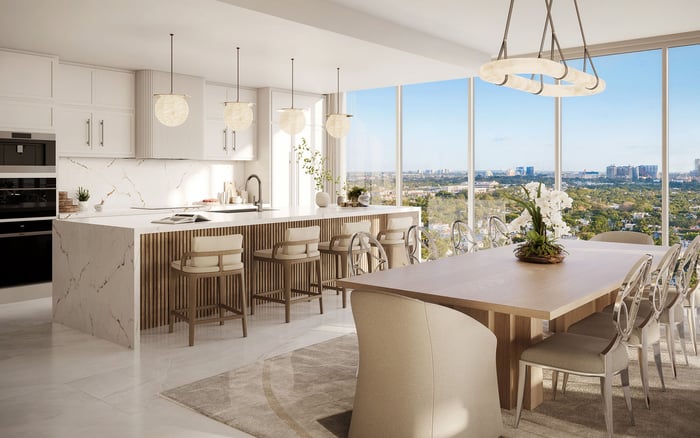
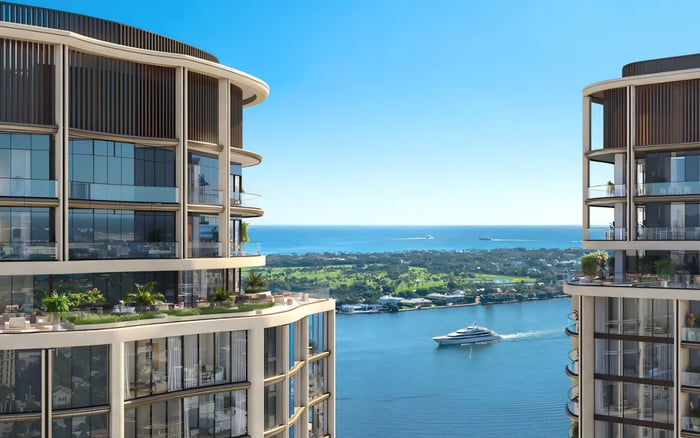
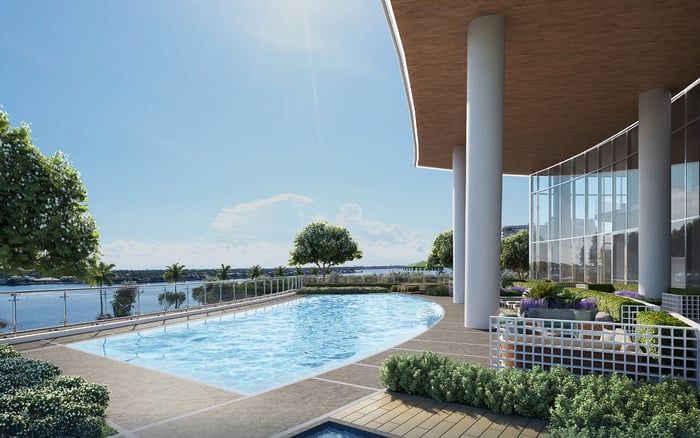
Edgeworth West Palm Beach presents a compelling alternative for luxury buyers who want refinement without the scripted theater of a branded residence. Positioned as a pure residential condominium, it speaks to owners who value privacy, quieter arrival sequences, residential autonomy, and amenities designed for daily life rather than spectacle. In a market where many luxury towers trade on hospitality branding and social programming, Edgeworth’s appeal lies in its restraint.
There is a particular kind of luxury buyer in South Florida who does not want to live inside a performance. This buyer may appreciate excellent service, beautiful materials, and polished amenities, yet still recoil from the rituals of branded-tower living: the orchestrated arrival, the social stagecraft, the hospitality identity, and the sense that ownership is being packaged as a lifestyle production. For that audience, Edgeworth West Palm Beach enters the conversation as a compelling alternative.
Edgeworth is positioned as a pure residential condominium in West Palm Beach, not as a hotel-branded residence borrowing its identity from an outside flag. That distinction matters more than marketing language may suggest. At the upper end of the market, some buyers want fewer layers between themselves and their home. They are not necessarily rejecting luxury. They are rejecting choreography.
The appeal, in this context, is clear: a quieter ownership experience, greater residential autonomy, and an environment designed for people who expect to truly live in the building rather than move through it as part of a broader hospitality ecosystem.
Branded towers have been highly effective at selling aspiration across South Florida. In neighborhoods shaped by international demand, a major hospitality or fashion label can bring immediate recognition and social currency. Projects such as 888 Brickell by Dolce & Gabbana or St. Regis® Residences Brickell speak fluently to buyers seeking a globally legible address.
But not every high-net-worth purchaser wants a residence to function like a branded product. For full-time owners, relocation buyers, and multigenerational households in particular, priorities can be less theatrical. Daily livability often outranks grand gestures. Privacy can matter more than visibility. Governance and control may feel more important than prestige borrowed from a hotel name.
There is also a practical dimension. Without a hotel brand in the mix, some buyers see the potential for a cleaner value proposition, one less shaped by licensing layers and amenity inflation. That does not make a non-branded building inherently better. It simply makes it more appealing to buyers who want their investment directed toward residential quality, discretion, and long-term use rather than identity signaling.
What makes Edgeworth notable is not that it tries to out-glamor branded competition. It is that it appears to decline the contest altogether. The project is framed around a restrained, residential-first experience, with owner-focused spaces such as wellness and private-use amenities rather than headline-seeking entertainment features.
That approach can resonate deeply with buyers who have already lived in highly programmed environments. In very large luxury towers, daily life can begin to feel operationalized: a constant flow of arrivals, guests, staff movement, and common spaces that impress but do not always calm. A building with fewer residences can offer a different atmosphere, one with less foot traffic, fewer neighbors, and less of the conveyor-belt sensation some owners associate with grander formats.
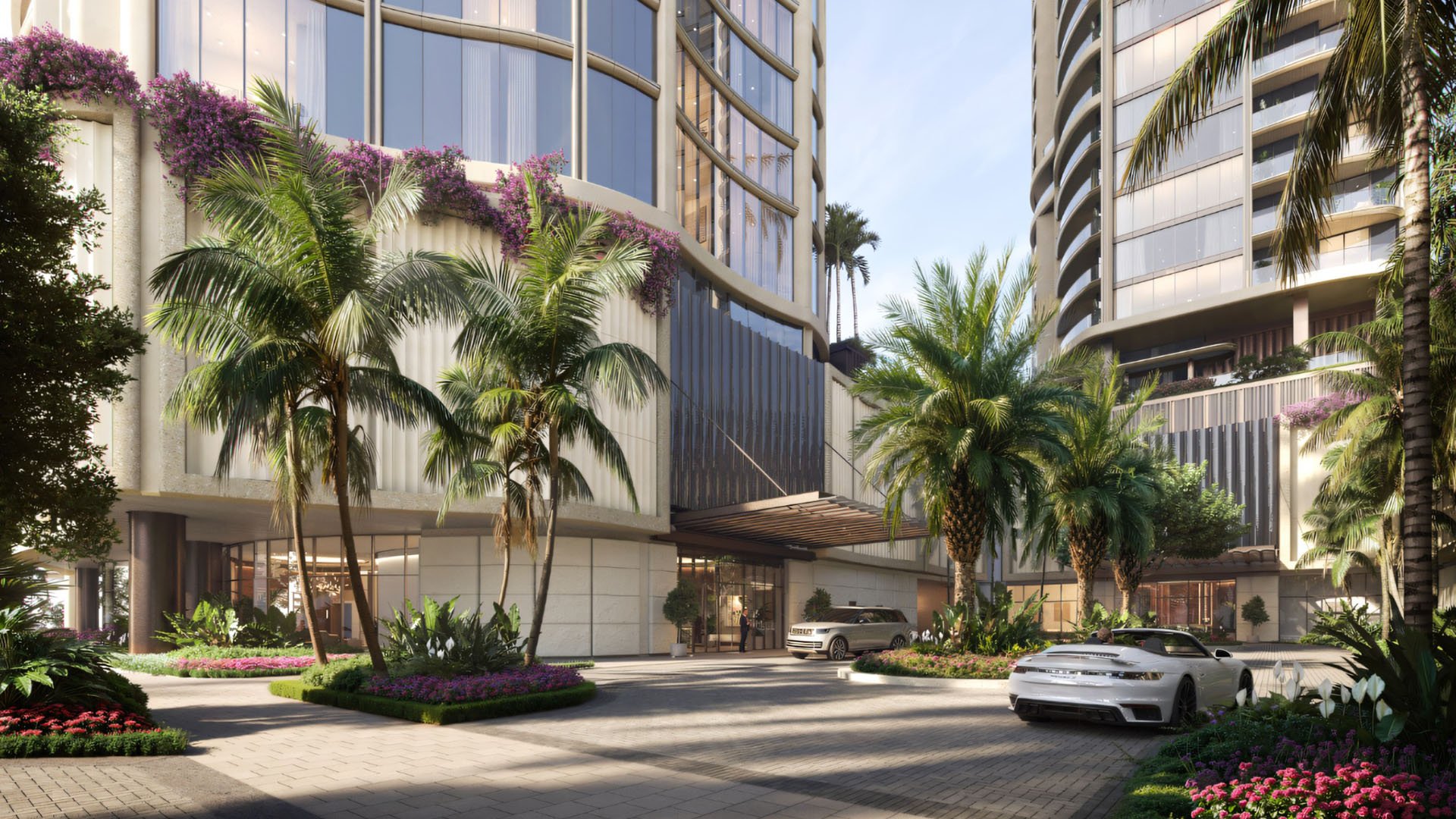
The quieter arrival sequence is part of that appeal. Concealed parking and more private entries suggest an experience that feels residential from the moment one returns home. For a buyer who values discretion, this is not a minor detail. It is part of the emotional architecture of ownership.
In West Palm Beach, this sensibility also sits comfortably alongside other projects that emphasize a more intimate or owner-centered posture, such as Alba West Palm Beach and Forté on Flagler West Palm Beach. The comparison is not about sameness. It reflects a broader local appetite for luxury that does not always need to announce itself through maximalism.
Edgeworth’s appeal is inseparable from its setting. West Palm Beach has become increasingly compelling for affluent buyers seeking a Palm Beach County base with urban convenience, but without the full intensity of Miami’s branded-tower ecosystem. That local context helps explain why an understated project can feel not merely attractive, but precisely timed.
In Miami, the luxury skyline often thrives on energy, density, and a highly visible social identity. That can be thrilling, and for some buyers it is exactly the point. Yet others want a city address that still feels measured. West Palm Beach offers that middle ground: cultured, connected, and increasingly cosmopolitan, but often with a less transient rhythm.
This is where Edgeworth may distinguish itself most clearly. It is not simply a luxury condo in West Palm Beach. It is a luxury condo whose positioning aligns with buyers who want to participate in the city without subscribing to a hospitality-led identity. Someone comparing it with highly branded coastal offerings such as The Ritz-Carlton Residences® West Palm Beach or Mr. C Residences West Palm Beach may find that the real decision is less about amenity count and more about temperament.
The strongest audience for Edgeworth is likely not the buyer seeking a globally marketed trophy address. It is the buyer who intends to use the residence in a sustained, personal way. Think of the executive relocating from the Northeast, the Palm Beach County household seeking a lower-maintenance urban base, or the long-stay owner who values routine over spectacle.
For these purchasers, permanence matters. Owner occupancy matters. A traditional condo governance model can be reassuring because it suggests a more purely residential framework rather than one influenced by hotel operations. There is often comfort in knowing the building is organized around owners first.
This helps explain why Edgeworth can appeal to buyers who dislike Instagram-first luxury. They are not anti-design, anti-service, or anti-amenity. They are simply pro-home. They want beauty without theatrical excess, wellness without spectacle, and exclusivity without a performative social calendar.
Choosing a non-branded luxury condominium is not always about opting out. Often, it is about opting in to a different hierarchy of values. The primary questions become more intimate: How does arrival feel on an ordinary Wednesday? Will the building support privacy when family is in town? Does the amenity mix enhance real routines? Will ownership still feel coherent after the initial sales gloss fades?
By that standard, Edgeworth’s anti-choreography positioning is especially relevant. It suggests a home for people who want less spectacle, less transient energy, and more emphasis on privacy, routine, and long-term use. That proposition can stand out without relying on an outside hospitality identity.
In an era when branding often stands in for identity, Edgeworth offers a rarer promise: the idea that a home can be luxurious precisely because it is not trying to be a stage.
What kind of buyer is Edgeworth best suited for? Edgeworth is likely to resonate with full-time or long-stay owners who prioritize privacy, daily livability, and a more permanent residential atmosphere.
Is Edgeworth a branded residence? No. It is positioned as a pure residential condominium rather than a hotel-branded project.
Why would someone prefer non-branded luxury? Some buyers prefer value rooted in residential quality, autonomy, and discretion rather than status signaling tied to a hospitality name.
How does Edgeworth differ from grand branded towers? Its appeal centers on restraint, owner-focused amenities, quieter arrivals, and less of the programmed social atmosphere common in hospitality-led buildings.
Why does West Palm Beach matter to this story? The city offers urban access and Palm Beach County positioning without the same intensity many buyers associate with Miami’s branded-tower environment.
Does a smaller residential feel really change ownership experience? Often yes. Fewer residences can mean less foot traffic, fewer neighbors, and a more private day-to-day rhythm.
Are owner-focused amenities different from entertainment-driven ones? Yes. They tend to support routine and wellness rather than dramatic social experiences or headline-grabbing features.
Who may not be the ideal buyer for Edgeworth? Buyers seeking a globally recognized trophy address or a highly social hospitality identity may prefer a branded alternative.
Why can traditional condo governance appeal to luxury buyers? It can feel more aligned with residential autonomy, especially for owners who want the building’s priorities centered on residents.
What is the core appeal of Edgeworth in one sentence? It offers luxury for buyers who want their home to feel private, polished, and genuinely residential rather than performative.
For a tailored shortlist and next-step guidance, connect with MILLION.
If branded residences are on your mind — as a home or as an allocation — we would be glad to share what we are seeing, privately.
Begin a quiet conversation