A discreet buyer's guide to comparing penthouse scale, rooftop control, and outdoor-room usability between Mr. C Residences Boca Raton and Banyan Tree Residences West Palm Beach.
At the top of the South Florida branded-residence market, buyers may recognize names such as Mr. C Residences West Palm Beach, but the more specific comparison here is Mr. C Residences Boca Raton versus Banyan Tree Residences West Palm Beach. It should not begin with a dramatic rendering or a single headline number. It should begin with three practical questions: how large does the penthouse truly live, who controls the roof, and how often can the outdoor spaces be used in real South Florida weather?
Mr. C Residences Boca Raton sits within the branded-residence conversation, with a hospitality-influenced residential posture rather than a purely speculative tower narrative. That distinction matters because buyers are not just purchasing rooms and views. They are buying daily rituals: shaded breakfast outside, a protected evening drink, a quiet place to read, and a terrace that still works when the wind rises or the sun shifts.
Banyan Tree Residences West Palm Beach belongs in this comparison because West Palm Beach has become a serious luxury alternative for buyers who want refinement without the full Miami tempo. Still, without leaning on unsupported project specifications, the smarter analysis is not to declare a winner. It is to isolate the trade-offs that should be verified before a penthouse contract becomes emotional.
A large penthouse floor plate can seduce quickly. Yet the most sophisticated buyers measure scale by continuity, furniture logic, privacy, and weather performance. A residence may appear expansive on paper while key zones feel narrow, exposed, or difficult to furnish. Conversely, a more disciplined plan can live generously when indoor and outdoor spaces connect without friction.
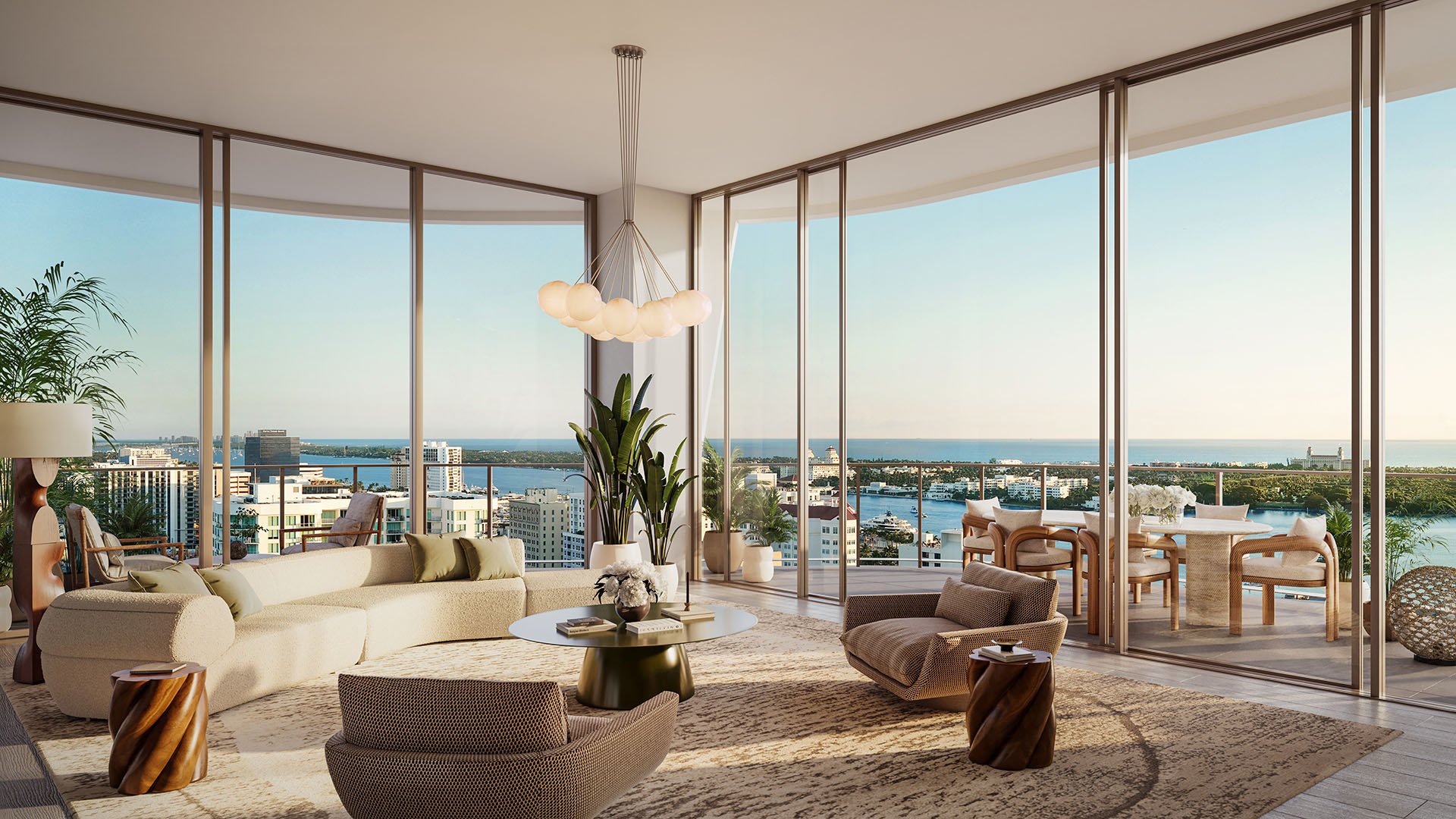
For Mr. C Residences Boca Raton, the central buyer question is how its terraces, loggias, and framed views function as extensions of the residence. The outdoor area should not be treated as a scenic appendage. In a coastal-urban Boca Raton setting, a terrace that supports dining, lounging, and quiet conversation can have more daily value than a larger exposed deck that works only under ideal conditions.
Think of this as a penthouse question before it becomes a Boca Raton versus West Palm Beach question: terrace depth, balcony exposure, and high-floor wind behavior shape how luxury is actually experienced. A buyer should walk the plan as if hosting, dining, and living there, not simply admiring the view corridor.
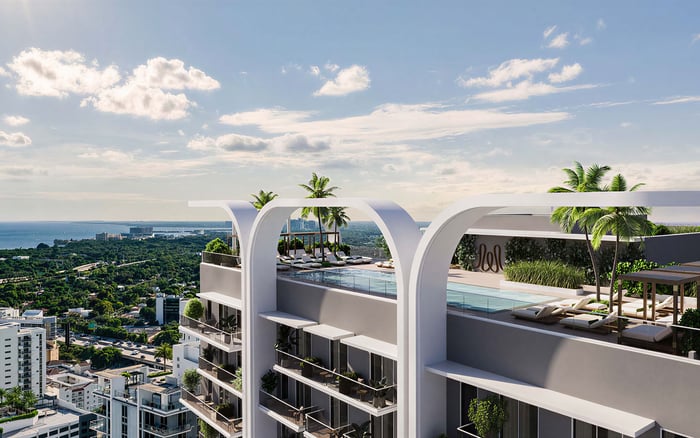
Among penthouse buyers, roof rights are often misunderstood until late in due diligence. A rooftop area may feel emotionally attached to the residence, but the legal structure can be more nuanced. It may be private, a limited common element, association-controlled, restricted by maintenance rules, or subject to approvals for changes in furniture, planting, shade, lighting, or mechanical access.
That distinction is critical in both Boca Raton and West Palm Beach. A penthouse buyer should understand whether the roof is a true private-use zone, a controlled amenity adjacent to the residence, or a visually compelling feature with limited practical rights. The answer can influence privacy, resale narrative, improvement potential, service access, liability, and the everyday feeling of ownership.
The strongest due-diligence questions are simple. Can guests access the roof without crossing private interiors? Who maintains waterproofing, drains, railings, and surfaces? Are planters, grills, cabanas, kitchens, plunge features, or shade devices allowed? What happens after a storm event? If the answer is not clear in the governing documents, it should not be assumed from a floor plan.
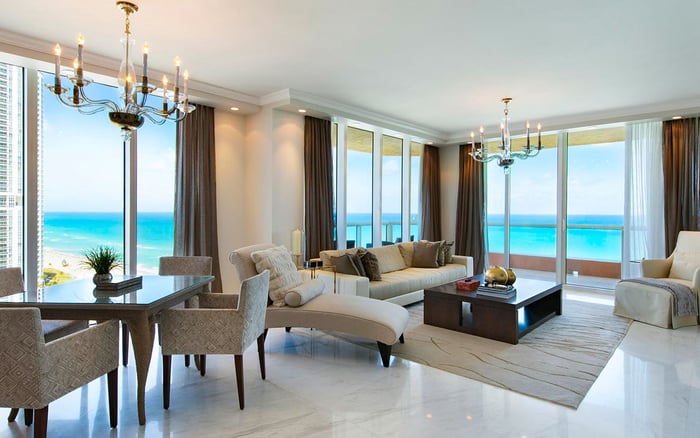
South Florida buyers often learn that outdoor square footage and outdoor usefulness are not interchangeable. Wind, rain, heat, glare, sound, and neighboring sightlines can turn a glamorous terrace into a seasonal or ceremonial space. The best outdoor rooms feel protected without feeling enclosed. They preserve air and view while moderating exposure.
This is where loggias, recessed terraces, covered outdoor rooms, and well-scaled overhangs can matter more than raw size. In Boca Raton, where many buyers value privacy, year-round usability, shading, and acoustic comfort, the protected outdoor room can become the emotional center of the residence. It is where a home stops feeling like an observation deck and starts feeling like a private retreat.
For a Mr. C Residences Boca Raton buyer, terrace design should be evaluated as part of the functional living area. Does the exterior space accept real furniture? Is there enough depth for circulation behind dining chairs? Can doors remain open without wind tunneling through the plan? Are shaded zones available during the hours the owner actually expects to be home?
For a Banyan Tree Residences West Palm Beach buyer, the same line of questioning should apply before any assumptions are made. The name, market, and lifestyle promise may be compelling, but outdoor performance still has to be tested through plan review, legal review, and a sober reading of how exposure affects daily life.
The Boca Raton luxury buyer often prizes discretion, polish, privacy, and a sense of residential calm. Mr. C Residences Boca Raton should therefore be read as a coastal-urban branded residence, not as a Miami-style high-rise chasing spectacle. Its value proposition is most persuasive when the hospitality identity supports comfort, service, and spatial ease rather than noise.
West Palm Beach offers a different cadence. For many buyers, it suggests cultural access, established neighborhoods, and a more formal Palm Beach County lifestyle pattern. But the comparison should not drift into general market romance. At the penthouse level, the decisive question remains technical: which residence gives the owner more usable living area, more defensible outdoor privacy, and clearer control of the spaces that appear to be exclusive?
This is why a buyer should resist ranking the buildings by skyline drama alone. A quieter terrace with better shade may outperform a larger deck. A clearly documented roof area may be worth more than an ambiguous one. A protected outdoor dining room may matter more than an open platform that photographs well but rarely hosts comfortably.
Before choosing between these residences, ask for the most complete package of plans, declarations, rules, and roof diagrams available. Review the penthouse not only with a sales lens, but with an architect, attorney, and lifestyle lens. Luxury mistakes at this level are rarely about taste. They are about assumptions.
Focus first on the plan. Confirm private elevator arrival, service paths, ceiling logic, storage, bedroom separation, staff or guest accommodations if applicable, and how the living room connects to the main outdoor area. Then study the terrace. Measure depth, covered area, rail height, sightlines, solar exposure, drainage, door operation, and likely furniture layouts.
Finally, study governance. Penthouse enjoyment is shaped by rules as much as by architecture. Noise restrictions, exterior furnishing guidelines, improvement approvals, maintenance access, and association control can all affect the feeling of private ownership. The right residence is the one where legal rights, design quality, and daily comfort align.
Is this comparison mainly about price? No. The more useful comparison is technical: penthouse scale, roof control, and the real usability of outdoor rooms.
What should buyers verify about roof rights? Buyers should confirm whether roof areas are private, limited common elements, shared, or association-controlled before relying on them as personal space.
Why does terrace depth matter so much? Depth determines whether an outdoor area can hold dining, seating, circulation, and shade without feeling compromised.
Are larger terraces always better? Not necessarily. A smaller protected terrace may be more valuable than a larger exposed area affected by wind, heat, or rain.
How should Mr. C Residences Boca Raton be evaluated? It should be viewed as a Boca Raton branded-residence option where privacy, service expectations, and functional outdoor living are central to the buyer experience.
Can buyers assume a rooftop shown near a penthouse is private? No. Rooftop use should be confirmed through governing documents and not inferred from drawings or marketing language.
What is the key outdoor-room test? Ask whether the space can be used comfortably for dining, lounging, and entertaining during typical South Florida conditions.
Why is wind protection important on high floors? Wind can limit furniture choices, door usability, conversation comfort, and how often the terrace is actually used.
Should Banyan Tree Residences West Palm Beach be judged by the same criteria? Yes. Any West Palm Beach penthouse candidate should be tested for legal clarity, privacy, exposure, and outdoor functionality.
What professional review is most useful before signing? Legal review of ownership rights and design review of the plan are both essential for understanding how the residence will live.
To compare the best-fit options with clarity, connect with MILLION.
If branded residences are on your mind — as a home or as an allocation — we would be glad to share what we are seeing, privately.
Begin a quiet conversation