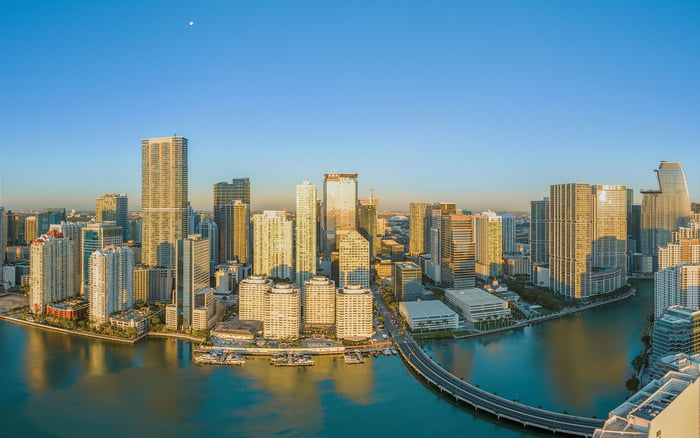
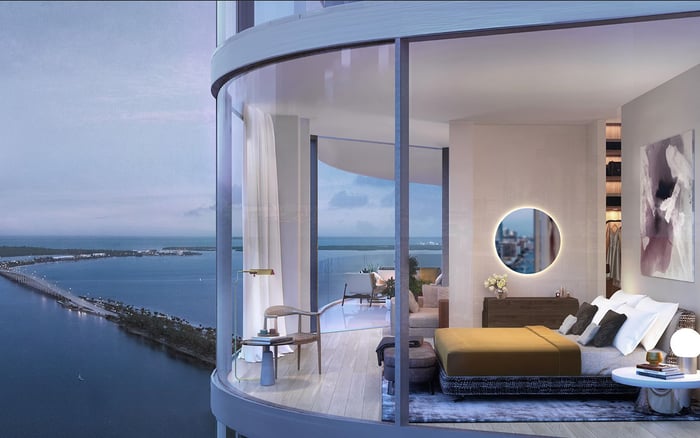
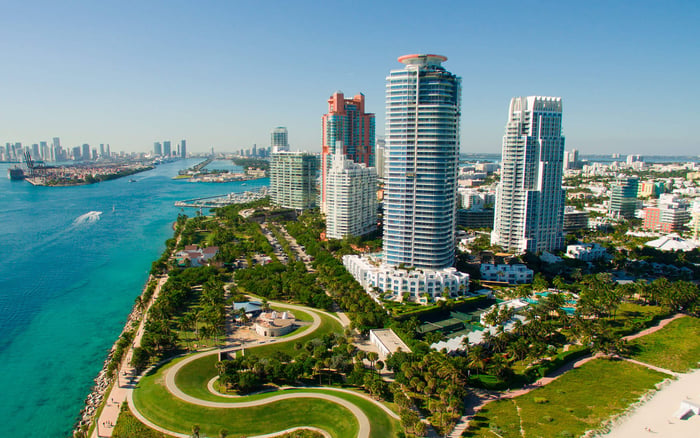
In 2026, global luxury buyers are comparing two very different propositions: Hong Kong’s hyper-connected, vertical cityscape and Miami’s waterfront, lifestyle-forward market that continues to attract international capital. This guide outlines what cross-border buyers should understand about value-per-square-foot dynamics, legal and tax mechanics, financing realities, and the rising importance of insurance and physical risk in South Florida underwriting.
International luxury demand is rarely about a single metric. It’s a blend of lifestyle, liquidity, legal certainty, and the practical ease of owning across borders. In 2026, Hong Kong and Miami sit on opposite ends of that spectrum.
Hong Kong remains the archetype of dense, transit-led urban living, where proximity and efficiency shape daily life-and pricing. Miami, by contrast, sells space, light, water access, and a year-round outdoor lifestyle, while continuing to expand and diversify its luxury inventory.
At the same time, South Florida has become unusually international by U.S. standards. In 2025, the region logged $4.4 billion in international-buyer residential dollar volume, with foreign buyers representing 15% of dollar volume versus 2% nationally. This isn’t just a headline statistic; it shapes how developers staff and structure sales teams, and how title, banking, and property-management vendors operate for non-resident owners.
If you want a single image that captures the contrast, consider global “what US$1 million buys” comparisons. In Hong Kong, about US$1 million has been associated with roughly 22 square meters of luxury housing-a shorthand for how scarcity and centrality are priced.
Miami’s equation is different. While ultra-prime waterfront can be expensive, the market’s enduring promise is more livable square footage, stronger indoor-outdoor flow, and lifestyle amenities at the same global budget. For international buyers, that typically translates into two distinct strategies:
In Hong Kong, buyers often optimize for micro-location and transit adjacency, accepting smaller interiors in exchange for city access and a dense services ecosystem.
In Miami, buyers often optimize for views, balconies, and building quality, using neighborhood selection to balance walkability with privacy and water proximity.
This is where buyer intent becomes decisive. A true pied-à-terre used for short stays often favors the most convenient, “lock-and-leave” configuration. A second home that functions as a winter base for family or entertaining typically puts more weight on layout, storage, and amenity completeness.
South Florida’s 2025 foreign-buyer mix was notably Latin America-led by dollar volume, with Colombia (15%), Argentina (11%), and Mexico (7%) among the top origins. The region also skewed more non-resident than the U.S. overall, with about 69% categorized as non-resident “Type A” buyers compared with roughly 44% nationally.
For developers, this mix tends to reinforce pre-construction and new-tower sales strategies that accommodate international timelines and documentation realities. For resale owners, it often raises the bar on turnkey condition and building management, since many buyers won’t be local full-time.
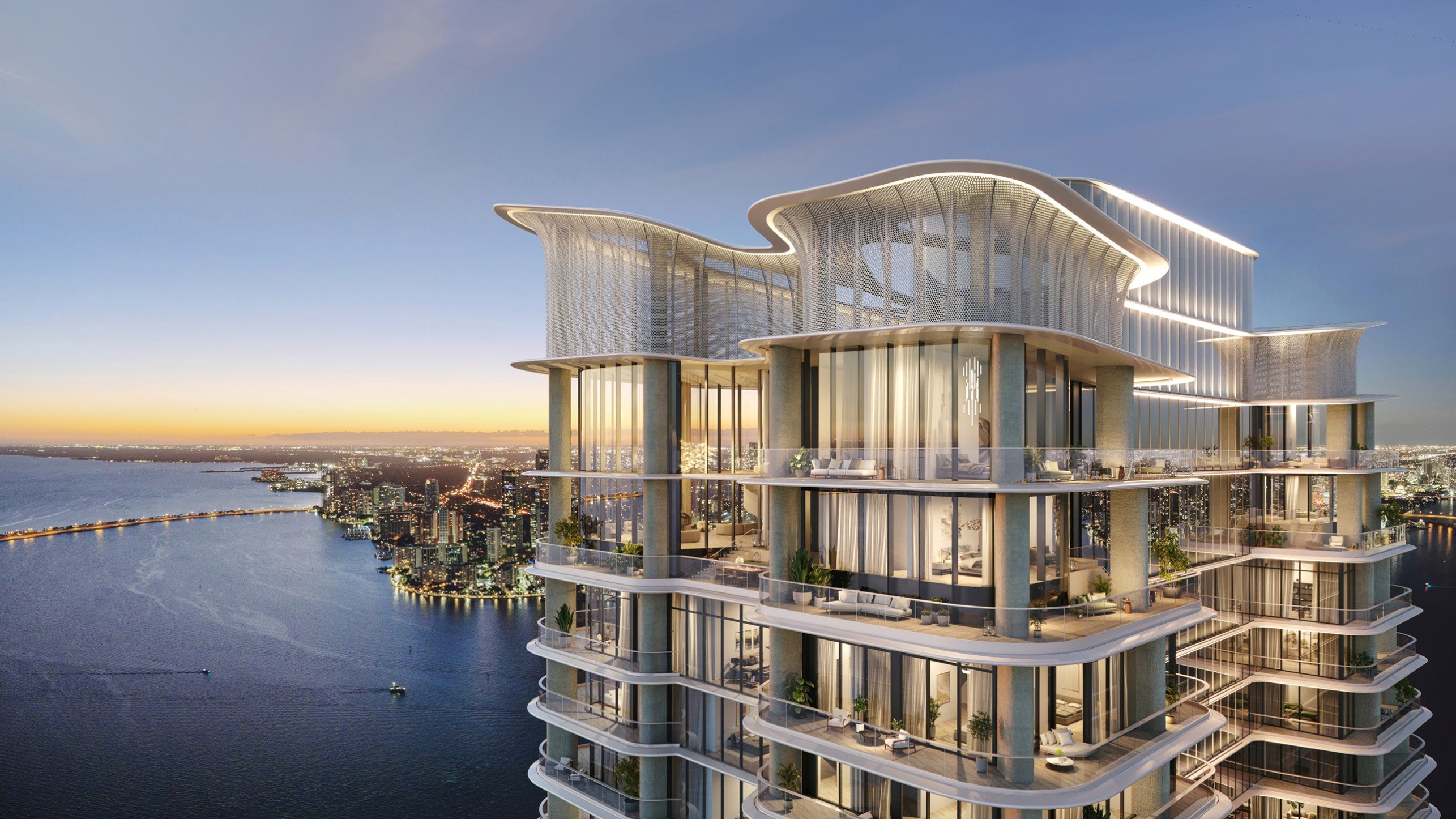
Within Miami, neighborhoods continue to separate by lifestyle and use case. Brickell is frequently the choice for buyers who want urban energy and a modern vertical lifestyle, while Miami Beach remains a primary magnet for beachfront identity and resort-level services. For buyers seeking a new, design-forward address in the core, 888 Brickell by Dolce & Gabbana reflects the branded, hospitality-adjacent direction shaping the area’s next cycle.
International buyers can generally purchase property in Florida, but “can buy” is not the same as “can close smoothly.” The difference is preparation.
Non-resident financing is typically stricter than financing for U.S. primary-residence buyers. In practice, that often means higher down payments, deeper asset documentation, and more conservative underwriting. Many international buyers choose to pay cash for speed and simplicity, but even cash closings still require clean source-of-funds documentation and careful coordination across banks.
Florida’s SB 264, effective July 1, 2023, restricts certain foreign nationals’ ability to purchase Florida real estate, including specific limits for Chinese nationals. The law’s applicability depends on facts that vary by buyer, visa status, and property type and location. International buyers should treat this as a threshold legal screen early in the process-not a last-minute closing question.
If you later sell as a foreign owner, U.S. FIRPTA rules can require withholding tax on the purchase from a foreign seller, commonly cited as 15% of the gross sales price, with limited exceptions or reductions. For many international owners, the practical takeaway is to plan your exit strategy in advance and structure ownership and compliance properly from day one.
Hong Kong’s appeal is inseparable from mobility. It consistently ranks at or near the top of global urban mobility and transport-readiness benchmarks, and public transport dominates travel through an extensive network that supports car-light living.
Miami’s lifestyle is different by design. It is not a transit-first city in the Hong Kong sense. Instead, it’s a waterfront metropolis where beaches, marinas, and private clubs can matter more than being steps from a rail station. For many buyers, that’s the point. The trade-off is that neighborhood selection carries more weight: a Brickell high-rise lifestyle, a Miami Beach resort corridor, or a more residential enclave each delivers a distinct daily rhythm.
In Miami Beach, buyers who want a quieter, design-led beachfront building that still reads as unmistakably “Miami” may gravitate toward 57 Ocean Miami Beach, where the value proposition centers on ocean adjacency, privacy, and elevated finishes.
In 2026, sophisticated buyers are increasingly underwriting carrying costs-not just purchase price.
Florida’s housing outlook for 2026 has been framed as pressured by affordability and insurance dynamics, with forecasts calling for price declines in several metros and persistent cost headwinds. Separately, Florida’s insurance market has faced escalating premiums and availability challenges, driven by catastrophe exposure, reinsurance, and insurer stress. For luxury buyers, the result is a more nuanced underwriting model: the “monthly nut” can move materially even when the mortgage is minimal.
For condo buyers specifically, cost pressures have also risen due to higher insurance and HOA burdens and post-Surfside structural-safety requirements that can trigger special assessments. This does not mean every building will face the same issues, but it does mean due diligence should include:
A clear read on reserves, recent engineering work, and the cadence of capital projects.
An understanding of the building’s insurance posture, deductible structure, and premium trajectory.
A realistic projection of HOA costs over a multi-year hold, not just today’s number.
In this environment, newer, well-capitalized buildings with a clear maintenance narrative can feel more legible to international owners. In Sunny Isles, where luxury towers cater to a global buyer base, Bentley Residences Sunny Isles represents a branded, amenity-rich approach for buyers who prioritize service, security, and a strong “arrival” experience.
Across Asia and the U.S., climate and physical-risk considerations are increasingly incorporated into real estate investment decisions, influencing underwriting and long-term value assumptions. In South Florida, that often becomes a practical checklist: elevation, flood exposure, building envelope, backup power, glazing standards, and a building’s demonstrated approach to storm readiness.
In Hong Kong, the risk conversation may be framed differently, with macro and policy considerations often part of the long-term evaluation for global allocators. In both markets, the shared principle is that “prime” now includes durability: the quality of the asset’s risk management has become part of its luxury identity.
In Fort Lauderdale, buyers often look for newer beachfront product with strong amenities and a well-defined management culture. Auberge Beach Residences & Spa Fort Lauderdale offers a reference point for that resort-residential hybrid-an appealing format for non-resident owners who want consistent service and a turnkey experience.
For international buyers weighing Hong Kong against Miami, the most useful approach is to match the city to the role the home will play.
You want a lifestyle base with more interior volume, terraces, and water-driven recreation.
You prefer a market with deep $1M+ inventory and a wide range of building typologies.
You value Florida’s tax profile, including the absence of a state personal income tax.
You are comfortable building a U.S.-based ownership stack: attorney, CPA, lender or banker, and property manager.
You want a compact, high-efficiency city lifestyle where public transport is the default.
Your strategy prioritizes dense urban access and “step-out-the-door” convenience.
You are underwriting within a market context that has been widely framed as recovering after a multi-year correction, with sentiment and conditions improving.
For some families, the best answer isn’t either-or-it’s portfolio logic: a primary urban base in Asia plus a winter base in South Florida.
Is Miami still a global luxury market if prices soften in parts of Florida? Yes. Miami’s luxury ecosystem is supported by deep $1M+ inventory and sustained international demand, even as broader affordability pressures influence some segments.
How international is South Florida compared with the rest of the U.S.? Foreign buyers represented 15% of South Florida dollar volume in 2025 versus 2% nationally, making the region unusually cross-border in practice.
Which countries are most active in South Florida luxury buying? By 2025 dollar volume, Colombia, Argentina, and Mexico were among the leading sources of foreign demand in the region.
Can foreigners buy property in Florida? Generally yes, but there are important restrictions for certain foreign nationals under Florida law, and buyers should obtain legal guidance early.
What is SB 264 and why does it matter? SB 264 is a Florida law effective July 1, 2023 that restricts certain foreign nationals’ ability to purchase Florida real estate, including specific limits for Chinese nationals.
Is it harder for non-residents to get a mortgage in Miami? Often yes. Non-resident financing typically requires stricter documentation and higher down payments than U.S. primary-residence loans.
What is FIRPTA and when does it apply? FIRPTA is a U.S. tax rule that can require withholding on the purchase of U.S. real property from foreign sellers, commonly cited as 15% of the gross sale price, with exceptions.
Why are Florida condo carrying costs a bigger topic in 2026? Insurance and HOA burdens have been rising, and structural-safety requirements can trigger special assessments, so buyers increasingly underwrite the total cost of ownership.
What makes Hong Kong’s lifestyle distinct for luxury buyers? It’s a transit-led city where public transportation dominates, enabling car-light living and high daily convenience in dense districts.
How should a cross-border buyer evaluate physical risk in coastal markets? Treat resilience as part of luxury due diligence, including building standards, insurance posture, and a clear plan for long-term carrying costs.
For a confidential assessment and a building-by-building shortlist, connect with MILLION Luxury.
If branded residences are on your mind — as a home or as an allocation — we would be glad to share what we are seeing, privately.
Begin a quiet conversation