Brickell and Downtown Miami have evolved into a true live-work-leisure core where luxury residences, hospitality-grade amenities, and walkable dining converge. For high-performing buyers, the differentiator is no longer square footage alone, but frictionless access: curated retail, private wellness, discreet meeting space, and transit that reduces decision fatigue. This guide ranks the most practical lifestyle drivers and maps them to the residential addresses that best complement an executive routine.
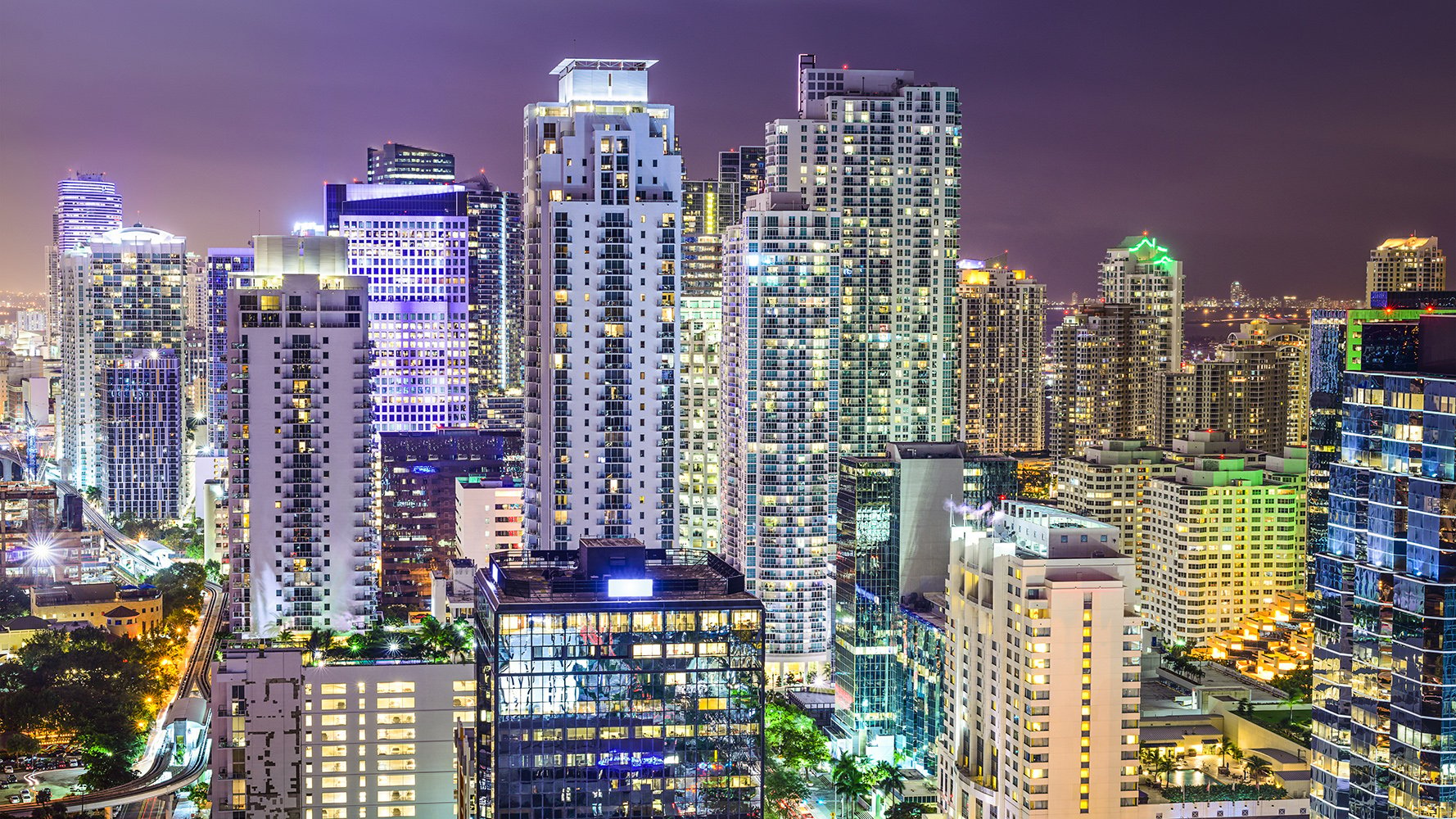
In South Florida’s ultra-premium market, the most valuable amenity is often time. Brickell and Downtown Miami have evolved into a lifestyle grid where dining, retail, wellness, and meeting space sit within a compact radius, letting a day move from workout to call to dinner without logistical drag. This is not about being “close to everything” in an abstract sense. It is about controllable routines: predictable commuting options, reliable dining for client-facing moments, and residences whose service culture matches the expectations of modern wealth. The result is a buyer profile that looks beyond finishes and focuses on systems: building operations, onsite programs, and neighborhoods that stay engaged after business hours.
1. Brickell City Centre, luxury retail and a deep dining roster
Brickell City Centre anchors daily convenience with a concentrated mix of restaurants and bars, paired with a luxury-leaning retail directory. For buyers, it operates as an extension of the home: a place for quick meetings, last-minute wardrobe needs, and dinners that don’t require a car. The advantage is consistency. When your neighborhood supports repeatable choices, you spend less energy on logistics, and more on the moments that matter.
2. The Metromover, free, frictionless connectivity
Brickell and Downtown benefit from a free transit loop that links key nodes across the urban core. For residents, this creates optionality: a way to move between offices, dining, and events without parking strategies or ride-hail timing. In luxury terms, the Metromover isn’t a substitute for a car. It’s a strategic alternative that keeps the day fluid.
3. Mary Brickell Village, walkable, always-on social energy
Mary Brickell Village remains a dependable neighborhood hub for restaurants and nightlife, with an outdoor, walkable feel that suits spontaneous plans. For residents, it delivers the “third place” modern city living demands: lively, close, and easy to join. When a district has a natural cadence of people and light, it supports safety, spontaneity, and a sense of community, without feeling manufactured.
4. Brickell City Centre coworking, polished space on demand
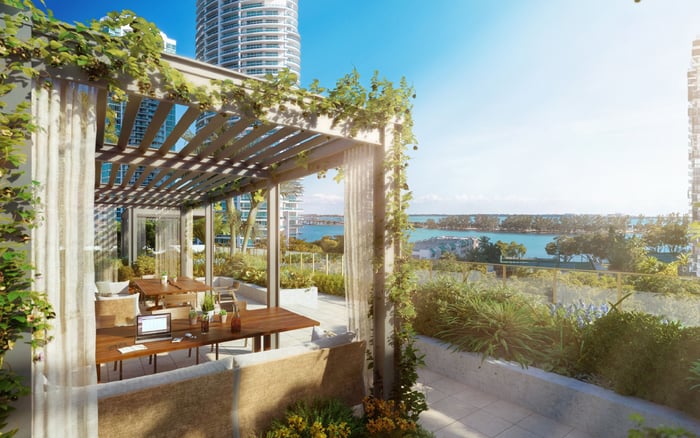
A coworking presence inside Brickell City Centre gives residents a flexible work setting for focus time, team days, and meeting rooms. The point isn’t novelty; it’s the ability to expand your work footprint without committing to long leases. For luxury condo owners, this matters most when a residence is optimized for living, but you occasionally need a boardroom-grade environment.
5. Executive office suites near residential towers, discreet, client-ready
Brickell and the adjacent core include executive office suite options designed for privacy, professional reception, and the kind of neutrality that supports sensitive conversations. This ecosystem pairs naturally with condominium living: you can keep the home serene while maintaining access to a business setting. For buyers who entertain professionally, separating “home” and “office” by a short walk or quick transfer can be a meaningful quality-of-life upgrade.
6. Downtown’s dining scene, breadth for everyday and occasion
Downtown Miami’s restaurant landscape delivers variety that supports both routine and celebration. The advantage is range: quick lunches, late dinners, and rooms that feel appropriate for out-of-town guests. When dining is truly neighborhood-based, entertaining becomes effortless, and weekday life feels less transactional.
7. Spa and fitness as baseline, wellness that matches city intensity
In leading Brickell towers, wellness has shifted from a secondary feature to a core identity: fitness programs, spa-like environments, and recovery-focused spaces that support high-demand schedules. A strong wellness program reduces the temptation to outsource self-care across the city. It turns health into an appointment you can keep.
8. Hotel-level services, the residence as a managed experience
Hospitality-integrated living continues to shape buyer expectations: concierge-style support, service consistency, and amenity programs designed with guest experience in mind. This is the quiet luxury of operations. When a building is run like a five-star property, life feels smoother, and hosting feels elevated.
9. Ultra-luxury branded amenity programs, curated, not generic
The newest wave of luxury development treats amenity concepting as a signature: spaces designed to look and function like destinations, not checklists. The aim is a private-club atmosphere without leaving home. For buyers, the question becomes: are the amenities beautiful, and are they usable on a Tuesday?
10. The “workcation” mindset, architecture supporting blended days
Luxury living increasingly assumes that work and leisure will overlap. Residences that support this reality, through quiet zones, thoughtful amenity scheduling, and service support, feel more aligned with how executives actually live. The best buildings don’t just provide space. They provide momentum.
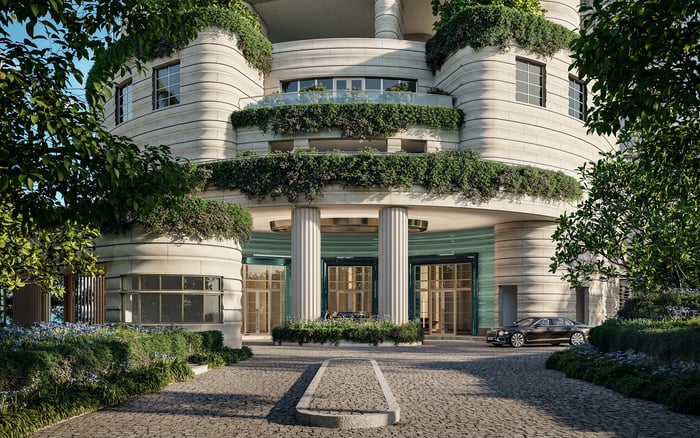
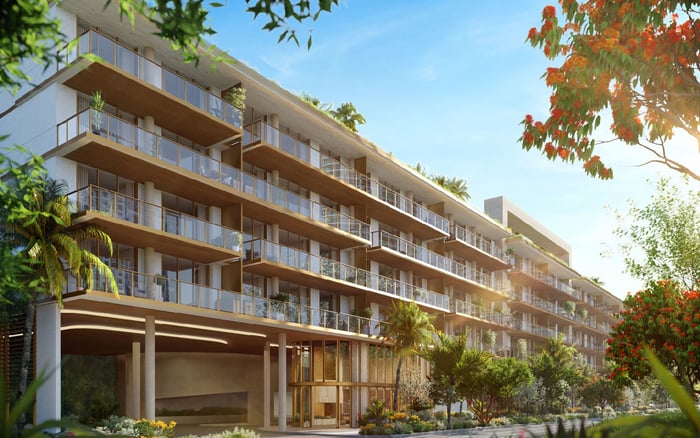
Brickell’s appeal is the ease of stitching together a complete day. For buyers who want a refined, design-forward base in the center of the action, 2200 Brickell offers a way to stay close to Brickell’s commercial energy while maintaining a more residential sensibility. For those who prioritize the next chapter of branded luxury in the neighborhood, 888 Brickell by Dolce & Gabbana reflects the city’s shift toward statement-making, hospitality-informed living. In a district defined by choice, the most meaningful differentiator can be identity: a building that reads like a personal signature. On the waterfront side of Brickell, St. Regis® Residences Brickell captures the market’s direction: service culture, considered amenity programming, and a sense of arrival that matters when you host frequently. Downtown, the energy skews more cultural and panoramic, with a different rhythm of dining and events. Buyers who want that perspective with a distinctive silhouette often gravitate to Aston Martin Residences Downtown Miami, where proximity to the urban core supports an “out-the-door” lifestyle.
Brickell reads as the executive center: a concentration of offices, polished retail, and a dinner scene built around convenience. Downtown can feel more eclectic, with broader dining variety and an urban texture that appeals to buyers who want to be close to arts, events, and the larger core. The deciding factor is usually cadence.
If you want repetition and predictability, Brickell’s nodes deliver.
If you want variety and a broader social map, Downtown offers range. In both cases, free transit connectivity makes the two districts feel more complementary than competitive. Many residents live in one and treat the other as a second living room.
Luxury buyers can avoid amenity fatigue by focusing on what will be used weekly. First, evaluate daily anchors: Where do you take meetings? Where do you train? Where do you dine when you don’t want to think? Brickell City Centre’s combined dining and luxury retail mix answers two of those questions in a single destination, and Mary Brickell Village covers the social side with walkable momentum. Second, test for optionality: free transit matters more than it appears. A Metromover ride can convert a “maybe” plan into a “yes,” especially on nights when parking feels like a negotiation. Third, separate aesthetics from operations: a beautiful amenity deck is only as good as its maintenance, staffing, and rules. The new benchmark is hospitality-style consistency, where service is anticipatory rather than reactive.
Brickell and Downtown Miami are no longer simply places to live near work. They are integrated environments where luxury is expressed through proximity, service, and the ability to move through the day with minimal friction. When the neighborhood grid is right, the residence becomes more than an address, it becomes a platform.
Is Brickell City Centre primarily shopping, or is it a dining destination too? It is both, with a dedicated roster of restaurants and bars alongside luxury retail.
Is the Metromover actually free to ride? Yes, the Metromover is a free system connecting Brickell and Downtown Miami.
Does Brickell have coworking options inside major mixed-use projects? Yes, coworking operates within Brickell City Centre with flexible memberships.
Are there executive office suite options near condo towers in the urban core? Yes, the area includes executive office suites integrated into or near towers.
Is Mary Brickell Village considered walkable for dining and nightlife? It is widely experienced as walkable and active with restaurants and nightlife.
How should buyers compare Brickell and Downtown for day-to-day living? Brickell is more executive and polished; Downtown skews broader and eclectic.
Do luxury buyers still value retail proximity in a delivery-first era? Yes, because last-minute needs and client-facing moments benefit from immediacy.
What’s the most practical “amenity” for a busy schedule? Connectivity, dining reliability, and a quiet place to work are used most often.
Do hotel-level services matter in a private residence? They can, because consistent operations and concierge support reduce friction.
Can a residence support a blended work-leisure routine without feeling like an office? Yes, when spaces are thoughtfully planned for privacy, focus, and recovery.
For tailored guidance, speak with MILLION Luxury.
If branded residences are on your mind — as a home or as an allocation — we would be glad to share what we are seeing, privately.
Begin a quiet conversation