A discreet, buyer-oriented look at why the Miami River corridor is drawing luxury attention, what the development pipeline signals for pricing and lifestyle, and how to underwrite noise, access, and rental strategy.
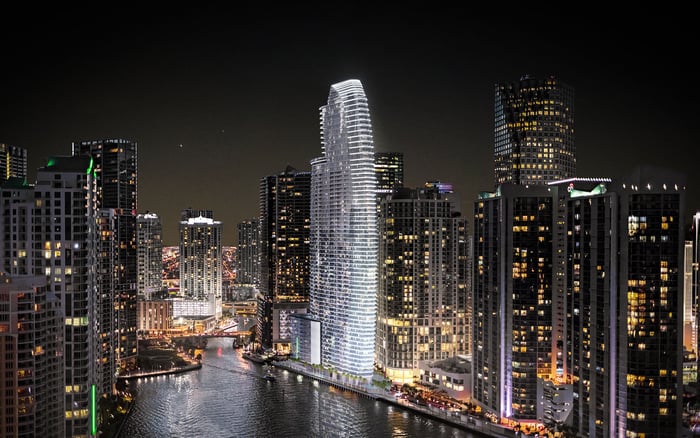
For decades, the Miami River functioned as a boundary: a working corridor threaded between Brickell and Downtown, defined by marinas, industrial remnants, and a patchwork of residential pockets. That framing is shifting. The catalyst isn’t simply “waterfront.” It’s scale, planning, and the arrival of projects that treat the river as the address - not the afterthought.
Along the corridor, 9,770 residential units have been delivered or are under construction, with another 9,270 units approved but not yet built. In luxury real estate, scale matters because it sets the trajectory for the next decade: whether the river becomes cohesive, walkable, and truly “sticky” for end users, or stays a collection of disconnected towers.
In parallel, the public realm is being approached with more intent. Riverwalk and greenway improvements are positioned as connective tissue - expanding pedestrian access and raising expectations for waterfront edges. For buyers who value daily life as much as views, that shift from private frontage to usable shoreline is the difference between being near the river and actually living on it.
A pipeline approaching 19,000 units - combining delivered/under construction with approved - can read like a caution flag. But luxury pricing doesn’t move on supply alone. It moves on absorption, delivery cadence, and whether the product is truly differentiated.
In Miami’s luxury condo market, Q3 2025 recorded 333 closed luxury sales, up 3.1% year-over-year, with a $1.8M median price, up 4.3% year-over-year. More telling, the $2M+ segment posted 152 closed sales, up 15.2% year-over-year. That points to real depth at the top end, even as the broader environment remains selective.
Inventory has hovered around 20 months of supply, consistent with a buyer-leaning market. For the Miami River, that translates into leverage: purchasers can negotiate with more confidence, and developers must present a sharper point of view - stronger amenity programs, better sound mitigation, and a clearer articulation of “why here.”
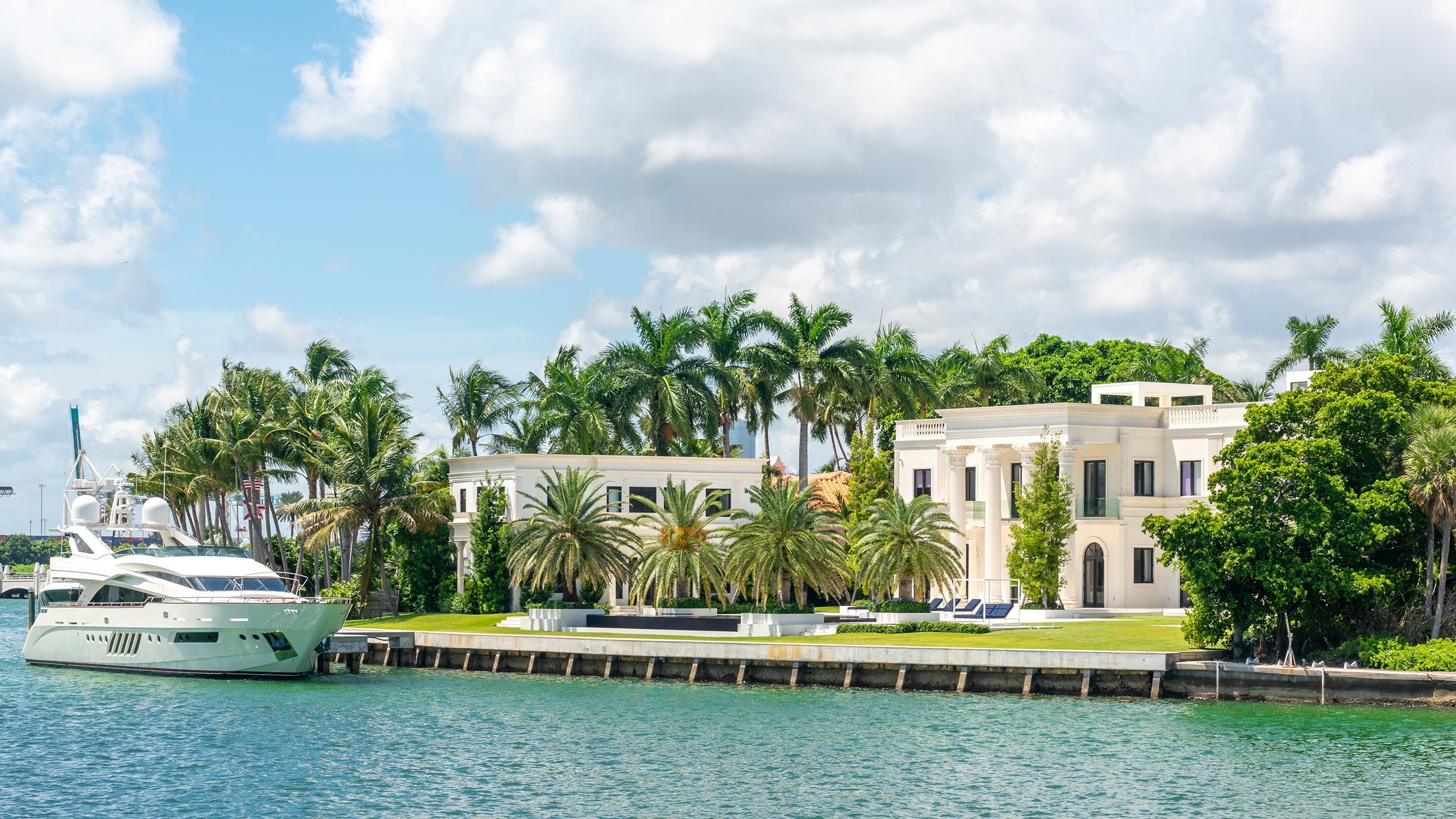
As a reference point for what established waterfront luxury feels like, Miami Beach’s trophy inventory sets expectations around service, privacy, and lifestyle adjacency. Consider the discretion and design polish buyers associate with Faena House Miami Beach, or the hospitality-forward DNA of Setai Residences Miami Beach. The river’s next chapter will be measured against those standards, even if its lifestyle reads more urban than oceanfront.
Luxury buyers often pay for what’s private: elevators that open into residences, staff who remember preferences, amenities designed as true extensions of the home. On the Miami River, the differentiator may also be what’s shared - being able to walk the water’s edge without detours, and experiencing the river as a promenade rather than a distant view.
Greenway guidance and design standards have been established to support continuous waterfront access and elevate what gets built along the shoreline. If delivered consistently, two implications follow.
First, value becomes less dependent on being the best building, because a well-executed public realm elevates the entire address. Second, micro-location becomes easier to underwrite. Residences that connect cleanly to the riverwalk - with safer crossings and fewer dead zones - will live meaningfully differently than towers that simply sit beside the water.
For buyers used to the clarity of an oceanfront walk, an analogous example is how direct shoreline access shapes the daily experience at an oceanfront boutique like 57 Ocean Miami Beach. The river can’t replicate the Atlantic, but it can deliver an equally compelling ritual: morning movement, sunset walks, and straightforward access to waterfront dining and marinas.
The river’s next-hotspot credibility strengthens when it isn’t purely residential. Riverside Wharf has broken ground as a $350M hotel and entertainment complex on the Miami River, planned as a nine-story development with 200,000+ square feet and a 167-key hotel. Its program includes a 30,000-square-foot nightclub and a 12,000-square-foot event hall.
That kind of anchor cuts both ways. It increases the area’s gravitational pull, helping the river register as an “evening neighborhood” rather than a corridor you pass through. It also introduces externalities - noise, traffic, and late-night activity - that can be misaligned with certain luxury buyer profiles.
This is where underwriting becomes intensely local. A river-facing unit with postcard views can still disappoint if the sound profile doesn’t fit the resident’s life. Conversely, a residence set slightly back - paired with better acoustic separation and more efficient vehicle access - may deliver the superior, day-to-day experience.
For buyers who prefer a controlled, service-centric environment, branded residential models elsewhere in the market offer a benchmark for operational standards and privacy protocols. In Miami Beach, for instance, The Ritz-Carlton Residences® Miami Beach and Casa Cipriani Miami Beach reflect the idea that the building is also a curated lifestyle system. On the river, the projects that win will likely be those that can deliver a similarly calibrated sense of arrival, security, and quiet - even within a more dynamic urban setting.
Several headline projects signal that the corridor is no longer a secondary consideration.
Faena Residences Miami is planned as two 68-story towers with 440 residences on the Miami River, associated with architect Rafael Viñoly, and positioned as a branded, culture-forward luxury offering. Sales have been launched by Fortune International Group and KAR Properties, underscoring the caliber of developer attention on the river.
Separately, Prosper Group partnered with Belgium-based Versluys Group on a $650M project along the Miami River in Brickell, planned as a 60-story tower with 158 residences. The disclosed assemblage includes parcels at 99 SW 7th St, 66 SW 6th St, and 625 SW 1st Ave.
Taken together, these moves signal a specific market bet: that high-design, brand-led product can pull demand into the river corridor - not only from local move-up buyers, but also from global purchasers who already view Miami as a prime residential market.
Luxury on the river is not a single-variable decision. Before committing, evaluate the corridor the way you would any high-value micro-market: through friction points, not marketing.
Sound and vibration profile Identify proximity to major entertainment uses, bridges, and marine traffic. Inquire about glazing specifications and whether mechanical systems are designed for quiet nighttime operation.
Water access versus water adjacency A view isn’t the same as usability. Ask how the building connects to the riverwalk, whether there is a safe, direct pedestrian route, and whether the shoreline feels activated or isolated.
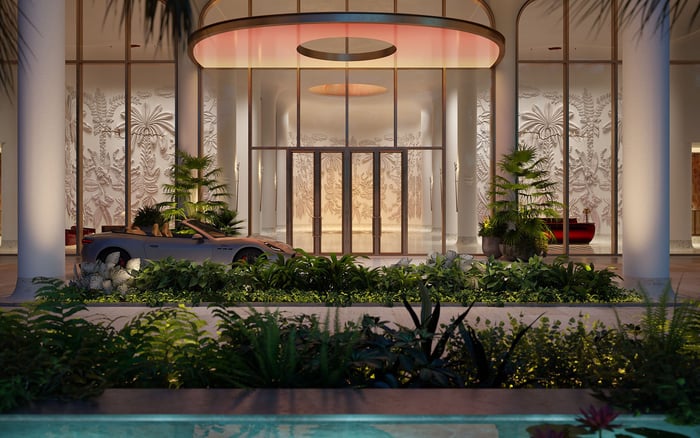
Arrival, privacy, and security Riverfront areas can draw public activity. Evaluate porte-cochère design, guest screening, and how resident circulation is separated from hospitality or retail components.
Resale liquidity In a buyer-leaning market, the strongest resale confidence typically sits with the clearest identity: distinctive architecture, a durable brand, and a livable layout that holds up beyond the initial “wow.”
Insurance and ownership costs Underwrite total cost of ownership conservatively. In luxury condos, the gap between a strong and a strained budget often shows up in reserves, long-term maintenance planning, and staffing models.
Miami’s rental backdrop remains supportive, with asking rents up 1.6% year-over-year and vacancy at 6.3% as of August 2025, tighter than the national average vacancy of 7.1%. For the river, that supports an investment narrative - particularly for buyers who want optionality: a pied-à-terre that can be leased when not in use.
The caution is reputational. In ultra-premium residential, the line between “flexible” and “transient” is consequential. Buildings that allow rental strategies must also maintain elevated operational standards so the ownership experience remains consistent for full-time residents.
If your objective blends personal use with leasing, prioritize properties with thoughtful separation of amenities, controlled access, and management that protects the building’s tone. That’s how rental capability becomes an advantage rather than a dilution.
The Miami River is likely to evolve into a more complete lifestyle district, but it won’t reward indiscriminate buying. The corridor’s future is being shaped by three forces: a substantial residential pipeline, a more deliberate waterfront public realm, and mixed-use anchors that bring energy to the shoreline.
For end users, the upside is a new kind of waterfront living - closer to Brickell’s intensity, more layered than a single beachfront strip, and increasingly connected through walkable edges. For investors, the opportunity is selecting product that can hold its identity as supply delivers and neighborhood character matures.
The most confident thesis isn’t “it’s on the river.” It’s this: the building is positioned for the river’s next decade, with the right micro-location, the right operating model, and a daily experience that feels quietly inevitable.
Is the Miami River luxury market already established, or still emerging? It’s moving from emerging toward established as major towers and mixed-use anchors advance, but micro-location still matters more than the broader label.
How large is the Miami River residential pipeline? There are 9,770 units delivered or under construction along the corridor, with 9,270 more approved but not yet built.
Will all approved units be built? Not necessarily; timing and delivery often depend on financing, market absorption, and entitlement execution.
Does a buyer-leaning market help Miami River purchasers? Yes; additional supply and longer inventory can improve negotiating leverage and increase the importance of choosing differentiated product.
What is the biggest lifestyle trade-off on the river? Noise and traffic can vary block by block - especially near large entertainment uses - so a site visit at different times is essential.
Are riverwalk and greenway improvements meaningful for value? They can be, because continuous waterfront access turns the shoreline into a daily amenity rather than a visual feature.
How is ultra-luxury demand behaving in Miami? The $2M+ segment posted 152 closed sales in Q3 2025, up 15.2% year-over-year, signaling resilience at the top end.
Can Miami River condos work as rentals? Potentially; Miami’s vacancy has been around 6.3%, but the best outcomes come from buildings that protect privacy and operations.
Is a branded residence important on the river? Often, yes - branding can help define service standards and resale identity as the corridor becomes more competitive.
What should I prioritize when comparing two riverfront buildings? Prioritize livability fundamentals: quiet, access, privacy, and an operating model that stays strong after the newness fades.
For a confidential assessment and a building-by-building shortlist, connect with MILLION Luxury.
If branded residences are on your mind — as a home or as an allocation — we would be glad to share what we are seeing, privately.
Begin a quiet conversation