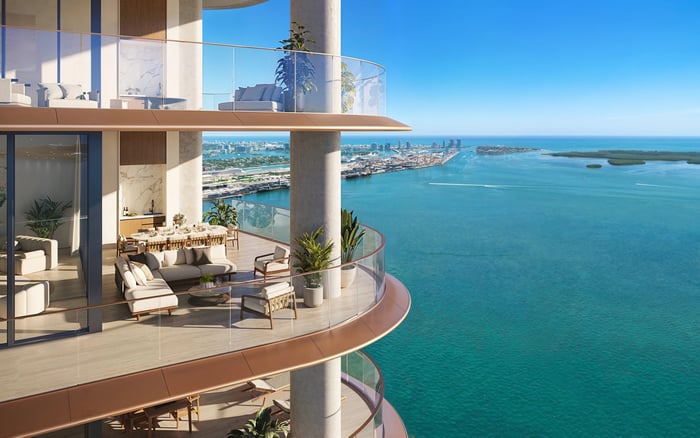
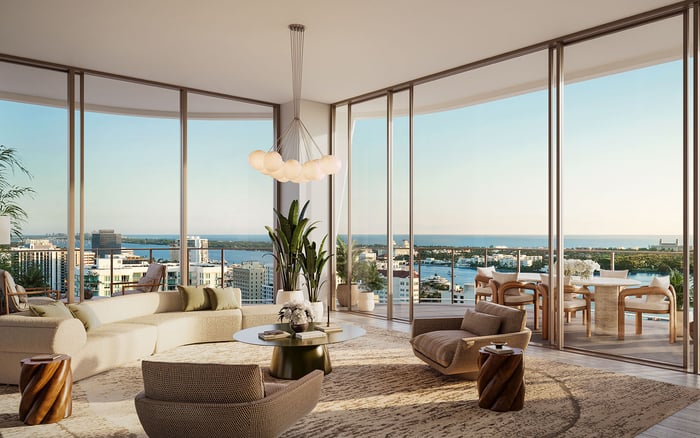
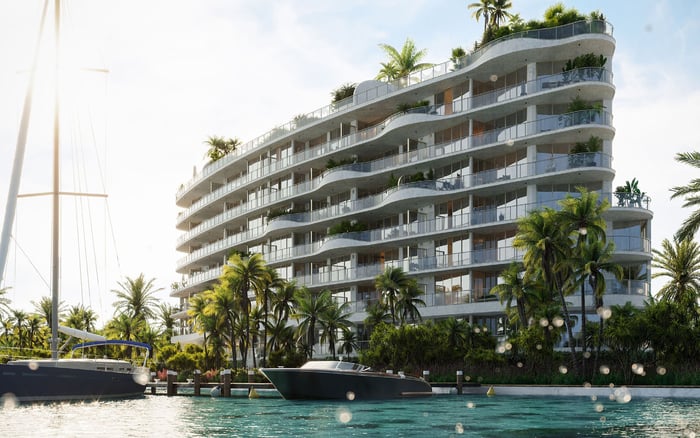
Boca Raton and West Palm Beach are converging on a new definition of luxury: fewer residences, more glass, and terraces designed as true outdoor rooms. From Boca’s Modern Mizner sensibility to West Palm Beach’s skyline-facing waterfront living, today’s buyer is comparing not just square footage but exposure, ceiling height, and how amenities extend the home’s daily rhythm.
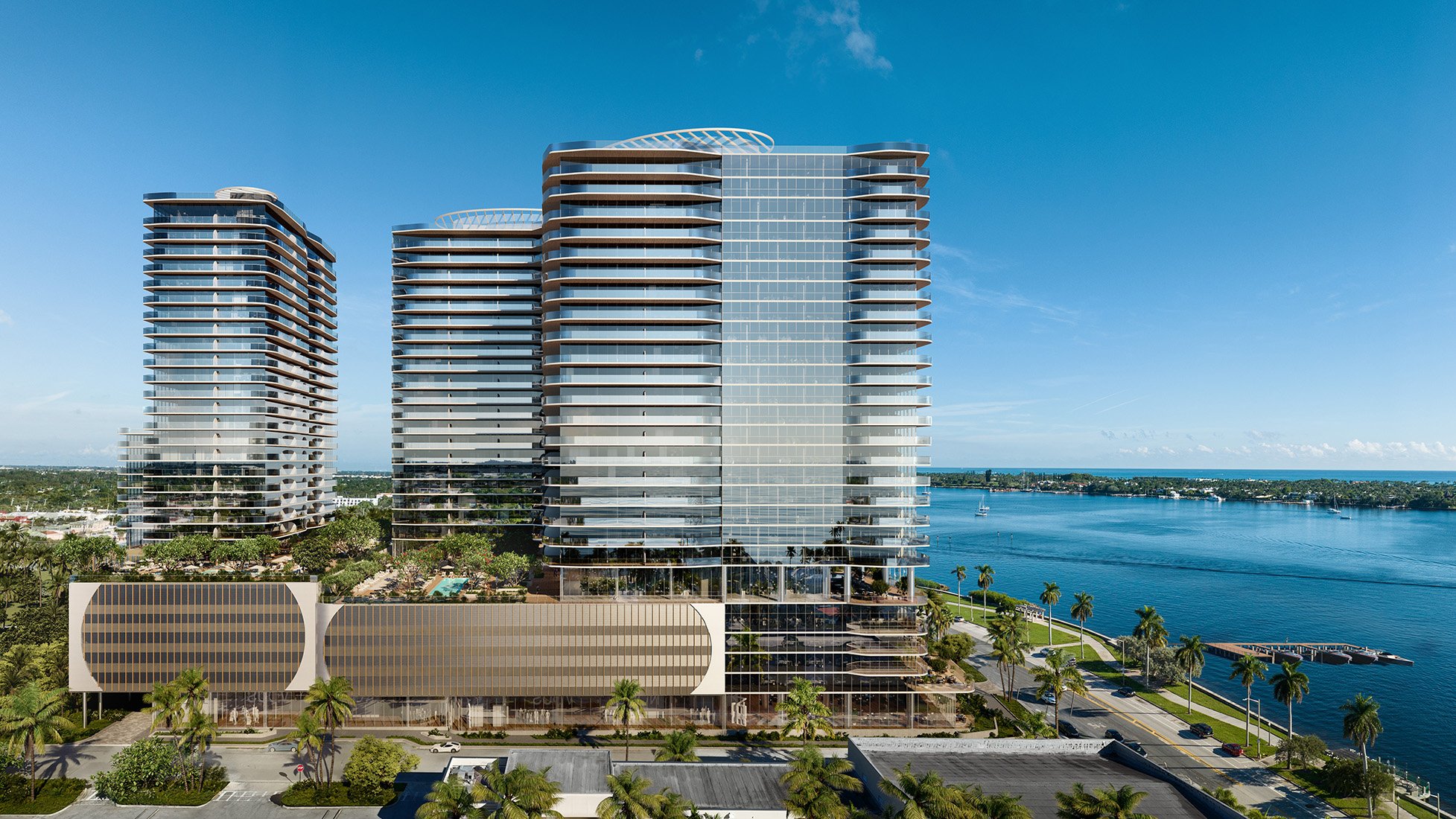
Boca Raton and West Palm Beach have long drawn different buyer profiles, yet today’s most competitive new-construction discussions are converging. Buyers are scrutinizing view corridors, terrace depth, glazing quality, and the intimacy that comes with boutique scale. The goal isn’t simply to be “near” the water or “in” Downtown - it’s to live with daylight, privacy, and outdoor space that performs like an additional room.
Here, the details decide. A 10-story building with only a handful of homes per floor can deliver more discretion than a far taller address. A truly deep terrace changes day-to-day living in a way a narrow balcony never will. And ceiling height can reset the entire experience of light and proportion before finishes even enter the conversation.
For South Florida’s ultra-premium audience, this is less a Boca-versus-West-Palm debate and more a question of what kind of luxury you want to inhabit: discreet and boutique, or skyline-forward and cosmopolitan. Increasingly, the most compelling options manage to offer elements of both.
Downtown Boca has leaned into a precise form of modern luxury: smaller buildings, thoughtful massing, and a preference for clean lines and glass that still nods to the city’s traditional cues. Boutique inventory can create the rare feeling of “knowing the building” - a texture larger towers struggle to replicate.
A clear example of this boutique posture is Glass House Boca Raton, positioned as a modern, all-glass concept with extensive floor-to-ceiling glazing. Its 10-story scale and limited 28-residence count naturally support quieter corridors and a more residential cadence. Home sizes are marketed in a roughly 2,500 to 3,900 square foot range - an offering that, paired with a glass-forward envelope, speaks to buyers who want volume and daylight without the sensation of a megatower. In the context of Boca-ratón, that scale can be the difference between simply being “in town” and feeling fully “in a building” that fits.
Terraces carry particular weight here. When private outdoor space is treated as primary living area - not a checkbox - it can structure everything from morning routines to entertaining. Glass House residences are marketed with private terraces approximately 8 to 12 feet deep, with glass railings intended to protect sightlines. That depth isn’t just visual; it’s operational. It’s the difference between stepping outside and actually living outside.
For buyers who want a larger “campus” feel while staying in a walkable core, Alina Residences Boca Raton offers a different interpretation: a three-building community commonly referenced as Alina 200, 210, and 220. The overall plan is positioned as a multi-building luxury environment, emphasizing floor-to-ceiling glass and expansive terraces to maximize light and views. If your priority is a more resort-like residential environment without leaving Downtown, the campus concept can read as the best of both worlds.
West Palm Beach has developed a confidence that feels distinctly urban for South Florida: a more pronounced skyline, proximity to the Intracoastal, and an audience that often wants their address to read “city” rather than “enclave.” That doesn’t imply buyers are less privacy-oriented; it suggests privacy is increasingly delivered through programming, plan design, and amenity curation rather than pure scarcity.
For the buyer seeking a waterfront-forward posture with a globally recognized service ethos, The Ritz-Carlton Residences® West Palm Beach is often evaluated alongside other top-tier, hospitality-aligned choices in the region. In West-palm-beach, the most competitive buildings tend to sell the full “day plan” of ownership: arrival, service, wellness, and entertaining, all within a controlled environment.
Likewise, Mr. C Residences West Palm Beach speaks to a buyer who wants a more contemporary, design-driven lifestyle signature in a city that is increasingly at ease with modern towers. The appeal of West Palm Beach is maintaining a metropolitan rhythm while still living within South Florida’s open-air sensibility.
Even when comparing Boca and West Palm Beach as second-home markets, the practical distinctions remain consistent. West Palm Beach tends to reward buyers who value a skyline-facing view experience and a more explicit Downtown identity. Boca tends to reward buyers who prioritize a quieter, boutique cadence with strong walkability.
Views are emotional; exposure is technical. Strong buyers approach the subject like architects: what faces water, what faces city, what is protected, what is future-proof. In both Boca and West Palm Beach, the most reliable way to evaluate this is through official floor plans and the way each residence sits within the building.
In Boca, a glass-forward tower can amplify any view it’s given - but it also heightens interior brightness and privacy considerations. Floor-to-ceiling glazing doesn’t forgive poor exposure; it intensifies it. Conversely, with a clean view corridor, glass can make even mid-level heights feel cinematic.
In West Palm Beach, verticality changes the math. Height can create distance from street activity and expand the panorama, but the “best” view remains personal: some buyers want sunrise energy and water, others want sunset tones and city lights. The premium often follows how cleanly a building’s massing frames those moments.
If you’re choosing between the two cities, define the view you want to live with daily - then work backward into the floor plan, not the other way around.
In South Florida, terraces aren’t accessories. They’re central to how sophisticated owners use their homes - especially in a second-home context, where a residence should feel like an escape the moment you arrive.
At the very top end of Boca’s new inventory, terraces are being treated with real culinary intent. At The Residences at Mandarin Oriental Boca Raton, residences emphasize large private terraces and specified outdoor kitchen and grilling components, including a built-in gas grill and ventilation. That detail is consequential: it signals outdoor dining as a routine, not an occasion.
Scale is also part of the terrace story. A terrace that is 8 to 12 feet deep, as marketed at Glass House, is deep enough to zone: dining on one side, a lounge moment on the other, with circulation that doesn’t feel tight. This is where “balcony” and “terrace” stop being labels and start functioning as a lifestyle.
West Palm Beach terraces often play a different role: they become the threshold between skyline and interior, a place to watch the city’s light shift over water and streets. In that context, the terrace acts as a pause button in a city gaining momentum.
Luxury buyers rarely announce they’re shopping for ceiling height, but they register it instantly. Volume is a quiet status symbol because it’s experiential: it changes how art reads on a wall, how daylight travels through a room, and how calm a space can feel after dark.
Mandarin Oriental’s Boca Raton residences are notable for tiered ceiling heights by residence type and level. Publicly disclosed ceiling heights include 12 feet in Garden Suites, 11 feet on Level 5, 10 feet on Levels 6 through 10, 11 feet in Tower Suites, and 12 feet 2 inches in penthouses. That stratification matters. It creates a clear hierarchy and lets buyers match lifestyle to volume rather than assuming every floor lives the same.
Glass House is marketed with approximately 9-foot ceilings, depending on plan, paired with extensive glazing. That combination can still read distinctly modern and bright, particularly when the terrace and window wall pull the exterior into the interior. The key is knowing the proportion you prefer: lofty and grand, or sleek and efficient with strong transparency.
For many buyers, the best answer isn’t a number - it’s how the space feels with the doors open, the terrace in use, and the view framed at eye level.
Amenities are increasingly shaped around the view, not simply around programming. In boutique buildings, that often means fewer spaces, but with sharper intent.
Glass House positions rooftop amenities as a view feature, with a rooftop pool and deck marketed for ocean, Intracoastal, and city views. That matters because a rooftop experience can effectively “lift” the entire building, allowing even non-penthouse owners to access a higher horizon line.
Alina similarly emphasizes elevated amenity experiences, including a 75-foot rooftop lap pool as part of the Alina 220 amenities. This is a different expression of luxury: not just having a pool, but having a pool that feels architecturally placed to maximize perspective and privacy.
In West Palm Beach, amenity expectations tend to broaden. Buyers often want wellness, arrival experience, and service flow calibrated to an urban lifestyle. The best buildings are the ones where amenities are not crowded, not performative, and never an afterthought.
The most satisfied owners tend to choose the city that matches their daily rhythm.
Boca-ratón often suits the buyer who values a polished, discreet environment with walkability and a boutique residential feel. They may prefer a building where the lobby is quiet and the social energy is optional, not constant. They also tend to prize terraces as genuine outdoor rooms, used for dining and hosting.
West-palm-beach often suits the buyer who wants a clearer urban identity: skyline, water, and an address that reads cosmopolitan. They may use the home more frequently as a base for culture, restaurants, and travel, and they tend to appreciate the “full stack” of amenity and service thinking.
Both profiles care about privacy, but they define it differently. Boca buyers often want privacy through scarcity. West Palm buyers often want privacy through design and operations.
If you’re narrowing down options, ask three practical questions.
First: do you want boutique intimacy or metropolitan energy when you step into the lobby? The answer will guide the building scale you should target.
Second: is your terrace a visual feature or a functional room? If you intend to dine outdoors regularly, terrace depth, wind exposure, and grilling capability become essential.
Third: what is your preferred “light signature”? Morning light, afternoon warmth, and evening city glow each create a different interior atmosphere. Once you know what you want, you can shop exposure with far more precision.
Buyers who take these questions seriously tend to end up with a home that feels inevitable, not merely impressive.
Is Boca Raton or West Palm Beach better for boutique luxury condos? Boca Raton currently reads more boutique in feel, especially in smaller, glass-forward buildings.
What makes terraces feel truly livable versus decorative? Depth, usable zoning for dining and lounging, and details like outdoor grilling infrastructure.
Do ceiling heights vary within the same new tower? Yes, some projects disclose tiered ceiling heights by level or residence type.
Are all-glass buildings practical in South Florida? They can be, but exposure, privacy, and heat management become more important to evaluate.
How should I compare views between two buildings? Start with official floor plans and orientation, then consider how glazing frames the horizon.
Is a rooftop pool just an amenity, or does it change value? When designed as a view platform, a rooftop can elevate the daily experience for all residents.
What does a “campus-style” condo community mean in Downtown Boca? It typically refers to multiple buildings planned together, with shared luxury grounds and amenities.
Why do buyers talk about volume and proportion so much now? Because ceiling height and glass strongly shape daylight, art display, and overall calm in the home.
Do smaller buildings always feel more private? Often, yes, because fewer residences can mean quieter common areas and fewer daily touchpoints.
What is the fastest way to narrow my search between the two cities? Decide whether you want boutique intimacy or urban energy, then align exposure and terrace use.
For a confidential assessment and a building-by-building shortlist, connect with MILLION Luxury.
If branded residences are on your mind — as a home or as an allocation — we would be glad to share what we are seeing, privately.
Begin a quiet conversation