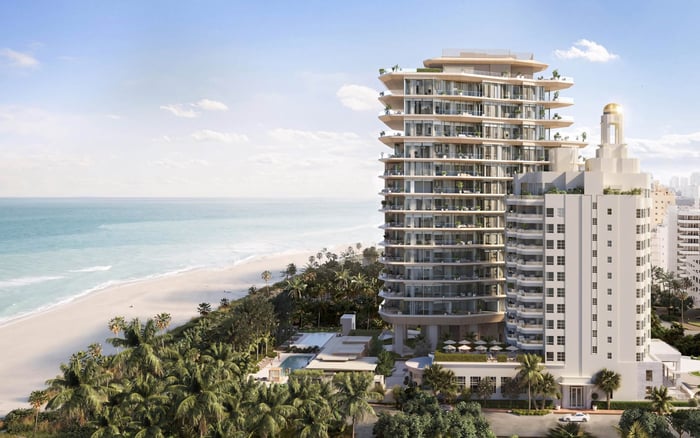
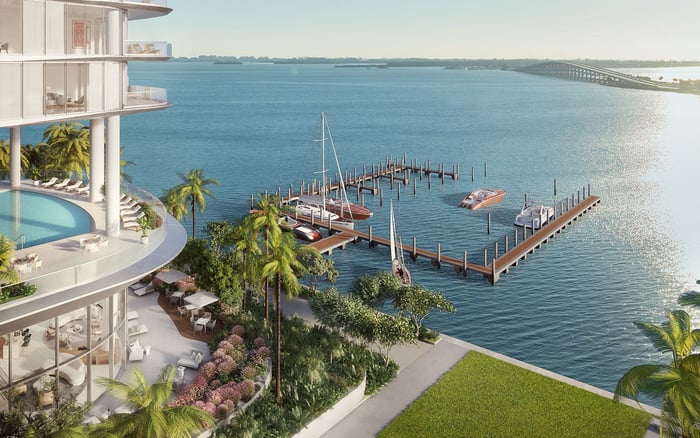
Star Island and the Venetian Islands sit only minutes apart in Biscayne Bay, yet they trade on different versions of Miami luxury. One is a singular, guarded enclave with one bridge in and out. The other is a connected chain of six islands with a broader mix of waterfront estates and condominium living. For buyers weighing privacy, architecture, and yacht practicality, the difference is less about distance and more about daily friction: access points, neighborhood texture, and the kind of waterfront you actually use.
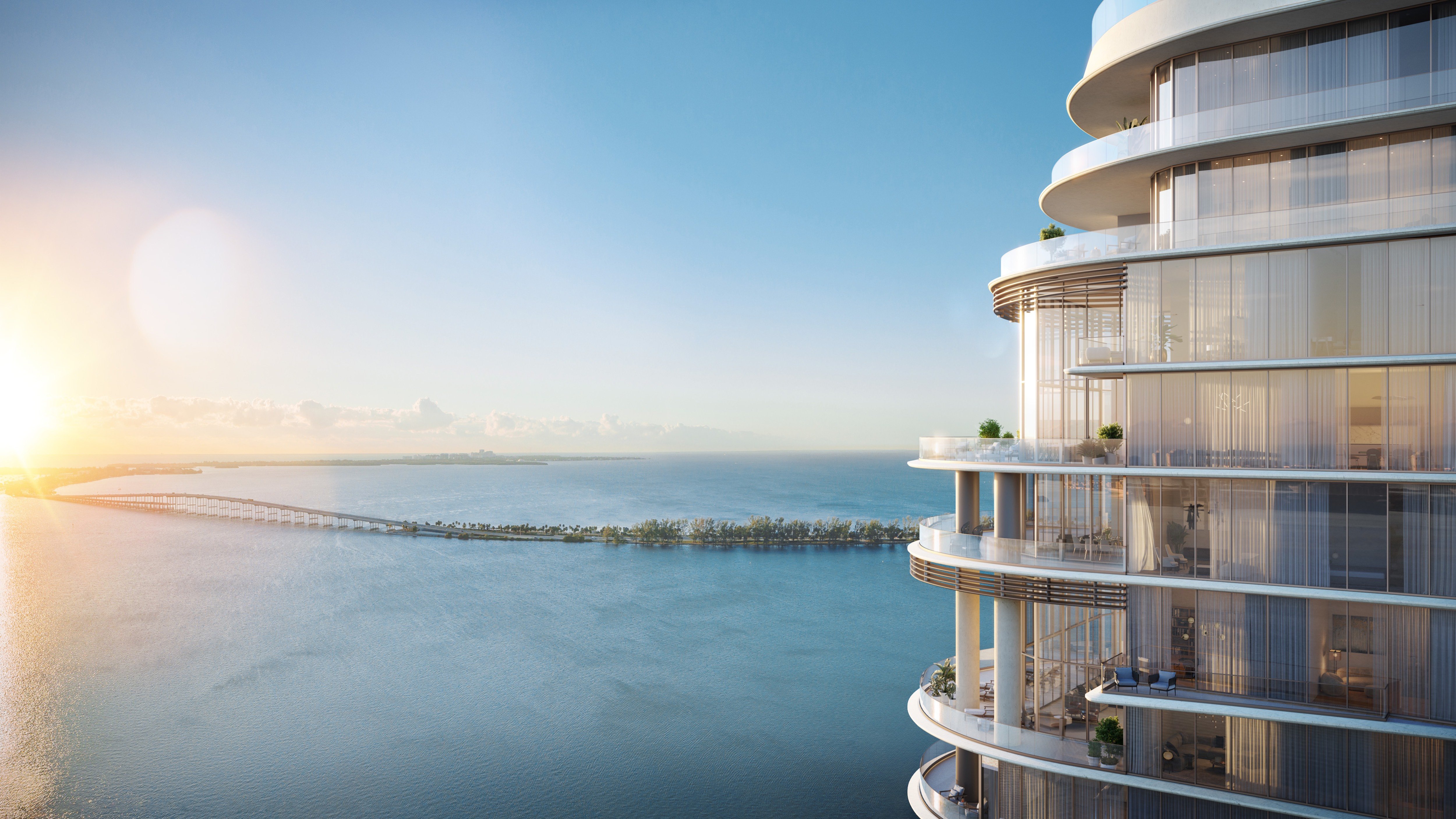
In Miami Beach, the most decisive luxury purchases are rarely about square footage alone. They’re about control: over privacy, over arrivals, over views, and over how much of the city is allowed to touch day-to-day life.
Star Island and the Venetian Islands are both man-made addresses in Biscayne Bay, both waterfront-forward, and both embedded in Miami’s global luxury narrative. Yet in practice, they live differently.
Star Island was created in 1922 through dredging and fill and developed as an exclusive residential enclave. It is gated and guarded, with a single bridge entry that materially limits through-traffic and elevates discretion. The Venetian Islands, by contrast, are a chain of six man-made islands between Miami and Miami Beach, connected by the Venetian Causeway. That connectivity creates a different kind of cachet: still rare, still expensive, but more varied in housing, architecture, and daily movement.
Privacy isn’t an abstract promise here. It’s built into the map.
Star Island’s single access point operates as a psychological boundary as much as a physical one. For owners who prioritize a clean perimeter, predictable entry, and fewer “accidental” pass-through drivers, the island’s design naturally supports that preference. The result is an enclave that feels curated before a buyer ever steps inside the home.
The Venetian Islands operate differently. Because the islands sit along a causeway that links Miami to Miami Beach and includes bascule drawbridges, the neighborhood is more integrated into the daily rhythm of the bay corridor. That can be a feature, not a flaw, for buyers who want immediate connectivity to both sides of the bay while still living on the water.
This is where a buyer’s definition of privacy becomes decisive. Some want true insulation; others want a neighborhood that feels residential but not sealed.
Both addresses trade in prestige, but they broadcast it differently.
Star Island has become shorthand for celebrity-scale privacy and status. It’s strongly associated with high-net-worth ownership and often framed as a discreet celebrity hideaway, which adds narrative weight to the address itself. In practical market terms, price levels in Star Island sit at the extreme end of Miami Beach.
The Venetian Islands answer with a different kind of proof. In 2025, a Venetian Islands mansion at 55 E San Marino Dr reportedly traded for $46 million, a record for the area. It isn’t Star Island’s ceiling-but it is a meaningful benchmark for an address with broader housing diversity.
For buyers, the takeaway is clear: Star Island pricing tends to reflect scarcity plus perimeter control; Venetian pricing reflects scarcity plus connectivity and variety.
If waterfront is the aspiration, dockage is the reality check.
Across Miami Beach, “deepwater dockage” is commonly discussed using Mean Lower Low Water (MLLW). Depth at the dock isn’t a marketing adjective to accept at face value, because Miami Beach’s tidal swing can materially change practical dock depth. That variability matters for larger-draft vessels and for owners who want dependable operations rather than occasional access.
Star Island listings frequently emphasize large waterfront frontage and private dockage, aligning with the island’s positioning as an estate-forward enclave. On the Venetian Islands, dockage can also be excellent, but conditions are more situational-driven by the specific home, shoreline, and exposure.
In both neighborhoods, a yacht-minded buyer should treat depth and clearance as due diligence, not a footnote. Verify what the water actually does at different times, not only what it measures on a calm day.
Miami Beach has long been defined by Mediterranean Revival architecture, a style that remains relevant to older estate neighborhoods across the city. On these bayfront islands, that influence still appears in proportions, courtyards, arched openings, and formal symmetry-especially in legacy properties.
That said, the Venetian Islands tend to read as more architecturally varied. The housing stock is more mixed than Star Island, spanning single-family waterfront estates and condominium buildings, notably on Belle Isle. Design narratives also range widely, including notable midcentury-modern appeal.
Star Island, by contrast, is more singular in how it presents: primarily single-family estates, a stronger sense of “one neighborhood, one purpose,” and a consistent expectation that the home is the experience.
For buyers who collect architecture, the Venetian Islands can feel like a gallery of eras and ideas. For buyers who collect privacy, Star Island tends to feel like a walled garden.
A subtle but meaningful difference between these addresses is the presence of non-residential adjacency.
On Belle Isle, The Standard Spa, Miami Beach sits within the Venetian Islands ecosystem, reflecting the neighborhood’s blend of residential and hospitality uses. Some buyers love the ambient energy that comes with that kind of nearby destination; others prefer an enclave with fewer external draws.
Star Island’s identity is more purely residential, and that purity is part of the value proposition. The island is designed to keep the outside world outside.
When a buyer is selecting an address at this level, the question isn’t whether amenities exist nearby. In Miami Beach, amenities always exist nearby. The question is whether you want them to be part of your immediate neighborhood story.
Many ultra-high-net-worth households in South Florida maintain more than one local footprint: an estate for privacy and entertaining, and a condominium residence for lock-and-leave convenience, security, and effortless access to dining, culture, and travel.
If your gravity is Miami Beach, a beachfront condominium can act as a clean counterpoint to bayfront dockage life. Discreet, design-forward buildings like The Perigon Miami Beach or 57 Ocean Miami Beach can deliver ocean exposure and a service-oriented lifestyle while an island home carries the hosting and boating side of the portfolio.
If your calendar splits between the beach and the city, a Brickell residence can provide a different kind of efficiency without sacrificing finish and stature. A waterfront-and-skyline pairing is a common strategy, and addresses such as Una Residences Brickell or 2200 Brickell can serve as the urban counterpart to life on the bay.
This isn’t about replacing the island dream. It’s about making it work seamlessly.
Star Island tends to suit buyers who:
The Venetian Islands tend to suit buyers who:
In either case, the waterfront itself should be evaluated with the same discipline as the interior. Dockage, depth conventions like MLLW, and the practical effect of tidal swing aren’t details. They’re deciding factors.
If you can only ask three questions before you start touring, make them these:
First, how much friction do you want between your front gate and the rest of Miami? Star Island is designed to maximize that friction. The Venetian Islands minimize it.
Second, is your waterfront primarily visual, or operational? If it’s operational, treat dock conditions as a first-order priority.
Third, do you want a neighborhood that feels singular, or a neighborhood that feels layered? Star Island is singular by design. The Venetian Islands are layered by nature.
In Miami Beach, the “best” address is not a universal title. It’s the one whose infrastructure matches your lifestyle.
Is Star Island a man-made island? Yes. It was created in 1922 through dredging and fill and developed as a residential enclave.
How many access points does Star Island have? Star Island has a single bridge entry, which supports privacy and limits through-traffic.
Are the Venetian Islands one island or several? They are a chain of six man-made islands in Biscayne Bay between Miami and Miami Beach.
What are the six Venetian Islands called? They are commonly identified as Belle Isle, Rivo Alto, Di Lido, San Marino, San Marco, and Biscayne Island.
How are the Venetian Islands connected to the mainland and Miami Beach? They connect via the Venetian Causeway, which links Miami to Miami Beach and includes bascule drawbridges.
Is housing on the Venetian Islands mostly single-family? No. The mix includes waterfront single-family homes and condominium buildings, notably on Belle Isle.
Does Star Island have a reputation for celebrity ownership? Yes. It is strongly associated with high-net-worth and celebrity buyers and is often framed as a discreet hideaway.
What does “deepwater dockage” usually reference in Miami Beach? It is commonly referenced using Mean Lower Low Water (MLLW), so depth should be verified carefully.
Why do tides matter for dock depth in Miami Beach? Tidal swing can materially change practical depth, affecting larger-draft vessels and day-to-day yacht use.
Have these neighborhoods seen record-setting sales? Yes. Star Island has been tied to a widely covered $120 million sale, and the Venetian Islands have seen a reported $46 million record sale.
If you'd like a private walkthrough and a curated shortlist, connect with MILLION Luxury.
If branded residences are on your mind — as a home or as an allocation — we would be glad to share what we are seeing, privately.
Begin a quiet conversation