A discreet buyer’s guide to evaluating Miami Beach waterfront residences through the lenses of view quality, insurance discipline, and long-term building integrity.
Miami Beach waterfront living seduces quickly. A morning horizon, a terrace framing the water, the hush of a private arrival and the particular light moving across Biscayne Bay can make a residence feel inevitable before the first document review begins. For seasoned buyers, however, the best waterfront decisions are rarely emotional alone. They require a disciplined reading of three intertwined questions: what is the view, what is the insurance position, and what does the building reveal about its own quality?
The most refined buyers do not treat water as a single amenity. Oceanfront, bayfront, canal, intracoastal and marina-adjacent settings each create a distinct daily rhythm. Value lies not only in seeing water, but in understanding the character of that view, the privacy around it, the residence’s exposure, and the strength of the structure that supports it. In search language, Miami Beach, Oceanfront, Waterview, Balcony and New-construction are useful filters, but they are only the beginning of the conversation.
That is why a Miami Beach waterfront residence should be considered not simply as a beautiful address near the water, but as a case study in how lifestyle, architecture and due diligence must be evaluated together. The question is not whether a residence is beautiful. The question is whether its beauty is supported by details a buyer can live with for years.
A waterfront view should be evaluated at multiple hours, not only during a polished showing. Morning light, afternoon glare, evening reflections and seasonal sun paths can all change the way a residence feels. A view that is cinematic at dusk may behave differently for a buyer who works from home at midday. A terrace that feels generous in photographs becomes more meaningful when it offers shade, depth, privacy and a logical connection to the living room.
Buyers should distinguish between open water views, framed water views and partial water views. None is automatically superior for every household. Some buyers prize the uninterrupted horizon. Others prefer the layered drama of water, skyline, greenery and passing boats. The essential exercise is to define what kind of view will be used, not merely admired.
Privacy deserves equal attention. A high-floor residence may provide a wider perspective, while a lower-floor residence may feel more connected to the water. Both can be compelling. The right choice depends on sightlines from neighboring buildings, terrace positioning, the relationship between bedrooms and exterior exposure, and whether the buyer values drama, intimacy or quiet.
At Shore Club Private Collections Miami Beach, the appeal for many buyers is tied to the broader idea of living by the water with a hospitality sensibility. Even then, the view should be tested as a lived experience. The best showing is not just a tour. It is a rehearsal.
Insurance should not be treated as a closing detail. In a waterfront purchase, it belongs near the beginning of the search, alongside budget, design preferences and neighborhood selection. The most elegant residence can become a poor fit if the buyer has not reviewed the building’s insurance posture, association obligations and potential ownership costs with care.
For condominium buyers, the first layer is the building’s master policy and the association’s financial structure. A buyer should understand what the association insures, what the owner must insure individually, and how deductibles, reserves and maintenance obligations may affect ownership. These are not merely administrative points. They shape the long-term comfort of owning in a coastal building.
The second layer is personal coverage. Interior improvements, contents, liability and temporary relocation considerations should be discussed with qualified advisers before final decisions are made. A residence with exquisite finishes may require a different level of personal attention than a simpler unit. The more customized the interior, the more important it becomes to understand what is protected and how claims would be handled.
The third layer is timing. Insurance diligence should happen before a buyer is emotionally committed. Waterfront properties reward decisiveness, but decisiveness is strongest when the financial picture is already understood. A refined acquisition process leaves room for beauty, but never at the expense of clarity.
Building quality is partly visible in the lobby, the arrival sequence, the corridors, the elevators, the glazing, the terrace edges and the quietness of the residence. Yet the most important quality signals often sit inside documents, systems and maintenance history. A buyer should look beyond finishes and ask how the building is managed, how its systems are maintained and how ownership responsibilities are allocated.
Architecture matters, but execution matters more. In waterfront settings, details such as waterproofing, window systems, balcony drainage, mechanical reliability and façade care deserve close attention. Buyers should request relevant building documents, association materials, inspection information when available, and professional guidance from inspectors, attorneys and insurance advisers. The goal is not to turn a purchase into an engineering seminar. The goal is to understand whether the building’s elegance is supported by competence.
Newer buildings are not automatically simpler, and older buildings are not automatically inferior. A new residence may offer contemporary layouts, current design language and fresh common areas, while a mature building may offer proven operations, established ownership culture and a sense of permanence. Each requires a different due diligence lens.
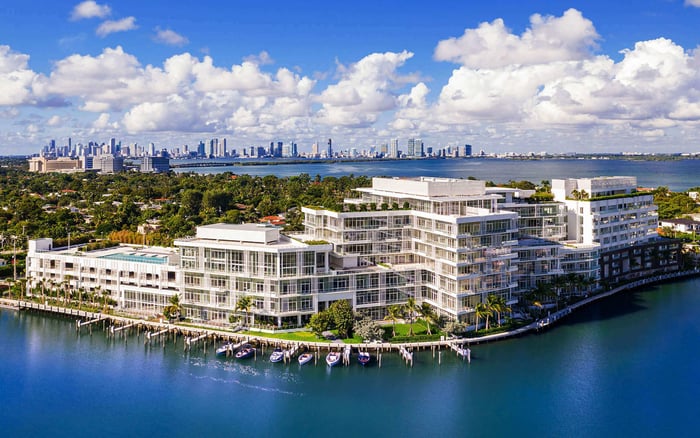
This is where a project such as The Perigon Miami Beach naturally attracts attention from design-focused buyers. Still, the luxury buyer’s work is the same: appreciate the architecture, then study the building as an operating asset.
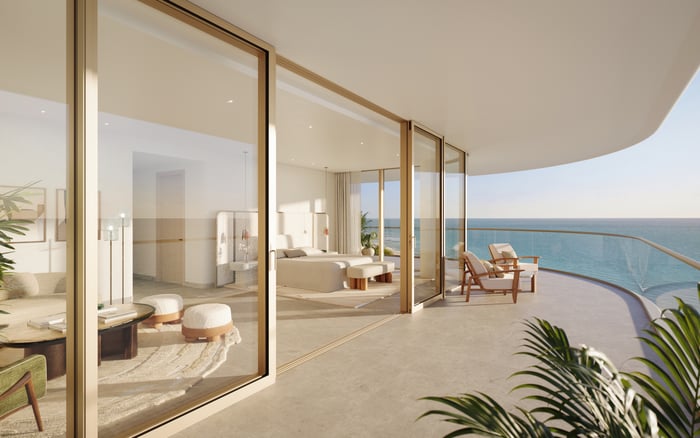
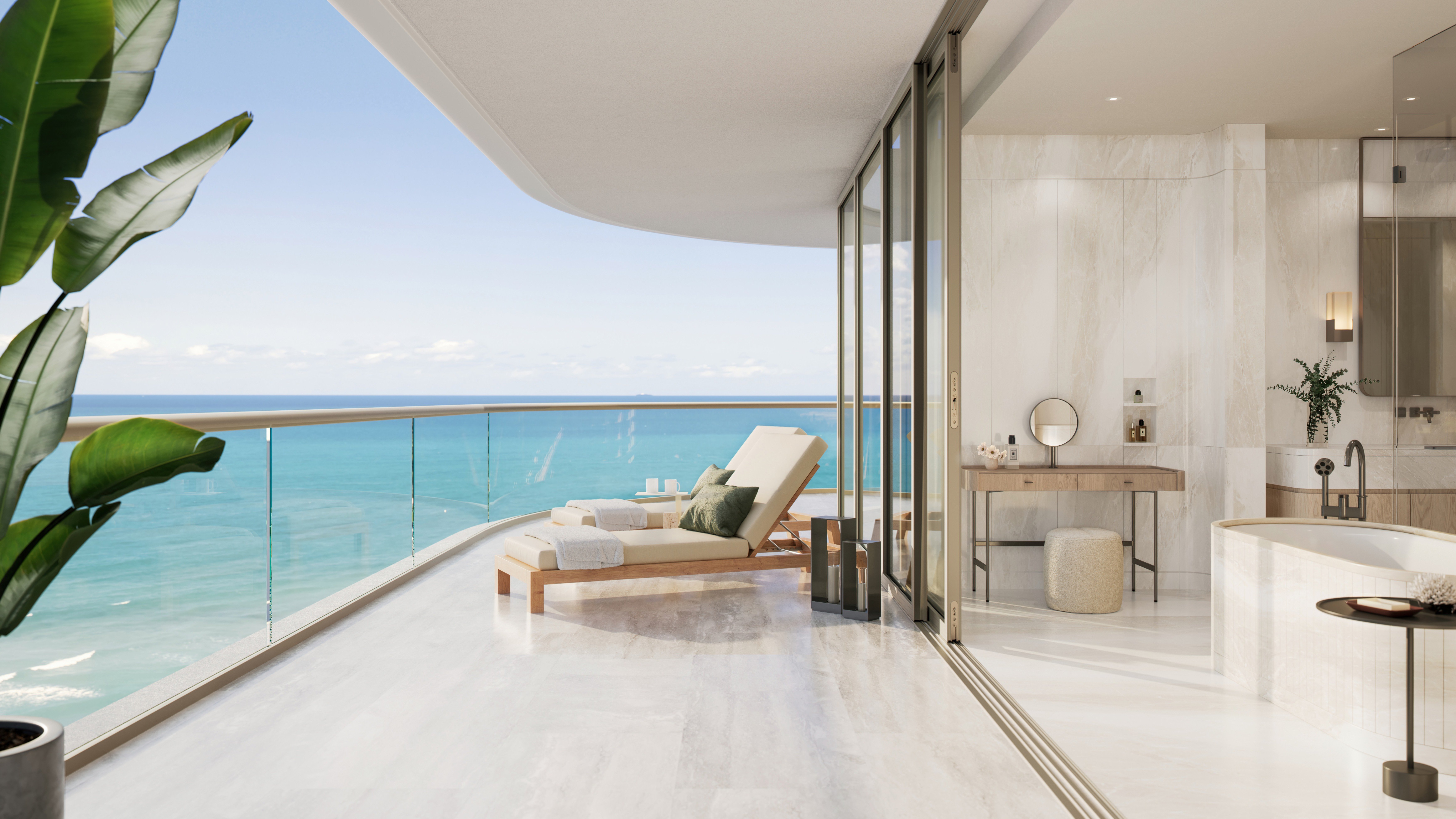
In Miami Beach, the terrace often determines how a residence lives. A Balcony may be a visual extension of the living room, a dining area, a quiet morning perch or a dramatic entertaining platform. The difference lies in depth, orientation, wind exposure, privacy and how naturally the floor plan connects interior and exterior space.
A good terrace also clarifies the view. Some residences are designed for a single cinematic outlook. Others offer a sequence of views from different rooms. The most valuable plan is not always the one with the broadest glass line, but the one that makes the water part of daily life without overwhelming the rooms.
Buyers should stand on the terrace and remain there long enough to notice comfort. Is conversation easy? Is the furniture layout realistic? Does the terrace feel private at night? Can doors remain open comfortably at certain times, or is the terrace more visual than usable? These small observations can matter as much as square footage.
New-construction appeals to buyers who want contemporary design, fresh amenity programs and the feeling of a first ownership cycle. Established luxury appeals to buyers who value a known building culture, mature landscaping, a tested location and a clearer sense of how the property functions over time. Neither category is a shortcut around due diligence.
For a new development, buyers should focus on specifications, delivery expectations, governance structure, developer reputation as presented in offering materials, and the long-term logic of the building. For an established condominium, buyers should study maintenance history, reserves, association governance, recent improvements and the quality of day-to-day operations.
The most sophisticated buyers compare not only price and view, but ownership experience. How does the valet function at peak times? Are amenity spaces sized for actual use? Does the lobby feel private or theatrical? Are service routes discreet? Is the building quiet? These are luxury questions because they shape the life inside the purchase.
A residence at The Ritz-Carlton Residences® Miami Beach may speak to buyers who want a composed, service-oriented environment away from the most obvious oceanfront rhythm. That distinction matters. Waterfront living is not one lifestyle. It is a set of micro-lifestyles defined by site, service, privacy and building culture.
Begin with lifestyle. Define whether the priority is sunrise, bay sunsets, beach access, boating proximity, privacy, walkability or a quieter residential atmosphere. Then translate that lifestyle into physical requirements: floor height, exposure, terrace usability, bedroom placement, parking, storage and service expectations.
Next, examine the building. Review association materials, insurance structure, budgets, rules, reserves and any available building condition information with the appropriate professionals. Ask how the building has been maintained and how decisions are made. Luxury ownership is easier when the governance feels as considered as the finishes.
Finally, evaluate the residence itself. Look at ceiling heights, acoustic comfort, natural light, window systems, kitchen and bath quality, mechanical systems, closets, laundry placement and the true usability of the plan. A waterfront residence should feel effortless, but effortlessness is usually the result of many small decisions made well.
What is the first thing a Miami Beach waterfront buyer should evaluate? Start with the view and how it will be used daily, then move quickly into insurance, building documents and ownership costs.
Are ocean views always more desirable than bay views? Not for every buyer. Some prefer the drama of the ocean, while others value the layered light, skyline and evening atmosphere of the bay.
When should insurance be reviewed? Insurance should be reviewed early in the search, before a buyer becomes emotionally attached to a specific residence.
What building documents matter most? Buyers should review association materials, budgets, insurance information, reserves, rules and relevant condition or maintenance records when available.
Is New-construction always better for waterfront living? No. New-construction can offer contemporary design, while established buildings may offer operational history and a proven ownership culture.
How important is a Balcony in Miami Beach? A Balcony can be central to the lifestyle, but its true value depends on depth, privacy, orientation, wind comfort and connection to the interiors.
Should buyers prioritize high floors? High floors can offer broader views, but lower floors may feel more connected to the water and landscape. The right choice is personal.
What does Waterview really mean in a listing? Waterview can range from a dramatic open panorama to a narrower framed outlook, so buyers should assess the actual sightline in person.
How should buyers compare Oceanfront and bayfront buildings? Compare not only the water setting, but also privacy, access, building quality, service culture, terrace usability and long-term comfort.
What is the best way to shortlist comparable options for touring? Start with location fit, delivery status, and daily lifestyle priorities, then compare stacks and elevations to validate views and privacy.
For a discreet conversation and a curated building-by-building shortlist, connect with MILLION.
If branded residences are on your mind — as a home or as an allocation — we would be glad to share what we are seeing, privately.
Begin a quiet conversation