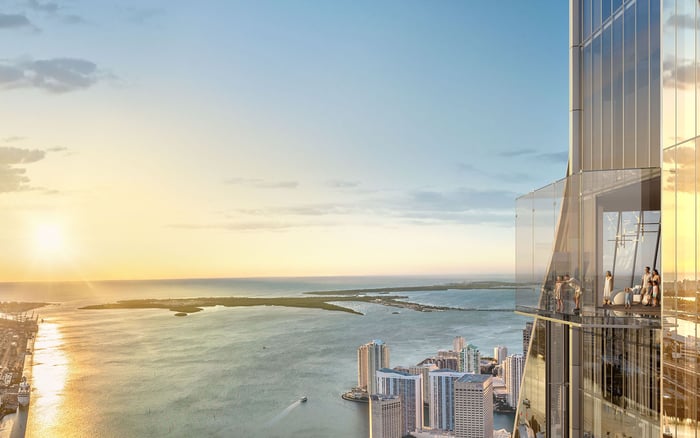
A buyer-focused editorial comparison of two hospitality-rooted Miami Beach ownership narratives, centered on heritage, privacy, service culture, and the evolution of luxury residential living.

Miami Beach has always understood the emotional power of a hotel name. For a certain buyer, a residence is not only a floor plan, a view, or a parking arrangement. It is an entry into a world with memory, service, atmosphere, and a recognizable social tempo. That is why the comparison between Delano Residences & Hotel Miami and Shore Club Private Collections Miami Beach is less a choice between two conventional condominiums than a decision about how one wants to live within a hospitality legacy.
The premise is powerful because Miami Beach hotel heritage is being reinterpreted for buyers who want residential privacy without surrendering the pleasures of a curated, hotel-style environment. In that context, Shore Club Private Collections Miami Beach stands out as a Miami Beach luxury residential project positioned around the Shore Club name, tying ownership to an established hospitality identity rather than a purely new-build condominium narrative.
Delano, by contrast, enters the conversation through the language of residences and hotel. For buyers, that phrasing immediately raises a sharper set of questions: how visible the hotel component feels, how separate residential life remains, and how the building preserves exclusivity while delivering the electricity that makes hotel-branded living appealing in the first place.
Shore Club Private Collections is best understood as a hospitality-rooted residential product. Its name signals privacy, selectivity, and a more residential register than a broad hotel-condominium proposition. The appeal is not merely that owners may associate with a known Miami Beach hospitality identity. It is that ownership is framed around access to a hotel-style ecosystem while still protecting the quieter values of home.
That distinction matters at the top of the market. Ultra-luxury buyers are increasingly fluent in the difference between service and spectacle. They may want the ease of arrival, dining, wellness, staffing, and lifestyle programming, but they also want the ability to disappear. Shore Club’s positioning allows the buyer to imagine both: an address with hospitality memory and a home life that does not feel like an extension of the lobby.
This is where the phrase Private Collections becomes important. It suggests that the residential experience is not merely attached to a famous name, but curated as a more intimate layer within it. For the buyer comparing Shore Club with Delano, the central question is whether privacy or hotel energy should sit at the heart of ownership.
The Delano name carries a different psychological charge in the Miami imagination. Even without relying on unconfirmed specifics, the title Delano Residences & Hotel Miami tells buyers the proposition is likely to be read through a hotel-residence lens. That can be highly attractive for owners who want a residence animated by hospitality, design culture, and a strong sense of arrival.
The caution is that hotel-residence living demands precise evaluation. Buyers should understand what is residential, what is shared, what is managed, and what is programmed. The most successful hotel-linked residences make service feel effortless without allowing the hotel to overpower the private home. The least successful blur the line too aggressively.
For some owners, that activity is the point. A second-home buyer who wants Miami to feel immediately alive may prefer a project where the hotel element creates rhythm and identity. Others may find greater comfort in the Shore Club Private Collections model, where the residential identity is placed more clearly in the foreground.
The broader significance is that Miami Beach is no longer only selling new towers. It is selling continuity. Hotel heritage gives buyers a story that glass alone cannot provide. It can supply an emotional frame, a cultural reference, and a sense that the residence belongs to the evolution of the Beach rather than arriving as an isolated object.
That is why projects such as Setai Residences Miami Beach and The Ritz-Carlton Residences® South Beach remain relevant touchpoints in buyer conversations about service, identity, and the relationship between residential life and hospitality atmosphere. The most sophisticated purchasers are not simply asking which brand is strongest. They are asking which brand supports the way they actually intend to use the home.
In this tier, labels can be useful shorthand, but they are not a substitute for judgment. It is the kind of Miami Beach conversation that often sits beside search terms such as Oceanfront, Second-home, Condo-hotel, New Project, and Top Project, though the serious decision is always more nuanced than a label.
The most important comparison point is daily rhythm. A buyer should imagine a Tuesday morning, not only a Saturday night. Who greets guests? How does the owner enter? Where does the public energy begin and end? Is the residence a retreat after the hotel experience, or is the hotel experience woven directly into the home?
Shore Club Private Collections is framed for those who want ownership connected to hospitality-oriented services and amenities, with residential privacy as a defining idea. That makes it compelling for owners who want the Beach without feeling permanently on display. The social and service ecosystem can be part of the appeal, yet the residence itself remains the sanctuary.
A Delano buyer may be drawn to a more overt hotel-residence identity. The question is not whether that is better or worse. It is whether the owner wants the address to feel like a private club, a residence inside a hotel universe, or something more fluid between the two.
The first filter is use case. Primary residents may prioritize acoustic separation, arrival sequence, storage, staff logistics, and governance. Seasonal owners may prioritize effortless maintenance, service continuity, and immediate access to a curated lifestyle. Investors and legacy buyers may focus on the durability of the name and the scarcity of hospitality-rooted residential inventory in Miami Beach.
The second filter is social appetite. Some buyers want the property to be a stage. Others want it to be a refuge. Shore Club’s private-residence positioning gives it a strong argument for buyers who value discretion. Delano’s residence-and-hotel language may appeal to those who want the charisma of a hotel address integrated into ownership.
The third filter is comparison set. A buyer considering these properties may also examine The Perigon Miami Beach when the priority is contemporary beachfront residential living, or look beyond Miami Beach to understand how branded and hospitality-driven residences are evolving across South Florida. The point is not to assemble a long list. It is to calibrate what kind of service culture feels natural.
For a buyer who places privacy first, Shore Club Private Collections Miami Beach has the cleaner conceptual fit. It presents itself as a residential ownership opportunity anchored by hospitality heritage, not simply as a condominium with amenities. That nuance is valuable, especially for owners who want Miami Beach service culture without sacrificing the psychological calm of a private home.
For a buyer who wants stronger hotel energy, Delano Residences & Hotel Miami may deserve close attention. The name itself invites a hospitality-forward reading, and that can be compelling for owners who want their Miami residence to feel animated, social, and connected to the life of a hotel.
The right answer is therefore not universal. It is personal. Shore Club speaks to discretion within a curated hospitality ecosystem. Delano suggests the draw of a residence shaped by hotel identity. In Miami Beach, where heritage can be as valuable as frontage, the winner is the property whose rhythm most closely matches the owner’s life.
What is the core difference between Delano Residences & Hotel Miami and Shore Club Private Collections? The difference is best approached through positioning: Delano reads through a residences-and-hotel lens, while Shore Club emphasizes private residential ownership within a hospitality-rooted ecosystem.
Is Shore Club Private Collections Miami Beach a conventional condominium? It is better framed as a Miami Beach luxury residential project tied to an established hospitality identity rather than as a stand-alone condo narrative.
Why does hotel heritage matter to luxury buyers? Hotel heritage can give a residence cultural memory, service expectations, and a sense of place that a purely new building may need years to establish.
Which project is better for privacy-focused buyers? Shore Club Private Collections has the clearer privacy-oriented positioning because the Private Collections name places residential discretion at the center of the concept.
Which project is better for buyers who want hotel energy? Delano may appeal to buyers drawn to a more explicit residence-and-hotel identity, provided the service model and residential separation match their expectations.
Should second-home buyers view these differently from primary residents? Yes. Second-home owners often value effortless services and lifestyle access, while primary residents may focus more heavily on daily privacy and building governance.
What should buyers ask before choosing either property? Buyers should ask how residential areas are separated from hotel activity, how services are delivered, and how the property protects owner privacy.
Is Shore Club Private Collections mainly about the Shore Club name? The name is important, but the stronger buyer argument is the combination of hospitality identity, residential ownership, privacy, and curated lifestyle access.
Are branded or hotel-linked residences always better investments? Not automatically. The value depends on scarcity, execution, service quality, governance, and how well the brand remains relevant to future buyers.
What is the best way to shortlist comparable options for touring? Start with location fit, delivery status, and daily lifestyle priorities, then compare stacks and elevations to validate views and privacy.
For a discreet conversation and a curated building-by-building shortlist, connect with MILLION.
If branded residences are on your mind — as a home or as an allocation — we would be glad to share what we are seeing, privately.
Begin a quiet conversation