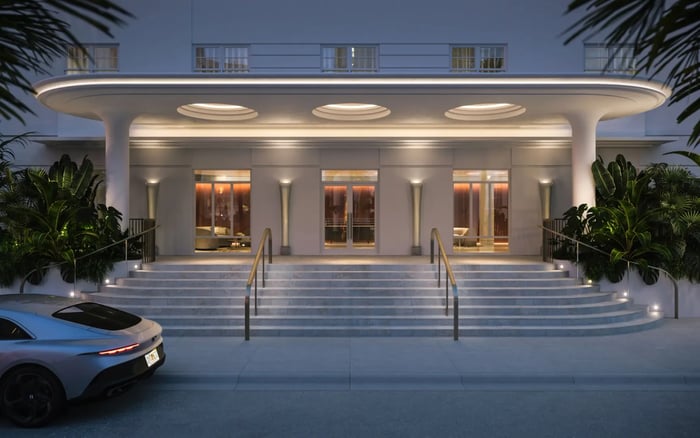
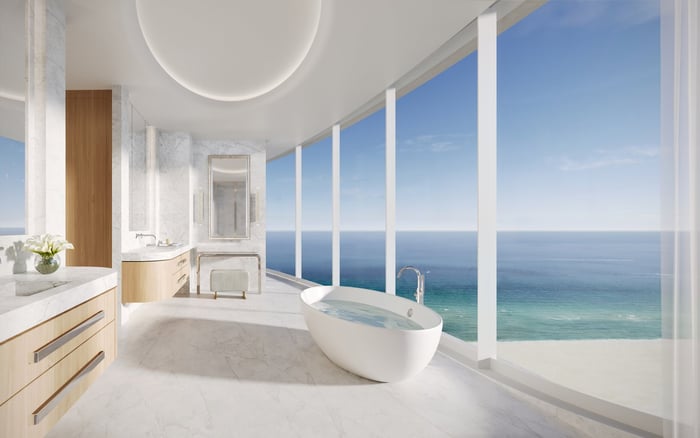
Miami Beach is entering a new cycle where preservation and ultra-luxury are no longer competing ideas. Along Collins Avenue, landmark restorations and hotel-branded residences are reshaping buyer expectations around service, identity, and scarcity, with projects like the Raleigh and Shore Club anchoring what the press has nicknamed “Billionaire’s Beach.” For end users and investors alike, the opportunity is less about chasing novelty and more about underwriting permanence: irreplaceable oceanfront land, cultural cachet, and operator-led lifestyle execution.
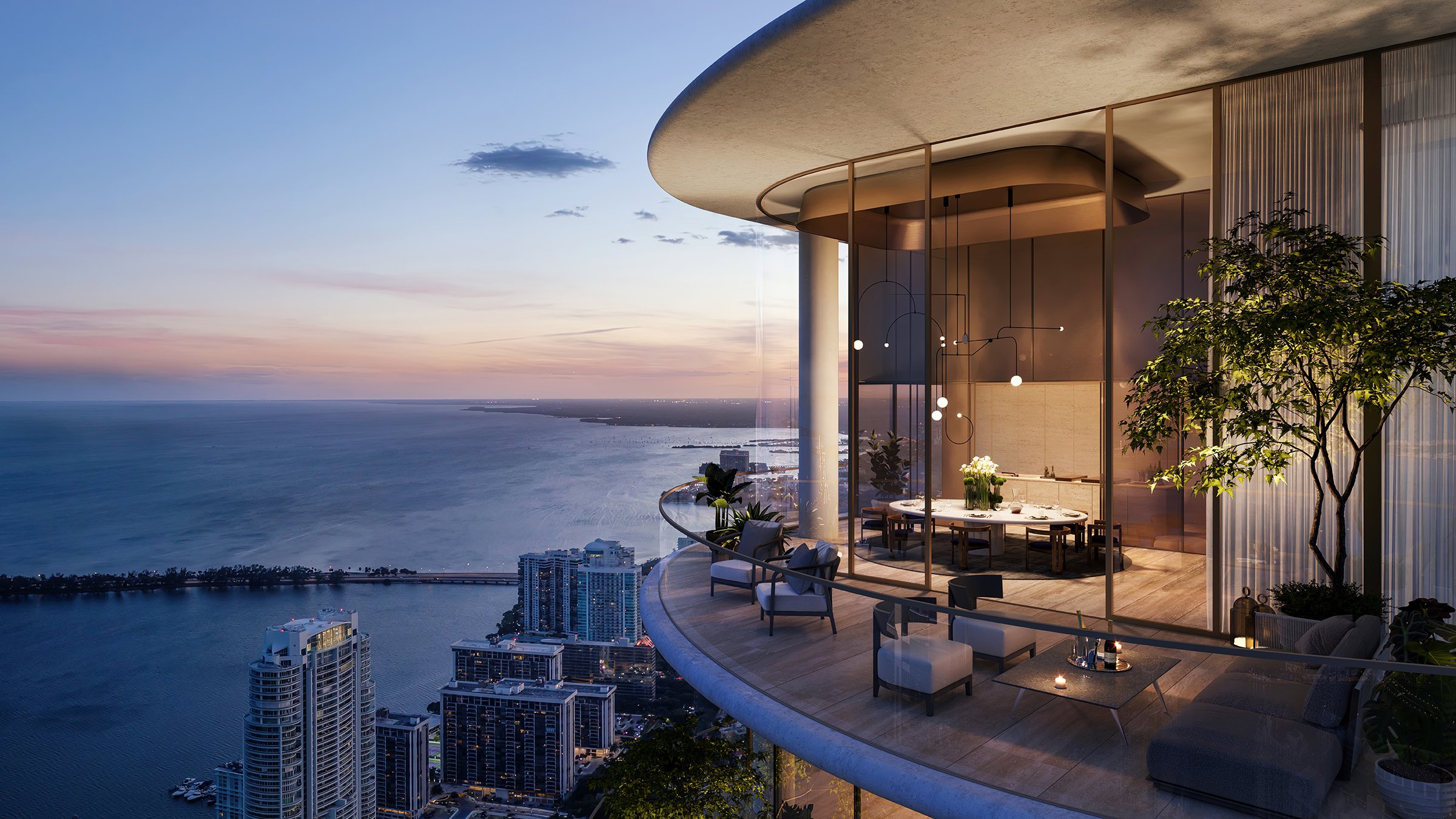
Miami Beach has always sold more than an address. It sells atmosphere: the visual language, the walkability, the oceanfront ritual, and the social history embedded in the streetscape. What feels materially different today is that heritage is no longer treated as a charming backdrop to luxury. It is increasingly behaving like a primary value driver.
A growing share of high-end buyers who once defaulted to new-build shine are now placing equal weight on authenticity, legacy, and architectural identity that cannot be re-created elsewhere. In a market where capital can buy almost any finish package, the differentiator becomes what cannot be duplicated: provenance, design coherence, and the sense that a place looks and feels like itself.
That identity is concentrated in the Art Deco Historic District, which spans roughly 5th Street to 23rd Street and is promoted as one of the world’s most notable collections of Art Deco-era buildings. From a real estate standpoint, that density creates two attributes affluent buyers tend to underwrite, even when they do not say it explicitly. First is visual continuity: the neighborhood reads as designed, not accidental. Second is a credible sense of place: the built environment is recognizable and, critically, defensible.
Miami Beach is also not preserving itself as a museum piece. The prevailing cycle is better described as adaptive reinvestment: landmark hospitality assets being restored and repositioned, often alongside a new residential component that meets contemporary expectations for privacy, security, and service. The appeal is straightforward for a sophisticated buyer: keep the cultural DNA of classic Miami Beach, then layer in the operational rigor and comfort of modern luxury living.
For anyone tracking Miami Beach at the ultra-premium level, the throughline is now hard to ignore. Preservation is not the alternative to luxury. It is increasingly the foundation of it.
In high-end coastal markets, scarcity is rarely about the raw number of units. It is about the number of opportunities that satisfy every relevant criterion at once: true oceanfront positioning, walkability, design integrity, and a setting that reads as unmistakably Miami Beach over the long term.
Preservation supports that long-term thesis because it strengthens defensibility. A restored landmark hotel, or a historic corridor maintained with discipline, provides something that ground-up development cannot manufacture on its own: narrative permanence. Owners are not merely purchasing a floor plan with a view. They are buying into an established story that has already demonstrated durability across cycles.
This is also where luxury underwriting becomes more layered than typical residential analysis. Traditional metrics still matter: price per square foot, HOA structure, taxes, and rentability. But at the top end, intangibles often behave like real assets. A protected architectural district can stabilize the aesthetic and energy of a walkable radius. A celebrated hotel can attract global travelers and amplify the surrounding dining, wellness, and social ecosystem. Those inputs can support demand without requiring constant reinvention.
The preservation-plus-reinvestment narrative is visible in the broader cadence of Miami Beach hospitality restorations that lean into design identity rather than replacing it. Public coverage has also highlighted significant restoration and repositioning activity at iconic properties such as the Delano Miami Beach, underscoring how heritage brands are being refreshed as luxury product.
For buyers, the takeaway is simple and strategic: the ocean is the view, but the neighborhood is the asset. When neighborhood character is actively maintained, it can reinforce long-term value beyond the typical boom-and-build cycle that can leave even expensive towers competing on sameness.
A stretch of Collins Avenue is increasingly described in media as “Billionaire’s Beach,” a nickname that signals a concentration of ultra-luxury hotel and residential development rather than a formal boundary. The precise edges are less important than the underlying dynamic. Luxury is clustering, and clustering changes outcomes.
When multiple top-tier operators and developers raise standards in the same corridor, the definition of prime resets. Arrival sequences become more choreographed. Lobbies, spas, and beach programs become more exacting. Security and privacy expectations become more standardized at the top end, not treated as upgrades. And older assets that want to remain competitive are pressured to renovate and reintroduce themselves.
This is not simply a design trend. It affects liquidity. At the highest tier, the buyer pool is global, selective, and time-sensitive. The best-performing addresses tend to be the ones that can be explained quickly and confidently: oceanfront, iconic, service-forward, and rare.
The oceanfront redevelopment of the Raleigh at 1775 Collins Avenue is a clear marker of the moment. It has been publicly described as combining restoration of the historic hotel with a new residential tower as part of a Rosewood-branded hotel-and-residences vision. The project has also been widely covered for a headline penthouse marketed at $150 million, which signals the scale of ambition now attached to this corridor. Most buyers will never tour a nine-figure residence, but the halo effect remains real. A widely publicized ceiling can elevate how the entire address is perceived, and it can sharpen the competitive set for neighboring projects courting the same cohort.
For clients calibrating Miami Beach allocations, Collins Avenue is increasingly less about any single building and more about an emerging luxury ecosystem, where scarcity, operator strength, and neighborhood narrative reinforce one another.
South Florida luxury has long been shaped by familiar comparisons: oceanfront versus city views, unit size versus height, new construction versus resale. The branded-residence era introduces a different category of decision-making, and it is operational.
Hotel-branded residences compete on service and lifestyle execution as much as architecture. The promise is not limited to a better finish schedule or a more photogenic amenity deck. It is a more reliable daily experience: trained staff, repeatable standards, curated programming, and a service culture designed to feel consistent over time.
A key precedent sits just north in Surfside: the Four Seasons Surf Club, which pairs a legacy property identity with a modern ultra-luxury residential offering and a full resort program. It illustrates why affluent buyers routinely compare service protocols and operational competence alongside square footage, especially when a property will function as a second home. The point is not indulgence for its own sake. It is ease, predictability, and the ability to arrive and live immediately.
This is where oceanfront living becomes less about simply being near the sand and more about how seamlessly the building manages the sand. The differentiators are practical. How does arrival work on a busy weekend? How quickly are requests resolved, and how quietly are they handled? Is wellness integrated into daily life or treated as a marketing line item? Does dining feel like part of the residence experience, or is it adjacent but disconnected?
Within Miami Beach, this same logic shows up in how buyers evaluate branded projects and hospitality-adjacent residences. Two condos can share comparable views, yet the one with a stronger operator narrative can feel less risky to a purchaser who values frictionless ownership and long-term resale clarity.
For buyers considering new construction in the Miami Beach corridor, the most compelling theme is scarcity paired with credible brand execution. Two signals repeat across the highest-quality offerings: low density and an operator with the reputation and systems to deliver.
One of the clearest examples is Shore Club Private Collections Miami Beach at 1901 Collins Avenue, promoted as a redevelopment into Shore Club, Auberge Resorts Collection with a dedicated residential component. The residential offering has been marketed as 49 residences in a new tower, a number that reads like a strategy, not a statistic. Not everyone gets in, and that is part of the value proposition. Public marketing has also referenced a completion target around 2027, placing it in the next wave of ultra-luxury deliveries.
Buyers tend to respond to that combination of limited unit count and operator-backed lifestyle because it can create a feeling of controlled access. In many families, that translates into longer hold periods. When the building culture is intentionally quieter and more private, owners often treat the residence as a stable base rather than a short-term trade.
In parallel, buyers who prefer an established, service-forward environment often cross-shop residences tied to well-known Miami Beach hospitality DNA. Setai Residences Miami Beach fits that profile for purchasers who want a more mature setting that still reads as internationally legible.
For those prioritizing a more overt branded-residence framing, The Ritz-Carlton Residences® Miami Beach enters the conversation because the brand carries global recognition around service expectations. In a segment where many owners live between cities, that recognition can reduce decision friction. It is easier to underwrite what the brand is supposed to deliver.
Finally, it is worth noting that Miami Beach’s ultra-luxury oceanfront experience is defined not only by individual towers but also by the surrounding resort infrastructure. That is why some buyers continue to benchmark the corridor against The Surf Club Four Seasons Surfside, even when their target purchase is farther south. The comparison is a proxy for operational excellence and lifestyle completeness, not geography alone.
High-end buyers do not need another checklist. They need a hierarchy, especially in a market where many offerings appear superficially similar online. In the current Miami Beach cycle, five priorities are emerging as practical underwriting anchors.
First, prioritize irreplaceable site dynamics. Oceanfront is the headline, but the nuance matters: how the property meets the ocean, how the arrival experience is managed, the distance and transition from lobby to sand, and whether the beach program operates at a truly luxury level. Two oceanfront buildings can deliver entirely different daily realities.
Second, treat operator quality as a value component. In branded residences, the brand is not merely marketing. It is a system for delivering consistency. The risk is not that service will be imperfect occasionally. The risk is that it becomes inconsistent. Consistency protects lifestyle, and it often protects the resale narrative buyers rely on when they eventually reposition capital.
Third, discount amenity inflation. Many new towers promise expansive programming. The better question is which amenities will be used weekly and staffed appropriately. A well-run, right-sized spa and fitness experience can be more valuable than a long list of underutilized rooms. At this level, execution beats quantity.
Fourth, understand scarcity in unit count, not just floor plan. Low-density towers, including projects marketed with a limited number of residences, tend to create a different ownership culture. That culture matters in buildings where residents are paying for privacy, a quieter social cadence, and a more controlled atmosphere.
Fifth, consider the role of headline pricing. The presence of a penthouse marketed at a world-class number can lift the perceived ceiling of an entire address. This is not about chasing records for their own sake. It is about what the ceiling implies: the building expects to serve buyers who could live anywhere, and it is positioning itself accordingly.
These factors hold whether the purchase is a primary residence, a second home, or an investment allocation intended to sit alongside other global trophy assets.
Miami Beach luxury is not monolithic. Buyers are often choosing between different versions of the same aspiration, and small geographic shifts can change the entire daily rhythm.
Some want the cultural energy near the Art Deco core: walkability, restaurant density, and the feeling of living inside Miami Beach’s most recognizable visual identity. Others prefer a slightly calmer, more residential cadence while remaining connected to the corridor’s dining and wellness scene.
For clients who want an oceanfront, design-forward building that feels intentionally smaller in scale, 57 Ocean Miami Beach can enter the conversation as a Miami Beach option aligned with the broader premium beachfront narrative.
For buyers who prioritize South Beach’s established cachet, it is also useful to watch how legacy hotels are continuously updated and repositioned. The Ritz-Carlton, South Beach has been promoted as blending a celebrated mid-century Miami Beach hotel shell with updated luxury, illustrating how legacy properties can be renewed to meet modern expectations while retaining the identity that made them relevant in the first place.
Taken together, the corridor’s strongest offering is not a single building. It is range: the ability to select a lifestyle niche without sacrificing the fundamentals that keep Miami Beach globally competitive, including oceanfront scarcity, walkable cultural density, and a growing set of operator-led residential experiences.
What is the Art Deco Historic District in Miami Beach?
It is a protected concentration of Art Deco-era buildings roughly from 5th Street to 23rd Street, central to Miami Beach’s design identity.
Why are branded residences so influential on Collins Avenue right now?
They combine private ownership with hotel-level service standards, which many buyers value for ease of ownership and lifestyle consistency.
What makes the Raleigh redevelopment notable?
It has been publicly described as restoring a historic oceanfront hotel while adding a new residential tower, with a penthouse marketed at $150 million.
Why do buyers care about low unit counts such as 49 residences?
Lower density can increase privacy and scarcity, and it often signals a more curated ownership experience.
Is “Billionaire’s Beach” an official neighborhood?
No, it is a media nickname used to describe a concentration of ultra-luxury projects along Collins Avenue.
For curated guidance on Miami Beach’s next-generation trophy addresses, connect with MILLION Luxury.
If branded residences are on your mind — as a home or as an allocation — we would be glad to share what we are seeing, privately.
Begin a quiet conversation