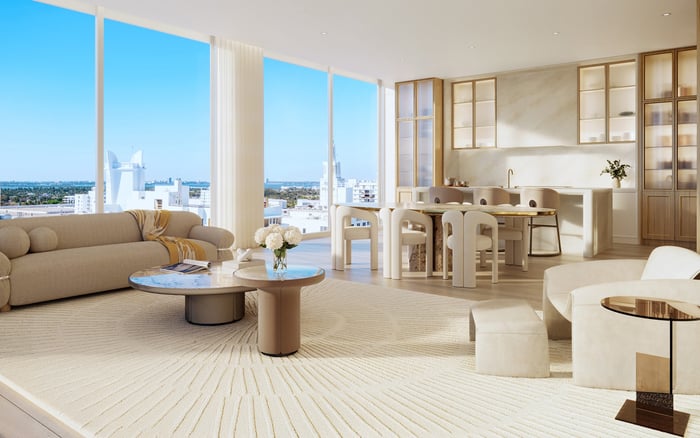
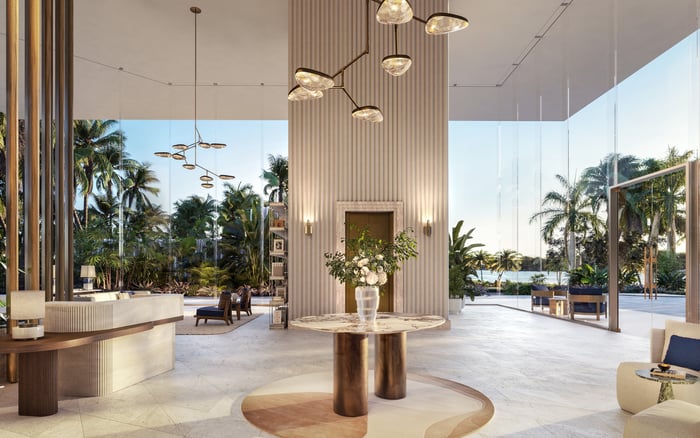
In South Florida’s top zip codes, “luxury” has become a broad label, while “ultra-luxury” is increasingly treated as its own tier with different price logic, buyer behavior, and product expectations. This editorial clarifies the working price bands, why branded residences and service platforms command a premium, and how micro-markets like Miami Beach and the private-island enclaves separate ordinary high-end from true trophy real estate.
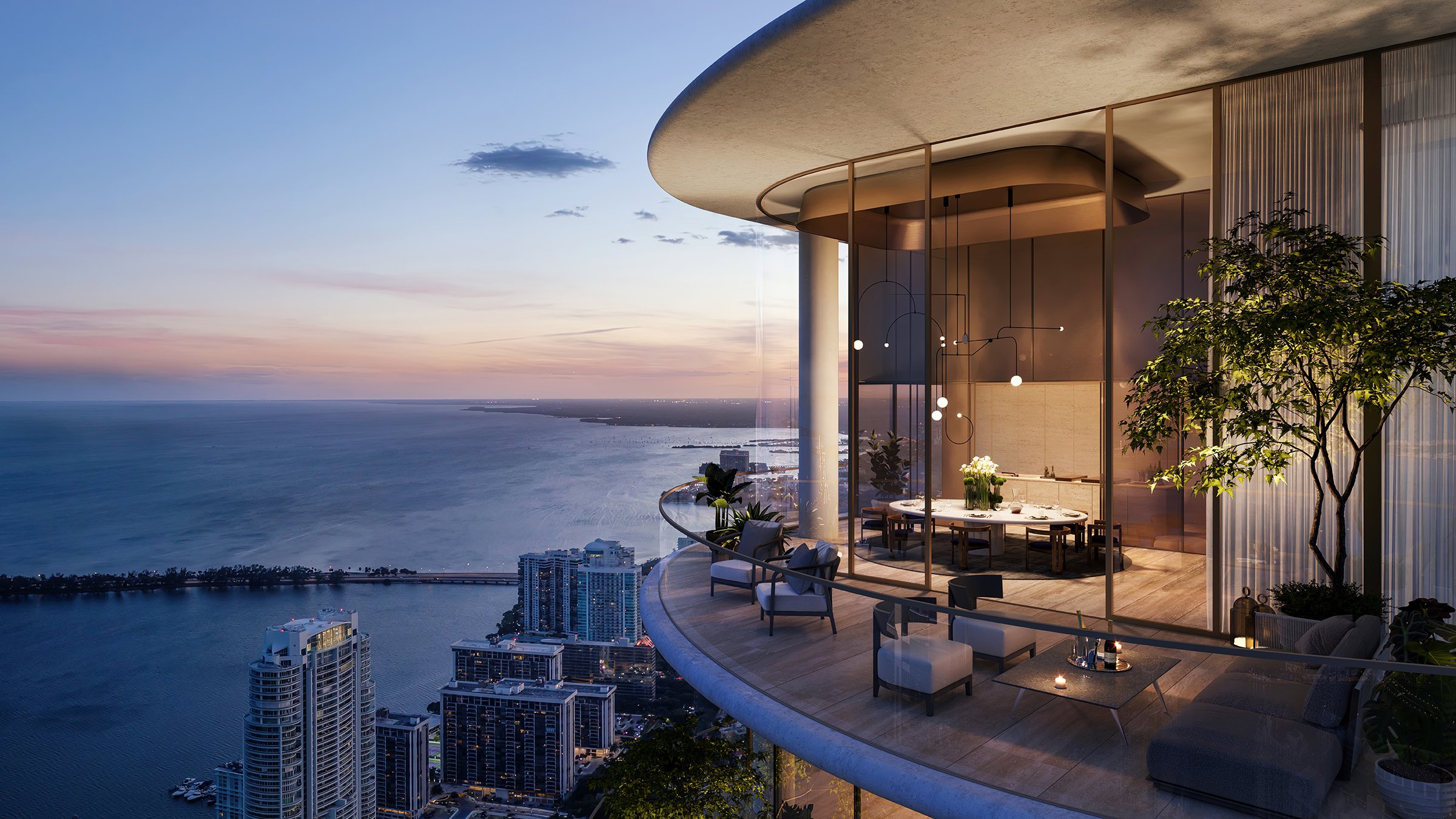
In South Florida, “luxury” has evolved into a broad operational label. It is useful for marketing and database segmentation, but it is no longer precise enough to describe the top of the market. Many local Realtor organizations still frame luxury as $1 million and above. In practice, that definition groups fundamentally different purchases into the same bucket: a $1.2 million pied-à-terre and a $12 million full-floor residence do not compete on the same decision logic.
As the region’s wealth base deepened and pricing reset upward in prime neighborhoods, broker commentary increasingly treated “ultra-luxury” as a distinct tier above traditional luxury. For buyers, the term is less about status and more about avoiding false comparisons. A common working frame in Miami is:
These are not official rules. They are a shared language that helps buyers and sellers align expectations. In 2026, the most important takeaway is that pricing does not simply scale with square footage. At the top, pricing scales with confidence: confidence in privacy, service, governance, and the long-term resilience of the address. The premium is often paid for what feels predictable and controllable, even when everything else in the market is moving.
A helpful benchmark for understanding today’s cadence comes from the $2M+ Miami luxury condo segment, because it sits at the gateway between conventional luxury and the ultra tier. In a Q3 2025 snapshot, Condo Black Book reported 152 closed sales in the $2M+ market, up 15.2 percent year over year, with an average of $1,445 per square foot. In that same snapshot, South Beach and Miami Beach were among the priciest condo submarkets, with luxury inventory around $1,538 per square foot.
For an ultra-luxury buyer, the nuance is not the exact number on a spreadsheet. It is what the number signals about the market’s ability to transact at elevated levels. When closings continue to print at the high end, it suggests liquidity. And when liquidity persists, the best product stops behaving like “a condo” and starts behaving like a rare asset class.
This is also where “Miami Beach” becomes more than a postcard. It functions as a shorthand for frictionless living when executed correctly: walkability when you want it, privacy when you require it, and a buyer pool deep enough that resale is not limited to one narrow profile. In other words, the premium is not only about the view. It is about the market depth behind the view.
In the ultra-high-end South Florida market, industry observers continue to note that cash remains the rule. That single fact changes how deals feel, how timelines compress, and how negotiations are framed. When financing is not the centerpiece, discussions shift away from monthly-payment math and toward total-value decisions: governance, certainty, and what the buyer believes the asset will be worth to their lifestyle over time.
Cash dominance also reshapes the product that wins, because the buyer is often selecting simplicity as much as design:
In other words, ultra-luxury is as much about certainty as it is about materials. The buyer is not simply acquiring a view. The buyer is buying fewer problems: fewer surprises, fewer delays, fewer operational headaches. At this level, convenience is not a perk. It is a core part of the valuation.
One of the most defining shifts in Miami’s modern ultra-luxury market is the premium attached to branded, hospitality-linked residences. The brand itself is not the value. The value is the operating platform behind it: service standards, staffing models, and the expectation that the building will feel consistent year after year.
This is why certain buyers gravitate to projects where hospitality DNA is obvious in the daily experience, from arrival choreography to concierge capability and the cadence of day-to-day operations. In Miami Beach, The Ritz-Carlton Residences® Miami Beach is a useful reference point for how the top end increasingly evaluates “home” as an extension of a well-run hotel, without surrendering privacy.
The brand-linked buyer is often a second-home buyer in the truest sense: someone who wants Miami to be effortless. In that context, the purchase decision becomes less about a single floorplan and more about an ecosystem that can support irregular schedules, extended travel, and a strong preference for discretion. The premium is best understood as insurance against inconsistency.
Miami Beach’s priciest inventory tends to reinforce a simple rule: when the lifestyle is globally legible, the buyer pool expands. That helps explain why certain Miami Beach buildings behave like international product, not purely local product. The address reads immediately, and the operating expectations are familiar to global buyers who value consistency.
Within that “ultra stack,” a few signals repeatedly surface in buyer behavior and broker positioning:
The throughline is control. Amenities matter, but they matter most when they are paired with professional management and discreet service. For many ultra buyers, the building itself is part of the decision, not an afterthought.
Consider how different kinds of luxury speak to different buyers. Shore Club Private Collections Miami Beach can be discussed as a lens on contemporary Miami Beach appetite for hospitality-forward living, where owners want an elevated service culture and the ability to arrive and live immediately.
Likewise, Setai Residences Miami Beach speaks to a segment of the market that values a resort-caliber operating experience as part of daily life. For some buyers, that is the point. They are not coming to Miami to manage a home. They are coming to Miami to enjoy it, with the operational details handled quietly in the background.
In these conversations, the term Oceanfront becomes a true price multiplier only when it is paired with quiet. Oceanfront without privacy can feel like a spectacle. Oceanfront with privacy becomes a refuge, and that distinction is often where pricing separates high-end from ultra.
At the very top, South Florida continues to post headline-making trades that function as price discovery rather than conventional comparable sales. The Real Deal reported an $86 million oceanfront penthouse sale tied to Fort Partners in the Surf Club area. Miami New Times also reported a $120 million Star Island sale that set a Miami-Dade County residential record.
These numbers matter less as “new comps” and more as proof of capacity: the market can clear extraordinary pricing for extraordinary assets. Trophy transactions influence psychology. They reset what sellers believe is possible, and they shift what buyers perceive as scarce. In a market defined by confidence, perception becomes a powerful driver.
This is where the word Penthouse becomes a category unto itself. In an ultra-prime context, a Penthouse is not just top-floor square footage. It is an ownership posture: less exposure to neighbors, fewer shared walls, and a sense that the residence is closer to a private home than to a typical condominium. The premium is paid for the feeling of separation as much as for elevation.
Ultra-luxury in Miami is also defined by what the buyer can avoid. Private-island and controlled-access enclaves like Indian Creek and Fisher Island carry a narrative advantage because the lifestyle is governed. Access is limited, security posture is visible, and the community identity is consistent. For certain buyers, that consistency is the luxury.
Indian Creek Island is often positioned as an ultra-luxury enclave because of its private-island character and security framing, frequently marketed around 24/7 security and restricted access.
Fisher Island’s differentiator is its private-club model. Membership culture, seclusion, and controlled access create a level of curation that is rare in most residential environments. For an ultra buyer, this can matter as much as square footage. It reduces uncertainty, and uncertainty is expensive.
Even when a buyer is not purchasing within these enclaves, the existence of such micro-markets elevates the region’s overall luxury narrative. They demonstrate that South Florida can offer multiple versions of privacy, from staffed towers with discreet arrivals to gated waterfront compounds that feel insulated from the broader city.
In 2026, ultra-luxury is increasingly evaluated through a set of features that read like a checklist of independence. Industry coverage of mega-mansion features and ultra-luxury waterfront pricing repeatedly points to the same themes:
At this level, buyers look for cohesion. The layout needs to serve the way they actually live, from hosting to downtime. The finish quality matters, but so does the functionality behind it. A residence can be visually impressive and still feel operationally complicated. Ultra buyers tend to price in that friction quickly.
Condo buyers translate these themes into building-level expectations: strong staffing, discreet arrivals, dependable valet flow, and amenities that feel professionally managed rather than merely installed. The difference between “nice” and “ultra” often shows up in the operations, not the brochure.
For buyers who want a more residential, boutique Oceanfront experience, 57 Ocean Miami Beach offers a way to talk about scarcity in a straightforward manner: limited inventory, a direct relationship to the shoreline, and a product type that tends to appeal to buyers who value calm over spectacle.
At the ultra level, Pre-construction purchases are often less about chasing appreciation and more about controlling outcomes. The buyer is securing the things that cannot be easily replicated later, particularly when supply is tight:
In that sense, Pre-construction becomes a form of customization and risk management. The buyer is selecting a future experience, not just a future finish package.
Market watchers have also highlighted a pipeline of projects expected to launch around 2026 with explicit ultra-luxury positioning, often tied to branding, amenities, and prime waterfront or urban-core locations. Branded towers, including major names in Downtown Miami, reinforce the idea that the next cycle of ultra-luxury is being defined by a “developer plus brand” stack as much as by materials.
For a Pre-construction buyer, the most important diligence question is simple: what will this building feel like to live in, not just what will it look like when it opens? In the ultra tier, long-term satisfaction is frequently a function of operations, governance, and the everyday competence of the building’s management.
Ultra-luxury buyers tend to move quickly once their criteria are clear. The fastest way to waste time is to tour homes that look comparable on paper but live in completely different tiers. A useful way to self-qualify is to answer three questions before touring:
Is this a primary residence or a Second-home? If it is a Second-home, prioritize service and lock-and-leave ease.
Is your value driver the address, the water, or the building? If your value driver is the building, branded operations can matter. If your value driver is the water, Oceanfront scarcity can matter more than amenities.
Are you buying a home, or an identity? Trophy assets behave differently. They can offer unmatched pride of ownership, but they can also require a more patient approach to resale.
When these answers are honest, the market becomes simpler. You stop comparing unlike with unlike, and you begin selecting the tier that matches how you actually live. In a region as varied as South Florida, that clarity is the difference between a purchase that merely qualifies as “luxury” and one that truly performs as an ultra-luxury asset.
What price point is considered “ultra-luxury” in Miami today? A common market frame places ultra-luxury around $5M to $10M+ for condos and $10M+ for single-family homes, with a smaller trophy layer above that.
Why do branded residences command a premium? Buyers are often paying for the operating platform: service standards, staffing, and consistency that can be especially valuable for a Second-home lifestyle.
Is Miami Beach still one of the region’s most expensive condo submarkets? Recent market reporting has placed South Beach and Miami Beach among the priciest luxury condo submarkets, with pricing benchmarks well above many neighboring areas.
Do trophy sales affect my pricing if I am not buying a trophy home? They rarely create direct comps, but they can influence expectations and elevate the perceived scarcity of the best inventory, especially Penthouse and Oceanfront product.
Is Pre-construction a smart way to buy ultra-luxury in 2026? It can be, particularly for buyers seeking the best orientation and a new-build operational profile, but it requires a high level of diligence on governance and long-term operations.
For private guidance on South Florida’s ultra-luxury market, connect with MILLION Luxury.
If branded residences are on your mind — as a home or as an allocation — we would be glad to share what we are seeing, privately.
Begin a quiet conversation