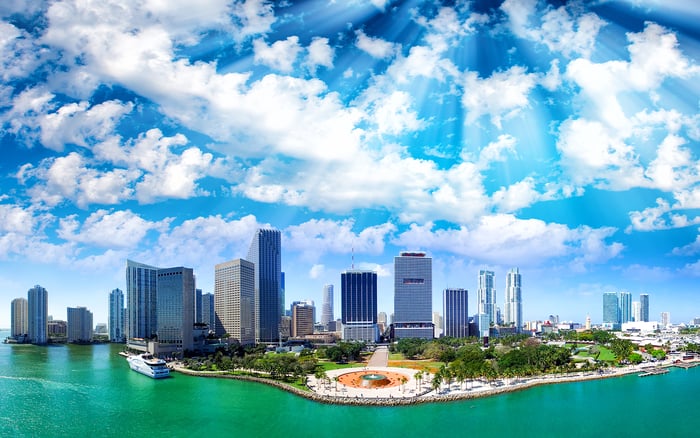
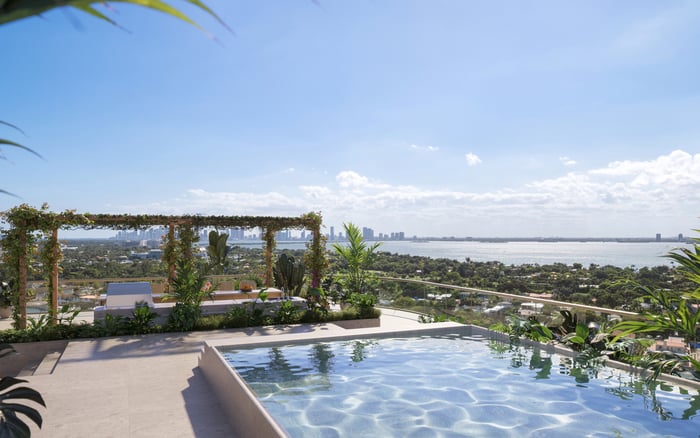
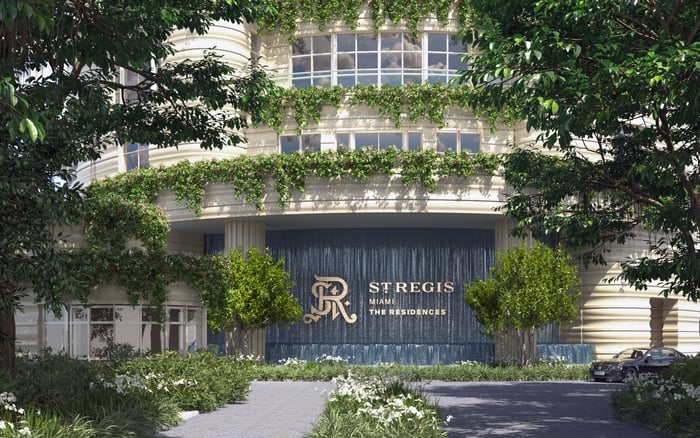
From rooftop helipads to private-terminal access, South Florida’s luxury market is increasingly defined by time, privacy, and controlled arrivals. This editorial looks at how buyers should evaluate aviation-adjacent amenities, what regulations can mean in practice, and where the concept is showing up across Downtown, Edgewater, Miami-beach, and Sunny-isles.
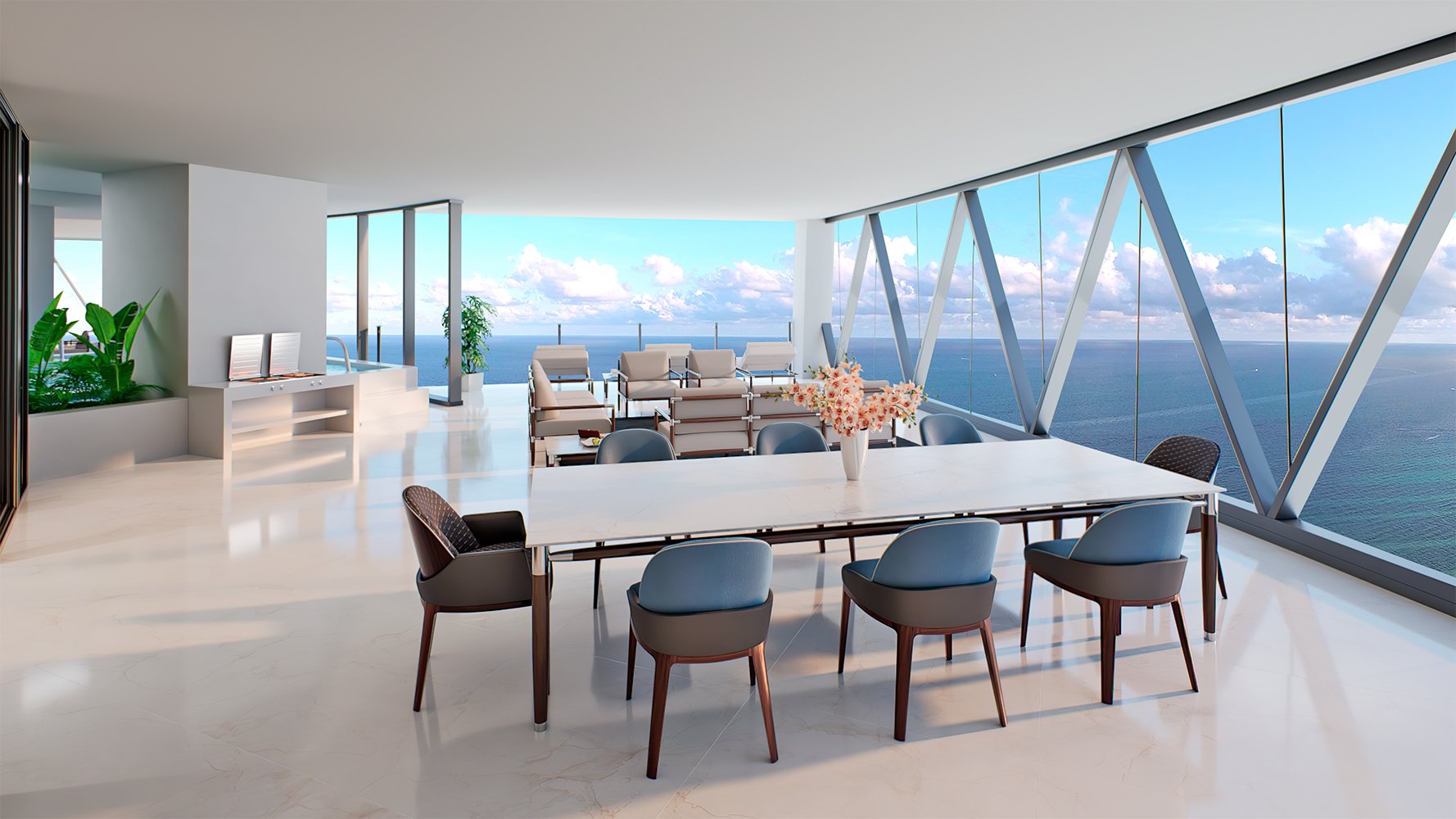
In South Florida’s top tier, luxury is moving away from what can be replicated and toward what cannot. Finishes can be upgraded. Views can be approximated. Privacy, by contrast, is positional, operational, and increasingly tied to how you move through the city.
That shift is why “mobility amenities” now carry a quieter prestige. A rooftop helipad, a protected path from vehicle to lobby, or an airport experience that minimizes contact with crowds is rarely about spectacle. It is about control. For executives, founders, and global families who treat Miami as a primary base or a fast-moving second-home hub, the most valuable amenity is often the ability to arrive and depart on their own terms.
This is not a promise that every aviation-adjacent feature functions like a personal runway. It is a reminder that residential desirability in South Florida is being priced not only by location and architecture, but also by the sophistication of arrival. The market is increasingly rewarding buildings and neighborhoods that reduce friction, protect discretion, and support a predictable routine.
When a building is marketed with a helipad, it typically signals a specific buyer profile: someone for whom the marginal cost of convenience is irrelevant compared to the opportunity cost of time. In a market crowded with premium finishes and curated amenities, aviation adjacency is used as a differentiator precisely because it is difficult to replicate.
Market coverage of Downtown condo towers has repeatedly positioned rooftop helipads as trophy details. One Thousand Museum, the Zaha Hadid designed residential tower, is widely marketed with a rooftop helipad among its headline features. Similarly, coverage and listings for Aston Martin Residences at 300 Biscayne Boulevard Way in Miami have promoted a rooftop helipad as part of the amenity mix. The clustering is telling: air access and trophy product tend to appear together at the peak end of the market.
In practice, these features operate as brand language. They communicate that the building is designed for residents who expect frictionless movement, elevated discretion, and a degree of separation from street-level unpredictability. Even for buyers who may rarely use aviation features directly, the signaling effect can still matter, especially when multiple high-quality options are competing for the same audience.
For buyers, the key is understanding what you are actually buying. In most cases, you are purchasing a positioning advantage and a future-proof narrative more than you are purchasing guaranteed, on-demand flight operations. That distinction is where sophisticated due diligence begins.
Helicopter access is not only a lifestyle choice. It is regulated infrastructure, shaped by approvals, airspace review, and public process. A helipad may be built or marketed, but its real-world utility can still be affected by operating rules.
Florida’s Department of Transportation outlines a multi-step process to establish a new airport, heliport, or seaplane base, including airspace review and public notice or advertisement steps. That framework matters because it points to a broader reality: aviation has layers of oversight. Even when a helipad exists, the day-to-day value to residents can be influenced by flight paths, safety protocols, noise considerations, and defined operating constraints.
From a due-diligence standpoint, the smartest buyers treat a helipad the way they would any high-impact building feature: they verify documentation, they ask operational questions, and they evaluate whether the amenity supports their actual lifestyle.
A helipad can still be meaningful with constraints. The prestige is partly symbolic, and symbolism can support a building’s positioning. But for decision-grade purchasing, symbolism should never substitute for clarity. In this segment, “available” and “usable as imagined” are not always the same thing.
Downtown remains the clearest stage for the sky-access story because it naturally attracts projects competing on global visibility. Towers along Biscayne and the bay are often marketed as international addresses, and aviation-adjacent amenities reinforce that promise of altitude, in both brand and experience.
For example, One Thousand Museum Downtown Miami has been widely positioned as a singular design statement, with the rooftop helipad frequently cited in building profiles as part of its ultra-luxury identity. The message is straightforward: this is a building designed for residents who move differently, who value controlled arrivals, and who see logistics as part of their daily environment.
This is where Downtown luxury becomes more than proximity to restaurants, cultural venues, or waterfront walks. It becomes about compressing the city into a controllable footprint. If your lifestyle includes frequent inter-city travel, late arrivals, or the need to move discreetly, reducing ground-level exposure becomes a form of comfort. It can also support security planning and scheduling discipline, which are central considerations for high-profile households.
The buyer insight: in Downtown, a helipad is rarely the sole reason someone buys. More often, it becomes a tiebreaker when the rest of the package is already excellent. In a trophy-to-trophy comparison, the building that communicates stronger control over arrivals can win, even if the amenity is used infrequently.
Edgewater has evolved into an ecosystem where new development competes on design, wellness, and resort-style ease. Within that competitive set, aviation-adjacent details increasingly appear in project storytelling, especially when a building is being positioned as an upper-tier alternative to the intensity of the Downtown core.
Villa Miami has been promoted in new-development coverage as an Edgewater luxury project that includes a rooftop helipad among its differentiating features. For buyers who want a newer building experience and a slightly quieter residential feel relative to the center of Downtown, Edgewater’s appeal is its balance: close enough to the city’s energy to stay connected, but calm enough to feel insulated from it.
The strategic value is not necessarily that a resident will fly in and out from the roof every week. Rather, it is the idea that the building was conceived with a higher operating standard in mind. In the ultra-premium segment, the narrative of capability can matter almost as much as frequency of use. Buyers often respond to a building that signals preparedness, privacy, and logistical foresight.
The buyer insight: treat “helipad included” as a prompt to evaluate the entire mobility stack. Ask about valet protocols, vehicle staging, lobby privacy, elevator access, and how arrivals are managed on high-traffic weekends. Often, the most impactful advantages are not in the air at all. They are in the choreography between curb, staff, security, and residence.
Some neighborhoods compete on nightlife. Others compete on quiet. Sunny-isles competes on a specific kind of coastal precision: controlled entries, new inventory, and a buyer base that values security, predictability, and routine.
Here, the most persuasive mobility amenities are often ground-to-residence systems designed to preserve privacy. Bentley Residences Sunny Isles is positioned as an ultra-luxury branded concept centered on in-residence sky garages enabled by the Dezervator vehicle elevator system. The appeal is simple: arrive without spectacle, keep a collection close, and minimize the number of hands and eyes involved in daily movement.
This is a different expression of the same impulse that drives rooftop helipads. Both prioritize time, discretion, and control. One operates through air access, the other through vertical circulation, private storage, and reduced public exposure. For many buyers, the daily value of a car-to-residence sequence can be more tangible than the occasional value of aviation access.
The buyer insight: if aviation access is a “sometimes” need, a vehicle-to-residence solution can deliver constant dividends. In Sunny-isles and across the broader Sunny Isles Beach market, the most meaningful luxury is often what happens between the curb and your front door, including how consistently that path is managed.
On Miami-beach, the ultra-luxury conversation often returns to service, privacy, and cultural proximity. The most sought-after residences operate like private clubs: strong staff, polished amenity programming, and a social environment that can be engaged or avoided on your schedule.
Through that lens, the most important mobility feature may not be a helipad on the building itself. It may be the ability to arrive quietly and transition immediately into a controlled environment. In this submarket, “arrival quality” often reads as hospitality discipline: how a lobby feels, how a vehicle is handled, and how effectively the property separates public energy from private residential life.
Shore Club Private Collections Miami Beach fits naturally into this buyer mindset because branded, hospitality-forward residences are often chosen by those who want a seamless handoff between travel and home. Even when a buyer primarily flies commercially, a building’s service culture can replicate the feeling that private aviation promises: reduced friction, reduced exposure, and a sense that the city is curated to your pace.
The buyer insight: Miami-beach rewards buyers who evaluate mobility as a complete experience, not a single feature. Consider street approach, valet choreography, guest screening, and the degree to which hotel activity is separated from residential circulation. In this market, discretion is rarely accidental. It is designed, staffed, and managed.
The residential market does not evolve in isolation. It responds to how the region itself upgrades, including the travel infrastructure that connects Miami to the rest of the world.
Miami International Airport is adding a major premium-travel option: PS, a private terminal experience designed for commercial flyers seeking VIP processing, is slated to open at MIA. Reporting has framed the facility as an adaptive reuse of the former Pan Am headquarters building, and the airport has described the concept as first-of-its-kind at MIA.
For luxury real estate, this matters because it expands the premium-mobility ecosystem beyond private jets. It suggests that high-end travelers will have more ways to reduce friction even when flying commercially. Over time, that can support demand for neighborhoods and buildings that already prioritize discreet arrivals, predictable service, and privacy-forward design.
The buyer insight: if your travel pattern blends private and commercial flights, the next phase of convenience may come less from owning the fastest aircraft and more from optimizing every transition point, including home-to-airport and airport-to-home. In a city where time is a tradable asset, the quality of each handoff becomes part of the residential value proposition.
Not every buyer wants vertical living. For those whose relationship with aviation is more frequent and hands-on, Florida offers a different model entirely: residential airpark communities where homes are organized around runway access.
Platforms dedicated to aviation real estate highlight Florida’s airpark lifestyle, and communities such as Spruce Creek Fly-In near Daytona Beach, Ridge Landing Airpark in Frostproof, and Wing South Airpark in the Naples area are marketed as places where runway adjacency is the organizing principle of home life.
This is a separate proposition from a high-rise helipad, but the underlying value is similar: compress time, protect privacy, and align your home with your preferred mode of movement. Where a condo helipad often functions as a symbol and an optional capability, an airpark community is designed for routine use and direct utility.
The buyer insight: if you regularly pilot or want direct hangar access, a fly-in community can offer functional advantages that even the most prestigious coastal tower may not replicate. The right choice depends on whether your priorities are city access and vertical service, or runway adjacency and aviation-first living.
Aviation-adjacent amenities can be real value, but only when they match your behavior and your risk tolerance. Use a sober framework that prioritizes operations over marketing.
First, define the use case. Is this about emergency preparedness, occasional executive travel, or frequent inter-city movement? A feature that is transformational for one buyer can be irrelevant for another, even at the same price point.
Second, evaluate constraints. Florida’s approval environment for heliports is structured, and operating limitations can shape day-to-day usability. Ask questions that address operations, not aspiration. If the amenity is part of your decision calculus, understand what “use” realistically looks like.
Third, connect the dots between home and aircraft. A helipad is only one node in the chain. Consider:
Finally, price the feature appropriately. Trophy amenities can support pricing power, but isolating an exact premium is difficult. The more realistic view is that mobility features strengthen a building’s narrative, reinforce its status within a submarket, and increase its appeal to a specific global buyer segment. In South Florida, that narrative can matter, because it signals how a building performs under real-world pressure: weekends, events, peak season, and unpredictable traffic.
Are rooftop helipads in Miami condos guaranteed for resident use? Not necessarily. Even when a helipad is marketed, real-world use can be shaped by approvals, operating rules, and safety protocols.
Why do luxury towers market helipads if few residents use them? Because they signal an elevated standard of privacy, capability, and prestige. The value is often as much brand positioning as it is frequency of flight.
What is PS at MIA, and why does it matter to homeowners? PS is a private terminal experience planned for Miami International Airport that aims to offer VIP processing for commercial flyers, potentially improving the region’s premium travel ecosystem.
Is a fly-in community a better option than a condo with a helipad? If you want runway and hangar access as a daily lifestyle, airpark communities can be more function-first. If you want vertical service and city access, a trophy tower may fit better.
For tailored guidance on South Florida’s most discreet, high-performing residences, speak with MILLION Luxury.
If branded residences are on your mind — as a home or as an allocation — we would be glad to share what we are seeing, privately.
Begin a quiet conversation