A discreet, buyer-oriented editorial on South Florida’s ultra-luxury real estate, focused on how to evaluate buildings, neighborhoods, and lifestyle priorities when specifics are not publicly disclosed.
South Florida’s luxury market has matured into a two-speed ecosystem: trophy assets that trade on rarity and lifestyle, and high-quality “everyday luxury” residences that win on execution, governance, and service. For buyers, the most important shift isn’t a single trend-it’s a reset in expectations. A premium home is no longer just a view and a brand name. It’s a complete operating system: arrival experience, privacy, staff, mechanical resilience, and a set of rules designed to protect your time and your capital.
This framework can also help when evaluating projects like Mandarin Oriental Residences Boca Raton.
This is especially true in Miami, where global attention has produced a more discerning buyer. The strongest buyers now underwrite a residence the way they would a boutique hotel: Who runs the building? How are decisions made? What is the true cost of ownership once staffing, reserves, and lifestyle are fully accounted for?
In that context, area choice becomes less about status and more about fit. Brickell offers vertical convenience and a true “walk down to it” lifestyle. Miami Beach offers the ritual of oceanfront living and a more resort-calibrated daily rhythm. Aventura and Sunny Isles bring a family-oriented, amenity-forward sensibility. Palm Beach and West Palm Beach skew toward legacy and discretion. The point isn’t to rank them universally-it’s to choose the environment that will still feel effortless five years from now.
Luxury neighborhoods in South Florida aren’t interchangeable. They behave like distinct asset classes, each with its own liquidity profile, buyer pool, and tolerance for change.
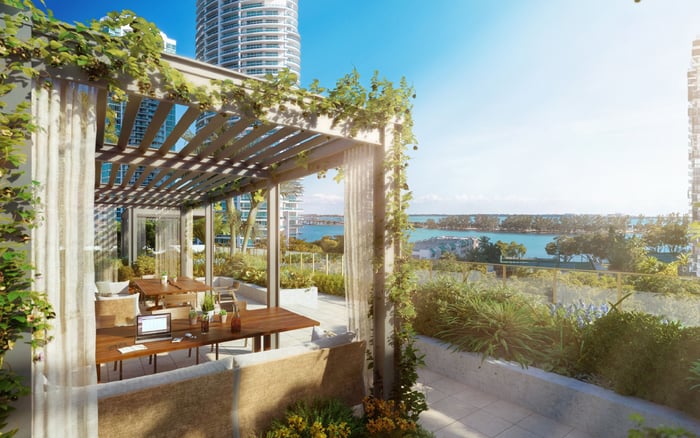
Brickell’s appeal isn’t merely proximity to dining and commerce. It’s the ability to live at altitude while staying tethered to the city’s pace. Newer product here tends to compete on arrival sequences, residents-only amenity floors, and service models designed to feel closer to hospitality than traditional condo life. For buyers who want to be “in it” rather than adjacent to it, 2200 Brickell is emblematic of the neighborhood’s direction: design-led, urban, and built around daily usability.
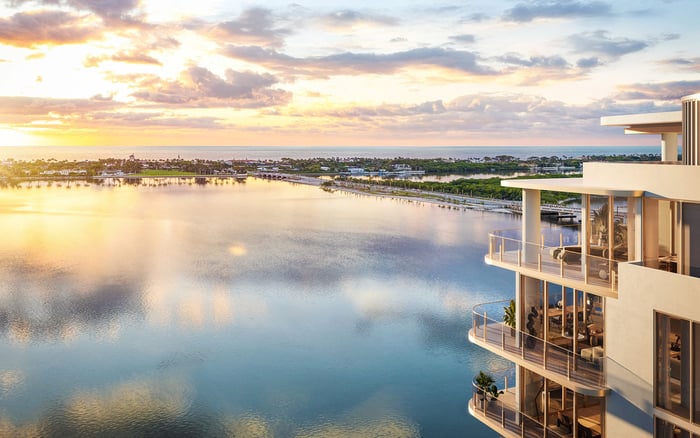
Miami Beach-particularly oceanfront-trades on a different currency: sand, sunrise, and the emotional certainty of living at the edge of the continent. Oceanfront inventory is inherently finite, and buyers tend to be less flexible on fundamentals like beach access, privacy, and the building’s ability to feel serene even when the city is loud. Through that lens, 57 Ocean Miami Beach speaks to a Miami Beach preference that doesn’t go out of style: intimate scale, direct connection to the water, and a sense of escape.
Sunny Isles often attracts buyers who want beachfront living in a straightforward, high-amenity format-with a family-friendly cadence. The strongest buildings here operate like private clubs with ocean views: secure arrival, robust amenity programming, and a clear separation between public beachfront energy and residents-only calm. A project such as Bentley Residences Sunny Isles reflects a broader Sunny Isles thesis: lifestyle-forward residences designed to make daily living feel as convenient as a weekend.
Moving north, the value proposition often shifts: larger footprints, resort-style amenities, and a pace that can feel more private without fully leaving the Miami orbit. When the goal is to pair a coastal setting with a more relaxed cadence, 2000 Ocean Hallandale Beach aligns with that “quiet luxury by the water” sensibility.
Finishes photograph well, but they’re rarely the reason an ultra-luxury residence holds value. The real differentiators sit beneath the surface-and inside the governance.
Ask early about rental policies, guest procedures, renovation rules, and the building’s enforcement culture. Luxury buyers often underestimate how strongly lifestyle is shaped by what the building permits-and what it refuses. If your priorities include privacy, quiet, and predictability, the rulebook matters as much as the view.
If your plan includes flexibility, the distinction between long stays and transient use isn’t semantic. In markets where Short-term-rentals are a consideration, buyers should confirm the building’s policies match their intended use-and that the policy feels stable.
Service isn’t only about friendliness. It’s about capability and coverage: package handling, security posture, valet reliability, and the building’s ability to scale up during high season without feeling chaotic. A well-run building protects your time-and time is the only asset you can’t refinance.
Without slipping into engineering jargon, buyers should still ask practical questions: How is water intrusion addressed? How are preventative maintenance decisions funded and executed? What is the building’s culture around capital planning?
Luxury owners often focus on monthly costs, but the more revealing metric is predictability. The best buildings aren’t necessarily the cheapest; they’re the ones where maintenance is planned, reserves are rational, and surprises are rare.
A South Florida residence can be many things at once: a primary home, a second home, a social hub, or a private retreat. But each use case pulls you toward a different product type.
If you’re living full-time and want a true city routine, prioritize walkability, ease of commuting, and a building that supports weekday living-not just weekends. Brickell and select parts of Downtown often win here, especially when the building offers practical services that reduce friction.
Second-home buyers tend to overvalue novelty and undervalue the permanence of daily rituals. Oceanfront living is a ritual: morning light, salt air, and the physical act of stepping onto sand. If that ritual is the reason you’re buying, then oceanfront isn’t a luxury feature-it’s the requirement.
If your home will host family, prioritize layouts, guest logistics, and amenity depth. Buildings that function like resorts can be ideal-provided the building’s rules support a calm, controlled environment.
In the ultra-premium segment, design that ages well tends to share a few traits: restraint, proportion, and a preference for materials that patina rather than date. Buyers should pay attention to the “quiet” elements.
Arrival sequence: the moment you enter should feel private and intentional.
Elevator strategy: how many residences share a landing, and how controlled is access?
Outdoor space: terraces that are truly usable, not symbolic.
Ceiling height and light: the mood of a home is often set by volume and daylight.
Today, branded and design-led towers can be compelling, but buyers should separate brand theater from enduring utility. A name can open a door; the daily experience is what protects value.
Luxury negotiation is less about aggression and more about clarity. The strongest buyers define non-negotiables early (view corridor, floor height, exposure, parking, privacy), then negotiate across variables (timing, upgrades, closing structure).
In new construction, the critical leverage points are often not the headline price, but the details that protect long-term livability: storage, parking configuration, deposit structure, and customization pathways. In resale, leverage is frequently found in certainty: clean terms, a credible timeline, and a buyer profile that reads as low-risk.
A sophisticated approach also requires psychological discipline. If you’re buying for lifestyle, don’t let market noise push you into a compromise that will irritate you every week. If you’re buying for value retention, don’t let a single design flourish distract you from governance, fees, and long-term building health.
For many MILLION Luxury clients, the cleanest way to begin is to choose a neighborhood thesis first, then a building thesis.
If you want an urban, tailored, design-conscious routine, start in Brickell with a building like 2200 Brickell in mind-and compare it against other service-forward options.
If your priority is direct ocean living with a calmer, boutique sensibility, let 57 Ocean Miami Beach anchor the conversation around scale, privacy, and beach access.
If you’re drawn to a high-rise beachfront lifestyle with an emphasis on amenities and convenience, consider the Sunny Isles thesis through the lens of Bentley Residences Sunny Isles.
If you prefer a quieter coastal rhythm just north of Miami’s core, 2000 Ocean Hallandale Beach is a useful reference point for what “resort-grade, less frenzied” can feel like.
The goal isn’t to choose a building from a screen. It’s to set criteria so property tours simply confirm what you already know: what kind of day you want to live-and what operating standard you’ll accept.
What is the first decision to make when buying luxury real estate in South Florida? Decide whether you’re buying for an urban routine, oceanfront ritual, or family hosting-then choose a neighborhood that naturally supports that lifestyle.
Is oceanfront always a better investment than skyline views? Not universally; oceanfront is scarce and emotionally compelling, while skyline living can win on convenience and rental flexibility depending on the building.
How important are building rules in a luxury condo? They’re critical because they determine privacy, guest experience, renovation friction, and whether the building feels calm or transient.
Should I prioritize amenities or square footage? Prioritize what you’ll use weekly; a slightly smaller home with excellent operations often lives better than more space with weak service.
What should I ask about staffing and service? Ask how the front desk, valet, and security are staffed across high season, and how service consistency is maintained.
How do Short-term-rentals affect my ownership experience? They can change the building’s rhythm and privacy; confirm policies early and ensure they align with your intended use.
Are branded residences automatically superior? No; a brand can signal design and service intent, but governance, build quality, and day-to-day execution matter more.
What makes a neighborhood feel “liquid” at resale? A deep buyer pool, clear lifestyle identity, and a track record of buildings with strong governance and predictable operations.
How can I compare new construction to resale fairly? Compare the total cost of ownership, rule stability, and service model-not just finishes and launch marketing.
What is the safest way to build a shortlist? Start with a neighborhood thesis, define non-negotiables, and tour only buildings that match your privacy and service expectations.
To compare the best-fit options with clarity, connect with MILLION Luxury.
If branded residences are on your mind — as a home or as an allocation — we would be glad to share what we are seeing, privately.
Begin a quiet conversation