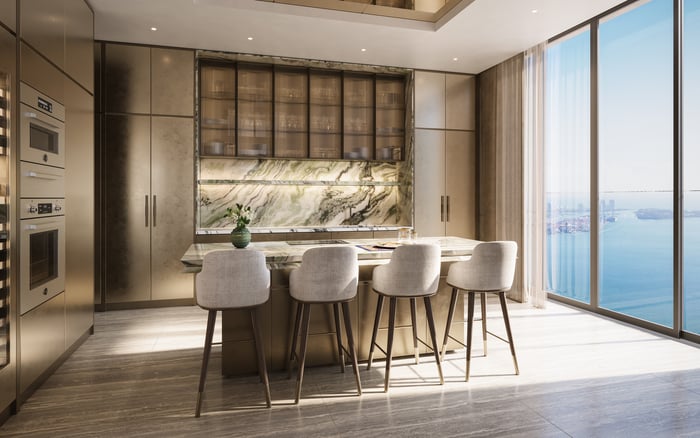
In South Florida’s turnkey market, a Sub Zero and Wolf suite is less a luxury flourish than a decision with measurable consequences for daily living, resale positioning, and long-term serviceability. This MILLION Luxury editorial breaks down what sophisticated buyers should verify beyond the badge: configuration, ventilation, cabinetry coordination, warranty transfer, and performance under real coastal conditions. We also outline the questions to ask developers, designers, and property managers before you sign, especially in high-rise kitchens where water, salt air, and acoustics punish shortcuts.
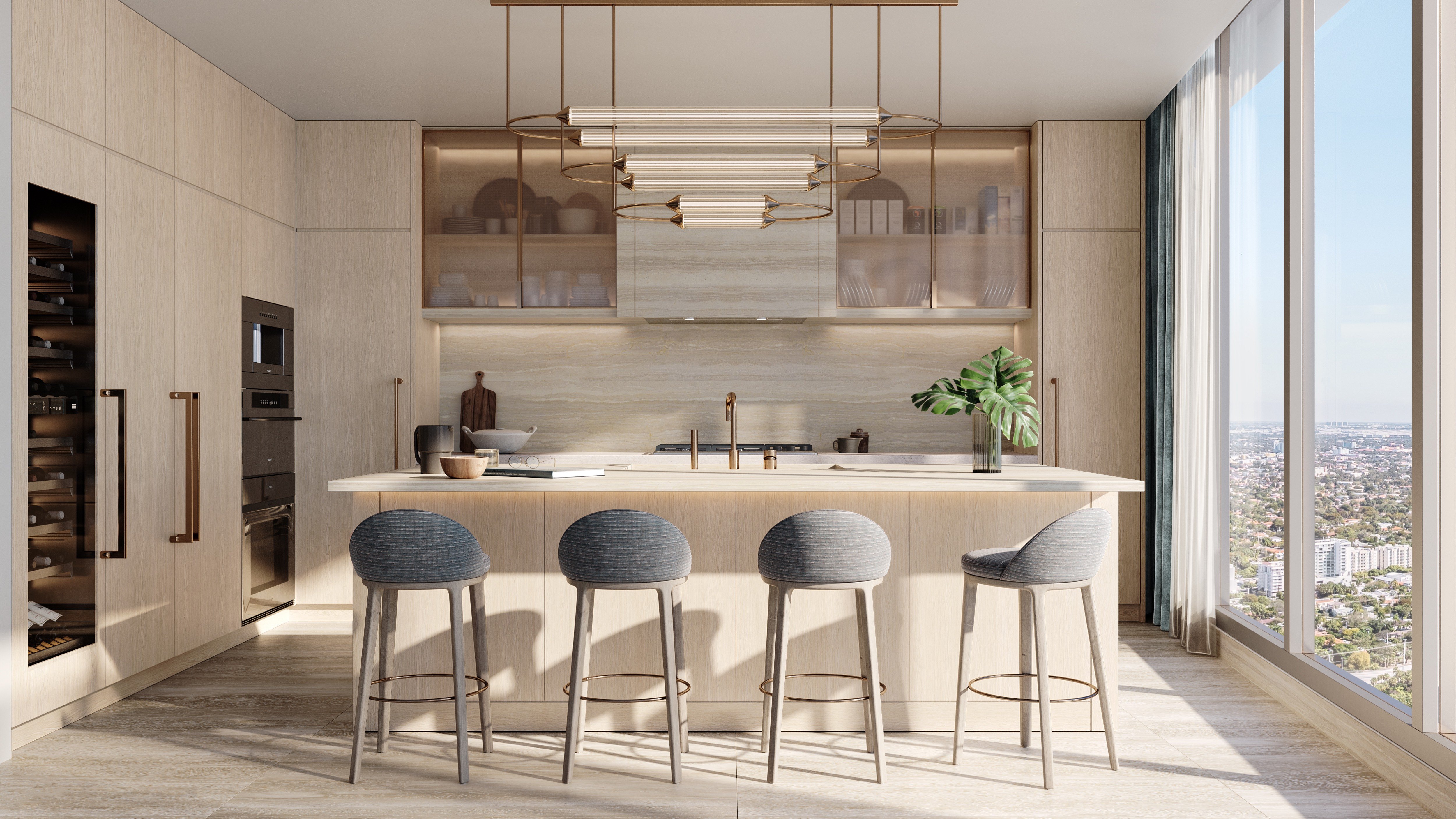
Turnkey has become the preferred posture for many ultra-premium buyers in South Florida: arrive, unpack, and live immediately. In that context, kitchen performance is not a showroom detail-it’s a daily-use system that shapes comfort, entertaining, and the sense of finish that separates a truly resolved residence from one that’s merely staged.
Sub Zero and Wolf appliance suites are often used as shorthand for “no compromises.” In practice, the logo is only the starting point. What matters is integration: how refrigeration, cooking, ventilation, cabinetry, electrical, plumbing, and acoustics work together. Done well, the kitchen feels serene, quiet, and dependable. Done poorly, it becomes fussy, loud, and perpetually in need of attention.
For buyers evaluating new-construction and design-forward resales in Brickell, Miami Beach, and Sunny Isles, the suite also implies a certain discipline in specifications and execution. That expectation can be fulfilled beautifully-or undercut by minor misalignments that become expensive to correct after closing.
The most productive mindset is to treat the kitchen as an engineered environment, not a collection of objects. When assessing any Sub Zero and Wolf suite, begin with a few high-impact checks.
First, confirm the suite’s intent. Is it designed for frequent cooking or for visual continuity? A serious cook will focus on burner spacing, oven capacity, and heat management near adjacent surfaces. An entertainment-driven buyer may care more about refrigeration capacity, icemaking, and the choreography between prep, serving, and cleanup.
Second, inspect alignment and reveals. Integrated refrigeration and panel-ready appliances should read like cabinetry, with consistent gaps and clean, flush planes. Misalignment isn’t only cosmetic; it can signal compromised mounting, door-swing interference, or cabinetry movement driven by humidity.
Third, verify service access. Many turnkey owners discover too late that a refrigerator cannot be removed without dismantling surrounding panels, or that cooktop components are difficult to reach without disturbing stone. In a high-rise-where service visits must be scheduled and coordinated with building rules-those constraints become ongoing friction.
Finally, evaluate whether the suite is balanced with the room’s airflow. High-powered cooking without correct ventilation can stress finishes, tint ceilings, and push odors into adjacent living areas. Proper integration makes the kitchen feel effortless, even when it’s working hard.
South Florida kitchens operate in a climate that punishes shortcuts. Humidity and salt air aren’t abstract-they influence hinges, fasteners, filters, and the long-term crispness of cabinetry lines.
A well-integrated suite anticipates that environment. Refrigeration shouldn’t fight the room; it should hold temperatures steadily without excessive cycling. Ventilation should capture and exhaust effectively rather than merely recirculating. And the materials surrounding the suite-including hardware and any exposed metal-should be selected with corrosion resistance in mind.
In oceanfront towers and high-floor residences with window walls and open plans, acoustics are part of luxury. Listen for compressor noise, fan resonance, and vibration transmitted through cabinetry. A quiet kitchen is typically the result of precise installation, decoupling, and correctly sized ventilation-not a single premium component.
This matters in lifestyle-driven markets such as Hallandale and Bal Harbour, where owners may split time between residences. A kitchen that holds up gracefully during absences-without odors, moisture issues, or surprise maintenance-becomes a quiet advantage.
Turnkey pricing often includes the promise that the major decisions have already been made correctly. The most valuable kitchens fulfill that promise across three layers.
The first layer is specification coherence: complementary appliances, a consistent design language, and capacities that match the home’s scale.
The second layer is execution: straight panels, clean trim, correct clearances, and finishes that don’t telegraph retrofit.
The third layer is documentation: model numbers, panel specifications, and warranty status, along with a realistic maintenance cadence. In ultra-premium condos, this should be easy to hand to a property manager-and just as easy to transfer at resale.
Without those layers, a Sub Zero and Wolf suite can become a decorative headline that masks compromises elsewhere, such as inadequate venting, insufficient circuits, or cabinetry rushed at the end of construction.
When touring a furnished residence or previewing a developer’s turnkey program, you don’t need to narrate every detail. You do need a disciplined lens.
Start with refrigeration capacity and configuration. Does the layout support the way you live-daily groceries, entertaining, or long stays? If the suite includes panel-ready refrigeration, confirm the panels are properly finished at edges and corners, and that door swings don’t collide with islands or adjacent doors.
Then move to cooking. Verify there’s adequate landing space near the cooking surface and that heat isn’t directed toward delicate finishes. In open-plan condos, an underperforming hood can make the entire living area feel like an extension of the kitchen.
Next, test the functional basics. Do doors open smoothly? Do drawers clear handles? Is there adequate task lighting over prep zones, or is the space relying on ambient lighting designed to flatter rather than work?
Finally, assess the “invisible” integration: where filters are located, how the water line is managed, and whether there’s space to service key components without damaging millwork.
In Brickell, many buyers want turnkey convenience without sacrificing a tailored, architectural feel. In that setting, integrated appliances are typically expected to disappear into millwork, preserving a clean, gallery-like plane. When exploring residences around 2200 Brickell, consider whether the suite’s visual restraint is matched by practical decisions: ventilation that performs in a high-rise environment and service pathways that don’t require dismantling the kitchen to replace a component.
In Miami Beach, design often prioritizes light, air, and social flow. Kitchens are frequently open and on display, which makes noise and odor control especially consequential. For buyers comparing turnkey options near 57 Ocean Miami Beach, the integration question becomes: does the kitchen stay composed during entertaining, or does it broadcast every fan speed and cooking aroma into the living room?
In Sunny Isles and other oceanfront corridors, residences are often used as second-home bases. The best turnkey kitchens are the ones that “restart” gracefully after time away. Refrigeration should feel stable, seals should be tight, and cabinetry lines shouldn’t betray moisture movement. Even when the suite is impeccable, the surrounding detailing is what keeps it that way.
In Hallandale, where turnkey living often intersects with full-service building life, buyers may prioritize reliability and predictable service coordination. In a project context like 2000 Ocean Hallandale Beach, evaluate the suite’s integration alongside building operations: how service calls are handled, how deliveries are managed, and whether access is straightforward.
For single-family buyers in Boca Raton, the conversation shifts. There is typically more square footage for a true working kitchen, separate prep zones, and generous storage. In a home such as 749 Bamboo Dr Boca Raton, integration becomes about ergonomics: refrigeration placement relative to prep, the relationship between indoor cooking and outdoor living, and whether the suite is supported by sufficient power and ventilation for serious use.
Turnkey buyers often assume that a brand-name suite eliminates uncertainty. It reduces it-but it doesn’t erase it.
Ask for the exact appliance schedule, including model numbers. Confirm whether items are panel-ready and, if so, whether the panels are custom and properly finished.
Ask how ventilation is handled: ducted to the exterior or recirculating, and where intake and exhaust pathways run. A discreet ceiling detail can hide a poor-performing system.
Ask about warranty status and transferability, and whether any components were installed earlier and sat unused for extended periods. In new construction, this can occur between delivery, installation, and final closeout.
Ask how water filtration is set up and how often filters should be replaced. In a humid climate, these routines aren’t optional details.
Finally, ask who services the suite and how access works in the building. The best kitchens are designed for serviceability without drama.
A Sub Zero and Wolf suite can anchor the design language of an entire residence, especially in open-plan layouts. When integration is handled correctly, it creates a calm hierarchy: the kitchen reads as part of the architecture, while the living areas retain their own identity.
In turnkey residences, the risk is that the suite becomes a visual focal point without a supporting cast-insufficient storage, awkward island proportions, or lighting that makes cooking feel like performing under stage lights. Luxury is the absence of friction. The goal is a kitchen that works hard without demanding your attention.
For buyers planning only light personalization, insist on a kitchen that is already resolved. Changing appliances later can trigger cascading consequences: panels, stone cutouts, electrical, ventilation, and even condo approvals. The strongest value is often in buying the integration you want from day one.
Are Sub Zero and Wolf suites always worth paying a turnkey premium for? They can be, but value depends on configuration, installation quality, and documentation-not the badge alone.
What is the biggest integration mistake buyers miss during showings? Ventilation performance and service access are often overlooked until the first real cooking night or repair.
Should I prioritize integrated (panel-ready) appliances or stainless statement pieces? Choose integrated for visual calm and continuity; choose statement pieces when the kitchen is meant to read as culinary.
How can I tell if an integrated refrigerator was installed correctly? Look for consistent reveals, smooth door swing, and panels that sit flush without rubbing or misalignment.
Does an open-plan condo kitchen change what I should look for? Yes. Odor capture, noise control, and heat management matter more because the kitchen shares air with living areas.
What documents should come with a true turnkey appliance suite? An appliance schedule with model numbers, warranty information, and any panel specifications or care guidance.
Is recirculating ventilation acceptable in luxury residences? It can be, but it should be exceptionally well-designed; ducted exhaust is typically the cleaner experience.
Do coastal conditions meaningfully affect appliances? Over time, humidity and salt air can stress finishes and hardware, making correct detailing and maintenance important.
Can I swap appliances later without major renovation? Sometimes, but integrated kitchens often require new panels, stone modifications, and updated clearances.
What is the simplest way to protect long-term resale value? Buy a kitchen with coherent specs, quiet performance, and serviceable installation, then keep the paperwork organized.
If you'd like a private walkthrough and a curated shortlist, connect with MILLION Luxury.
If branded residences are on your mind — as a home or as an allocation — we would be glad to share what we are seeing, privately.
Begin a quiet conversation