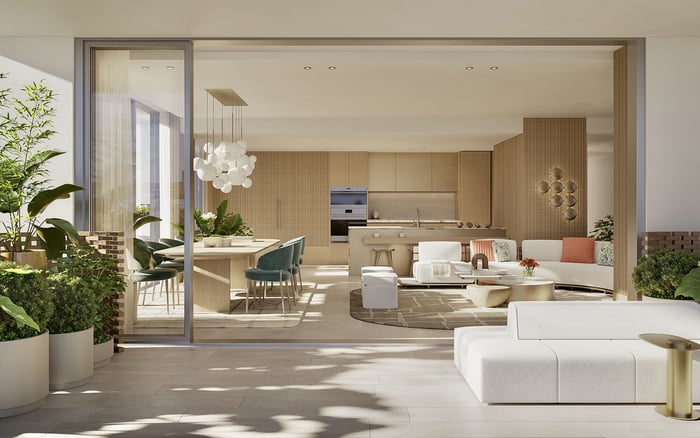
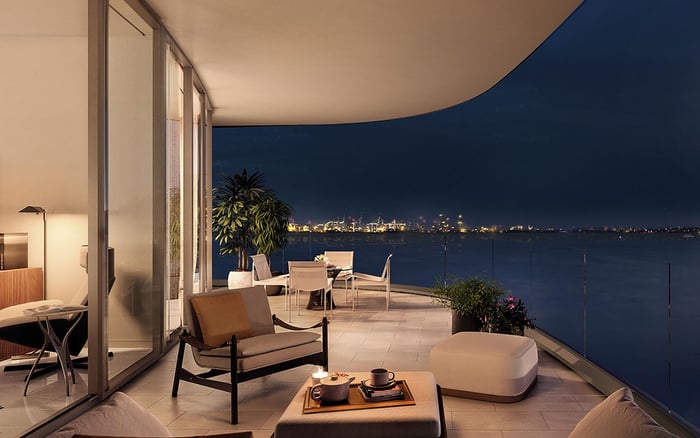
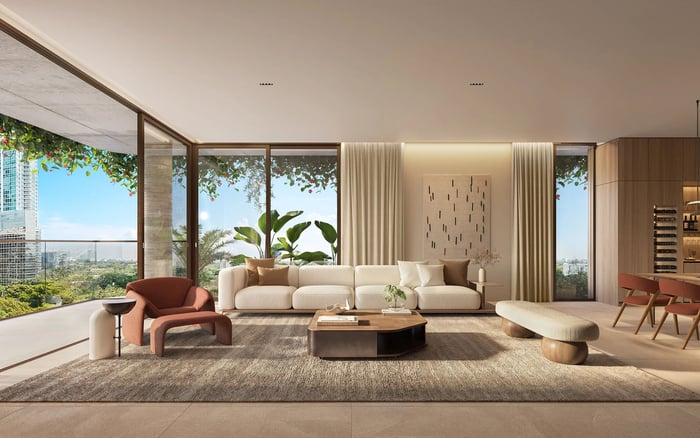
A buyer-oriented comparison of rooftop summer kitchen design priorities in Bay Harbor Islands, using Mila and Origin as the reference point and focusing on layout logic, materials, ventilation, and lifestyle fit.
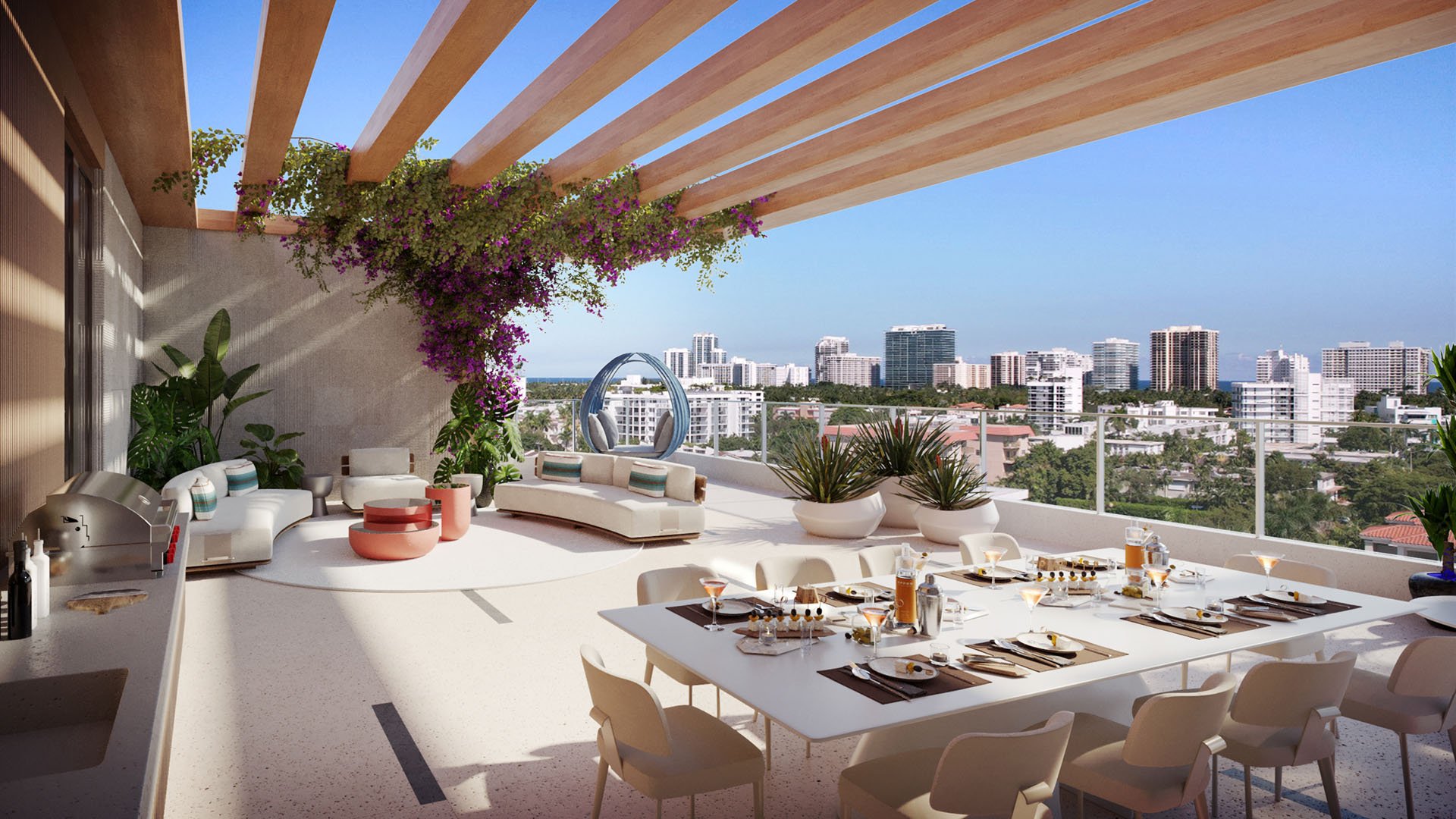
In Bay Harbor Islands, a rooftop amenity is rarely just a view deck. For owners who truly entertain, the summer kitchen becomes the working core of the terrace-the difference between a sunset gathering that feels effortless and one defined by avoidable tradeoffs: wind that snuffs burners, smoke that drifts into seating, heat that sends guests indoors, and circulation that forces everyone to funnel past the grill.
When buyers compare Mila Bay Harbor Islands and Origin Bay Harbor Islands, the most useful approach is to assess the rooftop kitchen as a design system-not a checklist of appliances. The most livable rooftops are the ones where the kitchen recedes into the architecture, supporting hospitality without dominating it.
Because publicly presented details can vary by unit and by release, the cleanest comparison uses design tests that hold across any premium rooftop.
Can the cooking zone perform in real coastal gusts? Look for wind-protected placement, partial screening, and thoughtful orientation.
Is there a plan for grease vapor and smoke so it doesn’t migrate into dining, lounge seating, or neighboring terraces? Hooding, distance, and airflow matter.
Is there shade where people sit, not only where they stand to cook? A rooftop that reads “beautiful” at noon is rarer than one that simply photographs well at 7 p.m.
Can a host move from prep to grill to service without crossing guest pathways? A strong terrace behaves like a loop, not a dead end.
Will the materials age elegantly in salt air, or will the kitchen become a high-end problem set two summers in?
Use those five lenses as you compare Mila and Origin. In practice, the better rooftop is usually the one with fewer dramatic gestures-and more quiet problem-solving.
Luxury rooftops often miss the mark for one simple reason: the kitchen is treated as an appliance wall instead of a hospitality plan. The best designs read like an interior kitchen translated outdoors, with zones that support a natural rhythm.
The ideal zoning sequence
is straightforward:
Staging and prep
near the terrace entry and refrigerator.
Cooking
slightly offset, so smoke and heat stay at the edge of the social area.
Plating and service
between cooking and dining, with a clear landing zone.
Beverage and bar
positioned so guests can self-serve without crowding the cook.
As you evaluate Mila Bay Harbor Islands and Origin Bay Harbor Islands, focus less on brand names and more on whether the plan anticipates real hosting. A well-composed rooftop keeps the cook in the conversation while still giving them control.
Bay Harbor Islands rooftops live in a demanding environment: sun, humidity, salt, and wind. A summer kitchen should be specified like exterior architecture, not patio furniture.
Key material priorities buyers should look for:
Countertops:
Dense, sealed stone or high-performance surfaces that resist etching, staining, and thermal shock. Polished surfaces can look impeccable, but honed finishes often carry day-to-day wear more gracefully.
Metalwork:
Marine-leaning alloys and finishes that resist corrosion. If hardware looks delicate in a showroom, it can feel tired quickly outdoors.
Cabinetry and reveals:
Tight seams and robust gasketing do more than keep things looking crisp; they help prevent swelling, warping, and pest intrusion.
Floor transitions:
The kitchen zone should be easy to rinse and easy to keep safe when wet, with slip-resistance that doesn’t read utilitarian.
A rooftop kitchen is a buyer’s test of a building’s detailing discipline. When outdoor millwork and hardware feel considered, it often signals a broader commitment to longevity.
Rooftop entertaining in Bay Harbor Islands is intimate by nature. Terraces are elevated, but sound and smell travel. A sophisticated summer kitchen isn’t only about performance-it’s about consideration.
Look for:
Separation between cooking and lounging
so guests aren’t seated in a smoke path.
Natural cross-ventilation
and placement that uses prevailing breezes instead of fighting them.
Acoustic softness
from landscaping, textured surfaces, or sheltered geometry that reduces the hard-echo effect common on rooftops.
This is where buyers often overvalue grill output and undervalue terrace comfort. When odor control and acoustics are handled quietly, the rooftop reads as a daily-use room-not a special-occasion stage.
In South Florida, a rooftop kitchen should be judged in three windows: late morning, late afternoon, and night. The design that feels premium in all three is the one that actually gets used.
Shade:
If the dining table and bar seating are exposed, guests will drift away from the spaces meant for gathering. Evaluate where fixed or flexible shade could realistically live without making the terrace feel heavy.
Lighting:
Task lighting at the grill and prep areas should be bright and glare-controlled. Ambient lighting should flatter faces, not flatten them.
Power planning:
The most elegant rooftops conceal outlets and controls in locations that are easy to access-and hard to notice.
If you want a useful reference point outside Bay Harbor Islands, study how hospitality-forward towers treat outdoor social space in other submarkets. For example, Onda Bay Harbor and La Maré Bay Harbor Islands reflect the broader trend toward terraces that function as true extensions of the home.
The more ultra-premium the buyer, the more specific the use case. Consider these profiles as you compare Mila versus Origin.
The effortless host
You entertain often, but you want it to look unforced. Prioritize an intuitive loop layout, generous landing zones, and a bar that lets guests self-serve.
The serious cook
You care about control and performance. Prioritize wind protection, heat management, and a functional prep zone that isn’t an afterthought.
The wellness-forward owner
You want daytime usability without heat stress. Prioritize shade coverage and a plan that keeps cooking heat away from lounging.
The collector of calm
You want quiet luxury. Prioritize odor control, acoustic softness, and a design that minimizes visual clutter.
Rooftop kitchens are personal, but the best ones share the same trait: they’re designed around how people actually move, pause, and gather.
A rooftop kitchen should be evaluated like a high-end interior kitchen. During a showing, buyers and their representatives should look past staging and press on the practical.
Where does food staging realistically happen, and is there a protected landing zone?
Is there adequate sink placement for both prep and cleanup, and is it convenient to service?
Where will trash and recycling live during a dinner party?
Is there a clear path for catering support without cutting through the main seating area?
Are there obvious “water meets cabinetry” risk points, and do the details look robust?
This checklist is equally relevant whether you are focused on Mila Bay Harbor Islands or Origin Bay Harbor Islands. The best rooftops feel like someone has already lived there well.
In a market where design intent is part of the purchase, it’s tempting to treat rooftop kitchens as headline amenities. But the highest form of luxury isn’t spectacle. It’s a terrace where:
the cook is comfortable,
the guests are shaded,
the smoke behaves,
the materials age gracefully,
and the layout makes hosting feel instinctive.
If lifestyle value is the priority, judge Mila and Origin less by what the brochure celebrates-and more by what the plan quietly resolves.
What makes a rooftop summer kitchen feel truly luxury in Bay Harbor Islands? Performance and discretion: wind protection, odor control, and a layout that supports hosting.
Is a larger grill always better for rooftop entertaining? Not necessarily; layout, landing space, and ventilation often matter more than sheer size.
How can buyers tell if a rooftop kitchen will be comfortable in summer heat? Look for shade over seating and a cooking zone placed away from primary lounging areas.
Which materials hold up best near salt air? Sealed stone or high-performance surfaces paired with corrosion-resistant metals and hardware.
Why is circulation such a big deal on rooftops? Tight terraces amplify bottlenecks; a loop from prep to grill to service keeps gatherings smooth.
What is the most common design mistake on luxury rooftops? Placing the grill where smoke and heat drift directly into dining and lounge seating.
Do rooftop kitchens add resale appeal in Bay Harbor Islands? Yes, when they’re usable and low-maintenance; poorly planned ones can feel like liabilities.
Should buyers prioritize a bar setup or a dining setup? Choose based on how you host, but ensure the bar doesn’t interfere with cooking and service.
How important is lighting for an outdoor kitchen? Essential; task lighting should be precise while ambient lighting should feel warm and flattering.
Can a rooftop kitchen still feel calm and private? Yes, with thoughtful screening, acoustic softening, and odor management built into the plan.
For a confidential assessment and a building-by-building shortlist, connect with MILLION Luxury.
If branded residences are on your mind — as a home or as an allocation — we would be glad to share what we are seeing, privately.
Begin a quiet conversation