A buyer-focused guide to assessing restaurant noise in Coconut Grove, with practical questions for evening visits, outdoor dining, terraces, construction quality, resale positioning, and long-term livability.

Coconut Grove has long appealed to luxury buyers who prefer texture to spectacle: mature streets, a village rhythm, waterfront proximity, and restaurants woven into daily life. That appeal is exactly why restaurant noise deserves careful attention. The sound of a lively dining room may feel charming at 7 p.m. during a showing, then register very differently from a primary bedroom after midnight, on a Sunday morning terrace, or during a quiet workday at home.
The question is not simply whether a residence is “noisy.” It is where the sound comes from, when it occurs, how it travels, and whether the home’s architecture manages it well. In Coconut Grove, the most desirable addresses often sit close to the very amenities buyers seek. Proximity is a privilege, but it should be evaluated with the same precision as water exposure, ceiling height, parking, or private outdoor space.
A midday tour can flatter almost any property. For restaurant noise, buyers should return during the hours that matter: early dinner, late dinner, closing time, weekend brunch, and, if relevant, a weekday morning when service deliveries may occur. The sound profile can change by hour and by season. A softly animated street at lunch may become a more energetic corridor after sunset.
Stand quietly in the primary suite, on the terrace, in the living room, and near any operable windows or balcony doors. Do not rely on broker conversation or ambient music during the showing. Let the room go quiet, open and close the doors, and listen for bass, voices, valet activity, waste handling, kitchen exhaust, or the general movement of guests. Some sounds are intermittent and tolerable. Others have a rhythm that becomes intrusive because it repeats.
Luxury buyers often choose Coconut Grove because they want to walk to dinner, meet friends without a long drive, and enjoy a neighborhood with life beyond private gates. That is different from accepting every form of sound. There is a meaningful distinction between distant street energy and a direct acoustic path from outdoor seating to a bedroom wall.
Bars deserve particular scrutiny because late hours, amplified music, valet movement, and departing patrons can create a different pattern than a quiet dining room. A fine restaurant with controlled service may be a good neighbor. A hospitality use with late-night activity may require more testing. Buyers should ask what types of venues are nearby, whether outdoor seating faces the residence, and whether service areas align with bedroom elevations or private outdoor rooms.
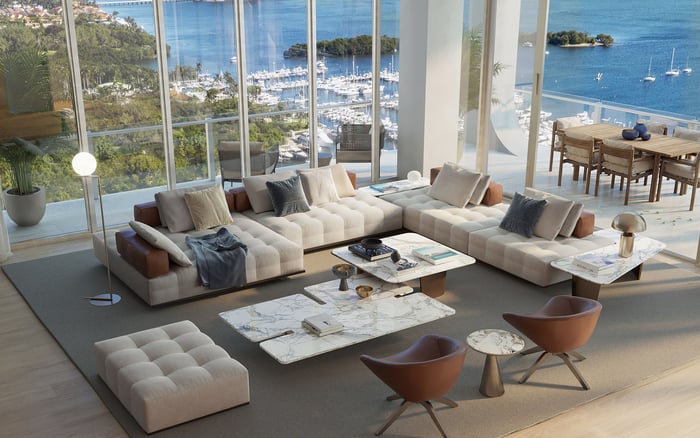
Two residences on the same street can live very differently. Orientation, elevation, setbacks, glazing, slab construction, balcony depth, and mechanical systems all influence interior calm. A higher-floor unit may clear some street-level conversation yet receive sound traveling upward from courtyards or rooftops. A lower-floor home may benefit from landscaping and walls, or it may sit directly in the path of restaurant activity.
For new-construction residences, buyers should ask specific questions about acoustic glass, door systems, ventilation, and whether the home can remain comfortable with exterior openings closed. In resale properties, look for evidence of retrofits: upgraded windows, heavier doors, acoustic treatments, or bedroom layouts that place sleeping areas away from active streets. None of these features should be assumed. They should be verified through inspection, documentation, and lived testing.
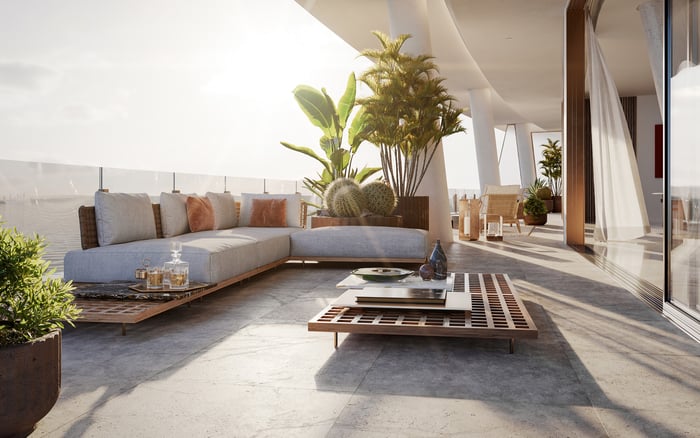
A private terrace is one of the great luxuries of South Florida living, but it is also where restaurant noise is most honestly revealed. Buyers should test the outdoor area without staging distractions. Sit for several minutes. Listen from the dining area, lounge area, and any spa or plunge pool zone. If the property is marketed around outdoor entertaining, ask whether the sound environment supports the way you intend to use it.
A water view can pull attention away from street-level conditions, especially during a dramatic sunset showing. Yet sound and view are separate assets. A beautiful outlook does not neutralize the acoustic effect of a loading area, rooftop crowd, or outdoor bar. For buyers who entertain formally, read outdoors, or expect restorative silence, the terrace experience may be as important as the interior finish package.
The most useful questions are direct. What hospitality uses are closest to the residence? Which rooms face them? Are there outdoor speakers, rooftop areas, courtyards, or service alleys nearby? Where do guests enter and exit? Where do rideshare vehicles and valets gather? Where are trash rooms, grease disposal, and deliveries handled? Are bedroom windows fixed or operable? Can the home be cooled and ventilated without opening exterior doors?
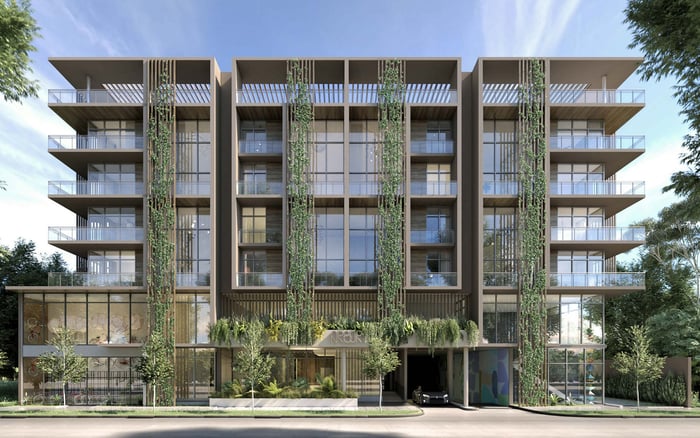
Buyers should also ask for any association rules that affect quiet hours, commercial adjacencies, renovations, exterior speakers, and use of common areas. If the residence is within a mixed-use setting, review how residential privacy is separated from retail or dining operations. In a boutique building, the intimacy can be elegant, but fewer layers between home and street may make orientation and acoustic detailing more important.
Restaurant proximity can be an asset in resale when it supports walkability without compromising rest. It can also narrow the buyer pool if the sound condition is obvious, recurring, or difficult to mitigate. A future purchaser will likely perform the same evening visit you should perform now. If the answer requires explanation rather than experience, pricing power may be affected.
This does not mean avoiding restaurant districts altogether. It means buying the best version of that lifestyle: access without exposure, energy without disturbance, and convenience without operational noise. In the luxury tier, the premium is not only for location. It is for control.
When discussing restaurant noise, vocabulary matters. “Quiet” should mean quiet during the hours you care about, not merely during a scheduled appointment. “Walkable” should not substitute for acoustic comfort. “Near dining” should be mapped by exposure, not just distance. “Village energy” should be tested from the rooms where you sleep, work, and gather.
For search and lifestyle clarity, buyers often group this conversation around Coconut Grove, bars, boutique residences, new-construction standards, terrace use, and water view expectations. Those labels can be useful, but they are only starting points. The decisive analysis happens in person, at the right hour, with the residence evaluated room by room.
Before offering, complete at least one evening visit and one weekend visit. Stand in silence in the primary bedroom. Test the principal outdoor spaces. Open and close windows and doors. Ask how HVAC comfort works when the home is sealed. Review association documents for quiet-use rules and operational adjacencies. Confirm whether nearby hospitality spaces include outdoor dining, late-night activity, amplified sound, or service zones facing the residence.
Most importantly, decide what kind of sound you welcome. Some buyers love a soft urban hum. Others want near-total quiet once they step inside. Both preferences are valid. The mistake is allowing the romance of a beautiful showing to define a long-term living condition.
Is restaurant noise always a negative for Coconut Grove buyers? No. Many buyers value dining proximity, but the key is whether the residence protects private life from recurring disruption.
When should I visit a property to evaluate noise? Visit during dinner hours, later in the evening, and on a weekend. A daytime showing is rarely enough for this question.
Which rooms matter most during a noise test? Prioritize the primary bedroom, secondary bedrooms, main living area, home office, and any private terrace or balcony.
Can high-floor residences still hear restaurant noise? Yes. Sound can travel upward depending on building orientation and nearby outdoor venues. Elevation helps in some cases, but it is not a guarantee.
What building features can improve acoustic comfort? Quality glazing, well-sealed doors, thoughtful layouts, setbacks, and reliable climate control can all help manage exterior sound.
Should I ask about outdoor dining nearby? Yes. Outdoor dining, rooftop spaces, courtyards, and service alleys can create different sound patterns than enclosed restaurants.
Is a terrace more vulnerable to noise than the interior? Usually, yes. Outdoor space should be evaluated separately because glazing and insulation do not protect it.
Can restaurant noise affect resale value? It can if the condition is obvious or limits how future buyers use bedrooms, offices, or outdoor areas.
Should I rely on seller assurances about noise? No. Use assurances as a starting point, then verify through visits, inspections, and document review.
What is the best way to shortlist comparable options for touring? Start with location fit, delivery status, and daily lifestyle priorities, then compare stacks and elevations to validate views and privacy.
For a discreet conversation and a curated building-by-building shortlist, connect with MILLION.
If branded residences are on your mind — as a home or as an allocation — we would be glad to share what we are seeing, privately.
Begin a quiet conversation