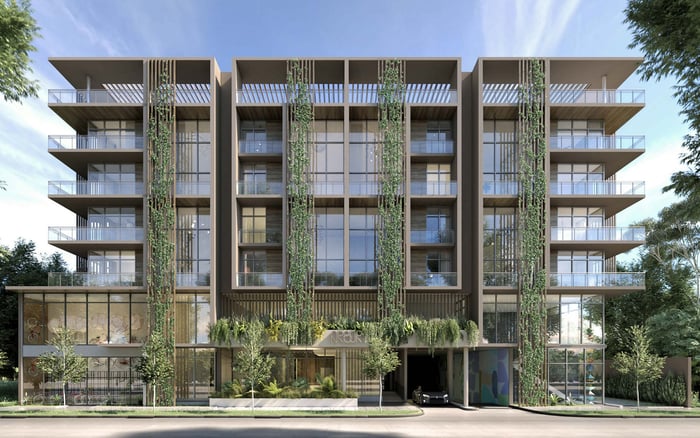
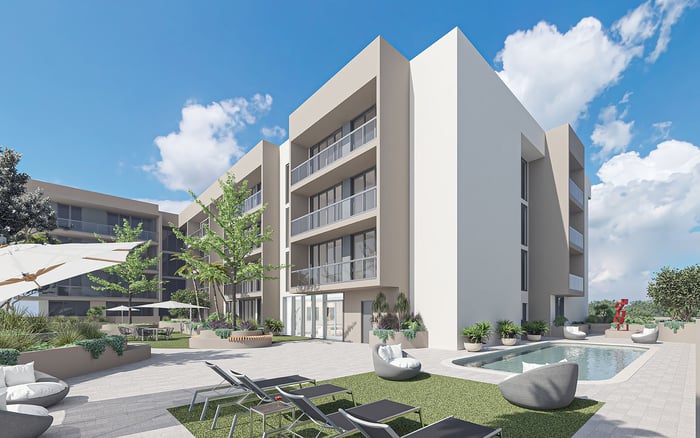
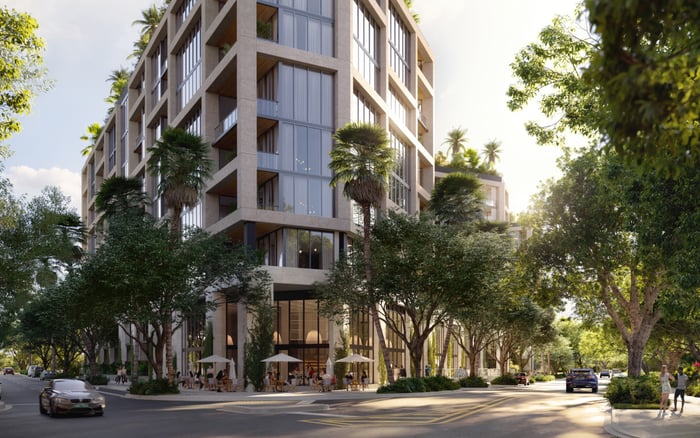
A buyer-focused look at Arbor Coconut Grove’s greenery-led views, filtered daylight, terrace usability, and unit-selection considerations within its low-rise Grove setting.
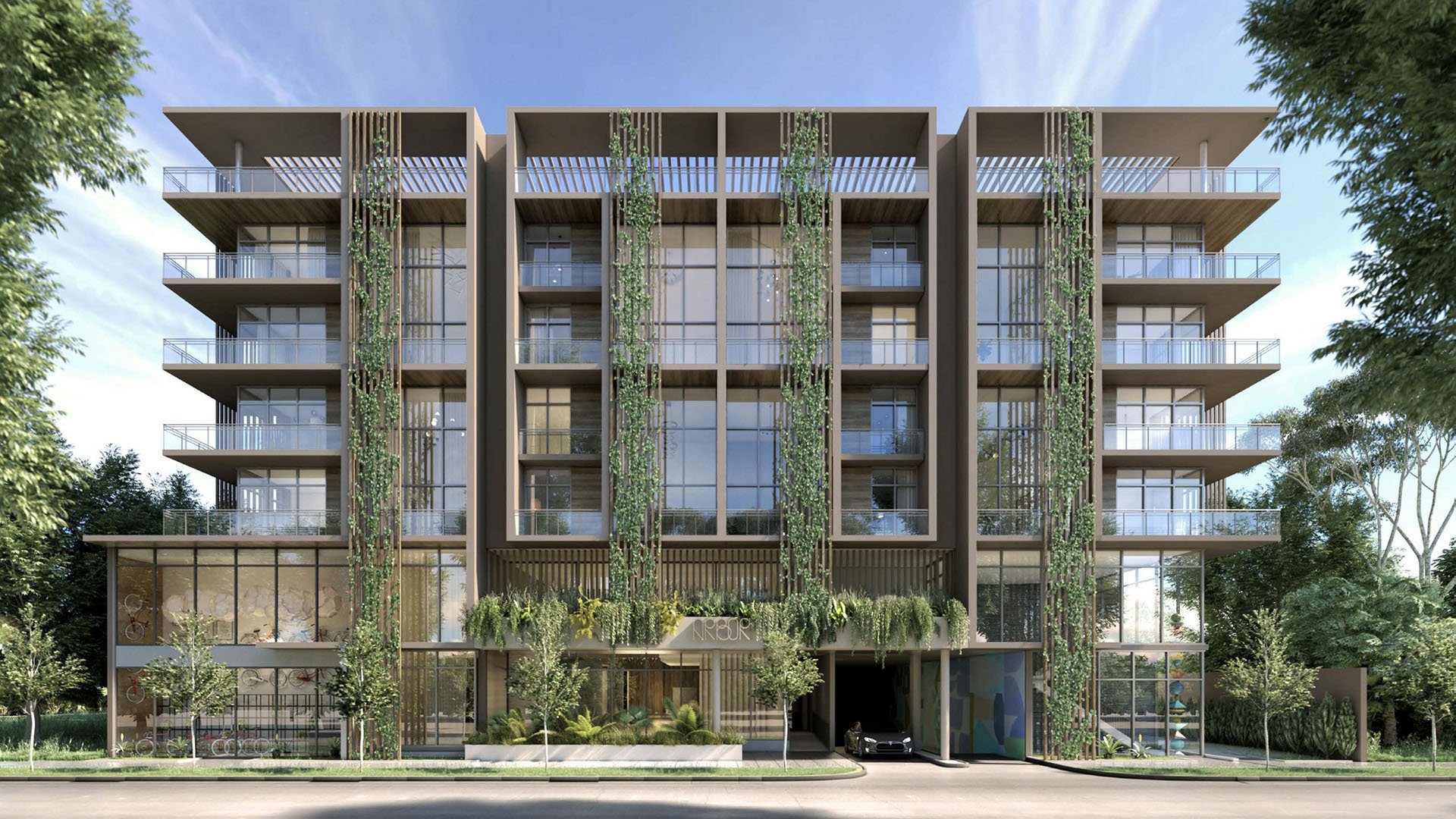
At Arbor Coconut Grove, the view conversation begins with restraint. This is not a high-rise waterfront tower built primarily around uninterrupted bay horizons. It is a boutique, low-density residential development embedded in Coconut Grove’s lower-scale fabric, where the daily outlook is shaped by foliage, sky, neighboring streets, mature landscaping, and the residential rhythm of the surrounding blocks.
That distinction matters for buyers. Arbor Coconut Grove is best understood as a treehouse proposition: private, green, and livable. Its appeal is not the theatrical reveal of a skyline wall or a glittering waterfront panorama. It is the quieter luxury of waking to filtered light, using a terrace without feeling exposed, and having greenery operate as both view and buffer.
In the Coconut Grove buyer vocabulary, this is a different form of value. The inland setting shifts attention away from direct bay frontage and toward calm, shade, privacy, and neighborhood context. For many buyers, especially those moving from glassier urban towers, that quieter framing can feel more residential and less performative.
Because Arbor is low-rise, view quality is more sensitive to floor height and exposure than it would be in a taller building that clears surrounding obstructions. Buyers should not assume that every residence reads the same way. Here, the difference between a lower, mid-level, and upper-level home can be meaningful.
Lower and mid-level residences are likely to feel more closely connected to the tree canopy. That proximity can create an enclosed, biophilic outlook where leaves, branches, and changing light become part of the room. For buyers who want a sheltered, almost garden-like daily experience, this may be the most emotionally compelling part of the building.
Upper-level residences are expected to gain more layering: treetops in the foreground, a broader sense of sky, and distant rooftops beyond the immediate streetscape. The effect is not necessarily panoramic in the waterfront sense, but it can feel more open. The strongest choice depends on whether the buyer prefers immersion in greenery or a higher, airier composition.
This is where in-person evaluation becomes essential. Unit selection should focus on floor height, orientation, proximity to the tree canopy, and the way the terrace frames the outlook. In a project like Arbor, the best view is not automatically the highest view. It is the one that matches the buyer’s preferred balance of enclosure, brightness, privacy, and sky.
Arbor’s daylight experience is more diffuse and filtered than the open-sky exposure common in taller waterfront residences. Large window openings, balconies, and terraces are central to the indoor-outdoor living concept, but the feeling is not meant to be harsh or overly exposed. Overhangs and balcony slabs help moderate sunlight, glare, and solar heat while preserving brightness.
That moderation is particularly relevant in South Florida, where abundant light is both an amenity and a design challenge. A room can be luminous without being punishing. A terrace can be usable for more than a staged sunset photo. Arbor’s architecture positions light as something to be shaped, softened, and lived with.
Buyers comparing Arbor with nearby Grove options such as Four Seasons Residences Coconut Grove or Mr. C Tigertail Coconut Grove should think carefully about how each building handles exposure, privacy, and the transition from interior to exterior. The question is not simply which home is brighter. It is which home offers brightness that remains comfortable throughout daily life.
Terrace is more than a marketing word at Arbor. The project’s balconies and terraces function as outdoor rooms, but also as visual foregrounds for the greenery-focused view story. The terrace edge becomes the place where interior life meets canopy, shade, street rhythm, and privacy.
Usability depends on several factors. Depth matters, but only in relation to shade and orientation. Privacy matters, especially in a low-scale neighborhood where surrounding homes and streets are part of the visual field. Tree canopy can be an asset, providing softness and enclosure, but buyers should also consider how close that canopy feels from a specific residence.
A balcony that is shaded, private, and visually connected to greenery may prove more valuable in daily use than a more exposed outdoor space with a broader but harsher outlook. This is the central Arbor idea: outdoor space should not be decorative. It should be comfortable enough to support breakfast, reading, conversation, and the quiet routines of Grove living.
The contrast with more exposed waterfront towers is instructive. In many high-rise settings, wind, glare, and full solar exposure can limit practical terrace use at certain times. Arbor’s reduced exposure and neighborhood setting can make outdoor living feel more domestic and consistent, particularly for buyers who value privacy over spectacle.
Coconut Grove has always rewarded nuance. Some buyers want the direct drama of taller buildings or waterfront proximity. Others want the intimacy of a residence that feels woven into the neighborhood. Arbor belongs firmly to the latter camp.
For buyers also considering The Well Coconut Grove, The Lincoln Coconut Grove, or other new-construction choices in the area, the Arbor lens is especially specific. It is about greenery, privacy, and the daily quality of light. It is about whether the home feels calm at 9 a.m., shaded at lunch, and usable at dusk.
That does not make Arbor universally superior. It makes it precise. A buyer who wants a postcard bay view may need a different address. A buyer who wants a lower-density, treehouse-like residence with a more protected outdoor experience may find Arbor highly aligned.
The most important Arbor decision is not simply floor plan. It is the relationship between the home, the terrace, and the surrounding canopy. Buyers should study how the residence receives light, what sits directly outside the glass, and whether the outdoor space feels usable rather than merely visible.
Prioritize orientation, terrace depth, shade, and privacy. Consider whether the outlook feels calming or enclosed in a way that may not suit every buyer. Ask whether the residence feels brighter in the rooms that matter most. Lower floors may offer a stronger canopy connection, while upper levels may provide more sky and layered distance.
Above all, Arbor should be judged on its own terms. Its luxury is not loud. It is residential, green, and quietly atmospheric.
Does Arbor Coconut Grove offer panoramic bay views? Arbor is better understood for foliage, sky, streetscape, and neighborhood views than for unobstructed water panoramas.
Are higher floors automatically better at Arbor? Not necessarily. Upper levels may feel more open, while lower and mid-level homes can offer a stronger tree-canopy connection.
What is Arbor’s main view advantage? Its advantage is a green, private, residential outlook that supports calm daily living rather than visual spectacle.
How important is orientation when choosing a residence? Orientation is very important because light, shade, privacy, and terrace comfort can vary meaningfully by exposure.
Are the terraces meant to be usable outdoor rooms? Yes. Balconies and terraces are central to the indoor-outdoor living experience at Arbor.
Is Arbor a good fit for buyers who want a quiet setting? Yes. Arbor’s inland Grove position favors privacy, greenery, and neighborhood calm over waterfront drama.
How does tree canopy affect the living experience? Tree canopy can soften views, filter light, improve privacy, and create a more biophilic atmosphere.
Can sunlight and glare be moderated at Arbor? The design includes overhangs and balcony slabs that help moderate glare and solar heat while preserving brightness.
Who is the strongest buyer fit for Arbor? The strongest fit is a buyer who prioritizes daily livability, greenery, shade, and privacy over panoramic views.
What should buyers focus on during a private showing? Focus on floor height, exposure, terrace depth, shade patterns, privacy, and the relationship to nearby trees.
If you'd like a private walkthrough and a curated shortlist, connect with MILLION.
If branded residences are on your mind — as a home or as an allocation — we would be glad to share what we are seeing, privately.
Begin a quiet conversation