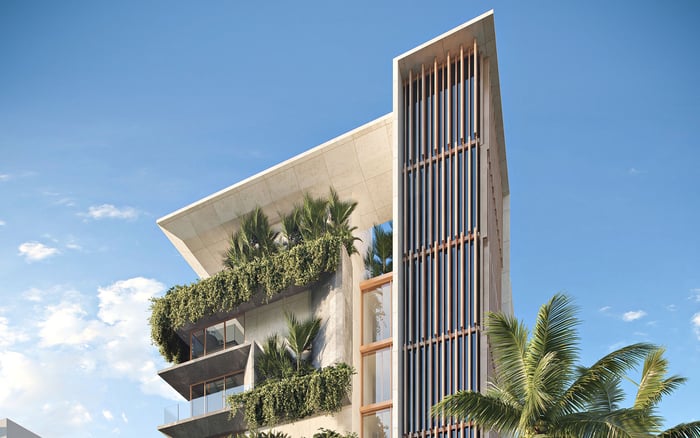
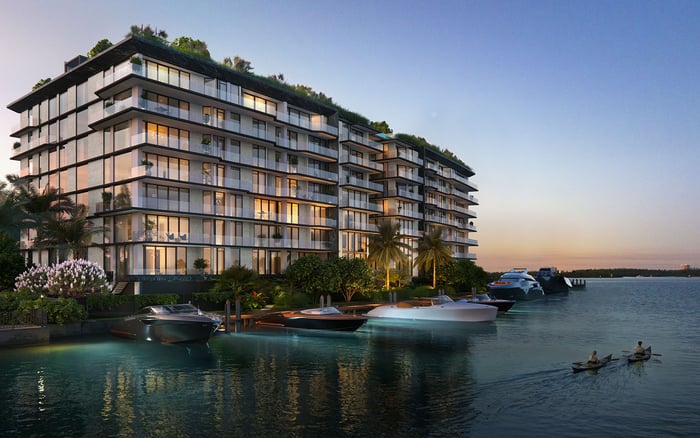
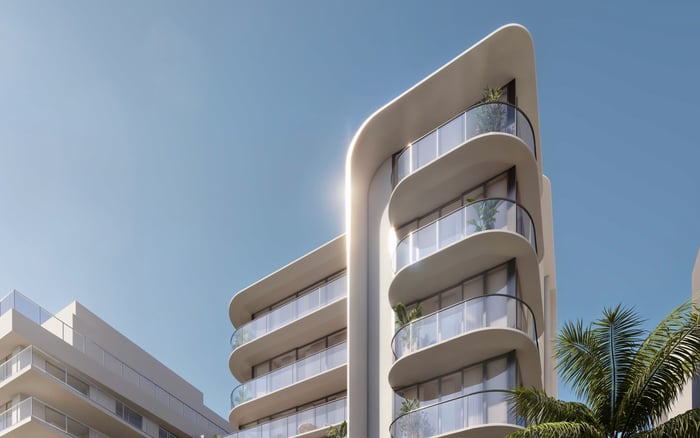
A buyer-focused guide to evaluating sunrise, sunset and mixed-exposure residences at La Maré Bay Harbor Islands through plans, terrace geometry, glare, heat and lifestyle fit.
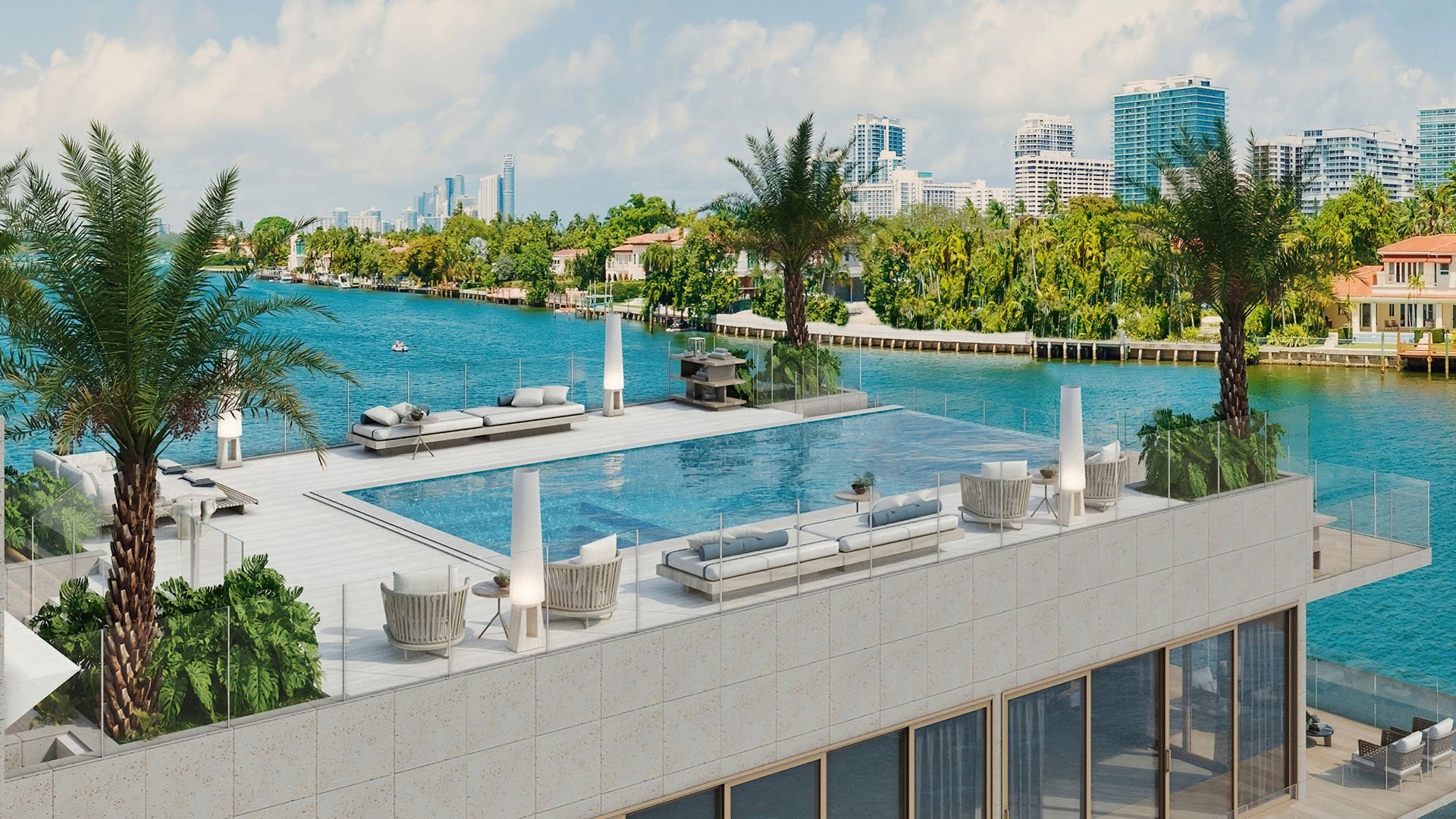
La Maré Bay Harbor Islands invites the kind of first impression that defines waterfront living: glass, terraces, bay light and a quieter scale than the most vertical parts of coastal Miami. Yet the central question for a serious buyer is not whether the project photographs beautifully. It is whether a specific residence will live beautifully at 8 a.m., 3 p.m. and 7 p.m., across seasons, with the terrace doors open and the air conditioning working in the background.
That is why sunrise-versus-sunset fit should be evaluated at the residence and stack level. Waterfront branding can imply openness, but it does not reveal whether a particular home is truly sunrise-facing, sunset-facing or mixed-exposure. At a boutique waterfront project, light is not decorative. It becomes part of the floor plan, the terrace, the cooling strategy and the daily rhythm of the home.
For a Bay Harbor buyer weighing Boutique, Waterview, Terrace and New-construction priorities, exposure becomes part of the architecture itself. La Maré Bay Harbor Islands should be read with the same care given to ceiling heights, room proportions and privacy, because the sun will shape how each of those features feels.
A rendering can be useful. It conveys design intent, water orientation and emotional atmosphere. It may also capture a single curated moment: a chosen camera angle, one weather condition and one flattering time of day. That is not the same as understanding daily light quality.
The issue is not that renderings are inherently misleading. The issue is that they are selective by design. A sunset image can make a bayfront terrace feel cinematic, but it cannot show how much heat builds in the living room on a humid late afternoon. A soft morning scene can suggest serenity, but it does not prove how the room performs when the sun shifts, reflects off the bay or is interrupted by neighboring buildings.
The proper starting point is the site plan, the stack plan and the balcony orientation for the actual residence under consideration. Buyers should ask where the main glazing faces, how the terrace projects from the building, whether the exposure is direct or angled, and whether the primary living spaces receive the same light as the bedrooms. In luxury real estate, especially in a glass-forward bayfront setting, the difference between a beautiful view and a comfortable home can be measured in degrees.
A sunrise-facing or southeast-facing residence may appeal to buyers who want quieter mornings, softer light and less intense afternoon solar gain. That can matter in South Florida, where comfort is not only seasonal. It is a year-round livability question.
Morning light tends to support early routines, family schedules and work-from-home patterns. It can make breakfast areas, home offices and primary bedrooms feel awake without necessarily turning the late afternoon into a glare-management exercise. For buyers using the residence as a primary home, this can be more meaningful than the occasional drama of a golden-hour view.
The trade-off is emotional rather than incidental. A sunrise exposure may not carry the same evening spectacle as a west-facing bay view. If sunset entertaining is central to the ownership story, a softer morning-oriented residence may feel quieter than expected. The key is not to mistake that quietness for a defect. For the right buyer, it is the point.
Sunset-facing bayfront residences can be visually powerful. They often produce the late-day atmosphere that photographs well, entertains well and gives a listing a clear narrative: bay, terrace, sunset. For investors or owners who think carefully about resale language, that drama can matter.
Yet west-facing beauty requires due diligence. Late-afternoon heat, glare and cooling-load concerns are not abstract issues when a residence has substantial glass and outdoor living areas. A terrace that looks magical in a still image may be less usable if the sun angle is too direct during the hours when the owner actually wants to sit outside.
Water can also intensify the experience. Direct sunlight is only part of the review. Reflected light from the bay surface can amplify glare, especially in living areas with broad glass walls or polished interior finishes. Buyers should consider how window treatments, glass specifications and terrace shading will work together, rather than assuming the view alone resolves the equation.
Compass direction matters, but it is not the whole story. Terrace depth, overhangs and balcony geometry can materially change how a residence feels. A deeper terrace may shade interiors during certain hours, while a shallower projection may allow more direct sun. Angled balconies can shift the experience from pure sunrise or sunset into a more nuanced mixed-exposure condition.
This is where plan review becomes practical rather than theoretical. Buyers should look at how far the terrace extends, whether the overhang shades the glass, and whether the outdoor area is protected enough for regular use. The most elegant terrace is not merely the largest or most photogenic. It is the one that supports breakfast, remote work breaks, evening conversation and seasonal comfort.
Interior planning also matters. If the main seating area sits directly behind floor-to-ceiling glass, glare control becomes more important. If the dining area is set deeper into the plan, the same exposure may feel calmer. The residence should be judged as a sequence of lived spaces, not as a single exterior elevation.
A disciplined buyer should compare light conditions at multiple times of day, especially morning, late afternoon and early evening. If an in-person test is not possible at every hour, the conversation should still focus on actual orientation, likely sun path, balcony geometry and the way neighboring structures affect view corridors.
Neighboring buildings and future development possibilities deserve attention because Bay Harbor Islands is a fine-grain market. Small differences in siting can materially affect outlook, privacy and light. A residence may be waterfront and still have a distinct relationship to adjacent massing, lateral views or reflected sun.
The review should also include glass performance. Floor-to-ceiling glass can be one of the great pleasures of a bayfront residence, but it makes solar heat gain and glare control important. Buyers should understand what the glass is designed to do, how shades or window treatments may be integrated, and whether the cooling strategy feels aligned with the exposure.
There is no universal winner between sunrise and sunset. The better exposure is the one that matches the owner’s day. An end-user who works from home, values quiet mornings and wants predictable terrace comfort may place greater weight on heat, shade and reduced afternoon intensity. An investor, seasonal owner or frequent entertainer may value the marketability of a dramatic sunset-bay narrative more heavily.
Families may prefer softer morning light in bedrooms and common areas. Entertainers may prioritize the visual event of evening. Design-focused buyers may care most about how daylight moves across materials and furnishings. The right answer is not found in a single image, but in the alignment between the residence and the life it is meant to hold.
At La Maré Bay Harbor Islands, the most relevant question is not which exposure looks better in a rendering. It is which exposure supports the buyer across mornings, afternoons, evenings and seasons. That is the standard that separates a beautiful purchase from a deeply livable one.
Is sunrise or sunset better at La Maré Bay Harbor Islands? Neither is automatically better. The better choice depends on the exact residence orientation, terrace design and the buyer’s daily routine.
Why should buyers review the stack plan? The stack plan helps confirm whether a residence is sunrise-facing, sunset-facing or mixed-exposure. It also shows how orientation may differ from the broader waterfront impression.
Can a rendering prove light quality? No. A rendering usually captures one selected time, camera angle and weather condition, so it should not replace plan review or exposure analysis.
What is the main benefit of sunrise exposure? Sunrise or southeast-facing residences may offer softer morning light and less afternoon solar gain. That can improve comfort for daily living and work-from-home use.
What is the main appeal of sunset exposure? Sunset exposure may deliver stronger visual drama and a compelling entertaining narrative. It can also be attractive from a resale marketing perspective.
What are the risks of sunset-facing bayfront homes? They may experience more late-afternoon heat, glare and cooling demand. Reflected light from the bay can intensify those effects.
Why does terrace depth matter? Terrace depth and overhangs can shade glass and change how usable outdoor space feels. Direction alone does not tell the full comfort story.
Should buyers test light at different times? Yes. Morning, late afternoon and early evening conditions can reveal very different experiences within the same residence.
Do neighboring buildings affect exposure? Yes. Nearby structures, view corridors and future development can alter light, outlook and privacy in meaningful ways.
How should an end-user approach the decision? An end-user should prioritize heat, shade, terrace usability and daily comfort. Investors may give more weight to the marketability of sunset drama.
For a confidential assessment and a building-by-building shortlist, connect with MILLION.
If branded residences are on your mind — as a home or as an allocation — we would be glad to share what we are seeing, privately.
Begin a quiet conversation