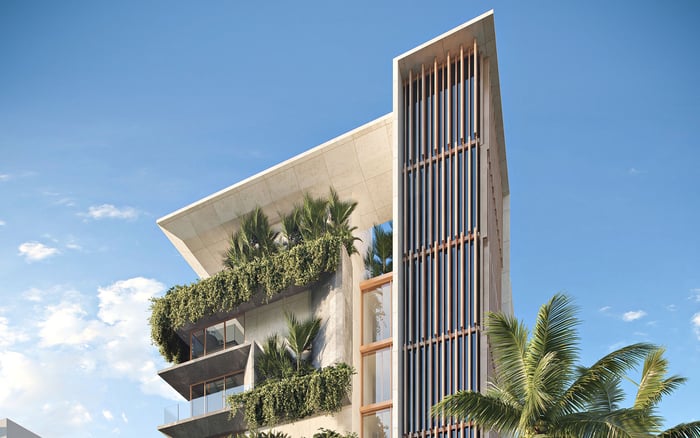
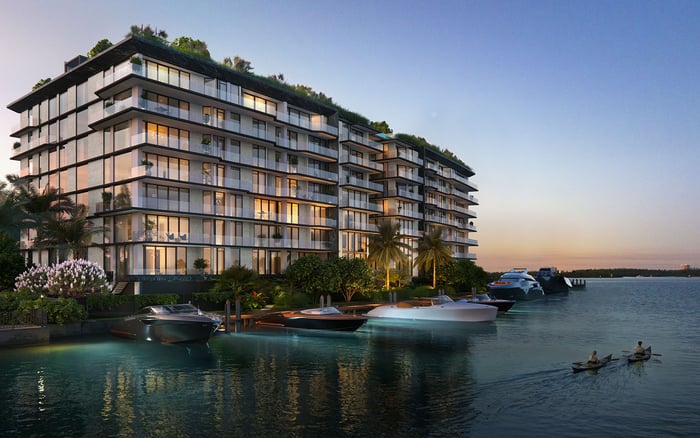
An analytical look at Alma Bay Harbor Islands as a compact waterfront condominium where staff logistics, service circulation, loading, package handling, and resilience planning shape the everyday luxury experience.
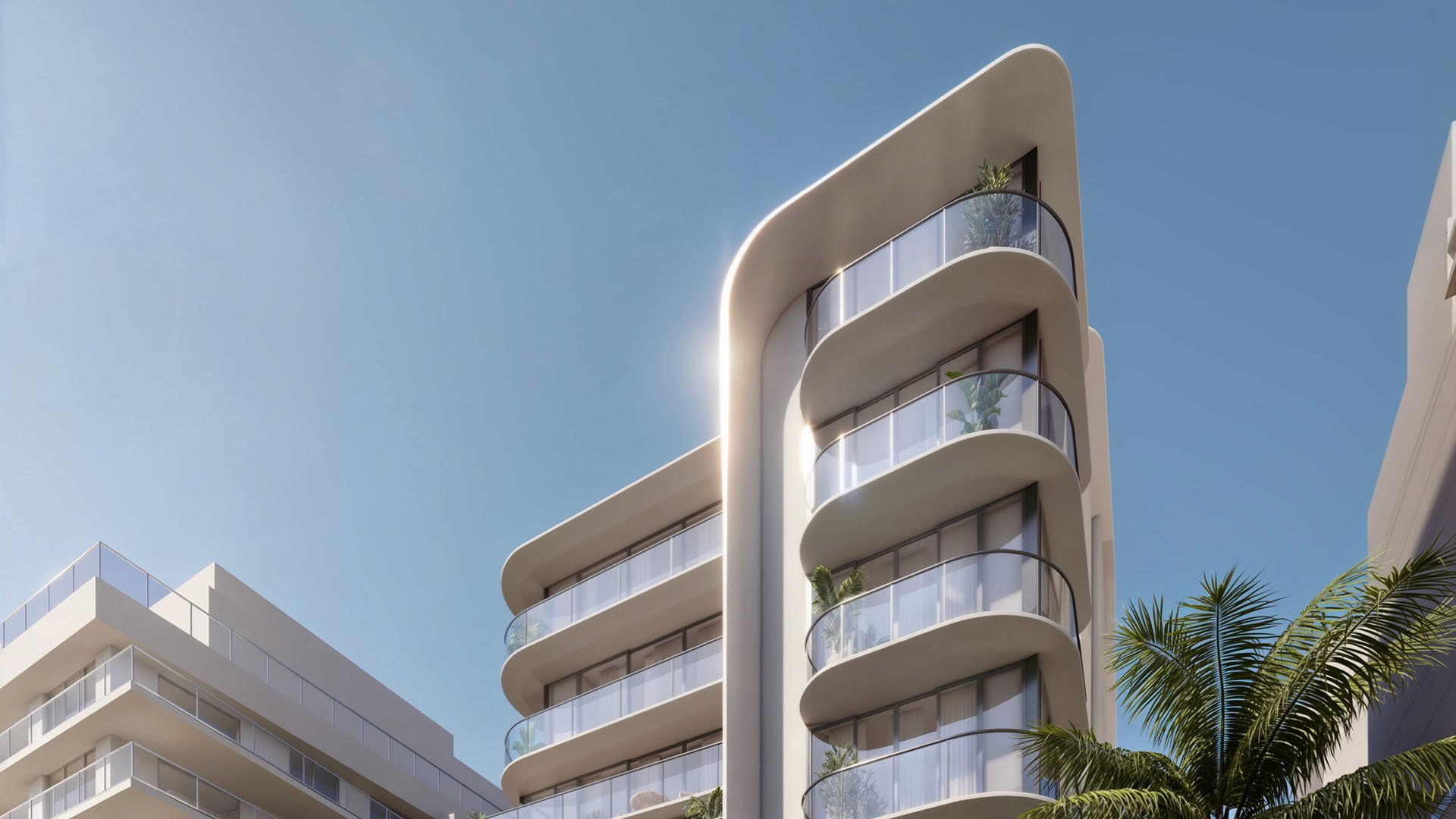
At Alma Bay Harbor Islands, the most revealing design questions extend beyond finishes, views, or the tone of the lobby. They sit behind the scenes, in the corridors, rooms, elevators, and loading patterns that allow a boutique waterfront residence to feel composed after move-in. In a compact Bay Harbor Islands setting, staff logistics are not an operational afterthought. They are part of the resident experience.
That distinction matters because luxury is often judged by absence: no friction, no waiting, no visible clutter, no crossed paths, and no awkward handoffs. A well-planned building makes the daily movement of valet activity, deliveries, concierge support, engineering access, amenity preparation, and guest traffic feel almost invisible. A poorly planned one lets those functions spill into arrival, lobby life, and amenity calm.
Alma is positioned as a boutique, high-end waterfront residential project, which gives the discussion particular weight. Boutique scale can feel intimate and private, but it also leaves the back-of-house plan less room for error. The smaller the canvas, the more precisely service elevators, loading, staff circulation, engineering rooms, and amenity support zones need to work together.
Waterfront frontage is the most valuable part of the experience, especially in a market where water-view orientation helps define both emotional appeal and long-term perception. That creates design pressure: the most desirable areas naturally want to be reserved for residences, outlooks, terraces, and amenity moments, while the building still needs a serious operational spine.
On a constrained site, ground-floor planning becomes especially important. Resident arrival, valet flow, loading, service access, parking movement, and amenity entry all compete for limited space. If those sequences are not separated or choreographed with care, the building can feel congested at precisely the moments when it should feel most serene.
This is part of the larger Bay Harbor conversation now shaping buyer expectations. Projects such as Onda Bay Harbor, La Maré Bay Harbor Islands, and Alana Bay Harbor Islands all sit within a market where waterfront living is intimate, highly residential, and sensitive to operational details. For Alma, the question is not simply whether service exists, but whether it can remain discreet under daily use.
In a broad podium building, back-of-house functions can spread horizontally. In a compact waterfront condominium, they may need to stack vertically. That makes the relationship among service elevators, staff pathways, storage, engineering rooms, package areas, and amenity support central to how the property lives.
A service elevator is more than a utility feature. It is the building’s pressure valve. It can keep housekeeping, vendors, maintenance teams, move-ins, catering support, and deliveries from colliding with the resident-facing experience. When it is thoughtfully located and supported by practical staging space, it allows staff to move efficiently without making the lobby feel like a workplace.
Loading is equally important. Luxury buildings receive constant movement: furniture deliveries, grocery services, floral arrangements, dry cleaning, seasonal luggage, event support, and contractor visits. None of this is glamorous, but all of it affects daily life. If loading lacks clarity, the effects can ripple into valet timing, lobby congestion, and staff efficiency.
Package handling deserves its own attention. Modern luxury residents receive a high volume of deliveries, often with varying size, temperature, timing, and security requirements. The best experience is not merely that packages arrive. It is that they are processed, held, tracked, and transferred without visual clutter or recurring inconvenience.
Back-of-house design is also a financial issue. A building that allows staff to work efficiently can support better service quality with less wasted motion. Over time, this can influence operating costs, staffing effectiveness, and the perceived professionalism of the property. Buyers often study monthly fees, but fewer ask whether the physical plan helps or hinders the team expected to deliver the service behind those fees.
That is where boutique luxury becomes demanding. A smaller building can feel personal and protected, yet it still needs the operational discipline of a much larger residence. Concierge-style staffing, valet support, frequent deliveries, and seasonal guest traffic can place meaningful pressure on the plan, especially during peak periods.
The comparison is not only local. Across South Florida, buyers looking at waterfront or urban luxury increasingly understand that service architecture is part of value. The visible drama of a tower such as Aria Reserve Miami may differ from the quieter residential scale of Alma, yet both depend on the same principle: the public face of luxury is only as smooth as the private system behind it.
Resale perception follows. A buyer may fall in love with a residence, but day-to-day impressions are formed in moments of use. How long does valet take when several residents arrive at once? Do deliveries feel organized? Are vendors discreet? Do amenity spaces stay composed because support areas are nearby and functional? These small encounters become part of the building’s reputation.
In South Florida, operational design also includes resilience. Hurricane exposure is part of the context for building systems, engineering access, and continuity planning. Buyers do not need to become engineers, but they should understand that mechanical rooms, service zones, access routes, and staff protocols all contribute to how a building responds before, during, and after severe weather.
The same is true for routine maintenance. A pristine lobby matters less if the staff cannot easily access the systems that keep the building running. Engineering rooms and service circulation should be evaluated as part of the luxury promise because their performance protects the resident experience when conditions are not ideal.
For new-construction buyers, this is a useful lens. Renderings can communicate atmosphere, but operations determine whether that atmosphere survives real life. Alma’s compact waterfront setting makes that lens especially relevant because the building must balance privacy, water-facing value, arrival choreography, and practical support in a limited footprint.
The most sophisticated buyer questions are often simple. Where do deliveries enter? How are resident and service paths separated? What happens during move-ins? How does valet interact with loading? Where are packages held? How are amenity areas supported? How can staff reach residences without overusing the primary arrival sequence?
These questions do not diminish the romance of waterfront living. They clarify it. A residence should feel effortless not because nothing complicated happens, but because the building has been designed to absorb complexity quietly. That is the essence of back-of-house planning at Alma Bay Harbor Islands.
A similar mindset applies when evaluating other premium South Florida residences, from the resort-oriented scale of The Ritz-Carlton Residences® Sunny Isles to the more intimate Bay Harbor Islands landscape around Alma. The buyer who understands service circulation is better equipped to judge whether the property will feel elegant in daily use, not only in presentation.
Why does back-of-house design matter at Alma Bay Harbor Islands? It shapes whether staff, deliveries, valet activity, and maintenance can operate discreetly without disrupting the resident experience.
Is staff logistics mainly a management issue? Management matters, but the physical plan determines how efficiently staff can move and how much friction residents notice.
What are the key back-of-house elements to evaluate? Buyers should focus on service elevators, loading, staff circulation, engineering rooms, package handling, and amenity support zones.
Why is the waterfront setting important? Waterfront frontage is highly valuable, so the building must balance prized residential space with the practical systems needed to support it.
How does a compact site affect daily living? Limited site depth can make arrival, valet, parking, loading, and amenity access more interdependent, which raises the importance of planning.
Does package handling really affect luxury perception? Yes. Frequent deliveries can create clutter and inconvenience unless the building has a clear system for receiving and transferring packages.
Can back-of-house design influence operating costs? Efficient circulation and support areas can help staff work more effectively, which may influence service quality and operating performance.
Why should buyers ask about service elevators? A service elevator helps separate resident-facing spaces from deliveries, vendors, maintenance, and move-in activity.
How does resilience relate to back-of-house planning? Engineering access, service zones, and operational pathways matter when a building prepares for or recovers from severe weather.
What is the main buyer takeaway? Effortless luxury depends on hidden systems, so buyers should study how service actually moves through the building.
For a discreet conversation and a curated building-by-building shortlist, connect with MILLION.
If branded residences are on your mind — as a home or as an allocation — we would be glad to share what we are seeing, privately.
Begin a quiet conversation