
A disciplined walkthrough should test the residence as a building, an operating environment, and a branded service proposition. Buyers should examine envelope conditions, acoustics, vertical circulation, back-of-house routing, resilience planning, arrival logistics, and governing documents before allowing design and views to dominate the decision.
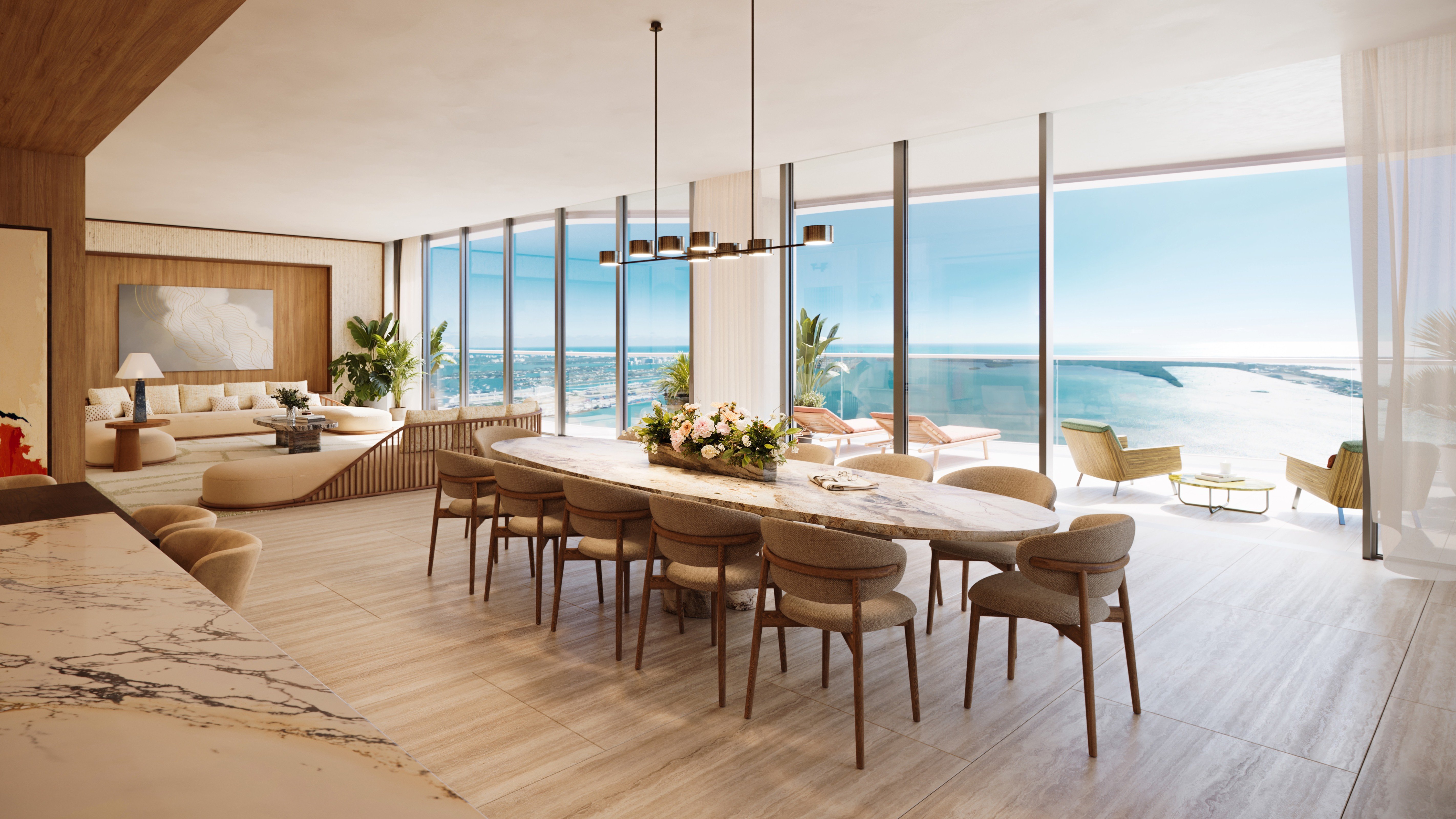
At The Residences at Mandarin Oriental, Miami, a buyer's review should extend beyond visible design elements. The walkthrough is an opportunity to ask how the residence, shared spaces, building systems, and service model are intended to function together.
A serious walkthrough should operate as both a technical and an operational inspection-not simply an appreciation of stone, millwork, fixtures, amenities, and views. The critical question is not only how the property presents, but how the building may perform, circulate, preserve privacy, and respond to disruptions under real conditions.
The most useful principle is simple: separate visible luxury from durable value. The former is immediately legible. The latter requires questions, testing, documents, and often independent professional advice.
Begin at the exterior edge of the residence. Study accessible glazing, doors, visible seals, exterior metalwork, terrace transitions, and facade interfaces. Look for irregular joints, staining, corrosion, damaged coatings, or places where water could collect. These observations do not establish a defect, but they can identify areas that merit technical clarification.
Ask how the envelope addresses wind-driven rain, water management, wind resistance, and marine exposure. On the terrace, check door operation and thresholds, then listen for wind noise. If construction access limits direct inspection, request available plans, engineering narratives, equipment schedules, and relevant testing or acoustic materials.
A South Florida high-rise architect, building-systems engineer, construction consultant, or owner's representative can help interpret glazing assemblies, fire-rated construction, mechanical layouts, and long-term durability risks. The objective is not to redesign the building, but to distinguish a cosmetic observation from an issue with operational or financial consequences.
Premium finishes do not guarantee acoustic privacy. Pause in bedrooms, living areas, corridors, elevator lobbies, amenity spaces, and terraces. Listen for closing doors, elevator movement, voices, traffic, mechanical hum, and service activity. Where possible, repeat the exercise with the air-conditioning equipment operating.
Request the locations of mechanical rooms, elevator equipment, service shafts, loading areas, and other noise-generating systems relative to the prospective residence. Review horizontal adjacencies as well as the floors immediately above and below. Buyers comparing Miami options such as St. Regis® Residences Brickell or Una Residences Brickell can apply the same review method: the view corridor matters, but so does the service corridor.
Visit at more than one hour when feasible. Rush hour, evening, and windy or rainy conditions may reveal noise, lighting, drainage, traffic, and service patterns that a staged daytime appointment does not expose.
Vertical circulation shapes daily life in a high-rise. Ask about elevator count, zoning, anticipated travel patterns, redundancy, and the separation of residents, guests, staff, deliveries, and service traffic. During the visit, time a representative journey rather than inspecting only the cabin finishes.
Request access to representative back-of-house areas where permitted. Loading operations, waste handling, staff routing, service elevators, and delivery staging can influence residential quiet and convenience. If physical access is restricted, ask for circulation plans and written operating protocols.
Where hotel and residential functions interact, clarify which amenities are shared, how access is controlled, which privacy rules apply, how service priorities are managed, and who bears the relevant common costs. A brand can define expectations, but governing and operating documents determine how those expectations are implemented. Buyers also reviewing The Residences at Mandarin Oriental Boca Raton should evaluate each property's structure independently rather than assume identical arrangements.
Evaluate the full arrival sequence, including surrounding traffic, emergency access, evacuation planning, valet operations, guest handling, vehicle storage, charging access, deliveries, and potential loading conflicts. Drive the approach at different times when possible and note where residential and service movements intersect.
Storm readiness demands equally direct questions. Request available details on flood mitigation, emergency power, water management, life-safety systems, and post-event recovery procedures. Determine which systems receive backup power and how residents would receive instructions during a disruption. The relevant issue is not merely whether a plan exists, but whether responsibilities, communications, and recovery priorities are clearly assigned.
When comparing with The Residences at Six Fisher Island, apply the same buyer discipline: assess privacy and arrival quality alongside logistics, service circulation, and emergency planning.
A two-visit strategy can protect judgment. Use the first appointment to assess spatial quality, light, views, orientation, and the overall emotional response. Reserve the second for targeted testing of systems, operations, access, and unanswered questions. Bring a written checklist and record which responses require documentary confirmation.
Before relying on any walkthrough representation, review the condominium declaration, budgets, reserve assumptions, insurance arrangements, maintenance obligations, use restrictions, and relevant brand agreements with qualified legal and technical advisers. Investigate staffing levels, service coverage, response standards, security procedures, and the operating assumptions required to sustain the proposed residential experience.
The best walkthrough does not diminish the pleasure of exceptional design. It tests whether that experience is supported by a resilient envelope, discreet circulation, credible staffing, disciplined governance, and an operating model aligned with ownership expectations.
Why should the walkthrough extend beyond finishes and views? Building performance, service circulation, privacy, and operating responsibilities can materially shape daily ownership.
What exterior elements deserve attention? Inspect accessible glazing, doors, visible seals, metalwork, coatings, thresholds, and terrace transitions for conditions requiring clarification.
How should a buyer evaluate acoustics? Listen from multiple rooms and shared areas with building systems operating, then revisit at a different time if possible.
Why do mechanical-room locations matter? Mechanical rooms, service shafts, and elevator equipment may affect noise, vibration, access, and maintenance activity.
What should buyers ask about elevators? Ask about count, zoning, travel patterns, redundancy, and separation among residential, guest, staff, delivery, and service traffic.
Is back-of-house access important? Yes. Loading, waste handling, deliveries, and staff routing can show how discreetly the property is intended to operate.
How should the hotel-residential relationship be reviewed? Confirm shared amenities, access controls, privacy rules, service priorities, cost responsibilities, and the governing agreements.
What should be tested about arrival and access? Review surrounding traffic, arrival queues, emergency access, evacuation planning, parking, and delivery procedures.
Which resilience questions belong on the checklist? Ask about flood mitigation, emergency power, water management, life safety, communications, and post-storm recovery procedures.
Who should accompany a technical walkthrough? Consider a South Florida architect, engineer, construction consultant, or owner's representative suited to high-rise review.
For a discreet conversation and a curated building-by-building shortlist, connect with MILLION.
If branded residences are on your mind — as a home or as an allocation — we would be glad to share what we are seeing, privately.
Begin a quiet conversation

.jpg&width=700&height=438&fit=cover)