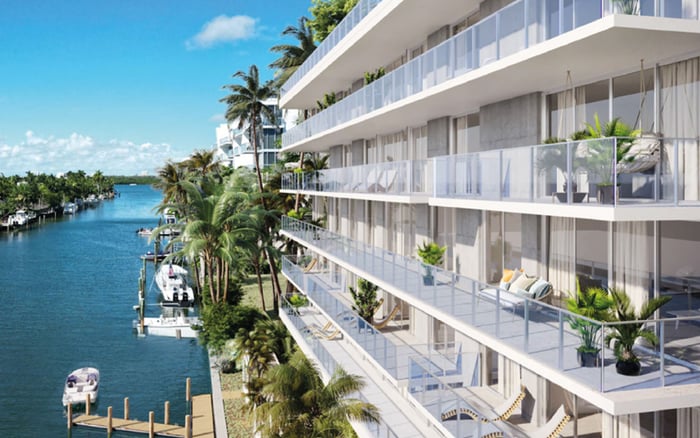
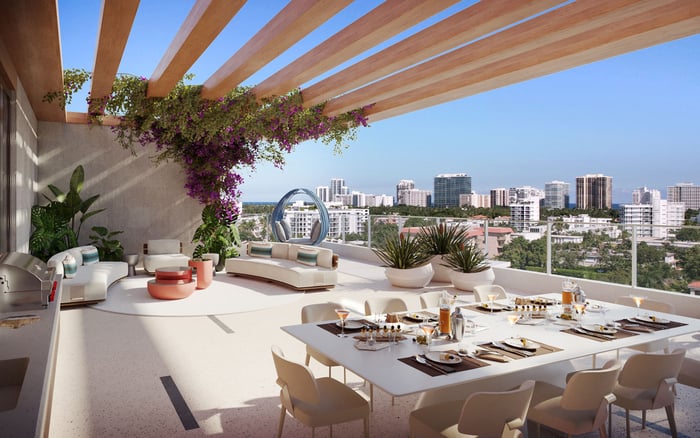
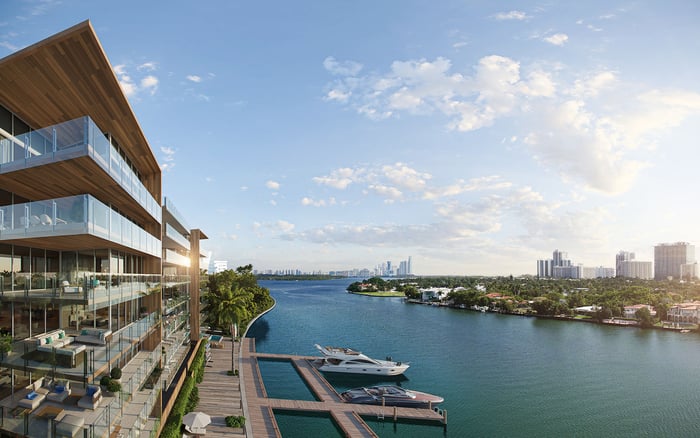
A buyer-oriented comparison of La Maré Bay Harbor Islands, Origin Bay Harbor Islands, and Shoma Bay North Bay Village through the practical lens of penthouse scale, roof rights, exterior-area control, terrace performance, wind exposure, and association rules.
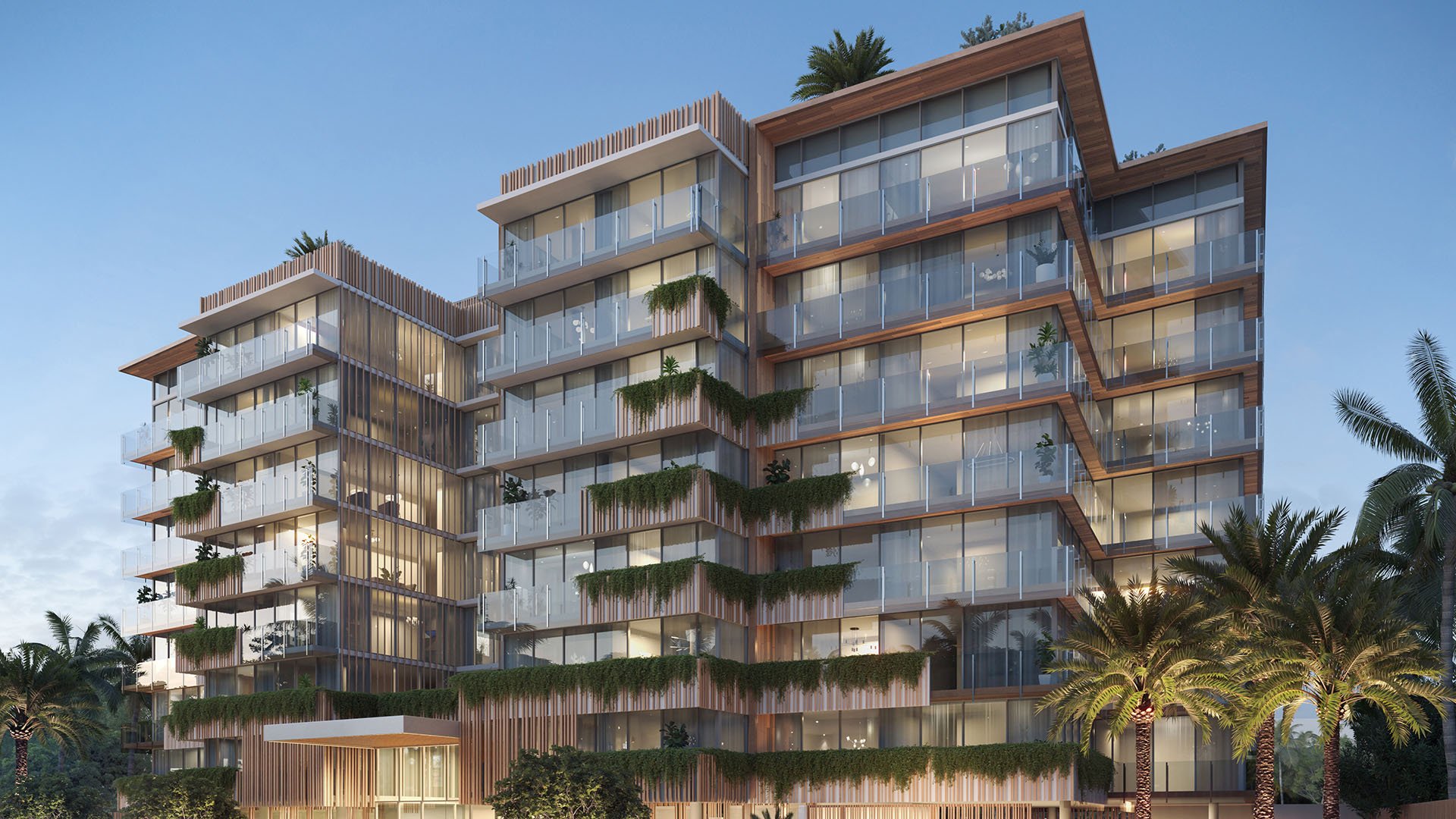
For the upper tier of South Florida condominium buyers, the penthouse conversation has become more exacting. Scale still matters, but it is no longer enough to ask how expansive a residence feels inside the glass. The sharper 2026 question is how much of the outdoor experience is genuinely private, legally controlled, and usable in real weather.
That is the practical lens for comparing La Maré Bay Harbor Islands, Origin Bay Harbor Islands, and Shoma Bay North Bay Village. The first two sit within the quieter, lower-scale Bay Harbor Islands context, where a penthouse can read as a lock-and-leave alternative to a waterfront home. Shoma Bay North Bay Village is the counterpoint: a more urban, mixed-use, amenity-forward setting shaped by greater density and a more vertical lifestyle.
For buyers using Bay Harbor as shorthand for discretion, calm streets, and residential scale, the appeal is clear. Yet the best penthouse is not simply the highest or most photogenic. It is the residence where the terrace, roof, wind conditions, building rules, and maintenance obligations all work together.
La Maré Bay Harbor Islands and Origin Bay Harbor Islands belong to the boutique-luxury wave in Bay Harbor Islands. Their penthouse value proposition will likely be judged through privacy, proportion, and the extent to which outdoor areas can substitute for single-family living. A private terrace that works for breakfast, reading, entertaining, and evening air can be materially more valuable than one that looks dramatic in renderings but proves uncomfortable in daily use.
Shoma Bay North Bay Village asks a different question. In a larger, more amenity-driven building, the penthouse sits within a more populous vertical community. That can bring advantages: services, shared spaces, and an urban rhythm. It can also require closer scrutiny of access patterns, elevator experience, guest policies, shared amenity proximity, and how association rules govern sound, furniture, grilling, planting, or after-dark use.
For the buyer, this is less about choosing quiet over energy than identifying which version of luxury fits the intended life. A Bay Harbor penthouse may appeal to someone leaving a waterfront home but unwilling to surrender privacy. A North Bay Village penthouse may suit a buyer who wants skyline energy, amenities, and a more connected social environment.
Penthouse buyers often speak casually about “my roof” or “my terrace.” The documents may say something more complicated. In 2026, that distinction should be treated as a core economic issue.
A rooftop or upper terrace may be deeded to the unit, assigned as a limited common element, or granted under a license or exclusive-use arrangement. Those structures can feel similar on a sales tour, but they are not equivalent. Deeded space suggests the strongest ownership interest. A limited common element may provide exclusive use while keeping structural components under association control. A license or use right may be more conditional, more rule-bound, or potentially easier to alter.
For La Maré Bay Harbor Islands, due diligence should begin with the precise legal character of rooftop and terrace areas. The buyer should not rely on floor plans alone. The declaration, survey exhibits, sales contract, budget, rules, and any roof-use language should be reviewed together, so the romantic promise of open-air living matches the legal reality.
For Origin Bay Harbor Islands, the same principle applies, with special attention to maintenance. If a penthouse owner can install or use shade structures, planters, kitchens, furniture, or other exterior improvements, the next question is who maintains the waterproofing membrane, drains, railings, pavers, lighting, and any penetrations. A roof terrace is only as carefree as the maintenance obligations behind it.
Terrace design is not decoration. In waterfront and near-water markets, wind exposure can determine whether outdoor space functions as a room or merely photographs as one.
A true wind-protected outdoor room has more than square footage. It has orientation, depth, usable corners, protected seating zones, drainage, durable finishes, and rules that allow the owner to furnish it meaningfully. A narrow exposed ledge may add marketing drama but little daily comfort. A deeper protected terrace may become the most used room in the home.
This is especially important for Shoma Bay North Bay Village, where building height, exposure, shared amenities, and association rules can shape the experience of private outdoor space. Buyers should ask how wind behaves at the relevant elevation, whether furniture must be secured or removed under certain conditions, and how private terraces interact with adjacent common areas.
In Bay Harbor Islands, the quieter residential setting can make outdoor rooms feel more intimate. Still, a terrace is not automatically private because it is attached to a penthouse. Sightlines from neighboring buildings, rooftop common areas, maintenance access, and rail height can all affect whether the space feels like an extension of the home or a stage.
Penthouse ownership is both private and communal. The buyer may occupy the most rarefied residence in the building, but the association still governs exterior appearance, repair access, insurance structure, common-element maintenance, contractor rules, and often the permissible character of roof or terrace improvements.
In a boutique building, culture can feel more personal. Fewer households may mean a quieter rhythm, but it can also place greater importance on early governance, budgets, reserves, and the tone set by initial ownership. In a larger, amenity-rich building, systems may be more formalized, yet the owner must understand how a high-floor private experience intersects with a busy shared environment.
The penthouse premium should therefore be tested against both architecture and administration. Who can access the roof? Who pays if a drain fails? Who approves a pergola or shade element? Who is responsible for railings, membranes, exterior lighting, or storm preparation? What happens if the association needs access through the residence to maintain building components?
These are not minor contract questions. They define whether a penthouse behaves like a private estate in the sky or a beautiful residence with constrained exterior rights.
Before signing, a serious buyer should align the sales narrative with the governing documents. Confirm the legal status of every exterior area. Identify whether rooftop, terrace, and mechanical-adjacent spaces are deeded, limited common elements, common elements, or licensed-use areas. Review whether exclusive use can be amended by the association or developer.
Next, test usability. Visit at different times if possible. Consider wind, sun, shade, privacy, sightlines, access to water and power, furniture rules, drainage, and the distance between kitchen, living room, and exterior seating. Outdoor space that is difficult to furnish or inconvenient to reach will rarely perform like true living area.
Finally, compare lifestyle honestly. La Maré Bay Harbor Islands and Origin Bay Harbor Islands are strongest for buyers who prioritize boutique privacy and a more residential island atmosphere. Shoma Bay North Bay Village is more compelling for those who want a denser, service-rich, mixed-use environment and are comfortable with a more active building ecosystem.
The highest-value decision is not the most obvious one. It is the penthouse whose legal rights, exterior comfort, association framework, and daily rhythm support the way the owner actually intends to live.
What is the main due-diligence issue for these penthouses? The key issue is whether outdoor space is legally controlled, practically usable, and protected enough from wind to function as true living area.
How do La Maré and Origin differ from Shoma Bay in lifestyle terms? La Maré and Origin sit in a quieter Bay Harbor Islands context, while Shoma Bay reflects a more urban, mixed-use North Bay Village setting.
Why do roof rights matter so much for a penthouse buyer? The value of rooftop space depends on whether it is deeded, a limited common element, or a more conditional use right.
What should buyers ask about Origin Bay Harbor Islands terraces? Buyers should confirm who maintains waterproofing, railings, drains, shade structures, and any approved rooftop improvements.
What should buyers examine at La Maré Bay Harbor Islands? They should focus on privacy, terrace configuration, and the exact legal status of any private roof-use rights.
What makes Shoma Bay North Bay Village different for penthouse ownership? Its more amenity-driven, vertical setting makes shared facilities, building rules, wind exposure, and community density more central.
Is a larger terrace always better? No. A smaller, deeper, wind-protected terrace can be more valuable in daily life than a larger exposed outdoor area.
Can association rules affect private outdoor rooms? Yes. Rules may govern furniture, sound, exterior improvements, storm preparation, access, and visual consistency.
Who is the ideal buyer for a Bay Harbor Islands penthouse? It often suits a buyer seeking boutique privacy and a condo alternative to the feel of a waterfront single-family home.
Who is the ideal buyer for a Shoma Bay penthouse? It may suit a buyer who values amenities, services, and a more connected urban waterfront lifestyle.
If you'd like a private walkthrough and a curated shortlist, connect with MILLION.
If branded residences are on your mind — as a home or as an allocation — we would be glad to share what we are seeing, privately.
Begin a quiet conversation