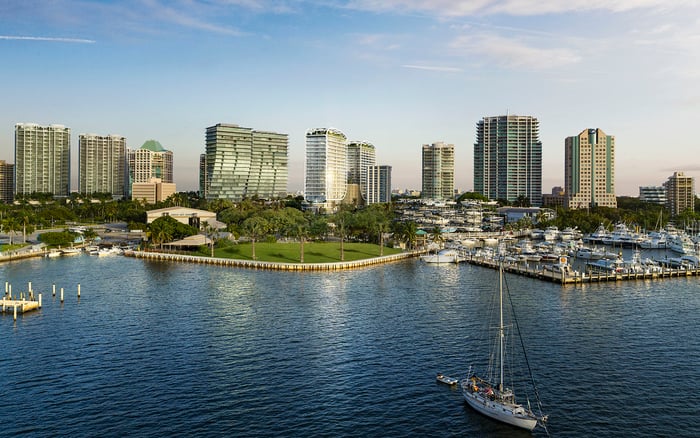
For philanthropic couples buying in South Florida, milestone inspection history is more than a technical file. It reveals life-safety priorities, board discipline, reserve planning, and the likelihood of future assessments across luxury condominium buildings.

For couples who give generously, collect carefully, and choose homes with a long horizon, a South Florida condominium purchase is rarely a private lifestyle decision alone. It is a commitment to a building, a board culture, a maintenance philosophy, and a shared civic footprint. That is why milestone inspection history now belongs beside view corridors, privacy, staff standards, and design pedigree in the luxury buyer conversation.
Florida’s milestone-inspection framework applies to condominium and cooperative buildings that are three stories or higher. Its purpose is precise: to assess a building’s life-safety condition and the adequacy of its structural components. It is not a certificate of full building-code compliance, and it should never be treated as a decorative closing exhibit.
In a Buyer's Guides context, the point is direct. Inspection history helps a buyer distinguish a building that has confronted maintenance obligations from one that has deferred difficult decisions. For philanthropic households, that distinction carries moral weight as well as financial consequence.
South Florida’s coastline rewards vertical living, but salt air, wind exposure, waterproofing demands, and aging concrete require discipline. Local inspection regimes existed before the statewide milestone system, including Miami-Dade’s building-recertification program for qualifying older buildings involving structural and electrical recertification. The newer statewide framework adds another layer of buyer visibility.
The emotional context is unavoidable. Champlain Towers South in Surfside collapsed on June 24, 2021, and 98 people died. The event reshaped how serious buyers read association documents, board minutes, engineer correspondence, and repair funding. It also clarified that luxury does not exempt a building from structural reality.
This is especially relevant when evaluating coveted coastal settings from Miami Beach to Sunny Isles Beach, where buyers may compare established addresses with new or recent offerings such as The Perigon Miami Beach or Bentley Residences Sunny Isles. Newness can be compelling, but disciplined document review still matters because governance begins long before any future resale.
Florida generally requires the first milestone inspection by December 31 of the year a covered building reaches 30 years of age, measured from the certificate-of-occupancy date. After that, covered buildings generally must be reinspected every 10 years. Local enforcement agencies may require the first inspection as early as 25 years when local conditions, including proximity to salt water, justify earlier review. Buildings that reached 30 years of age before July 1, 2022, had a statutory deadline of December 31, 2024, for the initial inspection.
The inspection must be performed by a licensed architect or engineer authorized to practice in Florida. Phase 1 is a visual examination of habitable and non-habitable areas, including major structural components. If Phase 1 finds no evidence of substantial structural deterioration, the professional may submit a report stating that Phase 2 is not required.
If substantial structural deterioration is found, Phase 2 may include destructive or nondestructive testing at the inspector’s direction. The final report must identify inspection methods, describe structural conditions, state whether unsafe or dangerous conditions exist, and recommend repairs for substantial structural deterioration. Associations must distribute a summary to unit owners and post it conspicuously on the property.
A milestone report answers one family of questions: What is the condition of the structure, and what repairs are recommended? A structural integrity reserve study answers another: Is the association financially planning for the cost of preserving the building?
Many condominium and cooperative associations with buildings three stories or higher must obtain a structural integrity reserve study. That study addresses major components such as the roof, load-bearing walls, primary structural systems, fireproofing and fire protection systems, plumbing, electrical systems, waterproofing and exterior painting, windows, and other qualifying items. It must estimate remaining useful life, replacement or deferred-maintenance cost, and the recommended annual reserve amount for covered components.
For buyers, the documents should be read together. A clean inspection paired with thin reserves may still invite future pressure. A difficult inspection paired with a credible repair plan, transparent minutes, and funded reserves may be more reassuring than polished common areas and evasive governance.
Waterfront buildings can be exceptional long-term homes, from bayfront Brickell addresses such as St. Regis® Residences Brickell to boutique coastal settings. Yet the most elegant lobby in Brickell cannot substitute for a clear reserve strategy.
The strongest buyers ask for the complete milestone inspection report, any Phase 2 follow-up, architect or engineer repair recommendations, board minutes discussing repairs, special-assessment history, the structural integrity reserve study, insurance disclosures, and pending litigation. They also ask whether recommended repairs have been completed, contracted, funded, or delayed.
Red flags include missed inspection deadlines, incomplete Phase 2 testing, repeated concrete, spalling, or waterproofing issues, unfunded repairs, resistance to disclosure, and large assessments without a clear repair plan. None of these automatically disqualifies a residence, but each changes the diligence posture.
For philanthropic couples, the question is not only, “Can we absorb an assessment?” Often, they can. The more refined question is whether weak governance shifts avoidable risk onto neighbors, staff, contractors, emergency responders, and the broader community. A building’s maintenance culture is a form of social architecture.
That lens applies across South Florida, whether the shortlist includes established resale towers in Surfside or new luxury options such as The Delmore Surfside and Auberge Beach Residences & Spa Fort Lauderdale. The most successful acquisitions combine beauty, discretion, and evidence of institutional seriousness.
Inspection history can shape price, timing, contingencies, and comfort with future assessments. A buyer may request more time for document review, seek clarity on pending repair obligations, or evaluate whether seller credits reflect known association exposure. Sophisticated counsel and engineering review can be indispensable when the documents raise technical questions.
The goal is not to overreact to every repair item. Buildings are living assets, and responsible associations maintain them continuously. The goal is to understand whether a building identifies problems early, communicates candidly, funds prudently, and follows professional recommendations.
For couples whose philanthropy reflects stewardship, this is the same discipline applied to foundations, museums, hospitals, and schools. Capital should not only acquire beauty. It should support systems that protect people.
What buildings are covered by Florida milestone inspections? The statewide framework applies to condominium and cooperative buildings that are three stories or higher.
Does a milestone inspection prove full code compliance? No. It addresses life-safety condition and structural component adequacy, not every building-code requirement.
When is the first milestone inspection generally due? It is generally due by December 31 of the year the covered building reaches 30 years of age.
Can coastal buildings be reviewed earlier? Yes. Local enforcement agencies may require an initial inspection as early as 25 years when conditions justify it.
Who performs the milestone inspection? A licensed architect or engineer authorized to practice in Florida must perform the inspection.
What is Phase 1? Phase 1 is a visual examination of habitable and non-habitable areas, including major structural components.
When does Phase 2 matter? Phase 2 matters when substantial structural deterioration is found and further testing is needed.
Why should buyers read reserve studies too? Reserve studies show whether the association is financially planning for major repair and replacement obligations.
What documents should a buyer request? Request milestone reports, Phase 2 materials, repair recommendations, board minutes, assessments, reserves, insurance disclosures, and litigation information.
Why is this especially important for philanthropic couples? Strong governance protects not only owners, but also neighbors, workers, responders, and the wider community.
For a discreet conversation and a curated building-by-building shortlist, connect with MILLION.
If branded residences are on your mind — as a home or as an allocation — we would be glad to share what we are seeing, privately.
Begin a quiet conversation