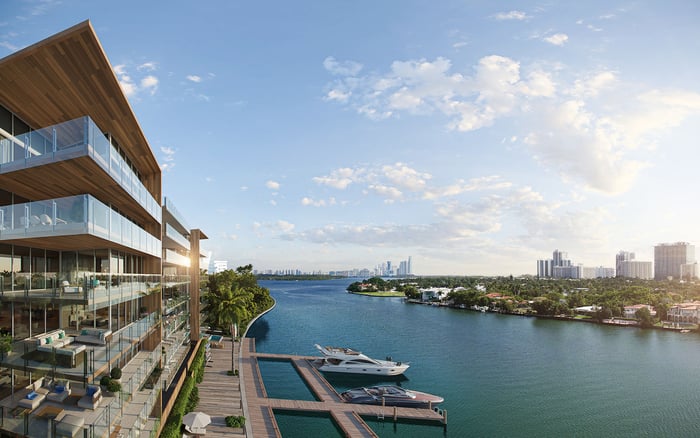
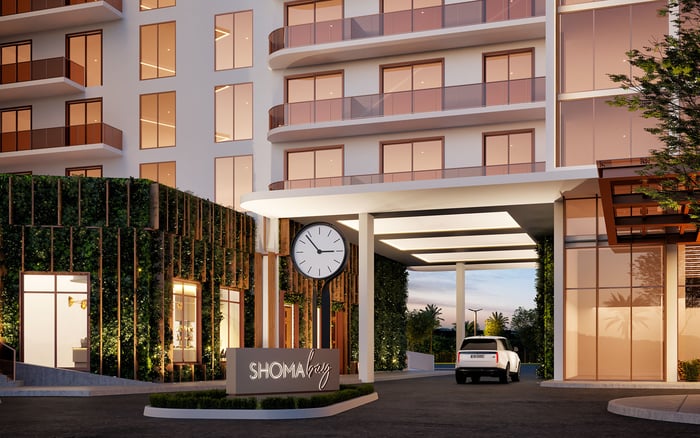
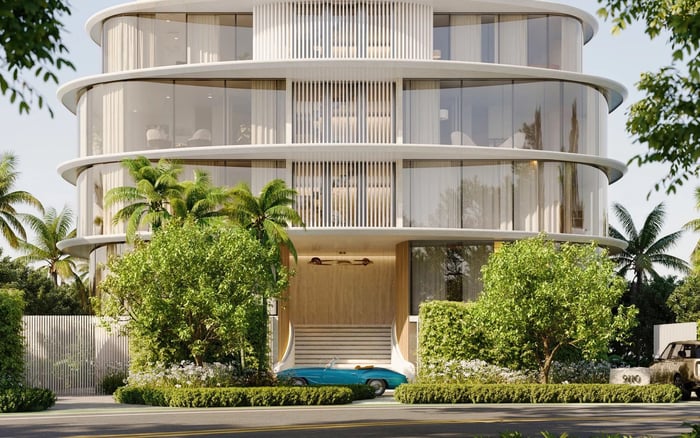
La Maré Bay Harbor Islands and Shoma Bay North Bay Village show two distinct paths for club-adjacent living: discreet waterfront privacy and more activated mixed-use social energy.
In South Florida’s upper-tier residential market, the most persuasive buildings are no longer defined only by pools, gyms, and lounges. The sharper question is how a residence organizes daily life: how it delivers social ease without compromising privacy, how it connects to dining and wellness without feeling public, and how it gives owners the atmosphere of a private club while preserving the autonomy of home.
That is the idea behind club-adjacent living. It is not a claim of private-club membership. Rather, it describes a residential language borrowed from clubs and hospitality: curated convenience, a sense of belonging, considered gathering spaces, and a lifestyle rhythm that feels intentional rather than incidental.
Within that shift, La Maré Bay Harbor Islands and Shoma Bay North Bay Village stand as useful counterpoints. One is quieter, more boutique, and waterfront in mood. The other is more vertical, more mixed-use, and more socially activated. Together, they show how the same luxury trend can take two distinct forms.
La Maré Bay Harbor Islands represents the quieter side of club-adjacent living. Its appeal is tied to a waterfront luxury setting in Bay Harbor Islands, where the residential experience is shaped by privacy, island character, and a softer sense of arrival. The emphasis is not on turning the building into a public-facing social engine. It is on giving residents the cues of a club-like life in a more controlled, residential environment.
This distinction matters for buyers who want access to South Florida’s social and leisure ecosystem without living inside it at all times. La Maré’s positioning suggests a preference for discretion: a home base that feels elevated and connected while remaining calm. In practical terms, Bay Harbor buyers are often weighing quiet island context as carefully as amenity volume.
Waterfront privacy remains a powerful luxury signal because it is not easily manufactured. Amenity programs can be expanded, redesigned, and rebranded. Setting is harder to replicate. Bay Harbor Islands gives La Maré a quieter island identity within Miami-Dade’s broader luxury waterfront market, which helps explain why the project reads as club-adjacent without needing to become overtly theatrical.
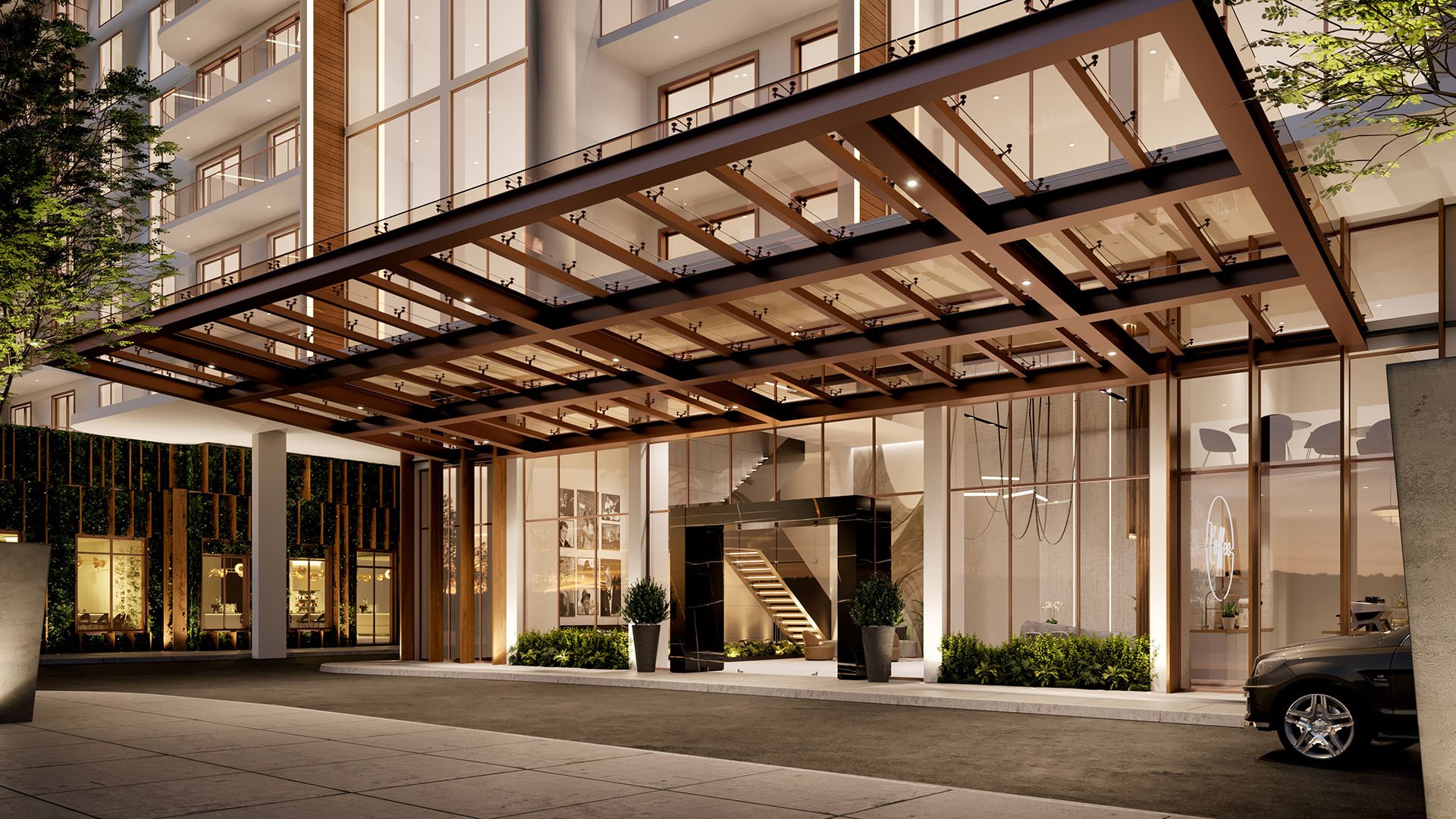
Shoma Bay North Bay Village reflects a different interpretation of the same buyer desire. Rather than leaning primarily on privacy and a discreet waterfront mood, Shoma Bay is positioned around a more vertical, mixed-use lifestyle model. Its club-adjacent identity comes from social activation, food-and-beverage concepts, and an energized ground plane as much as from private condominium amenities.
That makes Shoma Bay especially relevant to buyers who want structured social optionality. The modern luxury resident may not want constant interaction, but often values the ability to step into a lively building ecosystem when the moment suits. A restaurant, retail setting, or shared social space can make a residence feel closer to a hospitality venue or club, provided the private home remains protected above it.
North Bay Village gives this model a different micro-market profile from Bay Harbor Islands. The emphasis is more urban and more mixed-use, with a stronger sense of residential life extending beyond the elevator bank. In that context, nearby residential conversations such as Continuum Club & Residences North Bay Village reinforce how the area is increasingly associated with lifestyle-driven residential positioning rather than conventional tower living alone.
The useful comparison is not whether La Maré or Shoma Bay is more luxurious. It is that they answer different versions of the same question: how much social infrastructure should a luxury residence provide?
For some buyers, the answer is restraint. They want the atmosphere of a refined retreat, a waterfront address, and the ability to engage with the broader Miami social landscape on their own terms. La Maré speaks to that audience by framing club-adjacent living as a private residential experience with discreet amenity programming rather than a heavily public mixed-use model.
For other buyers, the answer is activation. They want residential life to include dining cues, shared spaces, and a ground plane that feels alive. Shoma Bay speaks to that preference by making the building environment part of the lifestyle proposition. The residence is still a private home base, but it is connected to a more animated social setting.
This is why the term lifestyle has become more important than a simple checklist. The point is not just whether a building has amenities. It is whether the building, the neighborhood, and the daily rhythm create a coherent way of living.
The broader shift is clear: luxury buyers are evaluating context as closely as finishes. Conventional resort-style condominium amenities still matter, but they no longer carry the whole story. Dining, wellness, social programming, neighborhood adjacency, and the feel of arrival are increasingly part of how a project earns attention.
That shift also explains why Bay Harbor Islands and North Bay Village can both gain relevance without becoming interchangeable. Bay Harbor Islands offers a quieter island setting suited to buyers who value privacy and waterfront character. North Bay Village offers a more activated mixed-use profile for buyers who want energy close at hand. The geography is part of the product.
A buyer comparing The Well Bay Harbor Islands with North Bay Village options, for example, is not simply comparing buildings. The decision also involves tempo, social exposure, neighborhood feel, and the balance between retreat and engagement.
New-construction buyers should therefore ask a more nuanced set of questions. Does the project feel like a sanctuary, a social hub, or a hybrid? Is the amenity experience mainly private, or does the building engage with a more public-facing environment? Does the address support quiet ownership, active daily life, or both?
La Maré and Shoma Bay show that club-adjacent living is not a single formula. It is a spectrum, and South Florida’s most sophisticated buyers are learning to locate themselves precisely on it.
What does club-adjacent living mean in this context? It describes residences that borrow the convenience, social rhythm, and hospitality cues of private clubs without necessarily implying club membership.
How does La Maré Bay Harbor Islands fit the trend? La Maré reflects the quieter version, with waterfront character, privacy, and a more discreet residential atmosphere.
How does Shoma Bay North Bay Village fit the trend? Shoma Bay represents the more socially activated version, using mixed-use energy, dining cues, and shared spaces to shape daily life.
Is club-adjacent living the same as living in a private club? No. In this discussion, it refers to lifestyle cues and residential programming, not confirmed private-club membership.
Why is Bay Harbor Islands important to La Maré’s positioning? Bay Harbor Islands gives La Maré a quieter island setting within Miami-Dade’s luxury waterfront market.
Why is North Bay Village important to Shoma Bay’s positioning? North Bay Village supports a more urban, mixed-use profile, which aligns with Shoma Bay’s socially activated model.
Which buyer is better suited to La Maré? La Maré may appeal to buyers who want privacy, waterfront calm, and club-like lifestyle cues without heavy public activation.
Which buyer is better suited to Shoma Bay? Shoma Bay may appeal to buyers who value social optionality, a lively residential ecosystem, and mixed-use convenience.
Are amenities still important in South Florida luxury condos? Yes, but buyers are increasingly weighing location, social context, wellness, dining, and neighborhood adjacency alongside amenity lists.
What is the main takeaway for buyers comparing these projects? The choice is less about one formula of luxury and more about the preferred balance between retreat, access, privacy, and activation.
For a confidential assessment and a building-by-building shortlist, connect with MILLION.
If branded residences are on your mind — as a home or as an allocation — we would be glad to share what we are seeing, privately.
Begin a quiet conversation