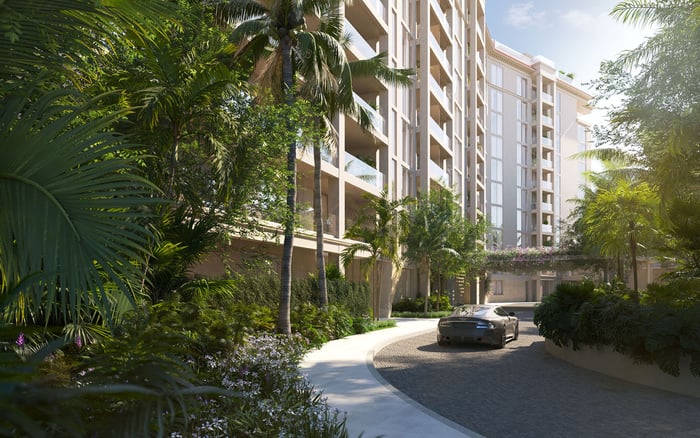
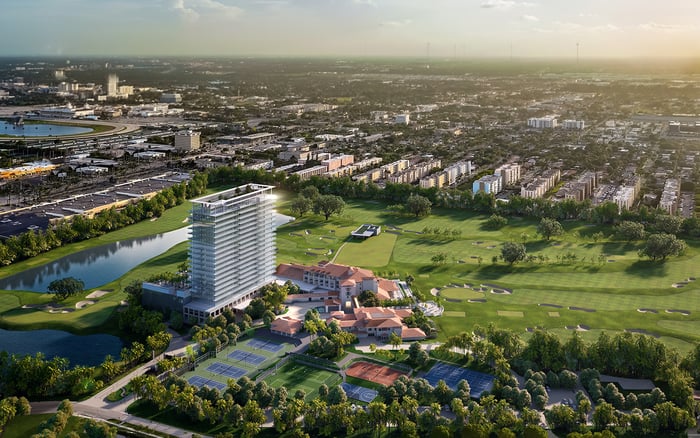
Key Biscayne and Miami Beach sit minutes apart, yet they deliver fundamentally different versions of waterfront living. This MILLION Luxury guide compares scale, pricing signals, family infrastructure, recreation, and access so buyers can match lifestyle priorities to the right shoreline.
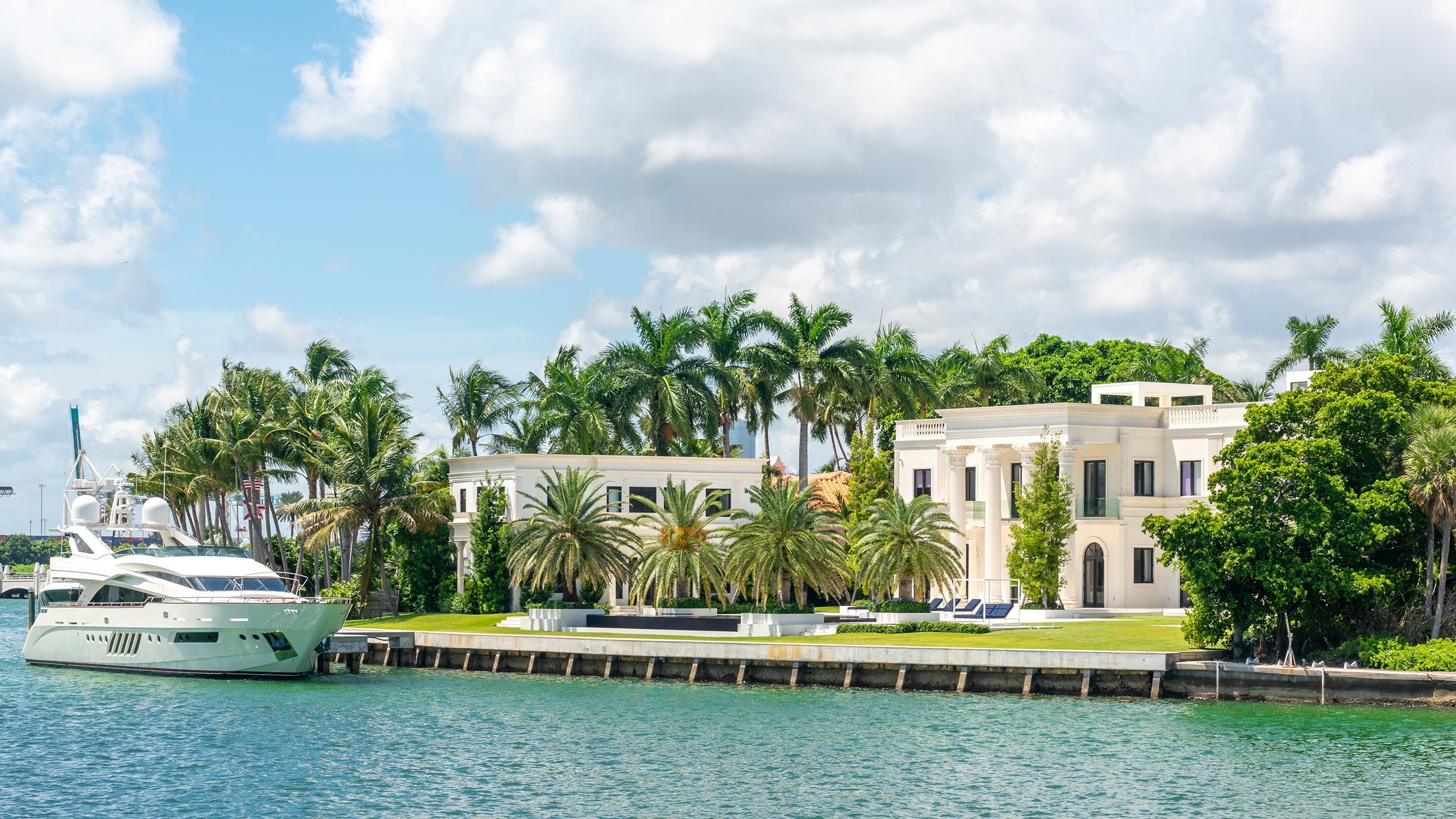
South Florida’s luxury conversation often places Key Biscayne and Miami Beach side by side. They are minutes apart on the map, yet they attract different buyers in real life.
Key Biscayne presents as an island enclave first. It is compact, predominantly residential, and widely perceived as family-forward. Miami Beach presents as a city on the water. It is larger, shaped by distinct sub-areas, and defined by globally recognizable cultural signals, from its Art Deco legacy to a nightlife ecosystem that rarely slips fully out of view.
Even basic scale indicators underline the split. Population estimates commonly place Key Biscayne around 15,000 residents, versus roughly 84,000 for Miami Beach, depending on the dataset and year. Third-party demographic compilations also publish income statistics that show a meaningful contrast, with Key Biscayne’s median household income reported far higher than Miami Beach’s. In practical terms, one market is structured around a smaller, wealthier base, and the other around volume, variety, and multiple use cases.
For a luxury buyer, that difference shows up in quiet versus cadence, in predictable routine versus spontaneous options, and in how much you want the neighborhood to curate your daily life versus how much you prefer to curate it within your own household.
Key Biscayne tends to resonate with buyers who want “everything close” without feeling surrounded. The island is small enough that life naturally organizes around a handful of familiar nodes: school drop-off, beach time, a club or court, and a short list of dining staples that quickly become your defaults. The familiarity can be the luxury, especially for households that value repeatable rhythm.
Miami Beach, by contrast, offers a wider spread of micro-markets and moods. A day can move from an extended beachfront walk to a pedestrian shopping corridor to dinner and live entertainment, all without the feeling that you have left the city’s core. The trade-off is straightforward: energy and variety usually come with more movement, more visitors, and a more public-facing atmosphere.
This is why lifestyle buyers often describe the choice as less about which coastline is “better,” and more about how much friction they want between home and the city. Key Biscayne reduces friction by shrinking the world into a contained, residential circuit. Miami Beach reduces friction by making a larger world feel navigable, walkable, and immediately available.
Privacy also behaves differently in each market. In Key Biscayne, privacy is often ambient because of the island’s residential orientation and smaller footprint. In Miami Beach, privacy is frequently something you select through building type, service model, and exact positioning within the broader environment.
In luxury real estate, public pricing tools should be treated as directional, not definitive. They can still be useful as a signal for how markets are positioned relative to one another.
Zillow’s “typical home value” estimates place Key Biscayne dramatically higher than Miami Beach, with Key Biscayne around $1.58 million and Miami Beach around $513,000 at the time of the cited estimates. Redfin’s market snapshot for Miami Beach has shown a median sale price around $635,000 in an example month, with a median price per square foot around $604, while acknowledging that conditions change.
The point is not the exact number. The point is the spread.
Key Biscayne’s pricing signal reflects scarcity and the psychological premium attached to a small, primarily residential island. Miami Beach’s pricing signal reflects breadth: more inventory categories, more segments, and a wider band of entry points across the market.
That same breadth is also why Miami Beach can produce ultra-premium product that reads like “private club” living even within a destination-driven city. If your preference is a hotel-caliber experience with service as part of the value proposition, branded and service-led residences can function as the filter that separates tranquility from surrounding energy. In that spirit, residences associated with Casa Cipriani Miami Beach are often discussed as a way to remain in Miami Beach’s orbit while maintaining a more insulated daily rhythm.
Key Biscayne’s strongest argument is not a single attraction. It is the way outdoor infrastructure and proximity to nature organize daily life into something both convenient and restorative.
Crandon Park functions as a marquee public recreation hub on the island, pairing broad beach access with a larger park environment. For sport-oriented households, it is notable for offering both a well-known public golf course and a major tennis facility. If golf is part of your weekly calendar, the presence of Crandon Golf as a signature Miami-area course becomes a meaningful lifestyle anchor rather than an occasional destination. If your schedule is built around a tennis routine, the Crandon Tennis Center provides extensive court access inside the same island ecosystem.
Beyond formal sport, the park-and-beach combination matters because it makes outdoor time easy to repeat. The luxury is not only the setting, but also the convenience of having it consistently available without needing to “plan a day” around it.
Then there is the nature-forward end of the island. Bill Baggs Cape Florida State Park is widely regarded as a flagship beach-and-nature destination, and it includes the historic Cape Florida Lighthouse. For many owners, this is the luxury of escape without travel. You can step out of the city’s tempo in a way that feels immediate, not aspirational.
Key Biscayne’s family orientation is reinforced by third-party community scoring. Niche, for example, shows an A+ “Good for Families” grade on its Key Biscayne profile. GreatSchools rates Key Biscayne K–8 Center at 7/10, a shorthand indicator many relocating families use as an early screen.
The island also benefits from nearby outdoor assets that extend the menu without changing the overall rhythm. Virginia Key Beach Park sits along the causeway between mainland Miami and Key Biscayne, adding more beaches, trails, and event-ready open space into the same general corridor. Biscayne National Park, promoted heavily for snorkeling and boat-oriented recreation, adds a different dimension for buyers who live through the water, not just beside it.
For buyers who prioritize a contained lifestyle, Key Biscayne’s appeal is that these anchors are not scattered across the city. They are clustered tightly enough to feel like they belong to one cohesive routine.
Miami Beach’s luxury proposition is less about retreat and more about access to curated experiences. For many buyers, the value is not simply the beach itself, but the layered options that sit beside it.
Lummus Park is an iconic, highly visible beachfront park that frames the Ocean Drive corridor and supports the classic “wake up and walk straight to the sand” ritual. Nearby, the city’s Art Deco identity remains a defining differentiator, with municipal resources dedicated to architecture and preservation. For design-minded buyers, that matters because the setting becomes part of the property’s emotional value. You are not only buying a residence; you are buying into a visual language that is recognized globally.
Miami Beach also offers one of South Florida’s most recognizable pedestrian shopping and dining environments at Lincoln Road, positioned as an open-air corridor with extensive retail and restaurants. If you want the ability to live without a car for stretches of time, Miami Beach tends to deliver that more convincingly than Key Biscayne, simply because the density of amenities is built into the urban structure.
Nightlife is another major divider. Official destination guidance for Miami positions nightlife as a core feature of the experience, and venues like Mango’s Tropical Cafe on Ocean Drive highlight the city’s “dinner plus show” style of going out. You do not have to participate to feel its presence, and that is the key consideration. The question is whether proximity to nightlife reads as a benefit, a backdrop, or background noise.
For buyers who want Miami Beach’s cultural and walkable advantages while prioritizing new-build comfort and a more residential feel, newer tower living can act as a buffer. Consider how the experience around Five Park Miami Beach is often framed: a modern residential lens on a destination market.
Similarly, if your definition of Miami Beach luxury is service and consistency, hospitality-linked residences can be compelling. A well-known example is Setai Residences Miami Beach, which speaks to buyers who want a refined, hotel-adjacent standard of living with the beach outside and the city within reach.
Access is where the romance meets logistics. Both destinations are coastal, but their connection to the broader Miami ecosystem feels different in day-to-day practice.
Key Biscayne’s relationship to the mainland is highly oriented around a single corridor: the Rickenbacker Causeway. That clarity can be comforting because it reinforces separation and gives the island a distinct sense of arrival. It can also be limiting because there are fewer alternatives when traffic patterns shift.
For households that want optionality, public transit can matter more than many luxury buyers admit. Miami-Dade Metrobus Route 26 is positioned as a primary link between Brickell and Key Biscayne, a useful detail for staff logistics, teen independence, or simply a household schedule that benefits from flexibility.
Miami Beach, by virtue of its size and city structure, tends to offer more internal walkability and a greater density of experiences close to home. The trade is that you are living in a place designed to be visited. That can be a feature if you like the energy and the constant sense of “things happening.” It can be a drawback if you are seeking a quieter baseline and prefer to choose when you step into the spotlight.
When comparing the two, access should be evaluated the way you would evaluate any luxury system: not just for average days, but for peak conditions. Consider how often you need to be on the mainland, how sensitive your routine is to traffic, and how much you value the psychological separation an island can provide.
Most real estate decisions become simpler when you decide what you are optimizing for.
If you are optimizing for privacy-by-default, Key Biscayne often wins. The combination of smaller scale, higher income profile (as reported by common demographic sources), and outdoor infrastructure creates a setting that reads as inherently residential. It can support a consistent family rhythm, with recreation that does not require you to “leave the neighborhood” in any meaningful way.
If you are optimizing for access-to-everything, Miami Beach often wins. Culture, dining, shopping, and nightlife are not occasional excursions. They are embedded into the geography and available on demand.
If you are optimizing for beachfront living specifically, Miami Beach also offers a broad spectrum of product types, from legacy condominium towers to newer, design-forward inventory. Some buyers prioritize oceanfront calm away from the loudest corridors, leaning toward residences such as 57 Ocean Miami Beach as an expression of quieter beachfront living within the Miami Beach address.
If you are optimizing for a service-led, lock-and-leave second-home experience, Miami Beach often has an edge simply because of the depth of hospitality DNA in the market. In that lane, options like The Ritz-Carlton Residences® Miami Beach are frequently considered by buyers who want a more managed lifestyle while staying close to the city’s cultural core.
Finally, if you are optimizing for budget discipline, directional cost-of-living comparisons commonly show Miami Beach as generally cheaper than Key Biscayne, largely due to housing. In ultra-premium real estate, “cheaper” is relative, but it can still influence how much capital you allocate to the home versus lifestyle, travel, or a second property.
The deciding lens is rarely the beach itself. It is the kind of day you want to wake up into.
Key Biscayne is often the choice when you want the island to protect your routine: a smaller world, higher consistency, and outdoor life that feels built-in. Miami Beach is often the choice when you want the city to expand your routine: more walkability, more culture, and more options when you decide the day should go somewhere else.
Is Key Biscayne or Miami Beach better for families? Key Biscayne is often positioned as especially family-friendly, including an A+ “Good for Families” grade on Niche and a well-known K–8 public school option.
Which market is more expensive, Key Biscayne or Miami Beach? Public home-value estimates show Key Biscayne substantially higher on a typical-value basis than Miami Beach, though any specific home depends on location, view, and building.
What are the signature outdoor amenities on Key Biscayne? Crandon Park is a major hub, with a public golf course and a large tennis center, and Bill Baggs Cape Florida State Park provides a distinctive nature and beach experience.
What are the signature walkable amenities on Miami Beach? Lummus Park and the Ocean Drive beachfront corridor are iconic, and Lincoln Road is a prominent open-air shopping and dining destination.
How important is the causeway in deciding on Key Biscayne? Very. Key Biscayne’s access is highly oriented around the Rickenbacker Causeway, which shapes commuting patterns and the feeling of separation from the mainland.
For discreet guidance on choosing between these two coastlines, connect with MILLION Luxury.
If branded residences are on your mind — as a home or as an allocation — we would be glad to share what we are seeing, privately.
Begin a quiet conversation