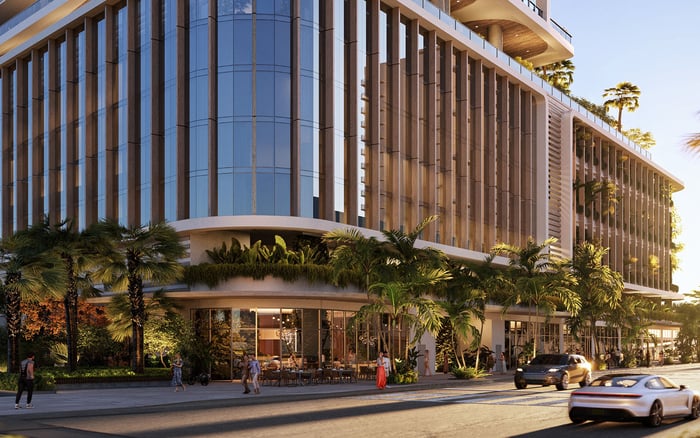
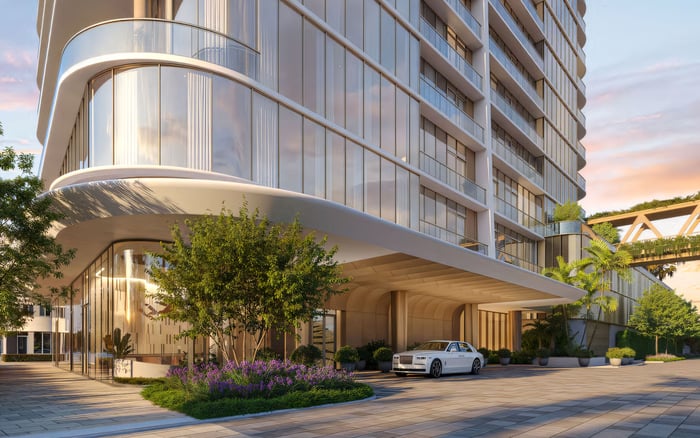
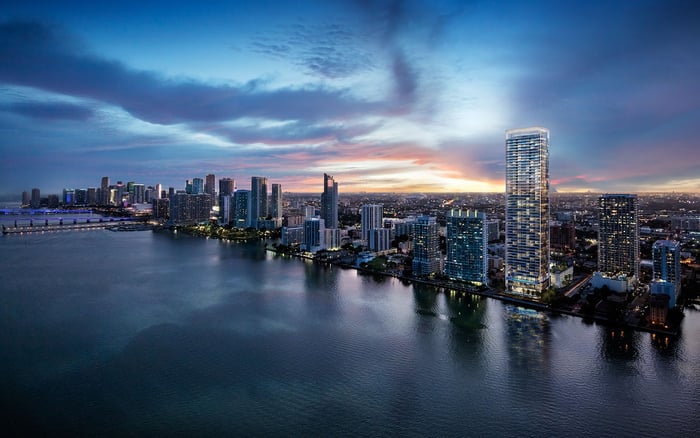
A buyer-focused comparison of two branded Miami addresses: Kempinski Residences Miami Design District, shaped by walkable culture and a more residential-primary feel, and Viceroy Brickell, defined by riverfront energy, hospitality integration, and downtown momentum.
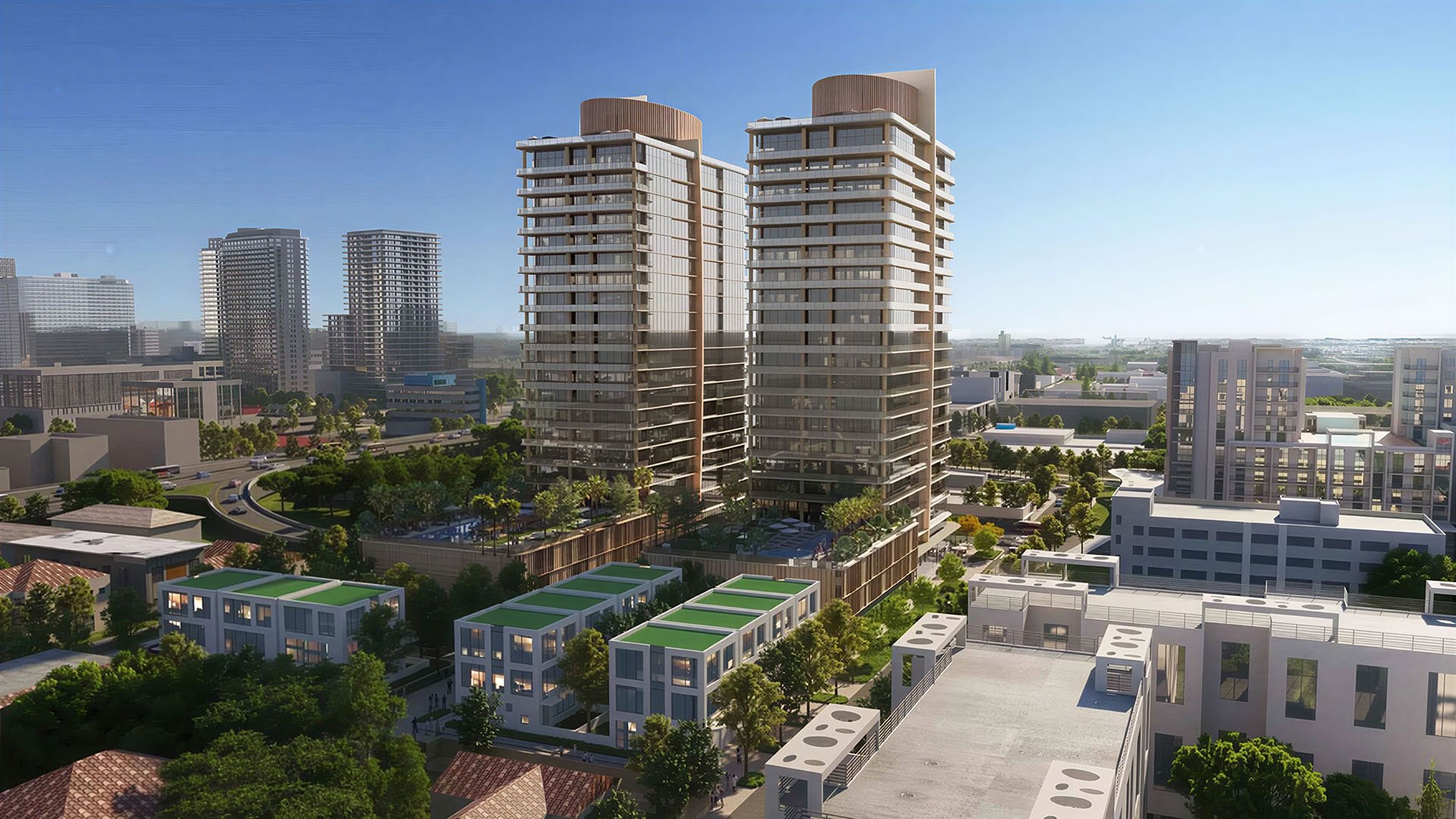
For buyers considering branded residences in Miami, the real distinction is rarely just finishes or service menus. It is the cadence of everyday life. In that respect, Kempinski Residences Miami Design District and Viceroy Brickell occupy distinctly different positions.
Kempinski Residences Miami Design District is set at 140 NE 39th Street in the Design District, an 18-block enclave defined by walkability, art, architecture, fashion, and destination dining. It is presented as the first standalone residential project in the Americas for the Kempinski brand, developed in partnership with Terra, and planned with 74 residences ranging from studios to penthouses. The proposition is clear: a residential address with hotel-style support, immersed in one of Miami’s most curated urban neighborhoods.
Viceroy Brickell speaks to a different buyer instinct. Positioned in Brickell near the Miami River and downtown’s business and entertainment core, it operates as a hotel-residential hybrid under the Viceroy flag. Its appeal is less about neighborhood curation and more about immediate hospitality, riverfront access, and a downtown-forward tempo tied to meetings, dining, arrivals, and departures.
For MILLION Luxury readers, the choice is not simply Design District versus Brickell. It is private residential composure versus a more pronounced hotel rhythm.
Kempinski’s strongest advantage is contextual. The Design District is not just a pin on a map. It is a recognizable Miami lifestyle zone where galleries, luxury maisons, design showrooms, and polished public spaces shape the experience outside the front door. For buyers who value stepping directly into a neighborhood with aesthetic coherence, that matters. The address offers a city-life version of convenience, rooted in proximity and walkability rather than waterfront spectacle.
That makes Kempinski feel aligned with other design-conscious urban offerings such as Miami Design Residences Midtown Miami, where the surrounding district is part of the ownership story. In this part of Miami, culture is not an amenity layered onto a tower. It is the environment itself.
Viceroy Brickell is anchored by movement. Brickell has long served as Miami’s financial and residential engine, and the riverfront adds a softer visual counterpoint to the district’s vertical intensity. Yet the character here is still fundamentally Downtown and Brickell: fast-moving, connected, and service-oriented. Buyers who want to be near offices, major dining corridors, and the city’s central circulation often find that logic compelling.
In that sense, Viceroy sits within the broader Brickell conversation alongside residences like Baccarat Residences Brickell and The Residences at 1428 Brickell, where branded living intersects with dense urban convenience. The difference is that Viceroy expresses that convenience through a more active hospitality lens.
This is the heart of the comparison.
Kempinski is framed as more residential-primary. That does not mean it lacks service. On the contrary, branded residential support, concierge-style assistance, and hospitality-inflected amenities are central to the offering. But the overall proposition suggests that hotel benefits are layered into a private home environment rather than defining the building’s atmosphere.
For many luxury buyers, that distinction is decisive. A residence that feels like a residence first often appeals to full-time owners, seasonal users who prioritize discretion, and purchasers who want staff support without the ambient churn associated with a large hospitality operation. The scale reinforces that reading. With 74 residences, Kempinski presents a more boutique profile than many mixed-use towers.
Viceroy Brickell takes a more hotel-centric approach. The project is tied to active hotel operations, with a 192-key hotel component integrated into the overall concept referenced in the research. That tends to create a livelier daily rhythm: more arrivals, more visible hospitality programming, and a stronger sense that the building participates in a broader guest ecosystem.
For some buyers, this is a feature rather than a compromise. A residence with an unmistakable hotel pulse can feel efficient, cosmopolitan, and highly serviced. It may suit owners who travel frequently, entertain often, or appreciate a property that functions more like a polished hospitality platform. Others may prefer a clearer separation between private residential life and guest activity.
Kempinski’s amenity language emphasizes a rounded residential lifestyle. Wellness, spa, fitness, co-working, wine, and private dining spaces suggest a building designed for owners to occupy the full day well, not simply arrive and depart. The implication is one of cultivated routine: morning wellness, afternoon work sessions, evening entertaining, all within a building that supports long-form living.
That approach resonates with buyers also watching newer wellness- and lifestyle-driven projects such as The Well Coconut Grove, where the internal amenity ecosystem is part of the value proposition. At Kempinski, however, the cultural life of the Design District remains equally important to the identity.
Viceroy Brickell’s amenity messaging is more recognizably hospitality-oriented: pool, fitness, spa, lounge, and food-and-beverage-style components. This is not merely semantic. It tells buyers that the project experience is meant to feel serviced and social, with a stronger overlap between resident convenience and hotel sensibility.
The distinction is subtle but important. Kempinski’s amenity mix suggests residential enrichment. Viceroy’s suggests hospitality activation.
Kempinski’s residential program ranges from studios to penthouses, which gives it broader format diversity than some ultra-luxury boutique projects. Yet publicly disclosed pricing appears limited in the current marketing picture. For buyers, that can signal exclusivity, early-stage opacity, or simply a more private sales process. In practical terms, it means conversations may begin with positioning and product fit before moving into transparent price discovery.
Viceroy Brickell appears to have more publicly visible pricing through market-facing inventory channels. That does not necessarily make it better value, but it does create a different shopping environment. Buyers can often benchmark expectations more quickly when more listing guidance circulates in public view.
This affects negotiating posture. In Brickell, where branded competition is dense and comparisons are easy, shoppers may evaluate Viceroy against neighboring alternatives with relative speed, including St. Regis® Residences Brickell. In the Design District, the conversation is more specialized. The value is tied not only to the residence, but to a rarer neighborhood concept.
Kempinski Residences Miami Design District is best understood as a cultural urban retreat for a buyer who wants Miami energy without the full velocity of Downtown. It suits owners drawn to design, architecture, walkability, and a boutique branded residence that appears to preserve a more private residential identity.
Viceroy Brickell is likely the stronger fit for buyers who want immediate hospitality, visible service infrastructure, and a location that plugs directly into Brickell and Downtown routines. It is especially persuasive for owners who like a building to feel animated, connected, and unmistakably metropolitan.
Neither address is inherently more luxurious than the other. They simply define luxury differently. Kempinski offers immersion in a curated district and a more composed residential atmosphere. Viceroy offers hotel integration, riverfront context, and a more kinetic urban tempo.
For the discerning buyer in Miami, that is the real decision.
Is Kempinski Residences Miami Design District a purely residential building? It is positioned as a branded residential project with hotel-style services, but its identity is framed as more residential-primary than hotel-driven.
What makes Kempinski distinct within Miami? Its strongest differentiator is immersion in the Design District’s art, fashion, and walkable design culture rather than a waterfront setting.
How large is Kempinski Residences Miami Design District? The project comprises 74 residences, with layouts ranging from studios to penthouses.
Where is Viceroy Brickell located? It is positioned in Brickell near the Miami River and close to downtown Miami’s business and entertainment core.
Does Viceroy Brickell feel more like a hotel than a private residence? Relative to Kempinski, it is presented as more actively hotel-centric in its daily feel because of its integrated hospitality operations.
Are both projects branded residences? Yes. Both are marketed with branded service components such as concierge-style support and hospitality-driven programming.
Which project is better for walkability and neighborhood culture? Kempinski is the stronger choice if your priority is walkability within a curated district centered on design, retail, and dining.
Which project suits a buyer who wants Downtown access? Viceroy Brickell is the more natural fit for buyers who prioritize proximity to Brickell and Downtown activity.
Is pricing equally transparent at both developments? Public pricing visibility appears clearer at Viceroy Brickell, while Kempinski’s official public pricing picture is more limited.
What is the simplest way to choose between them? Choose Kempinski for culture-led city living and a more boutique residential tone, or Viceroy for riverfront hospitality and a more active hotel rhythm.
If you'd like a private walkthrough and a curated shortlist, connect with MILLION Luxury.
If branded residences are on your mind — as a home or as an allocation — we would be glad to share what we are seeing, privately.
Begin a quiet conversation