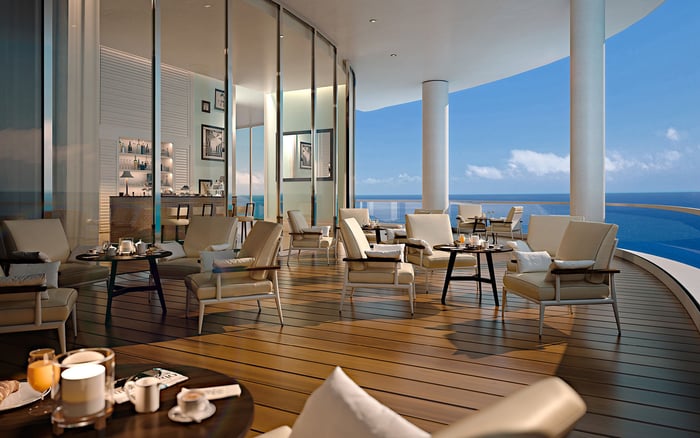
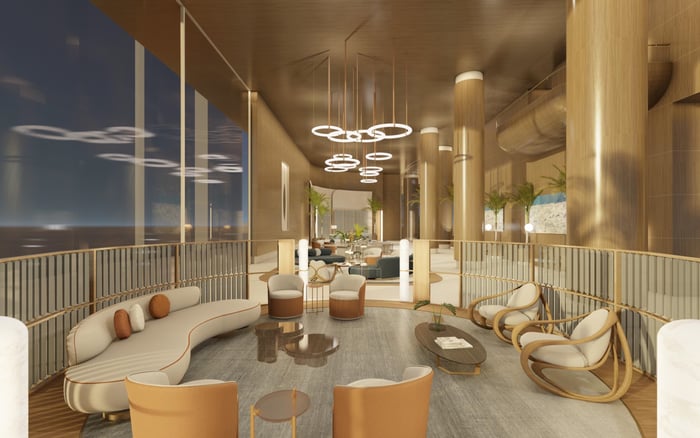
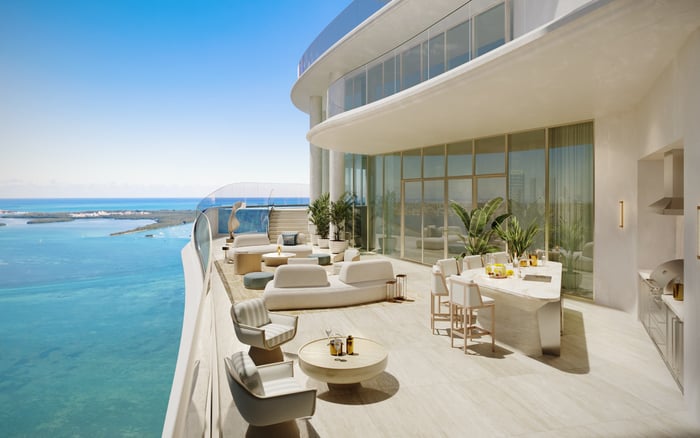
A discreet underwriting guide for buyers comparing a Design District branded-residence thesis with the stabilized oceanfront profile of The Ritz-Carlton Residences® Sunny Isles.
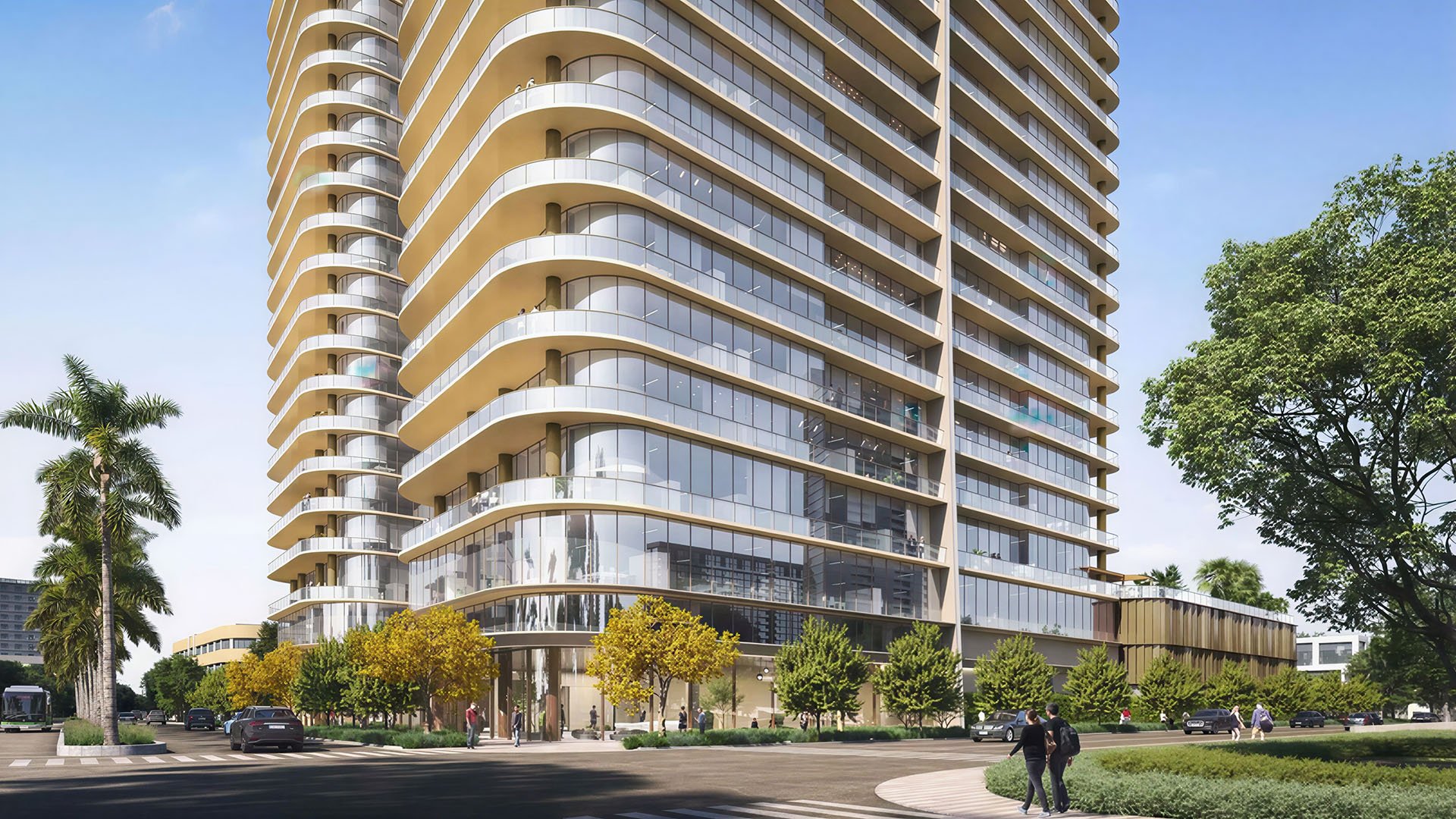
The question is not simply whether Kempinski Residences Miami Design District or The Ritz-Carlton Residences® Sunny Isles offers the more seductive lifestyle proposition. For a sophisticated buyer, the sharper issue is what each ownership environment requires you to underwrite. Brand, architecture, finish level, and neighborhood energy all matter, but the long-term experience is often defined by less visible variables: how densely amenities are shared, how vertical circulation performs at peak hours, and how much control owners retain once the building matures.
The Ritz-Carlton Residences® Miami Beach offers a separate branded-residence reference point within Miami-Dade, but Sunny Isles enters this analysis as the completed, oceanfront, resort-style tower in the comparison. It should be read as a stabilized branded-residence asset with an established owner and operator track record, not as a speculative concept. That distinction matters because buyers can evaluate the building through a more tangible lens: lived rhythms, established service expectations, and the realities of resale liquidity in a known luxury submarket.
Kempinski Residences Miami Design District, by contrast, should be examined through the questions that accompany any newer branded-residence thesis: what is promised, what is contractually controlled, what is delivered by the brand, and what remains subject to future association decisions. The answer may still be compelling, but the underwriting discipline is different.
Amenity count is not the same as amenity comfort. Ultra-luxury buyers should ask how many owners, guests, staff, and service users will converge on the same spaces at the same time. A large spa, club room, pool deck, or fitness environment can feel private when demand is light and strained when the building is full. Density, not square footage alone, is the measure that matters.
For The Ritz-Carlton Residences® Sunny Isles, the oceanfront resort-style identity naturally places emphasis on leisure spaces, arrival sequence, beach-oriented service, and the daily choreography of hospitality. The underwriting question is whether that resort rhythm remains graceful on holiday weekends, during peak winter occupancy, and when multiple owners are entertaining at once.
In a Design District setting, the amenity analysis may be more urban and lifestyle-driven. Buyers should consider whether amenities function as true private extensions of the residence or as brand theater. A beautiful lounge has limited financial meaning if it is rarely used, difficult to reserve, or crowded during the very moments owners want it most.
Elevator performance is rarely marketed with the same intensity as finishes, views, or wellness programming, yet it can define daily satisfaction. In luxury towers, vertical circulation affects everything from privacy to staff efficiency. The relevant questions are practical: how many elevators serve the residential population, how service elevators are separated, how pets, deliveries, contractors, and housekeeping circulate, and whether destination dispatch or access control supports a discreet experience.
At a stabilized tower, buyers can often assess elevator behavior with greater confidence. They can visit at different times, observe lobby flow, and speak with professionals familiar with the building’s daily cadence. That makes The Ritz-Carlton Residences® Sunny Isles a different underwriting subject from a new-construction proposition, where performance may depend on final staffing, turnover procedures, and actual operating patterns after closings.
A buyer comparing both should not ask only, “How fast is the elevator?” The better question is, “How does the building preserve calm when everyone wants to move at once?” In the ultra-premium market, a few minutes of repeated friction can become a meaningful lifestyle discount.
Branded residences attract buyers because they suggest consistency. Yet control is layered. There is brand standard control, developer control, association control, management control, and owner voting control. Each can affect the future condition of the asset.
The most important documents are not the glossy renderings. Buyers should understand who controls budgets, how brand standards are funded, how reserves are handled, what services are mandatory, what services are optional, and how future capital decisions will be made. This is especially important for investment buyers who care not only about beauty, but also about predictability of carrying costs and exit value.
In a completed and stabilized building, the owner-control picture is easier to evaluate because the association, service culture, and maintenance expectations are already in motion. In a newer or pre-completion context, the buyer must study the governance structure before assuming that the branded promise will remain aligned with owner preferences over time.
Sunny Isles remains a distinctive luxury corridor because buyers understand the value of direct coastal living, branded service, and vertical resort privacy. The Ritz-Carlton Residences® Sunny Isles benefits from that context: an established, completed oceanfront tower whose appeal is tied to a recognizable luxury format.
That does not automatically make it the correct choice for every buyer. A Design District buyer may prioritize cultural proximity, restaurant access, gallery energy, and a more urban ownership pattern. But the underwriting contrast is clear. One side of the ledger emphasizes a stabilized oceanfront lifestyle with observable operations. The other requires deeper scrutiny of future delivery, governance, and how the finished experience will compare with the promise.
The premium buyer should resist reducing the decision to brand versus brand. The better frame is environment versus environment, operating history versus future execution, and daily usability versus presentation value.
Before committing, buyers should run both residences through the same disciplined checklist. How many amenity users are likely on peak days? Are private spaces truly private, or merely reservable? How are elevators allocated between residents, staff, deliveries, and service providers? Does the building protect quiet arrival and departure? What happens when large residences host events? Who has the authority to change service levels, budgets, or rules?
The answers will not always appear in the sales conversation. They live in declarations, budgets, management agreements, house rules, and lived building culture. For a primary residence, these questions shape daily comfort. For a second home, they shape ease of arrival and confidence while away. For an investor, they shape the quality of future demand.
The Ritz-Carlton Residences® Sunny Isles should be analyzed as a stabilized branded-residence asset with a completed resort-style oceanfront profile. Kempinski Residences Miami Design District should be evaluated through the buyer’s tolerance for newer-product execution, urban lifestyle preference, and governance detail. Both can be desirable in the right portfolio, but they are not the same underwriting exercise.
The most discreet luxury is not always the most visible. It is the absence of friction: no crowding where privacy was expected, no elevator frustration where calm was promised, and no governance surprise after closing. In this segment, owner control is not an administrative footnote. It is part of the asset.
Is The Ritz-Carlton Residences® Sunny Isles a stabilized asset for underwriting purposes? Yes. It should be approached as a completed, oceanfront, resort-style branded residence with an established operating profile.
Can Kempinski Residences Miami Design District be compared directly with it? Yes, but the comparison should focus on underwriting differences rather than only brand appeal or design presentation.
Why does amenity density matter so much? Amenity density determines whether luxury spaces feel private during peak use or become difficult to enjoy when the building is active.
What should buyers ask about elevators? They should ask how residents, staff, deliveries, pets, and service providers move through the building during busy periods.
Is a longer elevator wait really material? In ultra-luxury ownership, repeated daily friction can affect satisfaction, perceived privacy, and long-term desirability.
Why is owner control important in branded residences? Owner control influences budgets, service levels, reserves, rules, and the future balance between brand standards and owner preferences.
Does oceanfront living change the underwriting? Yes. Oceanfront resort-style buildings often rely heavily on service, leisure amenities, and peak-season operating performance.
How should resale buyers approach this comparison? Resale buyers should study actual building rhythm, association culture, service consistency, and observable demand patterns.
How should new-construction buyers approach this comparison? New-construction buyers should focus on documents, governance, delivery risk, service obligations, and what is contractually promised.
Which residence is better for investment? The better investment depends on the buyer’s priorities, risk tolerance, holding period, and confidence in operating durability.
If you'd like a private walkthrough and a curated shortlist, connect with MILLION.
If branded residences are on your mind — as a home or as an allocation — we would be glad to share what we are seeing, privately.
Begin a quiet conversation