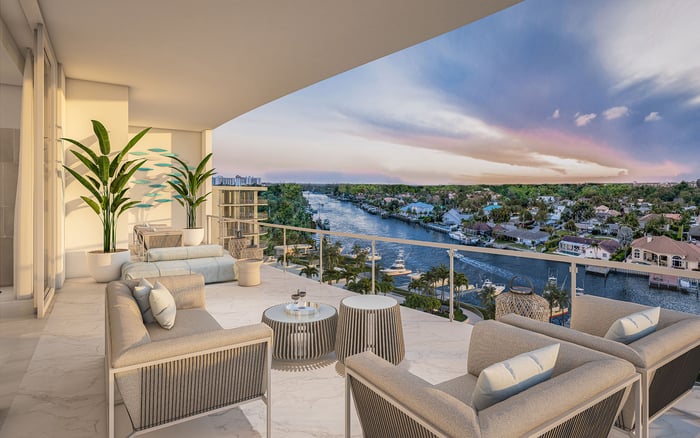
A buyer-focused MILLION guide to the Palm Beach County residence profiles where pet-friendly living is more than a marketing phrase, with emphasis on written rules, daily circulation, outdoor access, staffing, and enforceable governance.

For a discerning Palm Beach County buyer, pet-friendly does not simply mean a dog is permitted through the lobby. It means the rules are written, the building staff understands them, the access points are practical, and the surrounding environment supports the rhythm of daily life. The most valuable residence is not necessarily the one with the loosest language. It is the one where permissions, restrictions, fees, elevators, outdoor areas, and owner expectations work together without ambiguity.
This matters because luxury pet ownership is often operational. A buyer may be balancing multiple dogs, household staff, seasonal occupancy, visiting family, veterinary routines, grooming appointments, and travel schedules. A beautiful residence can become inconvenient if pet movement depends on a distant service corridor, if approved walking areas are unclear, or if a board treats every request as an exception rather than a defined category.
In Palm Beach County, the best search posture is disciplined. A buyer comparing Palm Beach waterfront privacy, West Palm Beach convenience, Boca Raton club living, pet provisions, dog-park adjacency, and gated-community governance should treat pet policy as part of the asset, not as a footnote.
1. Low-density condominium residence - written pet policy and predictable approvals
The strongest first choice is a low-density condominium with a pet policy that is clearly written in the governing documents and consistently applied. This profile is especially compelling when the residence offers straightforward elevator access, defined entry routes, and staff who can explain the rules without improvising.
For the buyer, the central question is not merely whether pets are accepted. It is whether the building has a practical system for registration, breed or size review, guest pets, service providers, cleaning expectations, and common-area etiquette. A polished lobby matters less than an operating culture that prevents confusion.
2. Full-service condominium residence - staff alignment and managed circulation
A full-service condominium can work beautifully for pet owners when staff procedures are well aligned. Door attendants, valet teams, managers, and maintenance personnel all influence the day-to-day experience. When each team understands how pets move through the property, ownership feels seamless.
This profile is best suited to buyers who value discretion. The ideal building has clear pathways, dependable elevator practices, and respectful separation between social areas and pet movement. The goal is not to hide the pet, but to preserve the atmosphere of a refined private address.
3. Townhouse-style residence - direct access and private transitions
A townhouse-style residence can be exceptionally practical because it often reduces dependence on common corridors and shared elevators. Direct entry, garage access, and private outdoor transitions can make morning and evening routines easier, particularly for larger dogs or households with multiple animals.
The buyer should still review association rules carefully. A residence that feels private may remain subject to exterior standards, leash rules, noise provisions, landscaping limits, and visitor requirements. The best townhouse setting combines the convenience of a private home with the predictability of professional governance.
4. Single-family residence in a governed enclave - space with rule clarity
For buyers who want maximum control, a single-family residence in a governed enclave can offer a strong balance of privacy, outdoor space, and household flexibility. This profile is often attractive to owners who prioritize yards, private service access, and room for pet care within the home.
Operational reality still depends on the rules. Gated or association-managed communities may regulate fencing, noise, outdoor structures, walking areas, and the use of common amenities. The best fit is a community where the rules are specific enough to protect quality of life without complicating ordinary pet ownership.
5. Boutique waterfront residence - calm scale and lifestyle compatibility
A boutique waterfront residence can be highly appealing when the building scale supports calm daily movement. Fewer residences may mean less congestion, more personal familiarity with staff, and a gentler rhythm in shared spaces. For pet owners, that can translate into a more comfortable experience.
The caution is that boutique does not automatically mean permissive. Some intimate buildings are more protective of shared areas, finishes, and noise standards. The winning profile is one where the smaller scale is paired with clearly documented pet permissions and realistic access to outdoor relief routes.
The central documents are usually more important than the marketing language. Buyers should review pet limits, registration requirements, approval rights, deposits, recurring fees, cleaning obligations, elevator rules, restricted areas, and enforcement procedures. A short policy may be elegant, but it may also leave too much to interpretation.
The most sophisticated buyers also ask how the policy works in practice. Are there designated elevators or preferred routes? Can a dog walker enter without disruption? Are guest pets treated differently from resident pets? Is there a procedure for temporary care when the owner is away? These are not minor questions. They shape the daily dignity of the residence.
For larger dogs, the inquiry should be even more precise. Size language, weight thresholds, breed references, and board discretion can all affect whether a residence is truly viable. A buyer should avoid relying on verbal comfort when written approval is required.
Pet amenities can be attractive, but they should be evaluated like any other luxury amenity: by usefulness, maintenance, access, and rules. A pet spa is valuable only if it is well kept, easy to schedule, and located in a practical part of the property. An outdoor relief area is useful only if it is convenient, clean, and supported by sensible hours.
The presence of a dog-focused amenity does not guarantee a smooth lifestyle. A building may advertise pet acceptance yet impose strict movement rules, limited access points, or narrow approvals. Conversely, a residence with modest amenities may function beautifully if its policies, staff, and surrounding streetscape are aligned.
Buyers should also think beyond the property line. Sidewalk quality, shaded walking routes, proximity to services, traffic patterns, and the feel of nearby public spaces can matter as much as an internal pet station. Luxury is the absence of friction, especially twice a day.
In the ultra-premium market, governance protects both the pet owner and the neighbor who does not own a pet. Strong rules reduce conflict. They clarify expectations before an issue becomes personal. They also preserve the value of the property by maintaining standards across common areas.
The best pet-friendly residences are not casual about animals. They are precise. They define what is permitted, how exceptions are handled, and how daily routines should occur. This clarity is particularly valuable in seasonal markets, where owners, guests, household staff, and building teams may all interact with the same residence at different times.
For buyers, the most elegant outcome is a home where a beloved animal is part of the household without becoming a governance negotiation. That is the difference between pet-tolerant and operationally pet-friendly.
What makes a residence operationally pet-friendly? It has written rules, practical access, staff familiarity, and predictable enforcement rather than informal permission.
Should buyers rely on verbal assurances about pet rules? No. The governing documents and written approvals should control the decision before a contract becomes nonrefundable.
Are luxury condominiums usually better than single-family homes for pets? Neither is automatically better. Condominiums offer service and structure, while single-family homes may offer more private space.
What is the biggest hidden issue for dog owners in condos? Circulation is often the issue, including elevators, entry points, relief access, and rules for walkers or staff.
Do pet amenities guarantee a pet-friendly lifestyle? No. Amenities help only when the underlying rules and daily operations are equally practical.
Why do pet deposits and fees matter? They reveal how the association manages risk, cleaning, and accountability for owners with animals.
Can guest pets create problems in a luxury residence? Yes. Some residences treat guest pets differently, so seasonal visitors and family stays should be reviewed in advance.
What should owners of larger dogs examine first? They should examine size limits, breed language, board discretion, elevator rules, and any approval procedure.
Is a gated community always easier for pet owners? Not always. It may offer space and privacy, but association rules can still govern fencing, noise, and common areas.
When should pet policy review happen during a purchase? It should happen early, before emotional commitment and before the buyer relies on assumptions about daily life.
To compare the best-fit options with clarity, connect with MILLION.
If branded residences are on your mind — as a home or as an allocation — we would be glad to share what we are seeing, privately.
Begin a quiet conversation