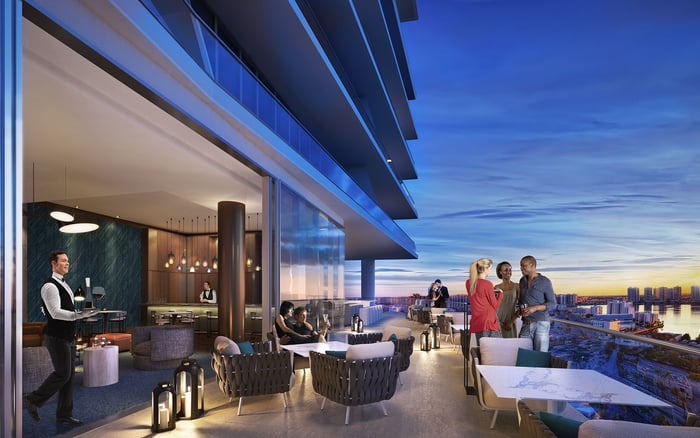
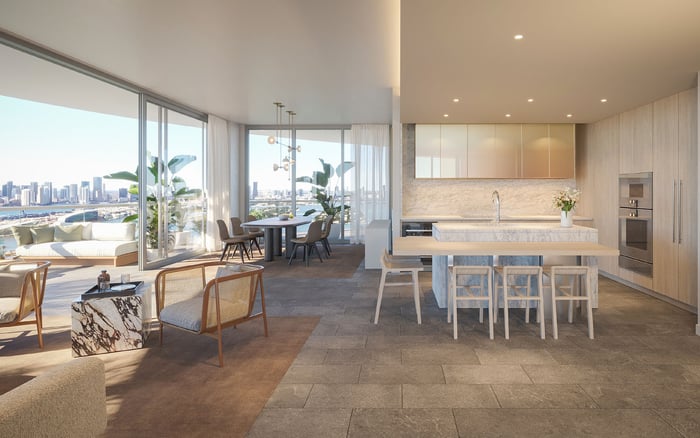
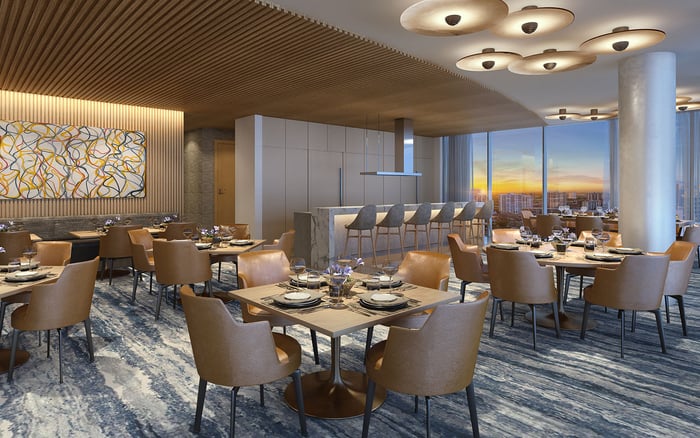
For buyers moving from seasonal mountain living into South Florida’s year-round rhythm, the best home is not defined only by floor plan, view, or brand. It is defined by building culture: the daily atmosphere, privacy norms, service style, neighbor profile, and residential cadence that make a property feel effortless as a primary address.
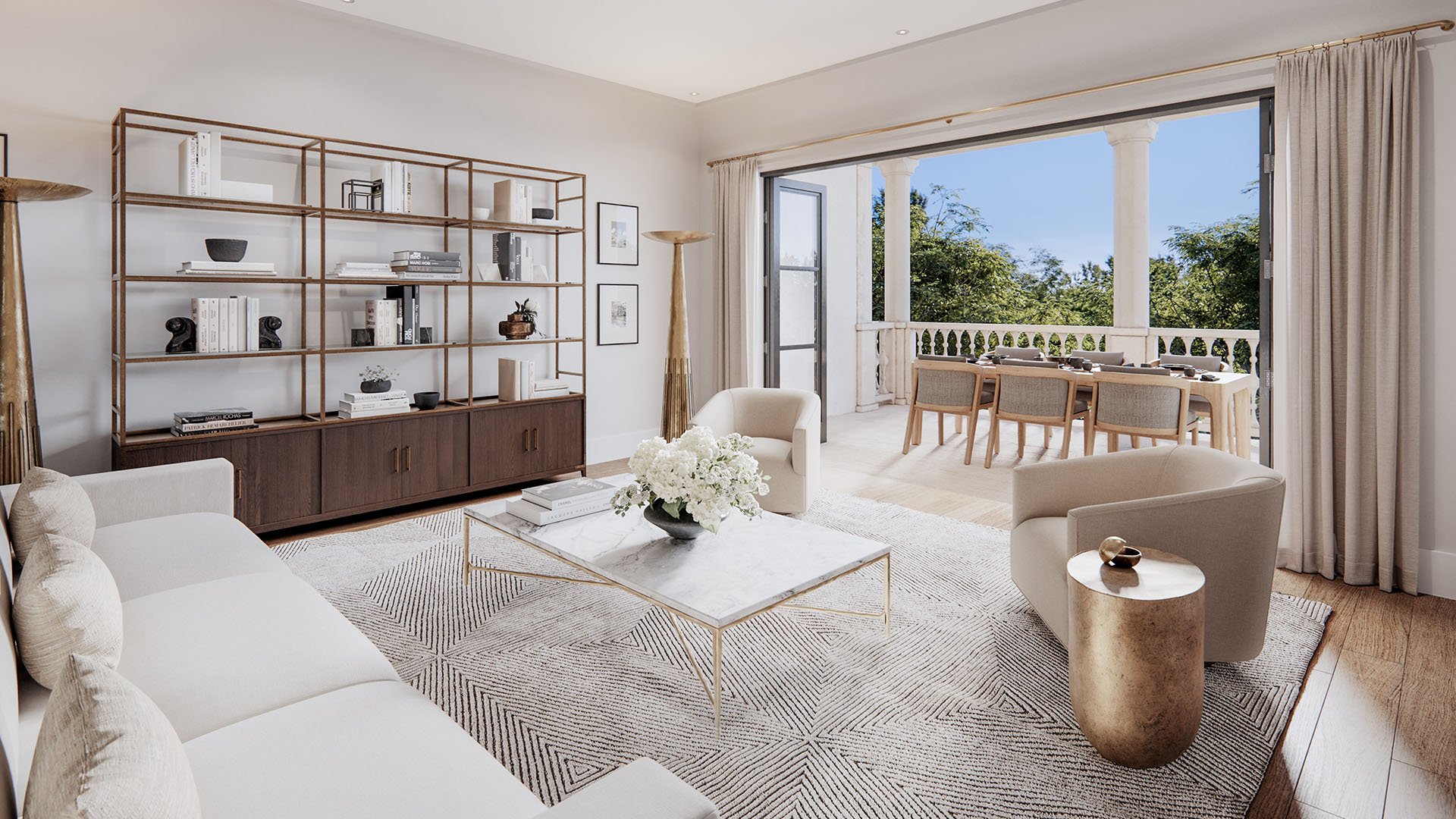
For a buyer arriving from Aspen, the South Florida search can feel deceptively simple at first: more light, more water, more outdoor time, and a broader year-round social calendar. Yet the decisive question is rarely whether a residence is beautiful. At the top of the market, beauty is assumed. The more revealing question is whether the building culture supports the way a household actually lives on a Tuesday morning, a Friday evening, and a quiet Sunday in August.
Building culture is the sum of small daily signals: how residents use the lobby, whether service feels formal or neighborly, how often guests circulate, how discreetly staff anticipate needs, how families manage routines, and whether the property feels like a resort, a private club, a village address, or a serene lock-and-leave home. For full-time life, those distinctions matter as much as exposure, finishes, and ceiling height.
Aspen trains the eye toward privacy, proportion, and seasonal adaptability. A home may need to host generously during peak weeks, then become deeply quiet when the calendar softens. South Florida can satisfy that same duality, but through different formats: boutique condominiums, garden-forward enclaves, waterfront towers, villa-style residences, and walkable urban districts.
The best fit depends on whether the buyer wants a social building or a sanctuary. A household that enjoys greeting familiar neighbors each morning may prefer a more residential, lower-tempo address. Another may value hotel-level coordination, active amenities, and a lobby with palpable energy. Neither is superior. The right choice is the one that does not require the owner to edit daily life to suit the building.
Coral Gables is often compelling for buyers who want South Florida without losing a sense of civic order, architectural restraint, and residential continuity. The appeal is not only aesthetic. It is the feeling of living in a place where daily routines can be composed: morning coffee, school runs, professional appointments, dinner close to home, and weekends that do not require crossing a causeway for every occasion.
In this context, projects such as The Village at Coral Gables speak to a buyer who wants a more neighborhood-scaled experience rather than a purely vertical one. Nearby, Ponce Park Coral Gables offers another lens on the same question: how does a new residence participate in the existing texture of Coral Gables rather than overpower it?
For full-time owners, the most important diligence is experiential. Visit at different hours. Watch how residents enter and leave. Notice whether the staff addresses people with warmth or ceremony. Ask how deliveries, guests, pets, drivers, and maintenance are handled. These are not secondary issues. They are the operating system of the home.
Coconut Grove can suit the buyer who wants mature landscaping, a relaxed social code, and a more organic daily rhythm. It is polished, but not rigid. It allows an owner to feel connected to Miami while still living with a degree of shade, privacy, and neighborhood texture that can be difficult to replicate in denser districts.
The building culture here often appeals to households that value wellness, terraces, quiet arrivals, and a sense of human scale. Four Seasons Residences Coconut Grove may attract those who want refined service in a setting that feels residential first. The Well Coconut Grove naturally enters the conversation for buyers who place wellbeing and routine at the center of the decision.
The key question is whether the building’s identity will age well with the owner’s life. A residence that feels perfect for entertaining in the first season should also feel calm after the novelty of arrival has passed.
Boca Raton is part of the broader South Florida decision for buyers who want a full week to function close to home. The conversation is less about a single dramatic skyline moment and more about ease, privacy, dining, club life, family logistics, and a daily environment that does not rely on spectacle.
A buyer considering Alina Residences Boca Raton is often weighing how a residence supports both independence and convenience. Does the building feel composed when fully occupied? Are common spaces used comfortably by full-time residents? Is the atmosphere refined without feeling performative? Boca Raton rewards that kind of practical, high-end scrutiny.
For those coming from a resort market, this can be refreshing. The best Boca Raton choices are not merely about escaping winter. They are about building a complete domestic life in a setting that can carry work, family, leisure, and privacy through every month.
Not every Aspen buyer wants quiet. Some want the opposite: immediate dining, finance, water views, design-forward towers, and the kinetic pleasure of a more urban South Florida life. Brickell, Miami Beach, Sunny Isles Beach, and selected waterfront corridors can offer that energy, but the same cultural test applies.
A full-time resident should distinguish between a building that feels alive and one that feels transient. Guest policy, short-stay atmosphere, elevator flow, valet choreography, amenity crowding, and the tone of the lobby all become part of daily life. A beautiful apartment in the wrong social cadence can become tiring. A slightly quieter building with better alignment can feel luxurious for years.
This is especially relevant in new construction, where renderings may show architecture, but not the future behavior of residents. Buyers should ask what type of ownership the building is likely to attract, how amenity spaces are intended to be used, and whether management is designed for privacy, hospitality, or both.
Before comparing final prices, compare daily friction. Where will guests wait? How are service providers cleared? Is there a comfortable route from garage to residence? Does the building welcome children, pets, visiting family, and household staff without making any of them feel like exceptions? How often will the owner actually use the amenities, and at what time of day?
Also consider the emotional temperature of the building. Some properties are clubby, some anonymous, some family-oriented, some highly social, and some almost monastic. Lifestyle is not a brochure word here. It is the lived pattern of the address.
The right South Florida home should make the owner feel less managed, not more. It should support privacy without isolation, service without intrusion, and sociability without obligation. That is the difference between buying a residence and choosing a life.
What does building culture mean in luxury real estate? It refers to the everyday atmosphere of a property, including service style, resident behavior, privacy norms, guest flow, and amenity use.
Why is building culture important for full-time South Florida living? Full-time owners interact with the building constantly, so small operational details shape comfort more than they would during occasional visits.
Is Coral Gables a good fit for buyers coming from Aspen? It can be, especially for buyers who value privacy, neighborhood rhythm, architectural character, and a calmer daily environment.
How does Coconut Grove differ from Coral Gables? Coconut Grove often feels more relaxed and landscape-driven, while Coral Gables tends to feel more civic, ordered, and traditional in tone.
Should I choose a branded residence for full-time life? A branded residence can work well if its service culture matches your preferences for privacy, formality, and daily interaction.
What should I observe during a building tour? Watch the lobby, valet, elevators, staff interactions, amenity spaces, and how residents move through the property at real-life hours.
Are boutique buildings better for full-time owners? Not always. Boutique buildings may offer intimacy, while larger buildings may provide deeper services and broader amenities.
How should families evaluate building culture? Families should look closely at pet policies, guest handling, staff access, school-day routines, parking, storage, and outdoor space.
Can a high-energy building still feel private? Yes, if circulation, staffing, amenity management, and residence layouts are designed to separate activity from personal space.
What is the best first step before choosing an area? Define the daily life you want, then compare neighborhoods and buildings against that pattern rather than beginning with views alone.
To compare the best-fit options with clarity, connect with MILLION.
If branded residences are on your mind — as a home or as an allocation — we would be glad to share what we are seeing, privately.
Begin a quiet conversation