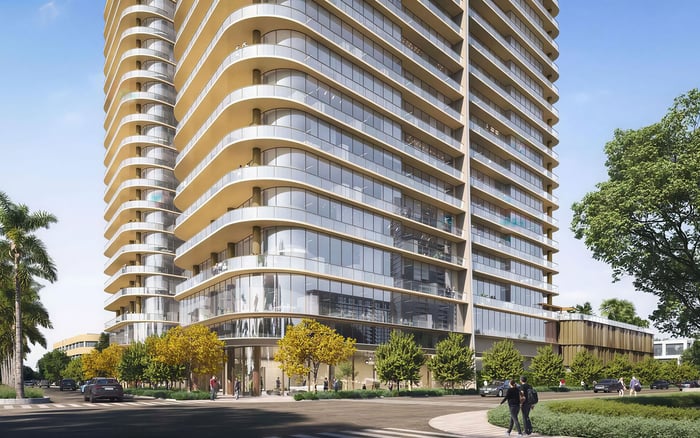
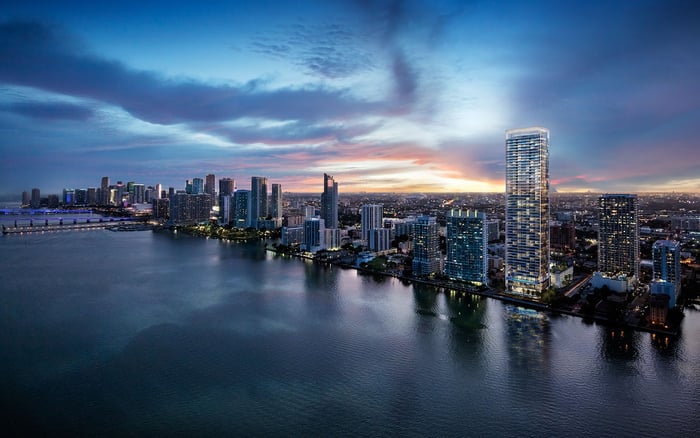
A buyer-focused comparison of Kempinski Residences Miami in the Design District and Miami Design Residences in Midtown, weighing prestige, walkability, access, and relative value in two adjacent but distinct urban lifestyles.
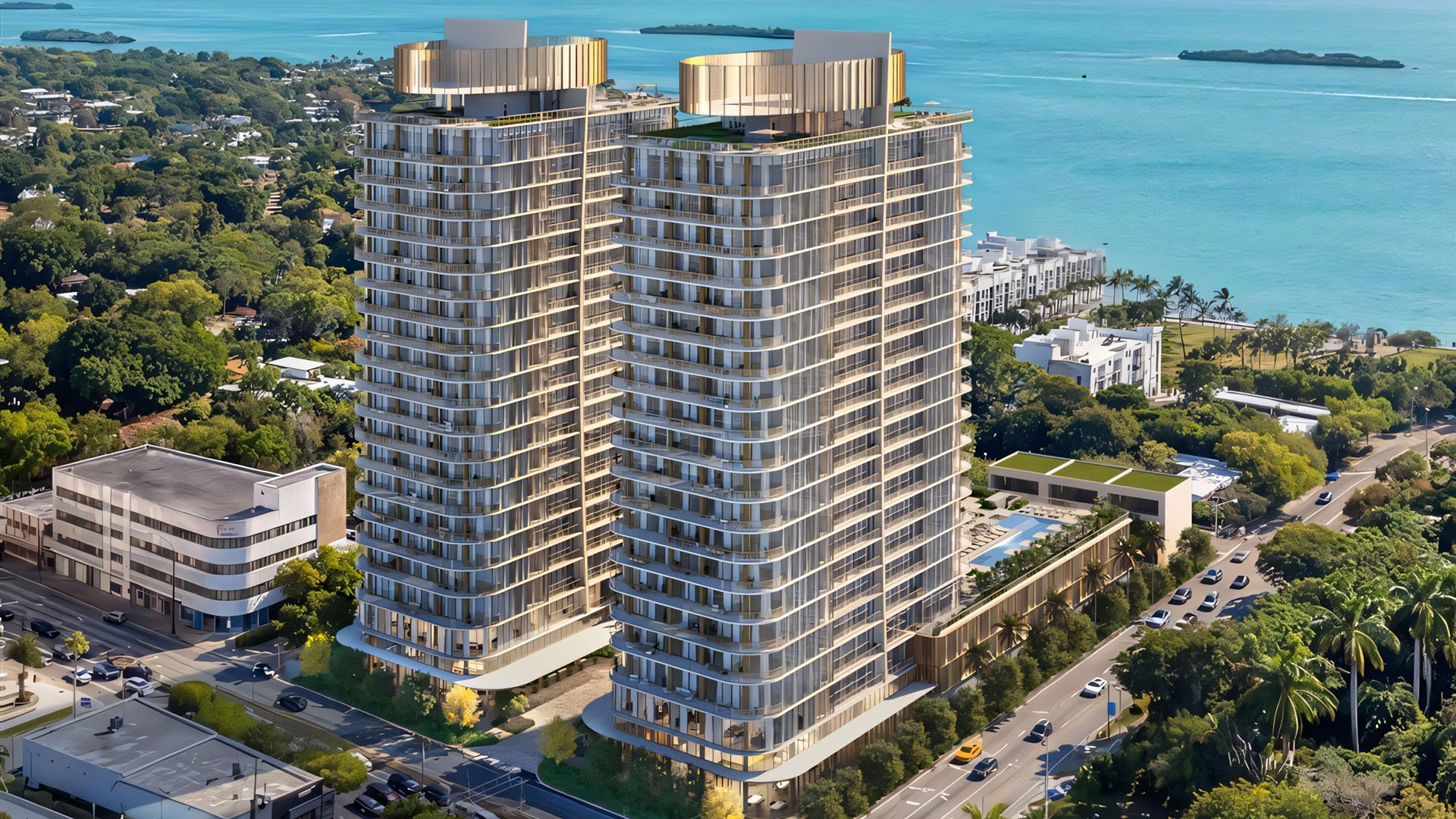
For many buyers, this is not a question of which project is universally better. It is a question of which neighborhood logic best aligns with how they intend to live. Kempinski Residences Miami Design District leans into branded ultra-luxury, private-club-style service, and the social currency of a Design District address. Miami Design Residences Midtown Miami speaks to a different expression of luxury: modern finishes, lifestyle amenities, and a more seamless daily rhythm in Midtown.
In MILLION Luxury terms, the divide is clear. One buyer is purchasing cachet. The other is purchasing access.
Kempinski Residences Miami is positioned within the Miami Design District. That matters because the surrounding neighborhood is part of the proposition. The Design District is not simply walkable. It is curated. Its appeal is rooted in flagship boutiques, galleries, restaurants, design-forward architecture, and cultural programming that make the district feel deliberately composed rather than incidental.
That distinction creates a different ownership experience. In the Design District, the streetscape itself functions as an amenity. Buyers who choose Kempinski are often drawn to the intangible advantages that come with a recognized luxury setting: prestige, discretion, and the ability to step into an environment shaped by high design and elevated retail.
Kempinski also benefits from a hospitality-linked identity. As an international luxury hotel and branded residences name, the brand signals service, polish, and a familiar standard to global buyers. In South Florida, that branding can resonate with purchasers who already compare residential opportunities through the lens of hospitality names such as The Residences at Mandarin Oriental, Miami and St. Regis® Residences Brickell. The message is not just where you live, but what ecosystem of service and identity comes with the address.
Miami Design Residences is framed around Midtown Miami, and Midtown operates by a different urban logic. Rather than relying on destination prestige alone, the neighborhood is defined by mixed-use energy, day-to-day convenience, and easier movement into surrounding districts. It has a live-work-play character, with retail, dining, and entertainment woven into the everyday streetscape.
For a buyer who values fluid access to Wynwood, I-95, and central Miami corridors, Midtown can feel materially more practical. Its walkability is broader and more functional than ceremonial. Put simply, the neighborhood is often easier to use. That makes Miami Design Residences compelling for affluent professionals, downsizers, and purchasers who want a polished product without paying primarily for symbolic neighborhood status.
This is where Midtown’s identity becomes persuasive. The luxury is less about separation and more about integration. A resident can move through the district with greater day-to-day efficiency, and that convenience is central to the value proposition. Buyers considering Midtown may also find themselves cross-shopping similarly access-oriented urban product such as Aria Reserve Miami or Villa Miami, where location strategy is as important as the interior finish package.
Kempinski’s positioning is consistent with what sophisticated buyers expect from branded residences: integrated hotel services, a more formal hospitality sensibility, and private-club-style amenities. Even before discussing any specific room or floor plan, that framework tells the buyer a great deal. It suggests a lifestyle centered on service, arrival experience, and a higher degree of residential polish.
Miami Design Residences, by contrast, is associated with modern finishes and lifestyle-driven common spaces that align with contemporary urban ownership. Fitness space, co-working areas, and the integration of ground-floor retail or dining are part of a practical amenity set aimed at people who want their building to support the cadence of everyday life. The emphasis is not less luxurious. It is luxurious in a different way.
This difference mirrors a broader split across South Florida new development. Projects in prestige enclaves often sell the refinement of scarcity and branding. Projects in highly connected mixed-use neighborhoods tend to sell versatility, movement, and efficiency. Neither is inherently superior. The question is whether a buyer wants a residence that behaves like a private retreat or one that functions as an elegant urban base.
The pricing relationship between these two neighborhoods is one of the clearest contrasts. Design District product generally commands a premium, and Kempinski is framed within that premium environment. Midtown, while increasingly polished, usually sits below comparable luxury pricing in the Design District.
That does not automatically make Midtown the bargain or the Design District overpriced. It means each neighborhood monetizes a different asset. In the Design District, buyers are paying for a more established prestige hierarchy, stronger brand recognition, and a highly curated surrounding environment. In Midtown, buyers often gain relative value efficiency, broader accessibility, and a district that may feel more useful on an ordinary Tuesday.
For many purchasers, value is not the same as the lowest entry point. Value is fit. A globally mobile buyer seeking status signaling, branded service, and a recognizably elite address may conclude Kempinski delivers the better value despite the premium. A younger executive, empty nester, or convenience-oriented owner may find Miami Design Residences offers the more rational allocation of capital.
Kempinski Residences Miami Design District is best aligned with established high-net-worth and international buyers who prioritize status, brand credibility, exclusivity, and the social shorthand of the Design District. These are purchasers who often want their residence to read as a statement as much as a home.
Miami Design Residences Midtown Miami is more naturally suited to younger affluent professionals, buyers transitioning from larger homes, and residents who want style without overcommitting to a purely prestige-led address. They may still want design, amenities, and neighborhood energy, but with greater emphasis on ease and relative value.
There is also a subtle difference in how each neighborhood supports daily life. Design District walkability is destination-oriented: boutiques, galleries, fine dining, and an edited public realm. Midtown walkability is broader, more integrated, and more practical. One is a stage set for luxury living. The other is a flexible framework for urban living.
Both districts have seen notable residential development in recent years, but they have evolved differently. Design District has maintained a stronger reputation for prestige concentration, while Midtown has absorbed more inventory as its identity has expanded. That divergence reinforces the central tradeoff.
Design District tends to appeal to buyers who are comfortable paying more for neighborhood maturity and prestige concentration. Midtown appeals to buyers who see opportunity in connectivity, ongoing neighborhood growth, and a more democratic version of walkable city living.
For the South Florida audience, this is a familiar pattern. Prime branded product trades on image discipline and long-term desirability. Mixed-use urban districts trade on momentum, utility, and the ability to serve more than one buyer profile well.
If your purchase is intended to maximize status, service, and the intangible confidence of an internationally legible luxury address, Kempinski Residences Miami Design District has the stronger argument. Its advantage is not merely the building. It is the combination of branded hospitality and a neighborhood with rare cachet.
If your purchase is meant to prioritize mobility, broader walkability, and a more efficient relationship between price and daily lifestyle, Miami Design Residences Midtown Miami becomes the more persuasive choice. Its strength is not exclusivity for its own sake. It is a cleaner fit for buyers who want sophisticated city living without paying the full tariff for a prestige-first district.
For many discerning buyers, the answer comes down to a simple private question: do you want your Miami residence to impress first, or to function beautifully first?
Is Kempinski Residences Miami more luxury-focused than Miami Design Residences? Kempinski is positioned as the more prestige-driven and service-oriented option because of its branded hospitality identity and Design District setting.
Is Midtown Miami easier for daily living than the Design District? In many cases, yes. Midtown is framed around broader convenience, mixed-use access, and easier movement to surrounding corridors.
Who is the typical buyer for Kempinski Residences Miami Design District? The project is best suited to established high-net-worth and international buyers seeking branding, exclusivity, and a high-status address.
Who is the typical buyer for Miami Design Residences Midtown Miami? It tends to suit younger affluent professionals, downsizers, and buyers focused on convenience and relative value.
Does the Design District usually command a pricing premium over Midtown? Yes. The Design District is generally associated with a premium because of prestige, curation, and stronger luxury brand recognition.
Is Midtown Miami less prestige-oriented than the Design District? Yes, and that is also part of its appeal. Midtown trades some cachet for accessibility, flexibility, and value efficiency.
What kind of walkability does the Design District offer? Its walkability is highly curated, centered on luxury retail, galleries, restaurants, and a destination-style public realm.
What kind of walkability does Midtown offer? Midtown offers a broader day-to-day walkable environment with neighborhood integration and practical access to nearby districts.
Are both neighborhoods active residential development areas? Yes. Both are part of South Florida’s active development conversation, though they have matured in different ways.
What is the best way to shortlist comparable options for touring? Start with location fit, delivery status, and daily lifestyle priorities, then compare stacks and elevations to validate views and privacy.
When you're ready to tour or underwrite the options, connect with MILLION Luxury.
If branded residences are on your mind — as a home or as an allocation — we would be glad to share what we are seeing, privately.
Begin a quiet conversation