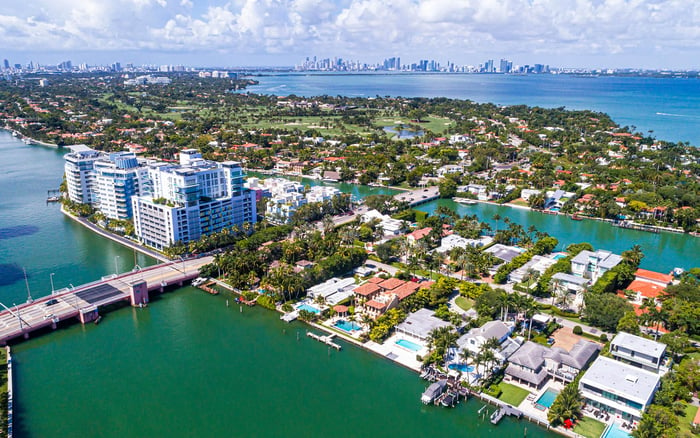
For globally mobile families, a Fisher Island purchase can be more than a lifestyle decision. It can become a governance, succession and capital-preservation exercise that should be coordinated before contracts are signed.

For a Singapore family considering Fisher Island, the purchase is rarely just a change of scenery. It can be a family office decision, a succession-planning event, a liquidity allocation, a lifestyle upgrade and a privacy strategy, all within one transaction. The address matters. The architecture around the purchase matters more.
Fisher Island holds particular appeal for globally mobile families: removed, controlled and residential, yet close to Miami Beach and the broader South Florida ecosystem. That combination can suit families accustomed to discreet service, private clubs, security-minded buildings and multigenerational homes that can host children, parents, advisers and guests without feeling overexposed.
This perspective is not tax, legal or immigration advice. It is a practical framework for the questions sophisticated families should answer before moving capital from Singapore toward a U.S. residence, especially when the asset may be held for the next generation.
The cleanest purchase plans begin with intent. Is the Fisher Island residence primarily a seasonal retreat, a U.S. education base, a family meeting point, a long-hold real asset, or a future principal residence for one branch of the family? Each answer points to a different ownership structure, financing posture, operating budget and exit strategy.
For some families, a residence such as The Residences at Six Fisher Island may represent a next-generation base designed around privacy and continuity. For others, the ideal asset may be less about daily use and more about giving heirs optionality in South Florida without tying the family to a single long-term lifestyle pattern.
The key is to avoid letting the home lead the planning. A spectacular view can obscure difficult questions: who may use the residence, who pays carrying costs, who has authority to sell, and what happens if siblings disagree. These decisions belong in the planning stage, not at the family dinner table after closing.
Families moving between Singapore and Fisher Island should assemble advisers before identifying a preferred residence. The team typically needs to consider tax residency, reporting obligations, estate and gift exposure, entity ownership, banking, insurance, foreign exchange, immigration intent and family governance. None of these subjects should be treated in isolation.
A family may be comfortable with Singapore structures and familiar adviser relationships, yet the U.S. dimension can change the analysis. The form of ownership, the identity of the beneficial owner, the use of debt and the timing of gifts or transfers can all affect future flexibility. Even a decision that seems administrative, such as whose name appears on a purchase contract, can create consequences that are difficult to unwind.
Privacy also needs to be planned rather than assumed. Ultra-high-net-worth families often want separation between personal use of the residence and the family's broader operating entities. That requires careful coordination among counsel, tax advisers, property managers and, when relevant, trustees or family office executives.
A Fisher Island residence should be stress-tested across life stages. Parents may envision holidays and extended winter stays. Children may see South Florida as a school, business or social bridge. Grandchildren may inherit a property with emotional value, substantial costs and ongoing management responsibilities.
That is why intergenerational planning should address use rights in plain language. Families can define booking priority, guest policies, maintenance approvals, art and furnishings decisions, and the process for capital improvements. These details may feel overly formal when everyone is aligned, but they become essential as families grow, marry, relocate and divide time across continents.
Second-home ownership works best when the next generation understands both the privilege and the responsibility. A residence on Fisher Island can be a gathering place, but it is still an asset requiring liquidity, oversight and governance. The family should decide whether the home is meant to be preserved at all costs, evaluated periodically, or sold if its purpose changes.
The physical form of the residence should support the structure behind it. A large estate setting can suit families expecting longer stays, staff support and frequent entertaining. A more lock-and-leave condominium format may suit families whose members move fluidly between Singapore, London, New York and Miami.
A buyer studying The Links Estates at Fisher Island may be thinking about compound-like living, family separation and long-term control. A buyer considering Palazzo del Sol or Palazzo della Luna may be weighing a different balance of residence management, building services and ease of seasonal use.
The right answer is rarely universal. A gated-community environment may appeal to one family because it limits friction and adds discretion. Another family may prioritize internal space, staff flow, terraces, marina proximity or the ability to receive guests without disrupting daily life. The planning question is simple: does the asset reduce complexity for the family, or does it create a new operating company in disguise?
Investment discipline matters even when the purchase is lifestyle-led. Families should model purchase price, closing costs, carrying expenses, assessments, renovations, insurance, staffing, currency movement and potential sale costs. The home may never be sold, but the ability to sell cleanly is still part of prudent planning.
Liquidity planning is especially important when a residence will be shared among heirs. A property can become a source of tension if one branch uses it often, another rarely visits and all are expected to contribute equally. Some families address this through reserve accounts, usage formulas or buyout mechanisms. Others appoint a decision-maker with authority to act within agreed limits.
Waterfront property in South Florida also deserves operational attention. Buyers should discuss insurance, maintenance, storm preparation, building governance and household staffing before they commit. The most elegant ownership experience is often the one with the fewest surprises after closing.
Fisher Island's appeal is not only visual. It is also temporal. The island can slow the pace of arrival, create a sense of threshold and give families a place where privacy feels natural rather than performed. For families arriving from Singapore, that emotional shift can be powerful.
Yet access should be evaluated with the same rigor as design. Who will arrive, how often, with what staff, and under whose authority? How will household employees coordinate with building or island protocols? How will guests be handled during holidays? These are practical questions, but they are also governance questions.
A strong plan lets the residence serve the family rather than dominate it. The home should create a rhythm: arrival, rest, family time, business calls, school visits, philanthropy meetings and departures. If every stay requires improvisation, the asset is not yet fully planned.
Before signing, each principal should be able to explain the ownership plan, funding source, intended use, decision rights, tax review, succession path and exit options in clear terms. If the explanation is confusing, the structure may be too fragile.
For Singapore families, Fisher Island can be a refined South Florida base with emotional and strategic value. But the most successful acquisitions are not defined by the most dramatic residence. They are defined by alignment among family members, advisers and the asset itself.
Should a Singapore family buy a Fisher Island residence personally or through an entity? That decision should be made with cross-border tax and legal advisers before any contract is signed.
Is Fisher Island better suited to legacy ownership or seasonal use? It can serve either purpose, but the ownership structure and household plan should match the family's true intent.
When should succession planning begin? Succession planning should begin before the purchase, not after the residence has been placed in one person's name.
What is the biggest planning mistake families make? The most common mistake is choosing the property first and trying to force the governance structure around it later.
How should siblings handle shared use? Families should define priority periods, guest rules, cost sharing and sale rights in writing.
Does a luxury condominium reduce complexity? It may simplify operations, but families still need clear ownership, tax, insurance and decision-making plans.
Why does liquidity planning matter for a lifestyle asset? Carrying costs, reserves, assessments and potential buyouts can create tension if they are not planned in advance.
Should advisers in Singapore and the U.S. communicate directly? Yes. Coordinated advice helps prevent inconsistent assumptions across jurisdictions and family structures.
Can a Fisher Island home support family office governance? Yes, if use policies, funding, staff oversight and decision rights are integrated into the family's broader framework.
What should buyers review before touring seriously? Buyers should clarify purpose, ownership options, budget, privacy needs, succession goals and the desired level of household support.
For a tailored shortlist and next-step guidance, connect with MILLION.
If branded residences are on your mind — as a home or as an allocation — we would be glad to share what we are seeing, privately.
Begin a quiet conversation